You may ask, What is GRS Certification and why is it important when you buy recycled bags. GRS Certification checks recycled content and proves a product follows strict rules. If you want proof besides just “eco-friendly” claims, GRS Certification gives you clear supply chain information. See how it affects your choices:
| Impact of GRS Certification | Description |
|---|---|
| Enhances Brand Reputation | You can make your brand look better and stand out. |
| Ensures Compliance | You follow laws and stay out of trouble. |
| Promotes Transparency | You can show your green actions to customers. |
| Supports Sustainable Practices | You use more recycled stuff and meet what buyers want. |
Key Takeaways
- GRS Certification means Global Recycled Standard. It makes sure products have real recycled materials.
- To use the GRS logo, bags need at least 50% recycled content. Business-to-business bags need at least 20% recycled content.
- GRS Certification helps a brand look good. It shows the brand cares about the planet and uses good sources.
- Being open about the supply chain is very important. GRS Certification lets people track recycled materials to the final product.
- Stores often want GRS Certification. This makes sure products follow green rules and are not fake.
- Always ask for GRS certificates. These include Scope and Transaction Certificates. They help prove recycled claims are true.
- Picking GRS certified materials, like rPET or recycled cotton, makes eco-friendly bags. These bags are good for people who care about the environment.
- Do not make common mistakes. Focus on good quality, not just low price. Check all papers and know what materials you pick for your bags.
What Is GRS Certification
GRS Certification Overview
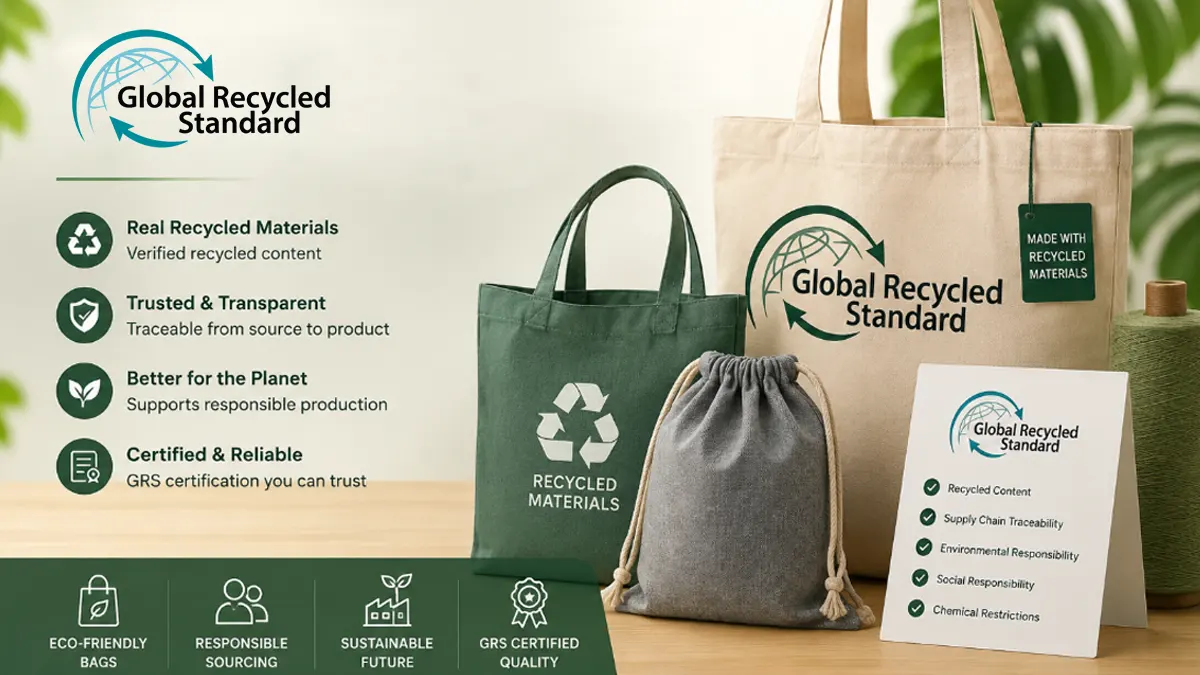
You might ask, What is GRS Certification and why does it matter for recycled bags? GRS means Global Recycled Standard. It is a worldwide rule that checks recycled content in products. This helps you know if your bags really use recycled materials. It is not just a claim.
GRS Certification has strict rules. For business-to-business bags, you need at least 20% recycled content. If you want to show the GRS label to shoppers, your bag must have at least 50% recycled content. The standard also looks at social, environmental, and chemical safety. You get more than a recycled label. You get proof your bag meets high standards.
Here is a quick look at the main rules for GRS Certification:
| Criteria | Description |
|---|---|
| Recycled Content Requirements | You need a minimum recycled amount (usually 20% or more), and post-consumer recycled material is best. |
| Traceability | Every partner in the supply chain must be certified. This keeps the supply chain honest. |
| Environmental Standards | You must have waste plans, track energy use, control emissions, and use chemicals safely. |
| Social Responsibility | You must follow local laws, train workers, keep them safe, and treat everyone fairly. |
| Chemical Restrictions | You must follow a banned substances list and handle chemicals safely. |
GRS Certification checks more than just recycled content. It looks at the whole process, from where materials come from to worker safety.
Look at the minimum recycled content needed for each certification:
| Requirement Type | Minimum Recycled Content |
|---|---|
| GRS (B2B) | 20% |
| GRS (Consumer) | 50% |
| RCS | 5% |
If you want the GRS logo on your bag for shoppers, you need at least 50% recycled content. Bags with 20% to 49% recycled content can only be sold to other businesses without the GRS label.
Tip: Always ask your supplier for GRS papers. This helps you avoid fake green claims and makes your brand more trusted.
Who Issues GRS Certification
You may wonder, Who gives out GRS Certification and how do you know it is real? Many groups give GRS Certification. These groups check factories, materials, and supply chains. They make sure everyone follows the rules.
Here is a table of the main groups and where they work:
| Organization | Global Reach |
|---|---|
| Textile Exchange | International |
| Control Union (CU) | Global |
| ITS | Worldwide |
| IDFL | International |
| TUV | Global |
| ESTS | Worldwide |
You might see these names on certificates:
- Control Union
- SGS
- Intertek
- TÜV Rheinland
- Bureau Veritas
If you see one of these names on a GRS certificate, your bag meets the standard. These groups work all over the world, so you can trust their checks.
GRS in the Textile Industry
What is GRS Certification doing in the textile world? You see it more and more now. Brands and factories want to show they use recycled materials. GRS Certification helps them prove it.
Here are some facts:
- Over 10,800 places had GRS Certification in 2025.
- GRS Certification is known in 80 countries.
- GRS has a 38.2% share among upcycled textile certifications.
You can find GRS certified bags, clothes, and fabrics in stores everywhere. If you want to buy recycled bags, GRS Certification gives you confidence. You know your bag comes from a good supply chain.
Note: GRS Certification is not just for big brands. Small businesses and custom bag makers can get certified too. This helps you stand out and meet store rules.
Now you know what GRS Certification is, who gives it, and how it changes the textile industry. You can use this to make better choices when you buy recycled bags.
GRS Certification Benefits
Brand Trust
You want people to notice your brand and trust it. GRS Certification helps you earn that trust. When you show your bags are GRS certified, you prove you care about being honest and making good products. People see your brand as trustworthy and friendly to the planet. They know you follow tough rules and use real recycled materials. This makes shoppers like your brand and want to buy again.
Here’s a quick look at how GRS Certification helps your brand:
| Benefit | Description |
|---|---|
| Enhanced Reputation | GRS certification makes people believe in your brand and keeps them coming back. |
| Market Advantage | Companies can reach buyers who care about the planet and stand out from others. |
| Business & Brand Benefits | Using GRS-certified packaging makes your brand look better and attracts green shoppers. |
You get ahead in the market when you use GRS certified bags. People who care about the earth want proof, not just words. GRS Certification gives you real proof and helps your brand look great.
Sustainability Claims
You want to say your bags are good for the planet, but you need proof. GRS Certification gives you papers to show you are telling the truth. You get a Transaction Certificate (TC) for every batch of bags. This paper shows your bags went through a checked supply chain. Without it, your words are just talk.
- GRS certification makes sure recycled materials follow strict rules for the planet and people.
- It proves suppliers recycle the right way, with real papers to show it.
- The TC is a real paper from the GRS system that shows where your bags came from.
- A Transaction Certificate is proof that a batch of GRS bags went through a checked supply chain.
You can show your customers real proof. This makes your green claims stronger and easier to believe. People trust brands that show real papers, not just say things.
Supply Chain Transparency
You want to know where your bags come from and how they are made. GRS Certification lets you see every step in the process. Each part, from recycling to the finished bag, gets checked and approved. You can follow your bag’s path and see that every step meets high standards.
- The government has rules that need you to be open.
- Company rules make sure you buy materials the right way.
- Certifications show you care about the planet.
| Stage | Certified? |
|---|---|
| Recycling Facility | Yes |
| Material Processing | Yes |
| Bag Manufacturing | Yes |
| Final Product | Yes |
GRS Certification checks the recycled content and makes sure you follow social and planet rules. It helps people trust your brand and your business partners. Without GRS Certification, people cannot check if your bags are really recycled. GRS checks and writes down every step, so you know your bag is really good for the planet.
If you ever wondered What Is GRS Certification, now you know how it helps your brand, your green claims, and your supply chain.
Retailer Requirements
You probably notice that big retailers have strict rules for recycled bags. If you want your bags on their shelves, you need to meet their requirements. GRS Certification makes this easier for you. Many stores now ask for proof that your bags use real recycled materials. They do not just accept claims. They want documents and certificates.
Here’s what you might see from retailers:
- They ask for GRS certificates before placing an order.
- They check your supply chain for transparency.
- They want to see a Transaction Certificate for each batch.
- They require a Scope Certificate from your manufacturer.
If you cannot show these documents, you may lose the deal. Retailers want to protect their reputation. They do not want to risk selling bags with fake green claims. GRS Certification helps you meet their standards and keeps your business safe.
Tip: Always keep your GRS papers ready. If a retailer asks, you can show proof right away. This builds trust and speeds up the buying process.
Let’s look at a simple table showing what retailers usually require:
| Requirement | Why It Matters |
|---|---|
| GRS Certificate | Proves recycled content |
| Transaction Certificate | Shows supply chain traceability |
| Scope Certificate | Confirms manufacturer status |
You can see that GRS Certification is not just a bonus. It is often a must-have if you want to work with big stores. When you ask, What Is GRS Certification, you find it is the key to meeting retailer rules and getting your bags into more markets.
Responsible Sourcing
You want to make sure your bags come from good sources. Responsible sourcing means you care about the planet and people. GRS Certification checks your supply chain and makes sure every step follows strict rules. You do not just buy recycled materials. You buy from factories that treat workers fairly and manage waste the right way.
Here are some ways GRS Certification helps you source responsibly:
- It checks worker safety and rights.
- It makes sure factories use safe chemicals.
- It requires waste management plans.
- It tracks energy and water use.
You can feel good about your bags. You know they come from a supply chain that cares about the environment and people. Responsible sourcing helps your brand stand out. Customers like brands that do the right thing.
Note: Responsible sourcing is not just about recycled content. It is about the whole process, from start to finish.
If you want to show your customers you care, GRS Certification gives you the proof. You can share your certificates and explain how your bags meet high standards. This builds trust and helps you grow your business.
GRS Certification Requirements
Recycled Content
When you want GRS certified bags, check the recycled content. GRS has rules for how much recycled material your bag needs. If you want the GRS logo, your bag must have at least 50% recycled content. For business sales, the minimum is 20%. This means your bag is not just a little recycled. It follows strict rules.
| Requirement Type | Recycled Content Threshold |
|---|---|
| Minimum for GRS Certification | 20% |
| Minimum for GRS Logo Use | 50% or above |
Minimum 50% Requirement
To use the GRS logo, your bag needs half recycled material. This rule stops brands from making weak claims. You can trust the GRS logo shows real recycled content.
Accepted Materials
GRS allows many recycled materials. You can use recycled polyester, cotton, non-woven fabrics, or felt. The material must come from post-consumer or post-industrial waste. Fake recycled materials are not allowed. GRS checks where the material comes from and how it is made.
Chain of Custody
You need to know your bag’s path from waste to finished product. GRS uses chain of custody rules to track every step. This keeps the supply chain honest and clear.
Supply Chain Certification
Check if your supplier has a scope certificate from a trusted group. This certificate shows their name, product scope, and certification dates. You can search public certification lists to see if your provider is certified. If you do not find them, they may not be certified. Look for certification numbers on their website. Ask for certification papers if you cannot find them online.
- Confirm scope certificates from a trusted group.
- Search certification lists for your provider.
- Look for certification numbers on their site.
- Ask for certification papers if needed.
Traceability
GRS makes sure you can trace your bag’s recycled content. Every partner in the supply chain must be certified. You can follow the recycled material from the recycling place to the finished bag. This gives you proof your bag is really recycled.
Environmental Standards
GRS checks more than recycled content. You must meet environmental rules too. Factories must have waste plans. They need to track energy and water use. GRS checks how factories handle waste and resources. You can feel good knowing your bag comes from a factory that cares about the planet.
Waste Management
Factories must manage waste the right way. They cannot dump waste or pollute the planet. GRS checks their waste plans and makes sure they recycle as much as possible.
Resource Use
Factories must track how much energy and water they use. GRS wants factories to use less and be more efficient. This helps protect the planet and saves resources.
Tip: Always ask your supplier about their environmental rules. This helps you pick bags that are good for the planet and your brand.
Social Standards
You want your recycled bags made in fair factories. GRS Certification checks if workers are treated well. This means your bags are good for the planet and for people.
Factories must follow rules about worker rights. They must pay fair wages. Workers need a safe place to work. No one can force people to work. Child labor is not allowed. Workers get breaks and work legal hours. GRS Certification covers more than recycled content. It protects workers, too.
Here’s a simple look at GRS social standards:
| Social Practice | Description |
|---|---|
| Wages | Workers get fair pay |
| Working Conditions | Safe and healthy workplaces |
| No Forced Labor | No one is forced to work |
Factories must also follow these rules:
| Social Responsibility | Description |
|---|---|
| No Forced Labor | Workers are free to leave |
| No Child Labor | Kids cannot work in factories |
| Worker Health and Safety | Factories keep workers safe |
| Legal Working Hours | Workers do not work too many hours |
| Fair Pay | Workers get paid fairly |
You can feel good about your bags. Workers are respected in these factories. GRS Certification checks these rules with audits. If a factory breaks rules, it loses certification.
Tip: Ask your supplier about worker rules. This helps you choose bags that support fair labor.
Worker Rights
Workers must get fair pay and freedom. Factories cannot force anyone to work. Everyone can leave if they want. GRS Certification checks these rules. Buying GRS certified bags supports worker rights.
Health & Safety
Factories must keep workers safe. They need to follow safety rules. Workers get training and protective gear. GRS Certification checks worker health. Your bags come from safe workplaces.
Chemical Standards
You want your bags safe for people and the planet. GRS Certification checks chemical rules to protect everyone. Factories must follow strict rules about chemicals. They cannot use banned substances. They must handle chemicals safely and keep records.
Restricted Substances
GRS Certification has a list of banned chemicals. Factories cannot use harmful chemicals. They must test materials and follow safety rules. If a factory uses banned chemicals, it loses certification.
- Factories keep chemicals away from workers.
- Chemicals are stored safely.
- Workers get training to handle chemicals.
You can trust GRS certified bags are safe. The certification checks every step, from recycled content to chemical safety.
Note: Always ask your supplier for chemical safety papers. This helps you avoid risks and keeps your brand trusted.
GRS Certified Bags vs Recycled Bags
Certification vs Claims
You see many bags called “recycled.” Some brands say their bags use recycled materials. Others show GRS Certification. What is different? GRS certified bags go through strict checks. Regular recycled bags rely on simple claims. You cannot always trust those claims.
Let’s see how GRS certified bags are special:
| GRS Area | What It Checks | Why It Matters to Buyers |
|---|---|---|
| Recycled content | Checks if the material really has recycled input | Helps stop false green claims |
| Traceability | Checks if each step is written down | Makes audits and claim checks easy |
| Chemical control | Checks if banned chemicals are managed | Lowers safety and compliance risk |
| Environmental practice | Checks waste, water, and resource use | Supports responsible sourcing goals |
| Social practice | Checks wages, work conditions, and no forced labor | Protects brand reputation |
GRS certified bags must pass all these checks. Regular recycled bags may skip some steps. With GRS, you get more than a label. You get proof.
Documented Proof
You want real proof your bags are recycled. GRS Certification gives you two important papers. The Scope Certificate shows a factory can handle GRS materials. The Transaction Certificate proves each shipment meets GRS rules. If you only see a Scope Certificate, you cannot be sure your batch is certified. Always ask for both.
Tip: Ask your supplier for the Transaction Certificate for every order. This proves your bags meet GRS standards.
Here’s how you can tell the difference:
- Scope Certificate: Shows the factory is qualified.
- Transaction Certificate: Proves your batch is GRS certified.
Regular recycled bags rarely have these papers. GRS certified bags always do. You can check the papers and feel sure.
Greenwashing Risks
You hear brands talk about “eco-friendly” bags. Sometimes, these claims are not true. This is called greenwashing. It tricks buyers and hurts trust. GRS Certification helps you avoid these risks.
- The ‘Trust Gap’ makes shoppers and regulators doubt green claims.
- GRS Certification gives checked proof of recycled content.
- GRS covers social rules, environmental care, and chemical safety. This builds trust and keeps you safe.
If you want to protect your brand, pick GRS certified bags. You get real proof, not just words. You avoid greenwashing and build trust with your customers.
Note: GRS Certification closes the trust gap. You can show buyers real papers and stand out from brands that only make claims.
GRS Certified Bag Materials
When you buy GRS certified bags, you can choose from different eco-friendly materials. Each material has its own good points. Let’s see which ones are most popular and what bags they work best for.
rPET & Recycled Polyester
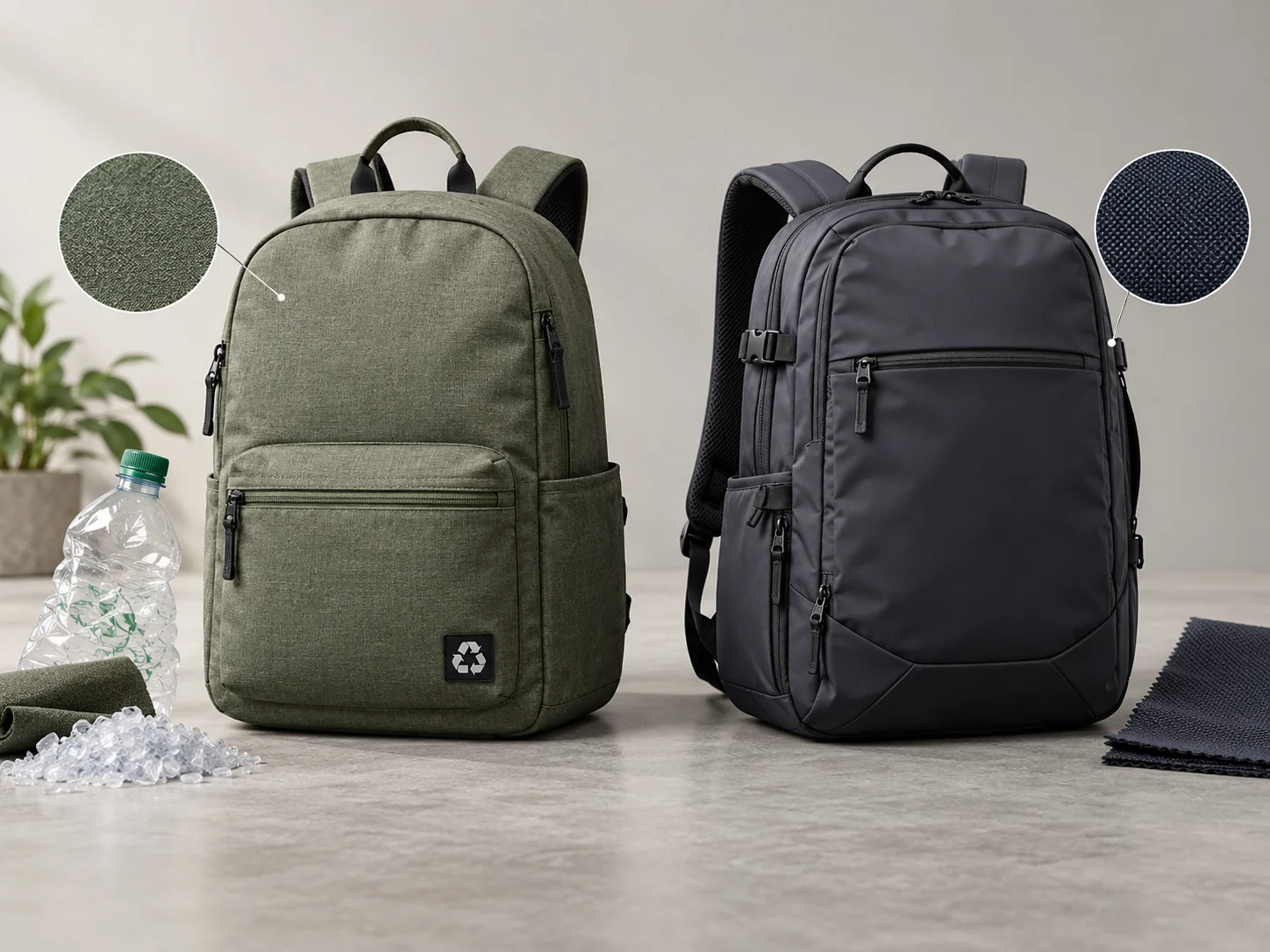
rPET means recycled plastic bottles and containers. Recycled polyester is almost the same. Both materials use old plastic again. This keeps trash out of landfills.
Here are some reasons to pick rPET and recycled polyester for bags:
| Property/Benefit | Description |
|---|---|
| GHG Reduction | Makes 60–70% less greenhouse gas than new plastic. |
| Energy Efficiency | Needs much less energy than new polyester. |
| Durability | Is strong and lasts as long as regular polyester. |
| Market Appeal | Shoppers like bags made from recycled stuff. |
Choosing these materials helps the planet. People in Europe and other places like them a lot. GRS certification shows your rPET bags are really recycled and made the right way.
Suitable Bag Types
You can use rPET and recycled polyester for many kinds of bags:
- Shopping totes
- Drawstring backpacks
- Cooler bags
- Cosmetic pouches
- Foldable grocery bags
These bags are tough and water-resistant. You can put your logo on them easily. If you want custom rPET bags, our team can help you pick the size, color, and style.
Recycled Cotton
Recycled cotton comes from old clothes or leftover fabric. It feels soft and natural. Many brands that care about the earth like it. It uses less water and energy than new cotton.
Let’s compare recycled cotton to other GRS materials:
| Aspect | Recycled Cotton | Other GRS Materials |
|---|---|---|
| Environmental Impact | Saves resources and cuts waste | Follows strict rules for waste and chemicals |
| Social Responsibility | Depends on factory practices | Must follow labor and safety standards |
| Performance | May be less durable, often blended | Usually strong and long-lasting |
Recycled cotton breaks down in nature. It is a good choice if you want a natural look and feel.
Suitable Bag Types
You will find recycled cotton in:
- Tote bags for shopping
- Drawstring gym bags
- Gift bags
- Messenger bags
These bags are great for brands that want a soft and green style. We can add your logo and design to recycled cotton bags.
Recycled Non-Woven
Recycled non-woven materials, like recycled polypropylene and recycled PET non-woven, are light and strong. They come from things like plastic bottles and packaging.
Here is why recycled non-woven bags are a smart pick:
| Advantage Type | Benefits |
|---|---|
| Environmental | Cuts landfill waste, uses less energy, and can break down in nature. |
| Economic | Costs less to make, so you save money and get more buyers. |
These bags are easy to shape and print. They are perfect for big orders and events.
Suitable Bag Types
You can use recycled non-woven for:
- Promotional tote bags
- Conference bags
- Reusable shopping bags
- Wine bottle carriers
If you need a lot of custom bags, recycled non-woven is a great choice. We have many shapes, sizes, and printing options for your brand.
Tip: Not sure which material is best for you? Ask us for samples! We will help you pick the best GRS certified bag for your project.
Recycled Felt
You might not think about felt when you picture eco-friendly bags, but recycled felt is a smart choice. This material comes from old plastic bottles, recycled polyester, or even leftover fabric scraps. Factories press and heat these fibers to make a soft, thick fabric. You get a material that feels cozy and looks modern. Recycled felt stands out because it is sturdy, flexible, and holds its shape well.
Why should you consider recycled felt for your bags? Here are some reasons:
- Eco-Friendly: You help keep plastic and fabric waste out of landfills. Every recycled felt bag saves resources and cuts pollution.
- Durable: Felt does not tear easily. It can handle heavy items and daily use.
- Unique Look: Felt has a soft, matte finish. It feels different from other fabrics. Your bag will look stylish and stand out.
- Custom Options: You can pick from many colors and thicknesses. Felt is easy to cut and sew, so you can create fun shapes and designs.
- Good for Printing: You can add your logo or artwork. The surface holds prints and embroidery well.
Tip: If you want a bag that feels special and eco-friendly, recycled felt is a great pick. You can show your customers you care about style and the planet.
Suitable Bag Types
Recycled felt works for many bag styles. You can use it for both simple and fancy designs. Here are some popular types:
| Bag Type | Why Felt Works Well |
|---|---|
| Tote Bags | Felt holds its shape and looks modern. |
| Laptop Sleeves | The thick fabric protects devices. |
| Gift Bags | Felt feels premium and can be reused. |
| Wine Carriers | The soft material cushions bottles. |
| Storage Baskets | Felt is sturdy and keeps its form. |
| Cosmetic Pouches | The fabric is gentle on delicate items. |
You can also try felt backpacks, organizers, or even lunch bags. Felt is easy to cut into custom shapes, so you can get creative with your designs.
As a custom bag manufacturer, we offer GRS certified recycled felt in many colors and thicknesses. You can choose the size, add your logo, and pick special features like zippers or pockets. If you want to see how felt looks and feels, just ask us for a sample. We help you create bags that match your brand and your green goals.
Note: Recycled felt bags make great gifts and promo items. They show your brand cares about quality and the environment. Your customers will notice the difference!
Buyer Document Checklist
Scope Certificate
You need to get the Scope Certificate first. This paper proves a supplier has GRS certification. It lists what products and steps are covered. You can see the company name, address, certificate number, and what they can make under GRS rules.
The Scope Certificate is your first checkpoint. If a supplier does not have it, find another partner. You can check if the certificate is real by searching the number in the GRS database. This helps you avoid fake claims and keeps your supply chain safe.
Tip: Always ask for the newest Scope Certificate. Certificates can expire or change. Make sure you see the current one.
Here’s what you’ll see on a Scope Certificate:
| Field | What It Means |
|---|---|
| Company Name | Who owns the certificate |
| Address | Where the factory is located |
| Certification Number | Unique ID for checking |
| Validity Dates | When the certificate is good |
| Product Scope | What products are included |
Transaction Certificate
The Transaction Certificate (TC) is proof for each batch. This paper shows your shipment meets GRS standards. You get a TC for every order, not just once. The TC lists batch details, supplier, buyer, product type, and recycled content percent.
Always ask for a TC with your order. Without it, you cannot prove your bags are GRS certified. Stores and inspectors will want to see this paper. The TC links the Scope Certificate to your real purchase.
Note: The TC is for each batch. If you buy more than one batch, you need a TC for each.
What’s inside a Transaction Certificate?
- Batch number
- Product description
- Quantity
- Recycled content percent
- Supplier and buyer info
- Certification body details
Manufacturer Certificate
You also need the Manufacturer Certificate. This paper shows the factory making your bags passed GRS checks. It proves the factory follows GRS rules for recycled content, worker safety, and chemical use.
Ask for this certificate before you order. It helps you check if the factory is good and meets GRS rules. You can use this certificate to check the factory’s name and address against the Scope Certificate.
Tip: If names or addresses do not match, ask questions. This helps you avoid mistakes and keeps your orders safe.
Here’s a quick checklist for buying teams:
- Get the Scope Certificate from your supplier.
- Ask for a Transaction Certificate for each batch.
- Request the Manufacturer Certificate before ordering.
- Check all names, addresses, and certificate numbers.
- Verify papers on the official GRS database.
You can use these papers to protect your brand and make sure your bags are really GRS certified. If you follow this checklist, you avoid fake green claims and build trust with your customers.
Document Verification
You have your certificates in hand. Now, how do you know they are real? You want to make sure your GRS documents are not fake. Many buyers skip this step and get into trouble later. Let’s walk through how you can check your certificates and protect your brand.
First, look at the details on each certificate. Every GRS document has important information. If something looks off, ask questions. Here’s what you should check:
| Key Element | Description |
|---|---|
| Certificate Number | A unique identifier for the transaction. |
| Issuing Body | The name of the certification agency (e.g., CU, ITS, SGS). |
| Supplier & Buyer Details | Your company’s name and address must be listed correctly as the “Buyer” or “Consignee”. |
| Product Description | Must accurately describe the shipped goods (e.g., “Backpacks made with GRS 50% rPET”). |
| Quantity | The weight or unit count must match your purchase order and delivery. |
| Supplier’s GRS Scope Certificate Code | The code that proves the factory is certified to handle GRS goods. |
You can use this table as a quick checklist every time you get a new certificate. If you see mistakes, stop and ask your supplier for an explanation.
Next, check the certificate number online. Most GRS certifying bodies have a public database. You can type in the certificate number and see if it matches the supplier and product. If you cannot find the number, the certificate might be fake.
Always check the name of the issuing body. Trusted names include Control Union (CU), ITS, SGS, TÜV Rheinland, and Bureau Veritas. If you see a name you do not know, look it up. A real certificate always comes from a well-known agency.
Look at the product description. It should match what you ordered. For example, if you ordered “GRS 50% rPET tote bags,” the certificate should say that. If it says something else, ask your supplier why.
Check the quantity. The number of bags or the weight should match your order and delivery. If the numbers do not match, you might have a problem.
Make sure your company’s name is on the certificate as the buyer or consignee. If another name is there, the certificate is not for your order.
Tip: Always keep copies of your certificates. Save them in a safe place. You might need them for audits or to show your customers.
If you follow these steps, you can feel confident your GRS bags are truly certified. You protect your brand and show your customers you care about honesty and quality. If you ever feel unsure, ask your supplier for help or contact the certifying agency directly. It is better to double-check now than to fix problems later.
Custom GRS Certified Bags
Size & Color
You want your bags to fit your needs and match your brand. With GRS certified bags, you can pick almost any size you want. Maybe you need small pouches for gifts or large totes for shopping. Custom bag makers can help you choose the right size for your project.
Color is just as important. You can select from a wide range of colors, including clear and custom shades. If you have a brand color, you can use the Pantone Matching System (PMS) to get the exact shade you want. This helps your bags stand out and look professional.
Here’s a quick look at your options:
| Customization Aspect | Details |
|---|---|
| Size | Custom sizes available |
| Color | Clear and custom colors via PMS |
Tip: If you are not sure which size or color works best, ask for samples. This way, you can see and feel the bag before you order in bulk.
Fabric & Weight
The fabric you choose changes how your bag looks and feels. GRS certified bags come in many materials, like heavy-duty canvas, organic cotton, rPET (recycled polyester), and even vegan leather. Each fabric has its own benefits. Canvas and cotton feel natural and strong. rPET is lightweight and water-resistant. Vegan leather gives a modern look.
You can also pick the weight of the fabric. Lighter fabrics work well for giveaways or events. Heavier fabrics are better for shopping or carrying heavy items. Custom bag makers help you pick the right fabric and weight for your needs.
| Fabric Option | Features |
|---|---|
| Canvas/Cotton | Durable, natural, eco-friendly |
| rPET | Lightweight, water-resistant, recycled |
| Vegan Leather | Modern, animal-free, stylish |
Note: All these fabrics meet GRS standards, so you know your bag is truly eco-friendly.
Logo Printing
You want your logo to look great on your bags. Custom GRS certified bags offer many printing options. You can choose simple one-color logos or full-color prints that cover the whole bag. Printing methods include silk screen, heat transfer, and embroidery. Each method gives a different look and feel.
Custom bag makers support bulk orders and can print your logo on thousands of bags. This is perfect for business events, promotions, or retail sales. You can boost your brand and make your bags stand out.
| Feature | Details |
|---|---|
| Customization Options | Flexible printing from simple logos to full-color all-over prints. |
| Minimum Order Quantity (MOQ) | Typically starts at 1,000 units, flexible based on material and printing complexity. |
| Printing Methods | Silk screen, heat transfer, embroidery. |
- High-quality logo printing helps your brand get noticed.
- Bulk orders save you money and time.
- GRS certification means your bags are both green and professional.
Want to see how your logo looks on a bag? Ask for a sample before you order. This helps you get the perfect look for your brand.
Handles & Zippers
Handles and zippers might seem like small details, but they can change how your bag looks and works. When you order custom GRS certified bags, you get to pick the handles and zippers that fit your needs. You can make your bags easy to carry, stylish, or even more secure.
Handle Options
You have many choices for handles. Here are some popular options:
- Short Handles: Great for hand-carry tote bags. These work well for gift bags or lunch totes.
- Long Shoulder Straps: Perfect for shopping bags or messenger bags. You can wear these over your shoulder.
- Drawstring Cords: Good for backpacks or gym bags. Just pull the cords to close the bag.
- Rope Handles: These look trendy and feel strong. Many brands use them for premium totes.
- Custom Colors or Materials: You can match the handle color to your brand or pick eco-friendly materials like recycled cotton or rPET.
Tip: If you want your bag to stand out, try two-tone handles or add padding for extra comfort.
Zipper Choices
Zippers help keep your items safe. You can choose from different zipper types:
| Zipper Type | Best For | Features |
|---|---|---|
| Standard Zipper | Totes, pouches, backpacks | Easy to use, many colors |
| Double Zipper | Travel bags, duffels | Opens from both ends |
| Hidden Zipper | Cosmetic bags, tech cases | Sleek look, protects contents |
| Recycled Zipper | Eco-friendly bags | Made from recycled materials |
You can also pick zipper colors, sizes, and even add branded zipper pulls with your logo.
Handles and zippers do more than just close a bag. They show off your style and make your bag easier to use. As a custom bag manufacturer, we help you pick the best options for your project. You can ask for samples to see and feel the handles and zippers before you order.
Packaging
Packaging matters more than you think. It protects your bags during shipping and makes a great first impression. With custom GRS certified bags, you can choose eco-friendly packaging that matches your brand values.
Here are some packaging options you can pick:
- Individual Polybags: Each bag comes in a clear recycled polybag. This keeps bags clean and ready for sale.
- Bulk Packing: Bags are packed together in cartons. This saves space and cuts down on waste.
- Custom Printed Boxes: You can add your logo or message to the box. This works well for gift sets or retail displays.
- Compostable Bags: For a greener choice, pick compostable or biodegradable packaging.
Note: Eco-friendly packaging helps your brand look responsible and modern. Many buyers and stores now ask for less plastic and more recycled materials.
You can also ask for special touches, like hang tags, care labels, or QR codes. These extras help tell your brand story and give customers more info about your GRS certified bags.
If you order in bulk, we can help you design packaging that fits your needs and budget. Just let us know what you want, and we’ll handle the rest. Your bags will arrive safe, stylish, and ready to impress.
Choosing a GRS Certified Manufacturer
Certification Status
You want to be sure your bag supplier is GRS certified. Start by checking their certification status. Good manufacturers will show you their Scope Certificate. This paper proves they follow GRS rules and use recycled materials. Look for the certificate number, company name, and valid dates. If you do not see these details, ask your supplier for them.
Check if the factory can use the GRS logo. To use the logo, bags need at least 50% recycled content. Some factories only meet the 20% minimum for business sales. If you want stronger proof, pick a supplier who offers 50% or more.
Here is a simple table to help you compare:
| Criteria | Description |
|---|---|
| Minimum Recycled Content | At least 20% for GRS certification scope |
| Stronger Claims | 50% or more for using GRS logo |
| Supply Chain Certification | All processing sites must be certified |
| Transaction Certificates | Needed for verifying shipments and recycled content |
Always ask for Transaction Certificates with your order. These papers prove your bags went through a certified supply chain. Factory certificates only show the company was checked. Transaction Certificates confirm your shipment is GRS certified.
Custom Order Experience
You want your bags to fit your brand and needs. Custom order experience is very important. A good GRS certified manufacturer will help you pick the right materials, sizes, and colors. They will guide you and answer your questions.
Find a supplier who can handle special requests. Maybe you need a unique logo, special handles, or a certain fabric weight. The best manufacturers offer flexible choices and clear answers. They will show you samples, explain printing, and help you pick features.
Check if the supplier can handle big orders. Some factories are small and cannot make many bags. Others have experience with large projects and deliver on time. Ask about their production size and how long it takes.
Tip: Pick a manufacturer who listens and helps you. This makes your custom bag project easy and stress-free.
Sample Availability
You want to see and touch your bags before you order many. Sample availability is important. Good GRS certified manufacturers will send you samples of materials, colors, and printing styles. You can check the quality, test strength, and make sure the bag fits your brand.
Here is what you should expect:
- Samples of recycled raw materials from certified recyclers.
- Yarn or fabric samples with traceability.
- Finished bag samples from the certified sewing factory.
You can ask for samples with your logo or custom features. This helps you avoid surprises and makes sure your bags look right. If a supplier cannot give samples, you may want to look for another.
Note: Samples help you make smart choices and build trust with your manufacturer. Always ask for them before placing a big order.
Bulk Order Support
When you plan to order thousands of GRS certified bags, you need a manufacturer who can handle bulk production with ease. You want your order to arrive on time, look great, and meet all GRS standards. Not every factory can manage big projects, so you should check a few key things before you choose your supplier.
First, ask about their production capacity. Reliable manufacturers will tell you how many bags they can make each month. They will share details about their machines, staff, and workflow. You can feel confident when you know your supplier has experience with large orders.
Next, look for clear communication. You want updates about your order, from design to delivery. Good suppliers answer your questions quickly and explain each step. They help you avoid surprises and keep your project on track.
Bulk order support often includes extra services that make your life easier. Many GRS certified manufacturers offer free design help, custom templates, and structure samples. You can see your bag’s shape and size before printing starts. This helps you fix problems early and get the perfect bag for your brand.
Here’s a quick table showing what you can expect from a top supplier:
| Feature | Description |
|---|---|
| Free Design Support | Flat & 3D View Mock Up |
| Free Custom Template | Request for a custom template |
| Free Structure Sample | Custom size without print |
You can also ask for print design support. Suppliers will help you create a logo or artwork that fits your bag. They send you flat design files and templates, so you can check every detail.
Tip: Always request a structure sample before you place a big order. You can touch and test the bag to make sure it meets your needs.
When you order in bulk, you save money and time. Manufacturers often give discounts for large orders. You get better prices and faster production. You can also customize your bags with special features, like handles, zippers, or packaging.
If you need help with bulk orders, our team is ready to support you. We offer free design mockups, custom templates, and structure samples. You can see your bag before production starts. We handle big projects and deliver on time. You get GRS certified bags that match your brand and your green goals.
Note: Bulk order support is more than just making lots of bags. It means you get expert help, clear communication, and quality every step of the way.
Buyer Mistakes to Avoid
Price Focus
You may think the cheapest bag is best. Many buyers make this mistake. If you only care about price, you might get bags that do not meet GRS standards. Cheap bags often come from factories without certification. You might save money at first, but you lose trust and quality. Your brand can get hurt if people find out your bags are not really recycled.
It is better to look at everything, not just price. Ask if the supplier has real GRS certificates. Can they show proof for each batch? Quality is more important than price. Good suppliers give fair prices and real certificates. You protect your brand when you choose value over cost.
Tip: If a price is very low, check the supplier’s certificates and ask for samples.
Document Neglect
You must check documents every time you buy GRS certified bags. Some buyers skip this step. They trust what the supplier says or accept photos of certificates. This mistake can cause big problems. Fake certificates are common. If you do not check documents, you might buy bags that are not certified.
Always ask for original GRS certificates. Check the certificate number on the agency’s website. Make sure the supplier’s name matches the certificate. Look for Transaction Certificates for each batch. These papers prove your bags are really GRS certified.
Here is a simple table to help you avoid document mistakes:
| Common Mistakes | Solutions |
|---|---|
| Working with uncertified manufacturers | Always ask for real GRS certificates and check them online. |
| Neglecting proper communication | Use pictures and feedback to explain details and problems. |
| Failing to implement a quality control plan | Make a QC plan using ISO rules and write cost rules in contracts. |
Note: Keeping good records helps you pass audits and builds trust with stores.
MOQ Ignorance
MOQ means Minimum Order Quantity. You need to know the MOQ before you order. Some buyers forget this and try to order too few bags. Suppliers may say no or charge extra fees. If you do not check the MOQ, you waste time and money.
Ask your supplier about their MOQ for each material and printing style. Some factories have different MOQs for custom colors or logos. If you want a small batch, find suppliers with flexible MOQs. This helps you plan your budget and avoid surprises.
- Always check the MOQ before you order.
- Ask if the MOQ changes for custom features.
- Plan your order size to fit your needs.
Tip: If you are not sure about MOQ, ask for a sample first. This helps you check quality before you order many bags.
You avoid mistakes when you check price, documents, and MOQ. These steps help you get real GRS certified bags and protect your brand.
Material Choice
You might think all recycled materials are the same. That’s a big mistake. Picking the wrong material can hurt your brand and waste your money. You need to know which materials work best for your bags and your customers.
Let’s break it down. GRS certified bags use different recycled materials. Each one has its own strengths and weaknesses. If you choose the wrong material, your bag might tear, look cheap, or feel uncomfortable. You want your bags to last and look good.
Here’s a quick table to help you compare:
| Material | Best For | Watch Out For |
|---|---|---|
| rPET/Polyester | Shopping, sports, promo | Can feel stiff, not natural |
| Recycled Cotton | Fashion, gifts, retail | May shrink, less durable |
| Non-Woven | Events, giveaways | Not as strong, limited reuse |
| Recycled Felt | Premium, tech, gifts | Can be thick, higher cost |
You need to match the material to your bag’s purpose. If you want strong bags for shopping, rPET works well. If you want soft bags for gifts, recycled cotton feels better. Non-woven bags are cheap and light, but they don’t last as long. Recycled felt looks stylish and protects items, but it costs more.
Tip: Always ask your supplier for material samples. Touch and test them. You can see how the fabric feels, how it holds your logo, and how strong it is.
Some buyers forget about the material’s impact on printing. If you want a bright logo, polyester and felt hold colors well. Cotton gives a natural look, but prints can fade. Non-woven bags work for simple designs.
You also need to check if the material meets GRS rules. Some suppliers mix recycled and new materials. That’s not allowed. You want real GRS certified fabric. Ask for proof.
Here are some mistakes you should avoid:
- Picking the cheapest material without testing it.
- Ignoring how the bag will be used.
- Forgetting to check if the material is truly GRS certified.
- Not asking for samples before ordering.
You can make smarter choices by learning about each material. Ask questions. Test samples. Match the material to your brand and your customer’s needs. Your bags will look better, last longer, and help your brand stand out.
Note: The right material makes your bag feel special. It shows you care about quality and the planet.
Conclusion
Now you know what GRS Certification is and why it is important for people who buy recycled bags. GRS Certification helps people trust your brand. It also makes sure you follow the rules and buy from good sources. Always look at the right papers and pick manufacturers with certification. Try not to make common mistakes so your brand stays strong.
Need Custom Recycled Bags for Your Brand?
GRS Certification helps buyers choose recycled bags with more reliable material sources and better supply chain transparency. If you are looking for recycled tote bags, rPET bags, shopping bags, or other eco-friendly custom bags, we can help.
INITI is a custom bag manufacturer. We support material selection, logo customization, sample development, and bulk production for brands, retailers, wholesalers, and promotional projects.
Contact Us for Custom Recycled BagsFAQ
What does GRS stand for?
GRS stands for Global Recycled Standard. You use it to check recycled content in products and make sure factories follow strict rules.
How do you know if a bag is GRS certified?
You ask your supplier for a Scope Certificate and a Transaction Certificate. These papers prove your bag meets GRS rules.
Can you use your logo on GRS certified bags?
Yes, you can print your logo on GRS certified bags. You pick the printing style and colors that fit your brand.
What materials can you use for GRS certified bags?
You can choose rPET, recycled polyester, recycled cotton, recycled non-woven, or recycled felt. Each material works for different bag types.
Why do retailers ask for GRS certificates?
Retailers want proof your bags use real recycled materials. GRS certificates help them trust your brand and avoid fake green claims.
How do you check if a GRS certificate is real?
You look up the certificate number on the certifying agency’s website. Trusted names include Control Union, SGS, and TÜV Rheinland.
What is the minimum recycled content for GRS certified bags?
You need at least 20% recycled content for business sales. If you want the GRS logo on your bag, you need 50% or more.
Can small businesses get GRS certified bags?
Yes, small businesses can order GRS certified bags. You pick the material, size, and logo. Custom bag makers help you with samples and bulk orders.