
Introduction
Business travelers often need to carry two very different types of items at the same time:
- Formal clothing that should stay as flat as possible
- Everyday travel items that need compact storage
This creates a structural problem.
A traditional suit bag is designed mainly to protect:
- Suits
- Shirts
- Dresses
- Formal jackets
A garment duffle combines a garment section with a duffel-style travel compartment.
The two products may serve the same traveler, but they solve the problem differently.
In general:
Suit bags prioritize garment protection.
Garment duffles prioritize packing efficiency and multi-function travel.
For B2B buyers, the right structure depends on:
- Trip length
- Number of garments
- Packing volume
- Carrying method
- Target price
- User expectations
What Is a Suit Bag?
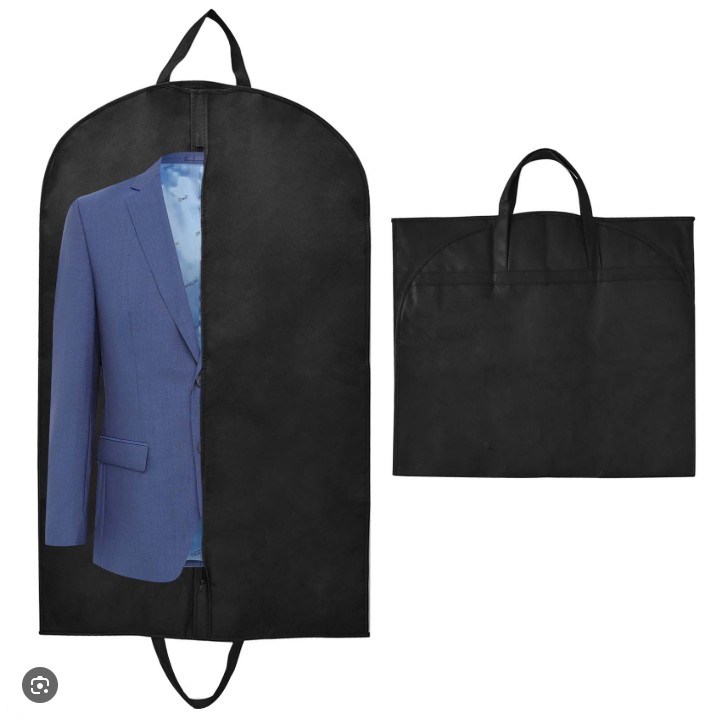
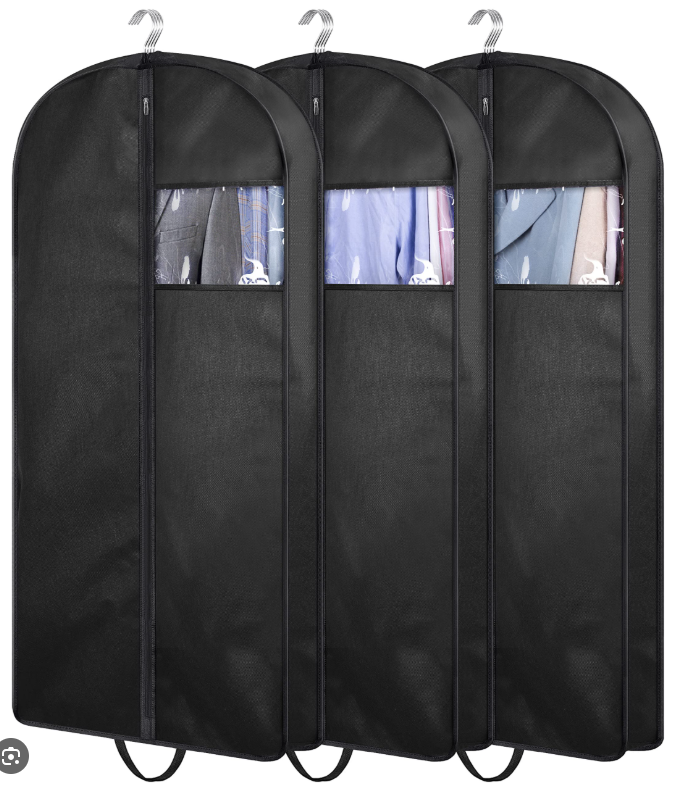
A suit bag, also called a garment bag or suit carrier, is designed to hold clothing in a relatively flat or hanging position.
Common contents include:
- Business suits
- Dress shirts
- Formal dresses
- Uniforms
- Jackets
The bag typically includes:
- Full-length garment panel
- Zipper closure
- Hanger opening or hanger loop
- Carry handles
Some designs also include:
- Shoulder strap
- Shoe pocket
- Accessory pockets
- Foldable structure
The primary function is simple:
Keep formal garments separated and reduce excessive folding during travel.
What Is a Garment Duffle?
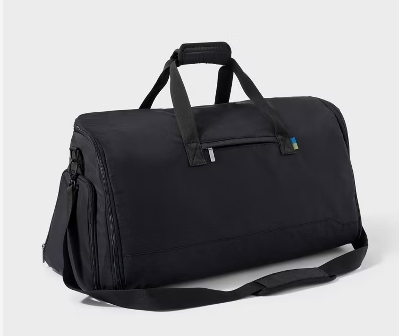
A garment duffle is a hybrid product.
When opened flat, it works like a garment carrier.
The user places formal clothing inside the garment panel and then folds or rolls the structure into a duffel-shaped bag.
Once assembled, the center space becomes a compartment for:
- Shoes
- Toiletries
- Casual clothing
- Accessories
This creates one travel bag that combines:
garment storage + duffel storage
Garment duffles are especially useful for short business trips where the traveler wants to avoid carrying:
- One suitcase
- One garment bag
at the same time.
Quick Comparison
| Factor | Suit Bag | Garment Duffle |
|---|---|---|
| Suit Protection | Very good | Good |
| Wrinkle Control | Better | Good |
| Main Packing Capacity | Limited | Higher |
| Shoe Storage | Optional | Often included |
| Toiletry Storage | Limited | Better |
| Carrying Style | Flat/folded | Duffel |
| Structure Complexity | Simpler | More complex |
| Product Weight | Usually lower | Usually higher |
| Cost | Lower to medium | Medium to higher |
| Best For | Formalwear-focused travel | Short multi-purpose business trips |
1. Garment Protection
This is the biggest difference.
A suit bag is designed around the garment itself.
The clothing remains relatively flat because the product does not need to transform into another bag shape.
This is useful for:
- Suits
- Formal jackets
- Dresses
- Uniforms
where wrinkle control is the primary concern.
A garment duffle also protects formal clothing, but the garment section must wrap around the duffel body.
This introduces more curvature and folding.
For most short business trips, this may be acceptable.
For highly wrinkle-sensitive garments, a traditional suit bag usually provides better protection.
2. How the Suit Is Positioned
Suit Bag
The garment normally lies:
- Flat
- Folded once
- Hung inside the bag
depending on the product structure.
The main advantage is that there are fewer forced folds.
Garment Duffle
The garment is first laid into a flat panel.
The panel is then folded around the center duffel section.
This means the suit follows the shape of the finished bag.
The better the internal construction, the smoother this curve can be.
3. Wrinkle Control
Neither product can guarantee wrinkle-free clothing.
Wrinkling also depends on:
- Fabric
- How tightly the bag is packed
- Garment thickness
- Packing technique
However, the structure still matters.
A suit bag generally provides better wrinkle control because the garment experiences fewer compression points.
A garment duffle works well when the user values:
- Convenience
- Compact travel
more than maximum garment-flatness.
4. Packing Capacity
This is where the garment duffle has a clear advantage.
A standard suit bag may carry:
- One or two suits
- Several shirts
- Small accessories
but usually offers limited space for the rest of the trip.
A garment duffle can also carry:
- Underwear
- Casual clothing
- Shoes
- Toiletries
- Chargers
- Small travel items
This makes it closer to a complete weekend travel bag.
5. Best for One- or Two-Night Business Trips
For short trips, a garment duffle can be particularly useful.
A traveler may need:
- One suit
- Two shirts
- One pair of shoes
- Casual clothing
- Toiletries
A garment duffle can often carry all of these in one bag.
This reduces the need for a separate:
- Suit carrier
- Duffel
- Small suitcase
For this use case, the hybrid structure provides strong practical value.
6. Best for Formalwear-Heavy Travel
A traditional suit bag is better when the trip revolves around formal garments.
For example:
- Weddings
- Trade shows
- Corporate events
- Formal meetings
- Uniform transport
If the traveler needs several:
- Suits
- Jackets
- Dresses
the flat garment-focused structure is usually more practical.
7. Shoe Storage
Shoes create an important packing challenge.
They are:
- Bulky
- Dirty
- Structurally rigid
Many garment duffles include a dedicated shoe compartment.
This helps separate shoes from:
- Suits
- Shirts
- Clean clothing
A traditional suit bag may include a shoe pocket, but internal volume is more limited.
For short business travel, the garment duffle often handles shoes more efficiently.
8. Toiletry Storage
Suit bags are not usually designed around toiletries.
Some include small zipper pockets, but capacity is limited.
Garment duffles can include:
- Side zipper pockets
- Internal mesh pockets
- Toiletry sections
This makes them more suitable as an all-in-one travel bag.
9. Laptop Storage
Some business travelers also need to carry a laptop.
This feature is not automatically included in either structure.
However, larger garment duffles may integrate:
- Laptop sleeve
- Document pocket
A suit bag can also include a flat document or laptop compartment, but the design must avoid creating pressure against the garments.
For corporate travel products, laptop storage should be considered separately rather than assumed.
10. Carrying Comfort
Suit Bag
Common carrying methods include:
- Top handles
- Shoulder strap
When folded, the bag may have a broad flat shape.
This works well for short movement between:
- Airport
- Hotel
- Car
- Office
Garment Duffle
Carries like a standard duffel.
It may include:
- Handles
- Shoulder strap
- Trolley sleeve
This often feels more natural for travelers carrying the bag through airports or train stations.
11. Trolley Compatibility
Business travelers frequently use rolling luggage.
Both products can include a luggage sleeve, but the feature is more common in modern garment duffles.
A trolley sleeve allows the bag to sit on:
- Suitcase handle
This reduces shoulder load during longer airport walks.
For business-travel programs, this is a practical feature worth considering.
12. Product Weight
Suit bags are generally lighter because their construction is simpler.
They require:
- Less fabric
- Fewer pockets
- Less reinforcement
Garment duffles include:
- Main duffel compartment
- Garment panel
- Zippers
- Handles
- Shoulder strap
- Reinforcement
This increases finished weight.
For travelers trying to minimize carry-on weight, the difference can matter.
13. Construction Complexity
A traditional suit bag is relatively straightforward.
Typical components include:
- Main body
- Garment zipper
- Handles
- Hanger opening
A garment duffle requires more precise pattern development.
The structure must work in two conditions:
- Fully opened garment mode
- Closed duffel mode
This requires careful alignment of:
- Zippers
- Corners
- Side panels
- Handles
Poor pattern development can make the bag difficult to close once packed.
14. Zipper Design
Zippers play a major role in garment duffles.
The garment panel often uses a long zipper around the outer edge.
When zipped, this creates the duffel body.
The zipper must tolerate:
- Curved corners
- Repeated opening
- Bag tension
For this reason, zipper quality matters more than in a simple garment bag.
Suit bags usually use simpler zipper layouts.
15. Material Options
Both structures can use materials such as:
- Polyester
- Nylon
- RPET polyester
- Canvas
- PU
However, material choice should match the structure.
Polyester
Polyester is practical for both products.
Advantages include:
- Competitive cost
- Good durability
- Easy customization
600D or lighter polyester constructions are common for travel bags.
Nylon
Nylon is useful when buyers prioritize:
- Lower weight
- Flexibility
- Abrasion resistance
It works especially well for premium travel products.
RPET
RPET polyester can be used for buyers requiring:
- Recycled-material programs
- Corporate sustainability positioning
Its suitability still depends on:
- Fabric weight
- Coating
- Construction
PU
PU can create a more business-oriented appearance.
It may be used for:
- Handles
- Panels
- Full exterior surfaces
However, full-PU garment duffles can become:
- Heavier
- More expensive
Material quality should also be tested for repeated folding.
16. Internal Lining
Garment sections usually benefit from smooth lining.
The lining should reduce friction against:
- Suits
- Shirts
- Dresses
Common options include:
- Polyester
- RPET polyester
The interior should avoid rough surfaces that may catch delicate garments.
17. Structure and Reinforcement
A garment duffle needs enough structure to hold its shape once zipped.
Possible reinforcement may include:
- Padded side panels
- Reinforced ends
- Bottom board
- Internal binding
However, too much reinforcement can make the bag:
- Heavy
- Difficult to fold flat
The design needs a balance between structure and flexibility.
18. Does a Garment Duffle Replace a Suitcase?
For short trips, sometimes yes.
A garment duffle can work well for:
- One night
- Two nights
- Weekend business travel
For longer trips, capacity may become limited.
A suitcase usually remains more practical when the traveler needs:
- Multiple outfits
- Several shoes
- Larger toiletries
- More equipment
A garment duffle is best viewed as a compact business-trip solution rather than a universal suitcase replacement.
19. Does a Suit Bag Replace a Travel Bag?
Usually not.
A suit bag is more specialized.
It protects formal clothing but offers limited storage for:
- Everyday clothing
- Toiletries
- Travel accessories
It is often used together with:
- Carry-on suitcase
- Backpack
- Duffel
This is less convenient but provides better formalwear organization.
20. Which Structure Is Better for Air Travel?
That depends on the packing priority.
Choose a suit bag when:
- Garment protection matters most
- The traveler already carries separate luggage
Choose a garment duffle when:
- One-bag travel matters
- The trip is short
- The traveler wants combined garment and luggage storage
Airline carry-on limits should always be checked separately because size rules vary by carrier.
21. Which Is Better for Train or Car Travel?
For car and train travel, both structures work well.
Suit bags are easier when:
- Garments can remain relatively flat
- Storage space is available
Garment duffles are more convenient when:
- The traveler needs to move frequently
- One compact bag is preferred
The difference becomes more about carrying convenience than luggage restrictions.
22. Which Is Better for Corporate Gifts?
Corporate travel programs often prioritize:
- Practicality
- Branding
- Perceived value
A simple suit bag can be a useful lower-cost corporate gift.
A garment duffle usually has higher perceived value because it provides:
- Multiple functions
- More storage
- More complex construction
It works well for:
- Executive gifts
- Sales teams
- Frequent travelers
23. Which Is Better for Hotels and Airlines?
For hotels and airlines, the product choice depends on purpose.
A suit bag may work well for:
- Guest wardrobe services
- Formalwear transport
- Hotel garment protection
A garment duffle may work better as:
- Premium merchandise
- Travel gift
- Loyalty-program accessory
Cost Comparison
In general, suit bags are less expensive to manufacture.
They use:
- Simpler patterns
- Fewer components
- Less hardware
Garment duffles cost more because they require:
- More fabric
- Long zippers
- Additional pockets
- Stronger handles
- More sewing operations
For large B2B programs, this difference can become significant.
Suit Bag vs Garment Duffle: Which Is Easier to Manufacture?
Suit bags are usually simpler.
They are easier to:
- Develop
- Sample
- Produce
Garment duffles require more accurate development because the opened garment panel must convert correctly into the closed duffel shape.
Small pattern errors can create:
- Difficult zipping
- Poor shape
- Reduced capacity
For OEM projects, garment duffle samples should be tested fully loaded.
What Should Buyers Test During Sampling?
Garment Fit
Place an actual:
- Suit
- Jacket
- Shirt
inside the product.
Check whether garments fit without excessive compression.
Wrinkle Performance
Pack the product as intended and inspect the garment after travel-style handling.
Duffel Capacity
For garment duffles, load:
- Clothing
- Shoes
- Toiletries
at the same time.
Zipper Operation
The bag should close without excessive force.
Carrying Comfort
Test:
- Handles
- Shoulder strap
- Loaded balance
Shape
Check whether the garment duffle becomes distorted when fully packed.
Common Buyer Mistakes
1. Assuming a Garment Duffle Protects Suits Exactly Like a Flat Suit Bag
Its hybrid structure naturally creates more curvature and compression.
2. Making the Duffle Compartment Too Large
More volume sounds attractive, but too much packing can compress the garment section.
3. Ignoring Shoe Placement
Shoes should not press directly against formal clothing.
4. Using Weak Long Zippers
Garment duffles place substantial tension on perimeter zippers.
5. Adding Too Many Features
Extra pockets can increase:
- Weight
- Cost
- Complexity
without improving the core business-travel function.
Practical Product Recommendations
Formal Business Travel
Structure: Traditional suit bag
Priority: Garment protection + low weight
Suitable for:
- Formal meetings
- Conferences
- Events
One-Night Business Trip
Structure: Garment duffle
Priority: One-bag packing + suit storage
Suitable for:
- Short domestic travel
- Sales visits
- Overnight meetings
Executive Corporate Gift
Structure: Premium garment duffle
Material: Polyester, nylon or PU combination
Priority: Function + perceived value
Hotel Garment Storage
Structure: Traditional suit bag
Priority: Garment protection + simple operation
Which Structure Should Buyers Choose?
Choose a suit bag when:
- Suit protection is the primary requirement
- Multiple formal garments are carried
- The traveler already uses another luggage piece
- Lower product weight matters
- Simpler construction and lower cost are preferred
Choose a garment duffle when:
- Short-trip versatility matters
- The traveler wants one main bag
- Shoes and toiletries need dedicated space
- Higher perceived value is important
- Additional product complexity is acceptable
Custom Suit Bags and Garment Duffles from INITI
INITI develops custom garment and business-travel bags for:
- Corporate programs
- Travel brands
- Hotels
- Retailers
- Promotional projects
Available product structures can include:
- Foldable suit bags
- Full-length garment bags
- Convertible garment duffles
- Business travel duffles
Material options can include:
- Polyester
- Nylon
- RPET
- Canvas
- PU
Customization can include:
- Garment compartments
- Shoe pockets
- Accessory pockets
- Shoulder straps
- Trolley sleeves
- Handles
- Zippers
- Logo printing
- Embroidery
- Packaging
For development, buyers can provide:
- Intended trip length
- Number of garments
- Required duffel capacity
- Preferred material
- Estimated quantity
- Target price
This helps determine whether a simple suit carrier or a convertible garment duffle provides the better solution.
FAQ
What is the difference between a suit bag and a garment duffle?
A suit bag primarily protects hanging or folded formalwear, while a garment duffle combines a garment section with a duffel-style storage compartment.
Which is better for keeping suits wrinkle-free?
A traditional suit bag generally provides better wrinkle control because garments remain flatter.
Is a garment duffle good for business travel?
Yes. It is particularly practical for one- or two-night business trips where the traveler wants to carry a suit, shoes and everyday items in one bag.
Can a garment duffle replace a carry-on suitcase?
For short trips, it often can. For longer trips, a conventional suitcase usually provides more capacity.
Which structure is lighter?
Suit bags are generally lighter because they use simpler construction and fewer components.
Which is more expensive to manufacture?
Garment duffles are generally more expensive because they require more fabric, zippers, pockets and sewing operations.
Should a garment duffle include a shoe compartment?
It is often useful for business travel because it keeps footwear separated from clean garments.
Which is better for corporate gifts?
Both can work. Suit bags are more economical, while garment duffles generally offer higher perceived value.
Conclusion
Suit bags and garment duffles solve two different business-travel problems.
A suit bag prioritizes:
- Formalwear protection
- Lower weight
- Simpler construction
- Lower cost
A garment duffle prioritizes:
- One-bag travel
- Higher packing capacity
- Shoe and toiletry storage
- Greater versatility
For travelers carrying several formal garments, a traditional suit bag remains the better structure.
For short business trips where one suit must travel together with everyday essentials, a garment duffle can provide a more efficient solution.
The right decision should therefore be based on:
garment protection + trip length + packing capacity + carrying convenience + target price
rather than assuming that the more complex design is automatically better.


