
A buyer sends us an inquiry: “We need waterproof canvas bags. Can you quote?”
This is one of the most common — and most ambiguous — requests we receive. “Waterproof canvas” is not one material. It can mean waxed cotton canvas, polyurethane (PU) coated canvas, PVC coated canvas, or acrylic coated canvas. Each performs differently, looks different, costs differently, and suits different products.
Choosing the wrong one doesn’t just affect the bag’s performance. It changes the brand’s positioning, the production timeline, the environmental story, and the customer’s long-term experience.
This guide compares waxed canvas and coated canvas across every dimension that matters for a bag project: waterproof performance, appearance and aging, durability, printing, sustainability, cost, and which bag types each material suits best.
Why Buyers Often Confuse Waxed Canvas and Coated Canvas
The confusion is understandable. Both materials start with cotton canvas. Both are modified to resist water. And both are described in product listings using the same vague term: “waterproof canvas.”
But the path from raw canvas to water-resistant fabric is completely different.
- Waxed canvas is created by impregnating cotton fibers with wax — the wax penetrates into the yarn itself, filling the spaces between fibers.
- Coated canvas is created by applying a synthetic polymer layer to one or both sides of the fabric — the coating sits on top of the fibers like a skin.
The production process, the look, the feel, the aging pattern, the printability, the environmental profile — all of it diverges from that single difference: inside the fiber vs. on top of the fiber.
For a brand making a purchasing decision, mistaking one for the other leads to disappointing samples, unexpected costs, and a product that doesn’t match the original vision.
What Is Waxed Canvas?
Waxed canvas has been around since the 15th century, when sailors discovered that treating sailcloth with oil and wax made ships faster (wet sails are heavier) and fabric last longer in saltwater conditions. The material evolved into the waxed cotton of British motorcycle jackets, the tin cloth of American hunting gear, and the heritage bag fabric used by brands like Filson, Barbour, and Frost River.
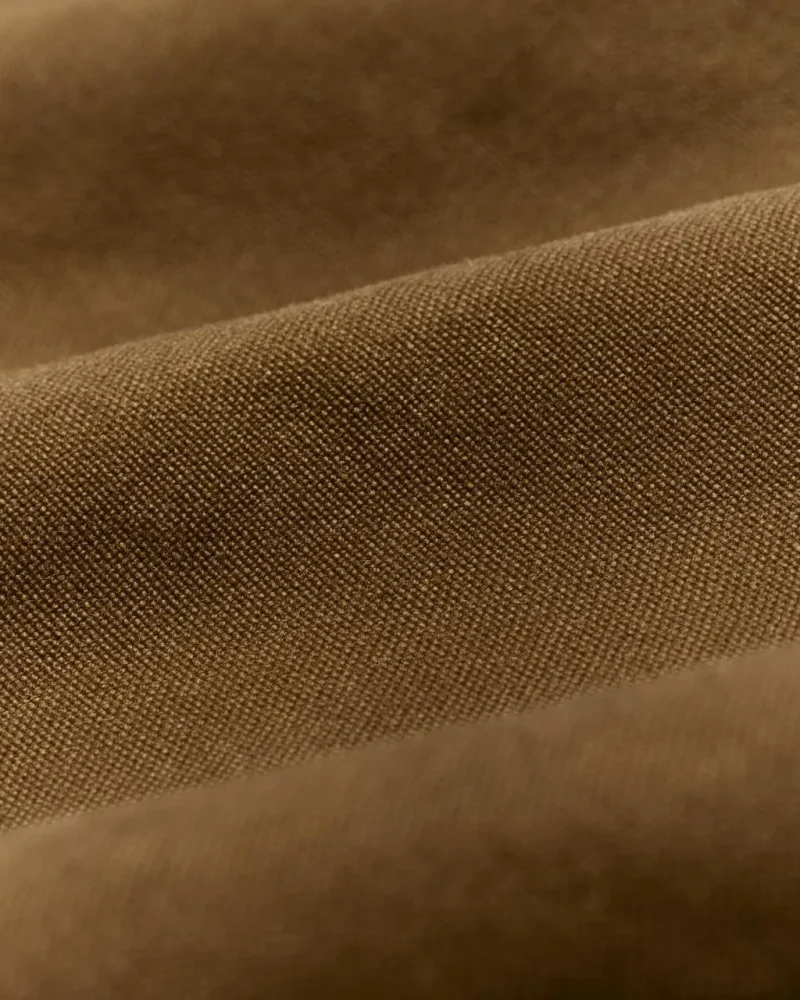
How Waxed Canvas Is Made
The production process is straightforward but labor-intensive:
Cotton Canvas
      ↓
Wax Application (paraffin, beeswax, or oil-wax blend)
      ↓
Heating (melts wax into fiber structure)
      ↓
Cooling (wax solidifies within fibers)
      ↓
Finished Waxed Canvas
The wax is not a coating. It permeates the cotton fibers. This is the fundamental difference between waxed and coated canvas: the water barrier is inside the material, not on top of it.
Common wax formulations include paraffin wax (most common industrial option), beeswax (premium, natural, softer finish), and oil-wax blends (used for traditional “oilskin” fabrics). Some modern formulations use plant-based waxes for brands prioritizing natural materials.
Dry-finish waxed canvas has the wax heat-set after application, leaving a matte, slightly tacky surface. Wet-finish waxed canvas incorporates the wax during the dyeing or finishing stage, resulting in a drier, smoother surface.
The key takeaway for buyers: wax penetrates the fiber. It does not form a surface film. This distinction explains everything that follows — how waxed canvas ages, how it feels, why it can’t hold certain types of printing, and why it requires maintenance.
What Is Coated Canvas?
Coated canvas is canvas fabric — typically cotton or cotton-blend — that has been treated with a synthetic polymer layer applied to one or both sides.

The most common coating types used in bag manufacturing:
- PU (polyurethane) coating: The most widely used coating in the bag industry. Applied as a thin, flexible layer to the back of the canvas. The face side looks and feels like normal canvas. The back side is smooth and slightly rubbery. PU-coated canvas provides good water resistance while maintaining a natural fabric appearance.
- PVC (polyvinyl chloride) coating: A thicker, glossier, fully waterproof layer. PVC-coated canvas feels unmistakably synthetic. It’s heavier than PU-coated canvas and is used for cooler bags, industrial bags, and extreme-duty applications.
- Acrylic coating: A lighter, more breathable alternative. Less water-resistant than PU or PVC but maintains the most natural fabric feel. Common in outdoor furniture; less common in bags.
- TPU (thermoplastic polyurethane) coating: A newer, more environmentally conscious alternative to PVC. TPU is fully recyclable, free of chlorine and plasticizers, and offers similar waterproof performance to PVC with less environmental impact.
Different coating technologies create different levels of waterproofness, flexibility, printability, and environmental performance. For a deeper dive into coating types, see our guide: [Types of Coatings Used in Coated Canvas for Bags].
Waxed Canvas vs Coated Canvas: Side-by-Side Comparison
| Feature | Waxed Canvas | Coated Canvas (PU/PVC) |
|---|---|---|
| Waterproof Performance | Water-resistant, not fully waterproof. Beads water when wax is fresh; performance fades over time. | PU: water-resistant. PVC: fully waterproof. Performance is consistent over the coating’s lifetime. |
| Breathability | Moderate. Wax fills gaps between fibers but doesn’t create an impermeable membrane. | Low to none. PU blocks most vapor transfer. PVC is completely non-breathable. |
| Appearance | Matte, natural, slight sheen. Develops unique patina over time. Color shifts at crease points. | PU face: identical to untreated canvas. PVC: glossy, synthetic. No patina — appearance stays uniform. |
| Texture | Slightly waxy, cool to the touch, becomes tacky when warm. Softens with use. | PU face: feels like canvas. Coated back: smooth, rubbery. PVC: cold, smooth, plastic-feeling. |
| Aging | Develops character — creases, lighter wear marks, color variation. A 5-year-old bag looks better than new. | PU: degrades over 3–7 years — eventually peels and flakes. PVC: can become brittle. No graceful aging. |
| Scratch Resistance | Shows scratches as lighter marks — part of the character. Can be re-waxed to blend. | PU: scratches damage the coating permanently. PVC: scratches are visible and cannot be repaired. |
| Flexibility | Flexible, especially when warm. Stiffens in cold weather. | PU: flexible across temperature range. PVC: less flexible, can crack when folded. |
| Weight | Similar to untreated canvas of the same weight. Wax adds minimal mass. | PU: slightly heavier than untreated canvas. PVC: significantly heavier — the coating itself adds weight. |
| Printing | Limited. Wax surface interferes with ink adhesion. Screen printing and heat transfer do not bond well. | Excellent on the uncoated face side. Screen printing, DTG, and heat transfer work well. |
| Maintenance | Requires periodic re-waxing (annually for daily-use bags). Cannot be machine washed — detergent strips wax. | Wipe clean with a damp cloth. No ongoing maintenance. Cannot be restored once coating begins to fail. |
| Cost | Higher material and labor cost. Waxing is a relatively manual process. | PU: moderate. PVC: higher than PU. Overall production costs are usually lower than waxed canvas for large runs. |
| Sustainability | Natural waxes are biodegradable. Waxed canvas can be re-waxed, extending lifespan. Cotton base is renewable. | PU: synthetic, not biodegradable. PVC: problematic — contains chlorine and plasticizers. TPU: more sustainable alternative to PVC. |
| Typical Applications | Heritage bags, premium totes, outdoor gear, tool rolls, messenger bags, fashion accessories | Everyday totes (PU), cooler bags (PVC), industrial bags, promotional bags, bags requiring consistent appearance |
Waterproof Performance: Which One Performs Better?
Three terms are often used interchangeably but mean different things:
- Water resistant: The fabric can resist light moisture — a few drops of rain, a damp hand. Water will eventually soak through under sustained exposure.
- Water repellent: Water beads on the surface and rolls off. The fabric resists penetration better than water-resistant, but will still wet through under pressure or prolonged exposure.
- Waterproof: Water cannot penetrate the fabric under specified conditions. Truly waterproof bags require sealed seams in addition to waterproof fabric.
Waxed canvas is water repellent when the wax is fresh. Water beads on the surface. But the wax wears away over time — at fold lines, friction points, and areas that flex repeatedly. After several months of daily use, a waxed canvas bag will start to soak through at the creases. Re-waxing restores water repellency. This is maintenance-dependent performance: the material works as long as you maintain it.
PU-coated canvas is water resistant to water repellent. The PU layer on the back of the fabric blocks water penetration, but the seam needle holes let water through unless they’re sealed (which most bag seams are not). Rain and splashes — fine. Submersion or sustained heavy rain — water will find the seams.
PVC-coated canvas is waterproof when seams are welded or taped. It’s the only option for bags that will be exposed to standing water, heavy sustained rain, or submersion. Cooler bags, dry bags, and industrial wet-environment bags use PVC-coated canvas for this reason.
A factory perspective: Most customers who ask for “waterproof canvas” actually need water-repellent or water-resistant canvas. They want a bag that survives rain on the walk from the car to the office, not a bag that can be submerged in a river. Clarifying the actual use condition saves money and produces a better product.
Appearance and Aging
This is the dimension where waxed and coated canvas diverge most dramatically — and the one that determines which brands choose which material.
Waxed Canvas: A Material That Improves With Age
Waxed canvas develops a patina. The wax wears at friction points — corners, fold lines, handle attachment points — creating lighter areas and a weathered, lived-in appearance. Each bag becomes unique. A 5-year-old waxed canvas bag looks richer and more characterful than a new one.
This aging quality is a selling point for heritage and premium brands. The patina tells a story. The bag doesn’t hide its age — it celebrates it. Brands that position themselves around craftsmanship, durability, and authenticity gravitate toward waxed canvas for this reason.
The trade-off: the bag will not look the same on day 500 as it did on day one. For brands that need consistent, uniform product appearance across every unit sold, this is a problem. For brands that market the uniqueness of each bag, it’s the core value proposition.
Coated Canvas: Consistent Appearance, Finite Lifespan
PU-coated canvas maintains a uniform appearance. A bag bought today will look like a bag bought next year. The coating keeps the fabric’s surface consistent, and there’s no patina, no color shift, no visible wear pattern — until the coating begins to fail.
When PU coating degrades (typically 3–7 years depending on conditions), it peels, cracks, and flakes. It doesn’t fade gracefully. It fails. The bag becomes unusable not because the canvas broke down, but because the coating did.
PVC-coated canvas has a glossy, synthetic look that remains consistent for years. It doesn’t develop character — it either looks the same or, eventually, cracks.
What we tell brands: If your product’s value proposition includes “gets better with age,” choose waxed canvas. If your product needs to look identical in every retail photo and unboxing video, choose coated canvas. Neither is wrong — they’re just communicating different things.
Durability and Maintenance
Abrasion Resistance and Scratch Behavior
Waxed canvas resists abrasion well because the wax lubricates the cotton fibers, reducing internal friction when the fabric flexes. Scratches appear as lighter marks in the wax — they blend into the patina over time and can be reduced by re-waxing.
PU-coated canvas resists abrasion on the coated side moderately well. The face side (uncoated) behaves like normal canvas. Scratches on the coating are permanent — there’s no way to repair them.
PVC-coated canvas has the highest abrasion resistance of the three. The thick plastic layer takes significant wear before failing. Scratches on PVC are visible and permanent.
Cleaning
Waxed canvas: Spot clean with cold water and a brush. Do not machine wash — detergent strips the wax. For deeper cleaning, use a waxed-canvas-specific cleaner and re-wax afterward.
PU-coated canvas: Wipe with a damp cloth and mild soap. Do not use solvents or alcohol-based cleaners — they attack the PU.
PVC-coated canvas: Wipe clean. PVC is chemically resistant and tolerates stronger cleaners.
Which Complaints Do We See Most?
From years of production experience, the most common customer complaints by material:
- Waxed canvas: “The bag left a waxy residue on my clothes” (usually from bags stored in hot cars, where wax can transfer). “It doesn’t look like the product photo anymore” (from buyers who didn’t understand the patina effect).
- PU-coated canvas: “The inside is peeling” (coating degradation, typically after 3–5 years of use in hot/humid conditions). “The bag smells like chemicals” (from low-quality PU formulations — avoidable by specifying higher-grade coating).
- PVC-coated canvas: “The bag cracked at the fold lines” (PVC stiffening in cold conditions or from repeated creasing). “It’s heavier than I expected” (PVC adds significant weight).
Printing and Customization
For brands that need logos, designs, or branding on their bags, printability is a critical decision factor.
Waxed canvas and printing don’t mix well. The wax surface repels ink. Screen printing ink sits on top of the wax rather than absorbing into the fibers, resulting in poor adhesion and a print that can rub off. This applies to screen printing, heat transfer, and digital printing. The wax must be removed or the fabric must be washed before printing — which defeats the purpose of buying waxed canvas.
Branding options for waxed canvas bags are limited to methods that don’t rely on ink-to-fabric bonding: embroidery (stitches penetrate the wax and hold), leather patches (sewn or riveted on), debossing (stamping a logo into the wax — subtle and premium), and woven labels (sewn in).
Coated canvas prints well on the uncoated face side. The canvas surface is untreated, so screen printing, heat transfer, and digital printing all bond normally. This is why most branded promotional bags use coated canvas — the logo needs to be clean, consistent, and durable.
Screen printing is the most cost-effective for bulk orders on coated canvas. Heat transfer works for full-color designs. DTG can be used for photographic prints.
A factory perspective: If branding visibility is your top priority — if the bag is essentially a vehicle for a logo — waxed canvas is usually the wrong choice. You’ll fight the material the entire way. Coated canvas gives you a clean, consistent print surface and doesn’t require workarounds.
Sustainability Comparison
Sustainability in bag materials is not about one number on a scorecard. It’s about the full lifecycle: raw materials, production, use phase, and end of life.
| Factor | Waxed Canvas | PU Coated Canvas | PVC Coated Canvas |
|---|---|---|---|
| Raw materials | Cotton (renewable) + natural or paraffin wax | Cotton + synthetic PU | Cotton + PVC (chlorine + plasticizers) |
| Biodegradability | Base canvas is biodegradable. Wax type determines how fully the composite biodegrades. | Coating prevents biodegradation of the composite. | Not biodegradable. PVC persists in the environment. |
| Recyclability | Difficult to recycle as a composite. | Difficult to recycle as a composite. | Not recyclable in standard streams. |
| Lifespan extension | Re-waxing extends useful life. A waxed canvas bag can last 10–20+ years with maintenance. | Cannot be restored once coating fails. Lifespan limited to coating durability (3–7 years typical). | Long lifespan structurally, but brittleness and style changes limit practical use. |
| Chemical concerns | Natural wax formulations avoid harmful chemicals. | Standard PU uses solvents in production. Water-based PU is a cleaner alternative (ask for it). | PVC contains chlorine and phthalate plasticizers — restricted in some markets. Consider TPU as an alternative. |
| Certifications | Can carry OEKO-TEX if the wax formulation is certified. | OEKO-TEX possible for high-grade PU. GRS possible for recycled content. | PVC rarely certifiable under OEKO-TEX. |
| PFAS | Traditional wax formulations are PFAS-free. | Standard PU is PFAS-free. Confirm with supplier. | Standard PVC is PFAS-free. Confirm with supplier. |
What we tell sustainability-focused brands: Waxed canvas with natural wax formulations offers the strongest sustainability story — renewable materials, extended lifespan through maintenance, and no persistent synthetic waste at end of life. If coated canvas is necessary for your application, ask for TPU (recyclable, chlorine-free) or water-based PU as more sustainable alternatives to standard PU and PVC.
Cost Comparison
Don’t compare the fabric price per yard. Compare the total cost of the bag project.
| Cost Factor | Waxed Canvas | PU Coated Canvas | PVC Coated Canvas |
|---|---|---|---|
| Fabric cost per yard | Higher. Waxing is labor-intensive. Natural wax adds material cost. | Moderate. PU coating is machine-applied at scale. | Higher than PU; lower than premium waxed canvas. |
| Production difficulty | Higher. Waxed canvas requires careful handling — wax can transfer to machines and other fabrics. | Moderate. Coated canvas feeds through machines normally. | Moderate to high. Heavier fabric feeds slower; some machines need adjustment. |
| Printing cost | Higher. Limited to embroidery, debossing, or sewn-on branding. | Standard. Screen printing works normally on the uncoated face. | Limited. PVC surface is not printable by standard methods. |
| Maintenance cost (customer) | Annual re-waxing (materials + time). | None. Wipe clean. | None. Wipe clean. |
| Shipping weight | Similar to untreated canvas. | Slightly heavier than untreated. | Significantly heavier — 20–40% more than waxed canvas of equivalent base weight. |
| MOQ | Higher for custom wax formulations. Standard paraffin-waxed canvas is widely available. | Standard PU-coated canvas has low MOQ. Custom formulations increase MOQ. | Moderate to high. PVC is a specialty product for most bag factories. |
| Total ownership cost | Higher upfront, lower long-term cost per year if maintained. | Moderate upfront, finite lifespan — replacement cost after coating failure. | Higher upfront (PVC), long physical lifespan but style/comfort limitations reduce practical lifespan. |
The decision isn’t “which is cheaper?” It’s “which cost structure fits your brand and your customer?”
Which Material Is Better for Different Bag Types?
| Bag Type | Recommended Material | Why |
|---|---|---|
| Tote Bag (everyday) | PU coated canvas | Easy to clean, consistent appearance, prints well for branding, no maintenance burden on the customer. |
| Messenger Bag | Waxed canvas | Heritage aesthetic, develops character with daily use, naturally water-repellent for commuting in light rain. |
| Tool Bag | Waxed canvas or PVC coated | Waxed canvas for traditional craft/trade aesthetic. PVC for maximum waterproofing and abrasion resistance. |
| Cooler Bag | PVC coated canvas | Needs full waterproofing and insulation compatibility. Waxed canvas and PU do not provide sufficient moisture barrier. |
| Laptop Bag | Waxed canvas or PU coated | Waxed canvas for premium, heritage-style bags. PU coated for modern, sleek designs. Both provide adequate rain protection for electronics. |
| Outdoor Backpack | Waxed canvas (traditional) or PVC coated (modern) | Waxed canvas for heritage outdoor brands. PVC for technical, wet-environment use. |
| Fashion Tote | Waxed canvas | The patina and tactile quality justify higher retail prices. Waxed canvas competes with leather on perceived value. |
| Promotional Bag | PU coated canvas | Lower cost, clean print surface, no maintenance expectations from recipients. Waxed canvas is too expensive and limits printing. |
| Wine Bag | PU coated canvas | Good structure for bottle weight, easy to clean spills, prints well for winery branding. |
| Travel Bag | Waxed canvas or PVC coated | Waxed canvas for heritage style and durability. PVC coated for maximum weather protection on checked luggage or adventure travel. |
Factory Insight: Common Buyer Misconceptions
Over years of production, certain misunderstandings come up repeatedly:
“Waterproof canvas means it’s waterproof in all conditions.” The term “waterproof” in the canvas industry almost always means water-repellent or water-resistant unless you’re buying PVC-coated fabric with sealed seams. A waxed canvas bag left in a downpour for an hour will soak through. Water will find the seams. Set realistic expectations with your customers.
“Waxed canvas is maintenance-free.” Waxed canvas performs as long as the wax is present. The wax wears off. Re-waxing is part of owning a waxed canvas bag. If your customer base won’t maintain the product, coated canvas is the better choice.
“Coated canvas always means PVC.” Most coated canvas in the bag industry is PU, not PVC. PVC is used for specific applications requiring full waterproofing. If a buyer says “no PVC” without specifying, they may be ruling out the wrong material.
“Heavier canvas with coating is always more durable.” Coating adds water resistance, not mechanical strength. A heavy waxed canvas can be more tear-resistant than a lightweight PVC-coated canvas. Don’t conflate coating thickness with overall durability.
Real Material Selection Cases
Case 1: European outdoor brand chooses waxed canvas for a retro messenger bag.
A Scandinavian outdoor accessories brand wanted a messenger bag that would compete with heritage leather bags on the retail shelf. They chose 14 oz waxed cotton canvas with natural beeswax finish. The patina development was explicitly part of the product story — each bag would look different after a year of use. Branding was via a debossed leather patch (waxed canvas doesn’t take screen printing). Retail price: €120–160. Customer response: strong loyalty and repeat purchases driven by the product’s aging character.
Case 2: Promotional products company standardizes on PU coated canvas.
A US-based promotional products distributor needed a bag material that would print consistently with screen-printed logos across thousands of units, handle occasional rain, and require zero customer maintenance. Waxed canvas was ruled out for printing limitations and cost. PVC was ruled out for weight and aesthetic. PU coated 10 oz cotton canvas became their standard — it looked like canvas on the outside, printed cleanly, and kept contents dry in light rain.
Case 3: Retail brand balances cost, durability, and sustainability.
A UK retail brand wanted reusable shopping bags that were water-resistant, branded, and aligned with their sustainability messaging. They chose 10 oz cotton canvas with water-based PU coating and OEKO-TEX certification. The water-based PU avoided the solvent concerns of standard PU. The coating was on the inside only, so the exterior looked and felt like natural canvas. The bags were screen printed with the brand’s logo on the uncoated face. The trade-off: water-based PU is slightly more expensive than standard PU, but the sustainability credentials supported a higher retail price.
How We Help Customers Choose Between Waxed and Coated Canvas
This isn’t a sales pitch. It’s the process we follow — and you can use it with any supplier.
- Understand the product application. What is the bag carrying? How heavy? In what conditions? A messenger bag for a bike commuter needs different water resistance than a tote for a grocery run.
- Evaluate waterproof requirements. Does the bag need to survive a drizzle, a downpour, or submersion? Most customers who ask for “waterproof” actually need water-repellent.
- Consider branding and printing needs. If the bag carries a logo, does the material support the required printing method? Waxed canvas limits branding options to embroidery and debossing.
- Balance durability and budget. Heavier waxed canvas costs more upfront but can last decades. PU coated canvas is more affordable but has a finite coating lifespan.
- Recommend the suitable canvas construction. Based on all of the above, we recommend a specific material, weight, and coating combination — with samples so the client can feel the difference.
- Produce a sampling for testing. A physical sample with the client’s selected material, construction, and branding lets them make an informed decision. Spec sheets are useful. Samples are decisive.
Frequently Asked Questions
Is waxed canvas completely waterproof?
No. Waxed canvas is water-repellent — water beads on the surface when the wax is fresh. It resists rain and splashes but will soak through under sustained exposure or submersion. Only PVC-coated canvas with sealed seams is truly waterproof.
Does waxed canvas wear out?
The wax wears off over time at friction points, reducing water repellency. The canvas itself is extremely durable — a well-maintained waxed canvas bag can last decades. Re-waxing restores performance.
Can coated canvas crack over time?
Yes. PU coating degrades through hydrolysis — accelerated by heat, humidity, and UV exposure — and eventually peels and flakes. This typically takes 3–7 years. PVC can become brittle and crack in cold conditions or at crease points.
Which material lasts longer?
Structurally, waxed canvas lasts longer — the canvas itself doesn’t degrade, and the wax can be replenished. PU coated canvas has a finite coating lifespan, after which the bag becomes unusable regardless of the canvas condition.
Which material is easier to clean?
Coated canvas (PU/PVC). Wipe with a damp cloth. Waxed canvas requires spot cleaning and cannot be machine washed.
Is waxed canvas environmentally friendly?
It depends on the wax formulation and the base canvas. Natural beeswax on organic cotton canvas has a strong sustainability profile. Paraffin wax (petroleum-derived) reduces the environmental benefit. Overall, waxed canvas that can be maintained and used for decades has a better lifecycle footprint than coated canvas with a finite lifespan.
Can waxed canvas be printed?
Not by standard methods. Waxed canvas repels ink, so screen printing, heat transfer, and digital printing do not bond. Branding options are limited to embroidery, debossing, and sewn-on leather patches or woven labels.
Which material is better for tote bags?
PU coated canvas for everyday and promotional totes (easy to print, easy to clean, no maintenance). Waxed canvas for premium fashion totes where the patina and texture justify a higher price point.
Can coated canvas look like leather?
PVC coated canvas can be produced with a leather-like grain pattern and gloss level. Some high-end PU coated canvases also mimic leather textures. These are distinct products from standard coated canvas and are typically more expensive.
Which option is better for custom promotional bags?
PU coated canvas. Lower cost, standard screen printing works well, brand colors remain consistent across large production runs, and recipients don’t need to maintain the bag. Waxed canvas is too expensive and incompatible with most printing methods for promotional applications.



