
Introduction
When developing a custom cooler bag, buyers often focus first on the insulation layer. However, the outer fabric also has a major influence on how the finished bag looks, feels and performs.
Two materials that may be considered for lightweight insulated bags are Tyvek and polyester.
They are very different materials.
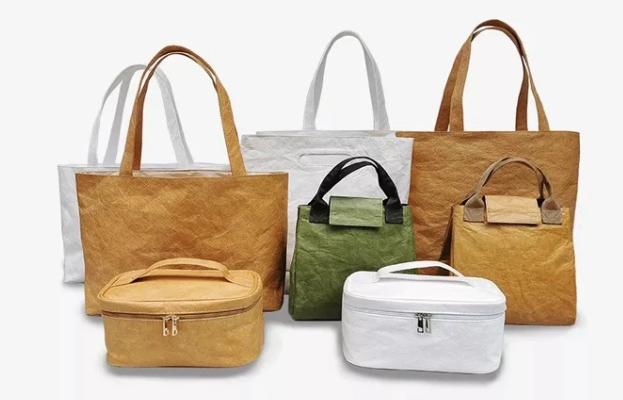
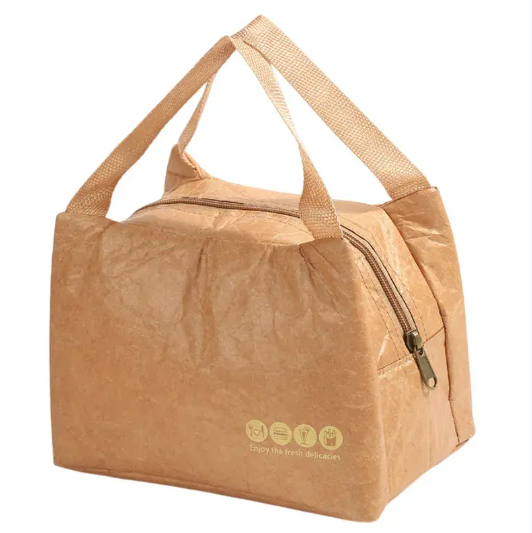
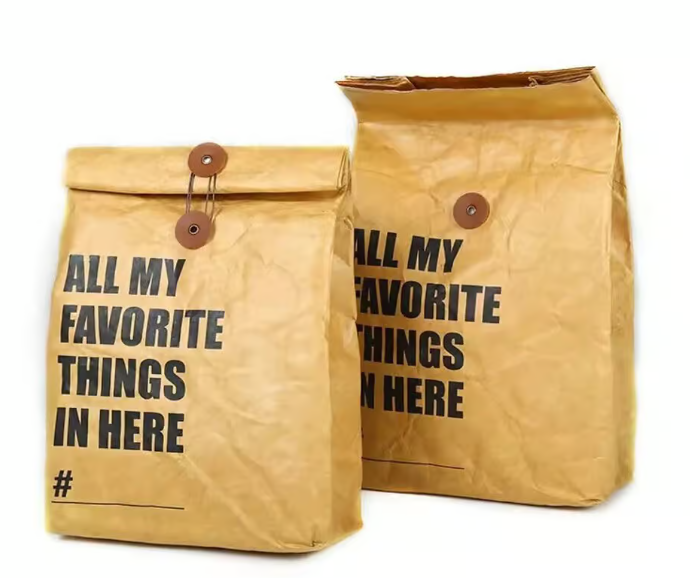
Tyvek has a distinctive paper-like appearance while being made from high-density polyethylene fibers. It is lightweight, tear-resistant and visually different from traditional textile fabrics.
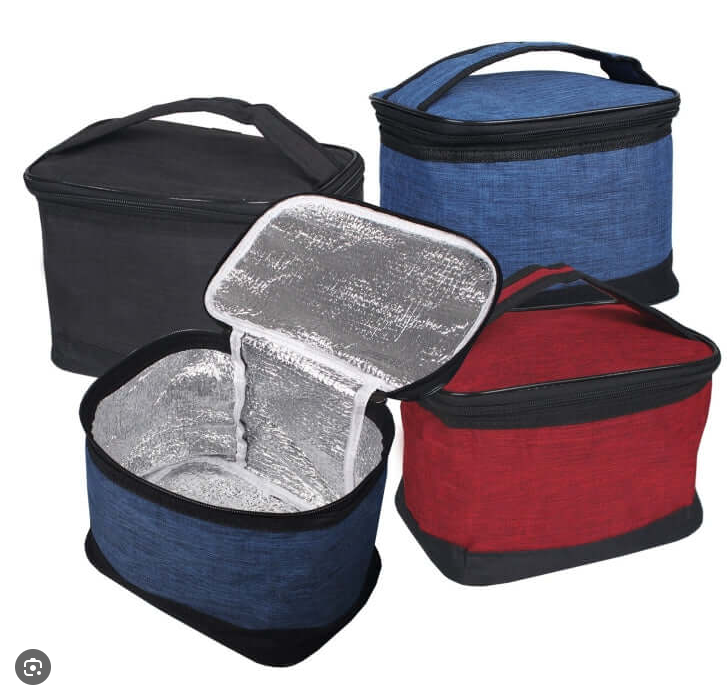
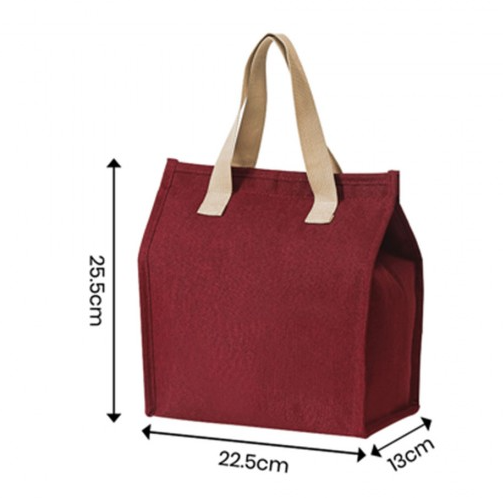
Polyester is a conventional woven synthetic textile available in a much wider range of weights, densities, finishes and coatings. It is commonly used for lunch bags, grocery cooler bags, delivery bags, picnic bags and larger insulated totes.
Neither material provides meaningful thermal insulation by itself.
For cooler bags, the exterior fabric normally works together with internal components such as:
- PE foam
- EPE foam
- EVA
- Aluminum foil
- PEVA lining
- TPU or other waterproof linings
The real question is therefore not:
Which material keeps food colder?
A more useful question is:
Which outer material creates the right balance of durability, structure, weight, appearance, cost and intended use?
For some lightweight promotional or design-focused cooler bags, Tyvek can be an interesting option.
For most everyday, grocery, travel and heavy-use insulated bags, polyester remains the more versatile choice.
What Is Tyvek?
Tyvek is a nonwoven material made from high-density polyethylene, commonly abbreviated as HDPE.
It is produced by forming very fine polyethylene fibers into a lightweight sheet structure.
The result looks somewhat like paper but behaves differently.
Depending on the grade and construction, Tyvek can provide:
- Very low weight
- Good tear resistance
- Water resistance
- Flexible handling
- Distinctive paper-like texture
- Printable surface
This appearance makes Tyvek attractive for:
- Lifestyle products
- Fashion accessories
- Promotional packaging
- Lightweight pouches
- Creative tote bags
- Specialty cooler bags
Tyvek can also develop wrinkles and creases during use, which some brands intentionally use as part of the visual design.
This gives the material a very different character from smooth polyester fabric.
What Is Polyester?
Polyester is one of the most widely used synthetic fibers in bag manufacturing.
For cooler bags, polyester is commonly available in specifications such as:
- 210D
- 300D
- 420D
- 600D
- Oxford polyester
The “D” refers to denier, which relates to yarn thickness rather than the total finished fabric weight.
Polyester can also be combined with:
- PU coating
- PVC coating
- TPU
- Water-repellent finishing
- Laminated films
Because of this flexibility, polyester can be developed for a much wider range of cooler bag applications.
Typical uses include:
- Lunch bags
- Grocery cooler bags
- Picnic bags
- Food delivery bags
- Insulated backpacks
- Wine coolers
- Promotional cooler bags
Tyvek and Polyester Are Outer Fabrics, Not Insulation
This is one of the most important points for buyers.
A cooler bag usually contains several layers.
A typical construction may include:
Outer fabric
Tyvek, polyester, RPET, canvas or another decorative and protective material.
Insulation layer
Common options include:
- EPE foam
- PE foam
- EVA foam
Inner lining
Common options include:
- Aluminum foil
- PEVA
- TPU
- Waterproof polyester
These layers work together.
The insulation layer slows heat transfer.
The lining helps contain moisture and provides an easy-to-clean interior.
The outer fabric mainly contributes:
- Protection
- Appearance
- Structure
- Abrasion resistance
- Branding
Therefore, a Tyvek cooler bag and a polyester cooler bag can theoretically use the same insulation thickness and inner lining.
Their thermal performance may be similar if the internal construction is the same.
Quick Comparison: Tyvek vs Polyester for Cooler Bags
| Factor | Tyvek | Polyester |
|---|---|---|
| Weight | Very lightweight | Light to heavy depending on fabric |
| Appearance | Paper-like, distinctive | Traditional textile appearance |
| Tear Resistance | Good for its weight | Very good, especially heavier fabrics |
| Abrasion Resistance | Moderate | Generally better |
| Water Resistance | Good against light moisture | Depends on coating; can be very good |
| Structure | Soft, flexible | Wide range from soft to structured |
| Printing | Excellent for creative graphics | Excellent with many methods |
| Cleaning | More limited | Generally easier |
| Heavy-Duty Use | Limited | Strong |
| Cost | Can be higher for specialty projects | Wide price range |
| Product Range | More specialized | Very broad |
| Best Application | Design-focused lightweight bags | Everyday and functional cooler bags |
1. Weight: Tyvek Has a Clear Advantage
One of Tyvek’s biggest benefits is its low weight.
A Tyvek exterior can produce a cooler bag that feels noticeably lighter than one made from heavy Oxford polyester.
This can be useful for:
- Small lunch bags
- Promotional insulated bags
- Lightweight gift products
- Travel accessories
- Event merchandise
Lower outer-material weight may also reduce shipping weight slightly.
However, buyers should remember that the main weight of a cooler bag may also come from:
- Foam insulation
- Lining
- Zippers
- Webbing
- Reinforcement boards
For large insulated bags, replacing polyester with Tyvek does not automatically make the entire product extremely lightweight.
2. Durability: Polyester Usually Performs Better
Tyvek has good tear resistance relative to its weight.
However, cooler bags often face more demanding use than ordinary pouches.
Customers may:
- Place the bag on rough floors
- Carry bottles and cans
- Drag it in and out of vehicles
- Use it at beaches
- Store it in car trunks
- Repeatedly open and close zippers
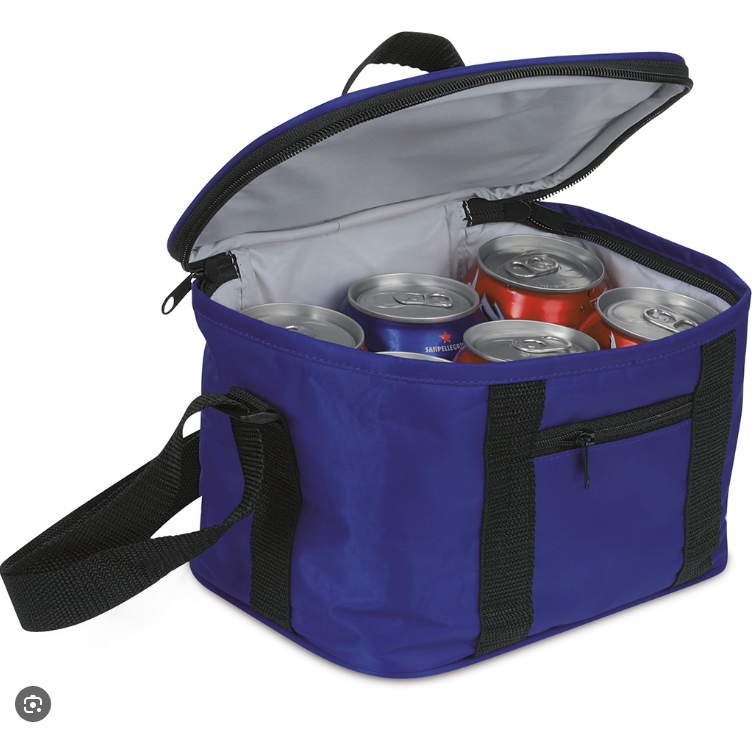
For this type of abrasion and repeated handling, polyester generally offers better long-term durability.
Heavy polyester fabrics such as 420D or 600D can provide significantly more resistance to:
- Surface wear
- Friction
- Repeated folding
- Heavy loads
For grocery, outdoor or delivery applications, polyester is usually the safer material choice.
3. Water Resistance
Both materials can perform well around moisture, but in different ways.
Tyvek
Tyvek naturally resists liquid water to some degree because it is made from polyethylene fibers.
This is useful for:
- Light splashes
- Condensation
- Casual outdoor use
However, a finished Tyvek cooler bag is not automatically waterproof.
Water can still enter through:
- Seams
- Zippers
- Stitch holes
- Openings
Polyester
Untreated polyester may provide limited water resistance.
However, manufacturers can improve its performance with:
- PU coating
- TPU coating
- Water-repellent finishing
- Laminated backing
This gives polyester much greater flexibility when specific water-resistance performance is required.
For beach, delivery and grocery applications, coated polyester is generally easier to engineer for higher moisture protection.
4. Appearance: Tyvek Is More Distinctive
This is where Tyvek has a major advantage.
Most polyester cooler bags have a familiar textile appearance.
Tyvek looks different.
It can create a:
- Minimalist look
- Modern technical style
- Paper-inspired texture
- Lightweight fashion appearance
Over time, the material can develop creases and wrinkles.
For some products, this is desirable.
It creates a worn-in texture similar to:
- Technical paper
- Crinkled fabric
- Modern industrial packaging
This makes Tyvek especially suitable for brands that want the cooler bag itself to look unusual.
Polyester, by comparison, is visually more conventional but also more flexible.
It can be:
- Matte
- Glossy
- Textured
- Smooth
- Printed
- Dyed
- Patterned
5. Printing and Customization
Both materials can support strong branding.
Tyvek Printing
Tyvek is particularly suitable for:
- Graphic prints
- Typography
- Illustration
- Full-surface artwork
- Minimal branding
Its relatively flat surface can create clear visual results.
This is one reason Tyvek is popular in design-focused products.
However, buyers should confirm ink and printing compatibility with the exact Tyvek grade being used.
Polyester Printing
Polyester offers a wider selection of decoration methods.
Possible options include:
- Screen printing
- Heat transfer
- Sublimation on suitable fabric
- Digital printing
- Embroidery
- Woven patches
Polyester is therefore more flexible when buyers need:
- Large-volume production
- Multiple logo options
- Full-color graphics
- Embroidery
- Retail-grade finishes
6. Bag Structure
The outer material affects how structured the cooler bag can be.
Tyvek
Tyvek is naturally lightweight and flexible.
For a more structured cooler bag, manufacturers may need to add:
- Thicker foam
- Reinforcement boards
- Additional lining
- Edge binding
This can reduce some of the weight advantage.
Tyvek works best for:
- Soft lunch bags
- Foldable cooler bags
- Lightweight insulated totes
Polyester
Polyester can support both soft and structured products.
Depending on fabric weight and reinforcement, it can be used for:
- Flat lunch bags
- Box-shaped coolers
- Large grocery bags
- Backpack coolers
- Delivery bags
This gives polyester greater structural flexibility.
7. Cleaning and Maintenance
Cooler bags are used around food and beverages.
This makes cleaning particularly important.
Tyvek
Tyvek can tolerate some surface cleaning, but repeated washing should be carefully considered depending on:
- Printing
- Construction
- Adhesives
- Lamination
Its crinkled surface can also trap some dirt over time.
For design-oriented products, this may not be a major issue.
For frequent food use, it requires more consideration.
Polyester
Coated polyester is generally easier to maintain.
It can often be:
- Wiped clean
- Brushed
- Surface washed
This makes polyester more suitable for:
- Grocery bags
- Family picnic bags
- Food delivery
- Daily lunch bags
8. Load Capacity
The cooler bag material itself is only one part of load capacity.
Actual strength depends on:
- Handles
- Stitching
- Bottom structure
- Fabric
- Reinforcement
Still, polyester provides more options for higher-load bags.
For example, a large 600D polyester cooler bag can support:
- Bottles
- Cans
- Ice packs
- Food containers
more reliably than a lightweight Tyvek structure.
Tyvek is better suited to light or medium loads.
9. Cost
Material cost varies significantly by:
- Supplier
- Grade
- Quantity
- Printing
- Coating
- Fabric specification
Tyvek is usually used as a specialty material rather than a basic low-cost cooler bag fabric.
Polyester provides a wider cost range.
Buyers can select:
- Lightweight 210D for promotional bags
- 300D or 420D for medium-duty products
- 600D for stronger coolers
This flexibility makes polyester easier to match with different budgets.
For very large promotional projects, polyester is often more economical.
10. Shipping and Packing
Both Tyvek and lightweight polyester can produce foldable insulated bags.
However, large structured polyester coolers may require:
- Thicker foam
- Reinforced bottoms
- Larger carton volume
Tyvek can work well for compact designs when:
- Fabric weight is low
- Foam is thin
- The bag remains soft
For international B2B orders, buyers should compare not only unit price but also:
- Carton size
- Pieces per carton
- Gross weight
- Freight cost
Tyvek Cooler Bags: Best Applications
Tyvek is most suitable when design and low weight are important.
Typical applications include:
Promotional Lunch Bags
For:
- Corporate gifts
- Product launches
- Events
Lifestyle Cooler Bags
Suitable for:
- Fashion brands
- Design stores
- Coffee brands
- Creative retail collections
Lightweight Picnic Bags
Suitable when heavy-duty performance is not required.
Limited-Edition Products
Tyvek works particularly well when unusual appearance is part of the product concept.
Polyester Cooler Bags: Best Applications
Polyester works well across a much broader range of products.
Grocery Cooler Bags
Important requirements:
- Larger capacity
- Strong handles
- Easy cleaning
Lunch Bags
Polyester works well for both low-cost and premium designs.
Picnic Coolers
Suitable for:
- Outdoor use
- Bottles
- Multiple food containers
Food Delivery Bags
Heavy polyester provides:
- Durability
- Better structure
- Greater abrasion resistance
Cooler Backpacks
Polyester is usually preferred because shoulder straps and structured panels create more stress on the material.
Tyvek vs Polyester for Promotional Cooler Bags
For promotional projects, the correct choice depends on the objective.
Choose Tyvek when:
- Design differentiation matters
- The bag is relatively small
- Lightweight construction is important
- The product is part of a creative campaign
Choose polyester when:
- Cost control is critical
- Quantity is large
- Durability matters
- Multiple styles are required
- The bag must support repeated use
Tyvek vs Polyester for Grocery Cooler Bags
For grocery use, polyester is generally the more practical option.
Grocery bags often carry:
- Milk
- Bottles
- Frozen food
- Meat
- Vegetables
- Ice packs
This requires:
- Better load performance
- Stronger abrasion resistance
- Easy cleaning
- Larger capacity
Polyester can meet these requirements more easily.
Tyvek can still work for smaller premium grocery bags where appearance is more important than heavy-duty use.
Tyvek vs Polyester for Outdoor Use
Outdoor cooler bags may be exposed to:
- Sand
- Grass
- Dirt
- Sunlight
- Repeated loading
- Vehicle storage
For this environment, polyester usually performs better.
Heavy polyester Oxford fabrics can be developed with:
- Coatings
- Reinforcement
- Waterproof linings
- Heavy zippers
Tyvek may be suitable for occasional outdoor use but is usually not the first choice for demanding environments.
Sustainability Considerations
Both materials are synthetic.
Tyvek is made from HDPE.
Polyester is usually made from PET.
Neither should automatically be described as environmentally friendly simply because the finished bag is reusable.
The sustainability value depends on:
- Material source
- Product lifespan
- Reuse frequency
- Product weight
- Recycling possibilities
For polyester cooler bags, buyers can consider:
RPET Polyester
RPET uses recycled polyester feedstock and can provide similar functionality to virgin polyester.
This is often a more straightforward way to reduce virgin material use while maintaining traditional cooler bag performance.
For sustainability-focused projects, buyers may compare:
- Tyvek
- Virgin polyester
- RPET polyester
rather than looking only at Tyvek versus polyester.
Important Cooler Bag Specifications Beyond the Outer Fabric
Choosing the outer fabric is only one part of product development.
Buyers should also define:
Insulation Thickness
Typical requirements vary depending on:
- Duration
- Bag size
- Product type
A thicker foam does not automatically guarantee better performance if seams and closures allow excessive heat transfer.
Inner Lining
Common options include:
- Aluminum foil
- PEVA
- TPU
- Waterproof polyester
Buyers should consider:
- Food-contact requirements
- Cleaning
- Water resistance
- Flexibility
Closure
Options include:
- Zipper
- Velcro
- Roll-top
- Drawstring
Zippers are common because they reduce open gaps around the top of the bag.
Handle and Strap Construction
For heavy cooler bags, handle strength is critical.
Buyers should inspect:
- Webbing width
- Sewing pattern
- Attachment length
- Reinforcement
Common Sourcing Mistakes
1. Choosing Tyvek Only Because It Looks Waterproof
Tyvek is water-resistant, but the finished bag is not automatically waterproof.
Check the entire bag construction.
2. Comparing Only Fabric Price
The total product cost includes:
- Insulation
- Lining
- Zippers
- Handles
- Printing
- Labor
Outer fabric may represent only one part of the total cost.
3. Ignoring Intended Load
A cooler bag designed for six cans does not require the same construction as a grocery cooler carrying several kilograms.
4. Selecting Material Before Defining the Application
The correct process should be:
Application → Load → Size → Insulation → Structure → Outer Fabric
rather than choosing a material first and designing around it afterward.
How to Choose Between Tyvek and Polyester
Choose Tyvek if the project prioritizes:
- Lightweight construction
- Distinctive design
- Paper-like appearance
- Creative printing
- Small or medium cooler bags
- Lifestyle or promotional positioning
Choose polyester if the project prioritizes:
- Durability
- Heavy carrying
- Easy cleaning
- Outdoor use
- Grocery applications
- Multiple structural options
- Cost control
- Large-scale production
For many functional cooler bags, polyester is the more practical choice.
For design-driven products, Tyvek can provide a stronger visual difference.
Custom Cooler Bag Solutions from INITI
INITI develops custom insulated bags for:
- Food brands
- Grocery retailers
- Beverage companies
- Promotional projects
- Outdoor brands
- Corporate programs
Available outer materials include:
- Polyester
- RPET
- Tyvek
- Cotton canvas
- Other customized fabrics
Cooler bag structures can include:
- Lunch bags
- Grocery cooler totes
- Picnic coolers
- Cooler backpacks
- Bottle bags
- Foldable insulated bags
Customization options include:
- Fabric
- Size
- Insulation thickness
- Inner lining
- Handles
- Shoulder straps
- Pockets
- Printing
- Embroidery
- Packaging
For cooler bag development, the intended application, carrying weight and insulation requirements should be confirmed before selecting the outer material.
FAQ
Is Tyvek suitable for cooler bags?
Yes. Tyvek can be used as an outer material for lightweight and design-focused cooler bags, but it does not provide insulation by itself.
Is polyester better for cooler bags?
For most grocery, outdoor and heavy-use cooler bags, polyester is more practical because it provides better abrasion resistance, structure and cleaning performance.
Is Tyvek waterproof?
Tyvek resists liquid water, but a finished Tyvek bag is not automatically waterproof because seams, zippers and openings can allow water penetration.
What polyester is commonly used for cooler bags?
Common choices include 210D, 300D, 420D and 600D polyester, depending on the required durability and structure.
Which material is lighter?
Tyvek is generally very lightweight, although total cooler bag weight also depends on insulation, lining, handles and reinforcement.
Can RPET replace normal polyester?
Yes. RPET polyester can be used for many cooler bag applications when recycled material is required.
Which material is better for promotional cooler bags?
Tyvek is useful for distinctive premium designs, while lightweight polyester is usually more economical for large-volume promotional projects.
Conclusion
Tyvek and polyester can both be used for cooler bags, but they serve different product strategies.
Tyvek is best when buyers want:
- Low weight
- Distinctive texture
- Strong visual identity
- Creative printed products
Polyester is better when buyers need:
- Higher durability
- Larger carrying capacity
- Better abrasion resistance
- Easier cleaning
- More structural options
- Greater cost flexibility
For most grocery, outdoor, delivery and everyday cooler bags, polyester remains the more versatile material.
Tyvek is more suitable for specialized lightweight products where appearance and differentiation matter.
The most important point is that neither outer material determines thermal performance by itself.
A successful cooler bag depends on the complete construction:
outer fabric + insulation + lining + closure + seams + handle structure.
For B2B buyers, defining the intended use first is the most reliable way to choose the right material.



