Introduction
A wet and dry compartment is one of the most useful functional features in modern gym bags.
It allows users to separate damp or dirty items from clean belongings such as:
- Clothing
- Towels
- Electronics
- Toiletries
- Shoes
- Personal accessories
The feature is especially useful for:
However, a “wet pocket” is not created simply by adding another zipper.
The compartment needs to manage several practical issues:
- Moisture containment
- Leakage
- Cleaning
- Ventilation
- Capacity
- Seam construction
- Zipper position
- Main-compartment space
A poorly designed wet compartment may leak into the dry section, trap odor or consume too much of the bag’s usable volume.
For B2B buyers, the correct design starts with understanding what will actually be stored inside.
What Is a Wet and Dry Compartment?
A wet and dry gym bag normally contains:
Dry Compartment
Used for:
- Clean clothes
- Towels
- Electronics
- Personal items
Wet Compartment
Used for:
- Swimwear
- Damp towels
- Sweaty clothing
- Shower items
The two sections are separated by an internal barrier.
Depending on the bag design, the wet section may be:
- A side pocket
- A bottom compartment
- An internal waterproof sleeve
- A detachable wet pouch
The goal is not necessarily to create a fully waterproof chamber.
For most gym bags, the practical requirement is:
Keep normal moisture from damp items away from the main dry compartment.
Wet Pocket vs Shoe Compartment
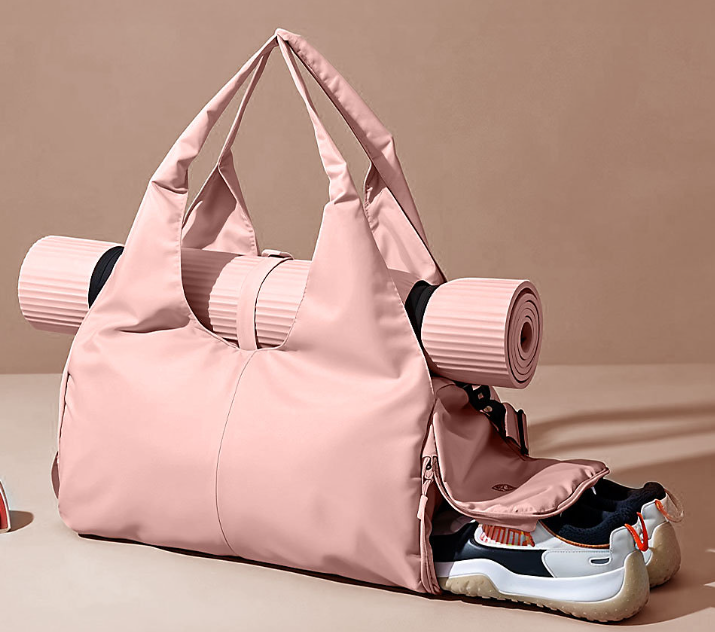
These two features are often confused.
A shoe compartment is designed primarily for:
- Dirt separation
- Footwear storage
- Ventilation
A wet compartment is designed primarily for:
- Moisture containment
- Damp clothing
- Swimwear
Their requirements can be different.
A shoe pocket often benefits from ventilation.
A wet pocket usually benefits from a more closed moisture-resistant lining.
Combining both functions into one compartment can create a compromise.
Common Materials for Wet Compartments
PEVA
PEVA is commonly used as a wet-compartment lining because it provides:
- Smooth surface
- Good moisture resistance
- Easy wiping
- Flexible construction
It works well for:
- Swimwear
- Damp towels
- General gym use
PEVA is especially common in mid-range gym and sports bags.
TPU
TPU can be used for higher-end wet-pocket construction.
Advantages include:
- Good flexibility
- Strong abrasion resistance
- Good moisture barrier
- Premium feel
TPU is useful when the wet compartment is intended for frequent reuse.
It usually costs more than PEVA.
Coated Polyester
Polyester fabric can be coated with:
- PU
- TPU
- Other moisture-resistant finishes
Advantages:
- Textile-like structure
- Easier sewing
- Good durability
This is useful when buyers want the wet compartment to feel more integrated with the rest of the bag.
PVC
PVC can provide:
- Strong moisture resistance
- Smooth cleaning surface
- Stable structure
However, many buyers now prefer PEVA or TPU for projects where PVC reduction is a purchasing requirement.
The correct choice depends on:
- Price
- Target market
- Compliance requirements
Quick Material Comparison
| Material | Moisture Resistance | Flexibility | Cleaning | Cost | Typical Position |
|---|
| PEVA | Good | Good | Easy | Medium | Standard wet pocket |
| TPU | Very good | Excellent | Easy | Higher | Premium wet pocket |
| Coated Polyester | Good | Good | Moderate | Medium | Textile-style construction |
| PVC | Very good | Good | Easy | Competitive | Economical moisture barrier |
1. Wet Compartment Placement
The location of the wet pocket strongly affects usability.
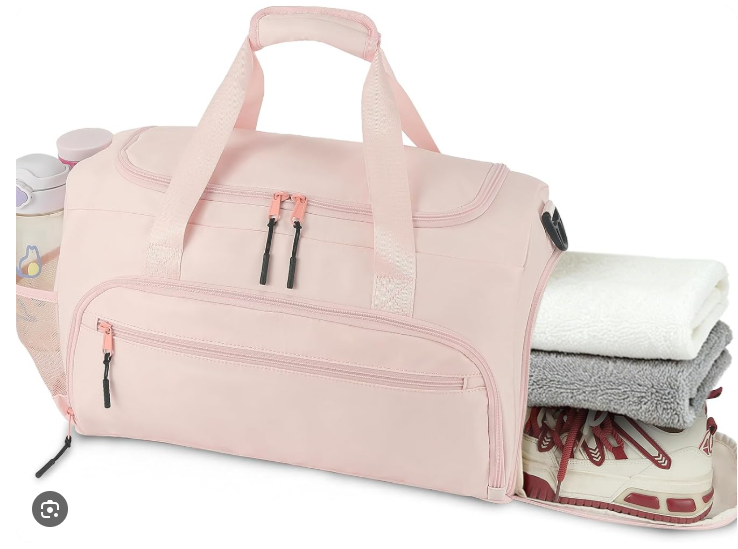
Side Wet Pocket
One of the most common designs.
Advantages:
- Easy access
- Simple construction
- Keeps wet items away from main opening
Suitable for:
- Swimwear
- Small towels
- Shower items
Bottom Wet Compartment
Creates stronger separation.
Advantages:
- Wet items stay physically below dry items
- Larger capacity
- Good for towels
Disadvantages:
- More complex construction
- Higher cost
- Increased bag height
Often used in:
- Travel duffels
- Premium sports bags
Internal Wet Sleeve
A moisture-resistant pouch sewn inside the main compartment.
Advantages:
- Compact
- Lower production cost
- Clean exterior
Limitations:
- Reduces main compartment space
- Harder to clean
Best for smaller wet items.
2. Moisture Barrier Construction
The internal barrier is the most important part of the design.
A common structure is:
Outer fabric + wet lining + sealed or protected seam
The lining should extend high enough to prevent damp contents from contacting the dry compartment.
If the wet pocket only uses waterproof material on one panel but ordinary fabric on the others, moisture can still migrate through the weaker areas.
For better protection, the barrier should cover:
- Bottom
- Sides
- Back panel
as needed.
3. Seams Are the Weakest Point
Even if the lining itself is waterproof, stitched seams create needle holes.
This means:
Waterproof material does not automatically create a waterproof compartment.
For normal gym use, stitched PEVA or TPU may still be sufficient.
For stronger moisture containment, buyers can consider:
- Seam tape
- Heat sealing
- Welded seams
- Reduced stitch lines
The required solution depends on how much water exposure is expected.
Stitched vs Welded Construction
Stitched
Advantages:
- Lower cost
- Easy production
- Flexible design
Suitable for:
- Damp towels
- Sweaty clothing
- Normal gym use
Welded
Advantages:
- Better water containment
- Fewer needle holes
Suitable for:
- Wet swim gear
- More demanding applications
Disadvantages:
- Higher tooling and processing requirements
- Material compatibility required
4. Zipper Placement
The zipper should allow easy access without interfering with the main compartment.
Common positions include:
- Side panel
- Bottom edge
- End panel
A side zipper is usually the simplest.
The opening should be large enough for:
- Rolled towel
- Swimwear
- Small clothing bundle
but not so large that the pocket becomes structurally weak.
Water-Resistant Zippers
Some premium bags use:
- Coated zippers
- Reverse coil zippers
- Water-resistant zipper tape
These can reduce moisture entry.
However, most gym wet pockets do not need fully waterproof zippers.
A standard zipper may be sufficient when the goal is only internal separation.
5. Pocket Capacity
Wet compartments often look large when empty but become restrictive once the main compartment is packed.
This happens because many designs use a flexible pocket that expands inward.
For example:
A wet side pocket may occupy part of the main compartment when filled with:
- Towels
- Swimwear
- Clothing
This is similar to a shoe-compartment tunnel.
Buyers should test both compartments at the same time.
Do not evaluate wet-pocket capacity only when the rest of the bag is empty.
6. Ventilation: Should a Wet Pocket Breathe?
This depends on the intended use.
A fully closed wet compartment provides better moisture separation but can trap:
- Humidity
- Odor
For temporary storage, this is usually acceptable.
For longer storage, ventilation may help.
Possible approaches include:
- Small mesh section
- Ventilation eyelets
- Partial breathable panel
However, too much ventilation reduces moisture containment.
For most gym bags, the wet compartment should be used for temporary transport, not long-term storage of damp clothing.
7. Easy Cleaning
Wet pockets should be easy to clean.
Smooth materials such as PEVA or TPU are useful because users can:
- Wipe the interior
- Remove moisture
- Dry the compartment
Avoid unnecessary internal details such as:
- Excess seams
- Decorative fabric
- Deep folds
These areas can trap moisture and dirt.
8. Wet Pocket Size
The correct size depends on the activity.
General Fitness
Needs space for:
- T-shirt
- Shorts
- Small towel
A moderate side pocket is usually enough.
Swimming
Needs more capacity for:
- Swimsuit
- Large towel
- Swim cap
- Goggles
A larger waterproof-style pocket may be preferable.
Yoga
Wet-pocket requirements are usually smaller.
It may only need to hold:
- Damp top
- Small towel
9. Lining Thickness
A very thin lining reduces cost but may:
- Tear more easily
- Wrinkle excessively
- Be difficult to clean
A heavier lining provides:
- Better durability
- Better handling
- More premium feel
However, thicker materials increase:
- Weight
- Cost
- Bulk
The correct specification should match the bag price level.
10. Outer Fabric Around the Wet Compartment
The outer material also matters.
Common gym bag fabrics include:
- 600D polyester
- 900D polyester
- RPET polyester
- Nylon
If the wet compartment sits near the bottom of the bag, stronger outer fabric can help protect the lining from abrasion.
A practical construction may use:
- 600D body
- Reinforced bottom
- PEVA wet-pocket lining
Wet and Dry Compartments for Different Bag Types
Gym Duffel Bag
Recommended structure:
- Side wet compartment
- PEVA lining
- Zipper access
Best for:
- General fitness
Swim Bag
Recommended structure:
- Larger wet section
- TPU or PEVA lining
- Moisture-resistant zipper
Best for:
- Pools
- Aquatic sports
Travel Gym Bag
Recommended structure:
- Separate bottom wet compartment
- Strong lining
- Reinforced base
Best for:
- Multi-day travel
- Hotels
- Fitness trips
Yoga Bag
Recommended structure:
- Small internal wet sleeve
- Lightweight lining
Best for:
- Small clothing or towel storage
Wet Compartment vs Waterproof Bag
These terms should not be treated as identical.
A wet compartment may resist normal moisture from damp clothing.
A waterproof bag should prevent water penetration under more demanding conditions.
To claim waterproof performance, the complete construction may require:
- Waterproof fabric
- Welded seams
- Waterproof zipper
- Specific testing
Most gym wet pockets are better described as:
- Moisture-resistant
- Water-resistant
- Wet-item compartment
rather than fully waterproof.
Common Construction Problems
1. Lining Not Fully Connected
If the moisture-resistant material covers only part of the compartment, water can reach the dry section.
2. Weak Seams
Wet clothing is heavier than dry clothing.
Seams need enough strength to support the load.
3. Pocket Too Small
A compartment that fits only a swimsuit but not a towel may be less useful than expected.
4. Zipper Opening Too Narrow
The interior capacity may be large but difficult to access.
5. No Drying Access
Very narrow pockets are difficult to wipe and dry.
6. Too Much Main-Compartment Loss
A large wet pocket can significantly reduce the bag’s main capacity.
How to Specify a Wet Compartment
Instead of writing:
“Add waterproof wet pocket.”
use a clearer specification.
For example:
Wet Compartment: Side entry
Size: Approx. 32 × 22 cm
Lining: PEVA
Closure: Nylon coil zipper
Use: Damp gym clothes and towel
Construction: Moisture-resistant internal barrier
Cleaning: Wipe-clean interior
For a higher-end product:
Wet Compartment: Separate bottom chamber
Lining: TPU-coated fabric
Seams: Seam-taped
Closure: Water-resistant zipper
Use: Swimwear and wet towel
This gives the manufacturer a much clearer development target.
Should Wet and Shoe Compartments Be Separate?
Usually yes, if the bag has enough space.
Shoes require:
- Ventilation
- Dirt separation
Wet clothes require:
- Moisture containment
These are different functions.
A bag with both features may use:
- Shoe compartment at one end
- Wet pocket on the opposite side
This provides better organization but also increases:
- Cost
- Weight
- Construction complexity
For compact gym bags, buyers may choose only one specialized compartment.
Quality Tests Buyers Should Consider
Moisture Test
Place damp textile inside and check whether moisture transfers to the dry section.
Seam Inspection
Check all corners and stitch lines.
Zipper Test
Open and close repeatedly.
Cleaning Test
Check whether the lining can be wiped without damage.
Load Test
Fill the wet pocket with realistic clothing and towels.
Capacity Test
Load the dry compartment at the same time.
This is important because both compartments compete for space.
Which Construction Is Best?
Choose a simple PEVA-lined side pocket when:
- Cost matters
- The bag is for general fitness
- Normal damp clothing is the main use
Choose a TPU-lined or seam-protected compartment when:
- Reuse frequency is high
- The product is premium
- Swimming or wetter items are involved
Choose a separate bottom wet compartment when:
- Capacity matters
- Strong physical separation is required
- The bag is used for travel
Custom Wet and Dry Gym Bags from INITI
INITI develops custom gym and sports bags with different compartment systems.
Available features can include:
- Wet compartments
- Shoe compartments
- Dry clothing sections
- Laptop compartments
- Bottle pockets
- Mesh ventilation panels
Material options include:
- Polyester
- RPET
- Nylon
- PEVA lining
- TPU lining
Customization can include:
- Wet-pocket position
- Pocket size
- Lining material
- Zipper type
- Ventilation
- Reinforcement
- Printing
- Packaging
For product development, buyers should provide:
- Intended sport or activity
- Bag size
- Expected wet items
- Estimated quantity
- Required material
- Target price
This allows the wet and dry structure to be designed around real use rather than simply adding an extra pocket.
FAQ
What is a wet compartment in a gym bag?
It is a separate moisture-resistant section designed to keep damp clothing, swimwear or towels away from dry items.
What material is commonly used for wet compartments?
PEVA, TPU and coated polyester are common options.
Is a wet compartment waterproof?
Not always. Many are moisture-resistant rather than fully waterproof.
Is PEVA good for wet pockets?
Yes. PEVA is widely used because it is flexible, moisture-resistant and easy to wipe clean.
Is TPU better than PEVA?
TPU generally offers better durability and flexibility but costs more.
Should wet pockets have ventilation?
Sometimes. Ventilation helps reduce trapped humidity, but it can also reduce moisture containment.
Can a wet pocket also be used for shoes?
It can, but shoe and wet compartments have different design priorities. Separate compartments are usually better when space allows.
Where should a wet compartment be placed?
Side and bottom positions are most common. The best location depends on bag size and required capacity.
Conclusion
A wet and dry gym bag works well only when the compartment system is designed around actual moisture control.
The most important factors are:
lining + barrier construction + zipper placement + seam quality + capacity
For everyday fitness bags, a PEVA-lined side pocket usually provides a good balance between function and cost.
For swim, travel or premium gym bags, TPU lining, better seam protection or a separate bottom chamber can provide stronger separation.
The key is not simply adding a “wet pocket.”
The compartment must keep damp items separated without:
- leaking into the dry section
- trapping excessive moisture
- reducing too much main-compartment space
- becoming difficult to clean
For B2B buyers, the best approach is to test the finished sample with real wet clothing and full dry-compartment loading before approving bulk production.