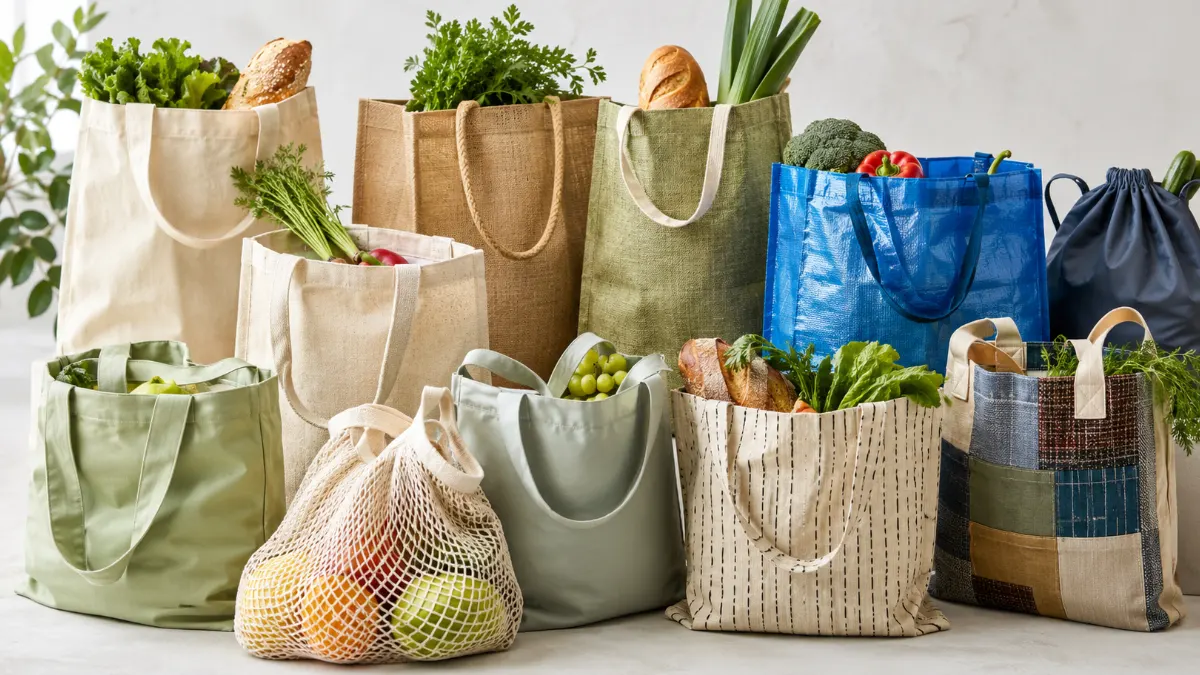
When you pick up reusable grocery bags, you might ask what reusable grocery bags material they are made from. Most bags use materials like nonwoven polypropylene, cotton, canvas, jute, hemp, ripstop nylon, recycled PET, bamboo, or even upcycled or DIY choices. Each reusable grocery bags material has its own advantages and disadvantages regarding being eco-friendly, strong, or easy to use. Look at this table to see how much carbon each bag type produces when you reuse them:
| Bag Type | Usage Pattern | Carbon Emissions Comparison |
|---|---|---|
| Plastic Bag | Used once | Has the lowest carbon emissions of all types |
| Paper Bag | Reused four times | Can have lower emissions than plastic |
| Reusable Bag (PP) | Used at least eleven times | Can have lower emissions than plastic |
Choosing the right reusable bag can help you shop smarter and benefit the planet.
Key Takeaways
- Pick the best material for your reusable grocery bags. Think about what you need. You can choose cotton, jute, hemp, or recycled plastics.
- Using reusable bags often helps the environment. The more you use them, the better it is for the planet.
- Look at how strong the bag is before buying. Canvas and hemp are tough. Ripstop nylon is light and keeps water out.
- Eco-friendly choices like jute, hemp, and bamboo break down on their own. This makes them safer for nature.
- Read how to clean your bags. Cotton and canvas can go in the washing machine. Other bags may need wiping with a damp cloth.
- Think about the bag’s size and shape. Big bags are good for lots of groceries. Small bags are nice for quick shopping trips.
- Customizing your bags makes them special. You can decorate them or pick designs that show your style.
- Compare the price and how long the bag lasts. Buying strong bags saves money and cuts down on waste.
Reusable Grocery Bags Material Overview
Main Types of Materials
There are many choices for reusable grocery bags material. Each material has its own good and bad points. Here are some of the most common types:
- Nonwoven polypropylene bags are light and strong. They keep water out. These bags are cheap and easy to find. People like them because you can print on them.
- Cotton feels soft and is easy to clean. It is good for printing designs. But cotton bags can shrink and wrinkle after washing.
- Canvas is a thicker kind of cotton. It is very strong and lasts a long time. You can carry heavy things in it.
- Jute comes from plant fibers. It breaks down in nature and looks rustic. But jute bags do not do well with water.
- Hemp grows fast and does not need chemicals. It makes bags that are tough and do not rot.
- Ripstop nylon is light and folds up small. It keeps water out. You can keep it in your car or pocket.
- Recycled PET (rPET) bags use old plastic bottles. They help recycling and feel soft.
- Bamboo grows quickly and makes soft bags. It is gentle on the earth and breaks down easily.
- Upcycled materials come from old clothes or banners. These bags are special and help cut down on trash.
- DIY options let you make bags from old shirts or scraps. You can make your bag unique and reuse old stuff.
Here is a table that shows some materials and their good and bad sides:
| Material | Advantages | Disadvantages |
|---|---|---|
| Cotton | Biodegradable, strong, machine washable, ideal for printing | Not moisture resistant, high water consumption, can shrink and wrinkle |
| Hemp | Extremely strong, rot resistant, grows in poor soils | Can be expensive, grainy texture |
| Jute | Biodegradable, durable, natural resource | Not moisture resistant, grainy texture, limited printing options |
| Polypropylene | Recyclable, strong, chemical resistant, flexible printing options | Not biodegradable, a product of the petrochemical industry, not machine washable |
| Nylon | Strong, lightweight, water resistant, easily dyed | Petroleum-based, slow to break down |
Why Material Choice Matters
Picking the right reusable grocery bags material is important. It changes how green, strong, and cheap your bag is.
If you want a green bag, pick cotton, jute, hemp, or bamboo. These break down in nature and are safe for the earth. Bags made from recycled PET or upcycled things also help by using waste.
If you shop a lot, you need a strong bag. Nonwoven polypropylene bags last a long time and hold heavy things. Canvas and hemp bags are tough and do not wear out fast. Ripstop nylon bags do not rip easily and can take rough use.
Price is something to think about too. Nonwoven polypropylene bags are cheap and good for daily shopping. Cotton, jute, and hemp bags cost more but last longer. Recycled PET bags usually cost a medium amount.
Here is a table to help you compare:
| Material | Eco-Friendliness | Durability | Cost |
|---|---|---|---|
| Cotton | Organic options available, biodegradable | Soft, durable, but heavier | Varies |
| Jute | Biodegradable, compostable | Strong, rustic look | Moderate |
| Hemp | Grows quickly, no pesticides | Tough, lightweight | Moderate |
| Bamboo | Biodegradable, fast-growing | Lightweight, soft | Moderate |
| Nonwoven Polypropylene | Recyclable, water-resistant | Durable, good for everyday use | Low |
| Woven Polypropylene | Extra tough, handles heavy loads | Long-lasting, quick-drying | Low |
| Recycled PET (rPET) | Supports recycling efforts | Soft, flexible | Moderate |
Think about how you will use your reusable grocery bags material. Do you want a green bag? Do you need one that lasts a long time? Are you looking for a cheap choice? Your answers will help you pick the best material for your reusable grocery bags.
Polypropylene & Recycled Plastics
Nonwoven Polypropylene Bags
Nonwoven polypropylene bags are very common. Grocery stores often give them out. You probably have some at home. These bags are light but can hold a lot. If you spill something, you can wipe them clean. They keep their shape well, so groceries stay safe. Woven polypropylene bags look and feel different. They use threads, which makes them stronger. Both types resist water and last for many trips.
How long do these bags last? Check this table:
| Material | Average Lifespan |
|---|---|
| Non-woven Polypropylene | 1-2 years |
| Cotton | 1-2 years |
| Nylon | 3-5 years |
| Jute | 1-2 years |
| Polyester | 2-3 years |
You can use nonwoven polypropylene bags for one to two years. Woven polypropylene bags usually last even longer. If you need a bag for heavy groceries, woven polypropylene bags are a good pick.
Recycled PET (rPET) Bags
Recycled pet reusable bags are made from old plastic bottles. When you use these bags, you help the planet. They feel soft and are also strong. You can carry heavy things without worry. These bags help recycling and cut down on waste. They come in many colors and designs because printing is easy.
You may wonder how to clean them. You cannot put these bags in the washing machine. You need to wipe them with a damp cloth. Making recycled pet reusable bags uses less energy than making new plastic. But recycling still needs energy and resources.
Tip: If you want a soft bag that helps recycling, try recycled pet reusable bags.
Pros & Cons of Synthetic Materials
Synthetic materials like polypropylene and recycled PET have good and bad sides. Here is what you should know:
- Polypropylene bags are strong and simple to clean. They keep their shape and last a long time.
- Polypropylene is a kind of plastic. Lamination can lower how much is recycled.
- Recycled PET bags are tough and use less energy to make. You can mix them with other fabrics and print many designs.
- Recycled PET is still plastic. The recycling process uses a lot of energy. You cannot wash these bags in a machine.
These bags last long and help recycling. But they are still plastic and use energy. If you want a bag that is strong and eco-friendly, think about woven polypropylene bags and recycled pet reusable bags.
Cotton, Canvas & Natural Fibers
Cotton & Organic Cotton
You probably see cotton bags everywhere. They feel soft and look stylish. You can wash them in your machine, which makes them easy to keep clean. Many people like cotton because it comes from plants and breaks down in nature. You might think organic cotton is even better. It grows without harsh chemicals and feels gentle to the touch.
But here’s something you should know. Cotton and organic cotton bags have a much bigger environmental footprint than you might expect. Making these bags uses a lot of land, water, and energy. Organic cotton needs even more resources because it produces lower yields. To match the environmental impact of a single plastic bag, you would need to use a cotton bag about 7,100 times. For organic cotton, you’d need to use it around 20,000 times. That’s a lot of trips to the store! If you want a greener option, look for recycled cotton bags. These use leftover fibers and help reduce waste.
Tip: If you choose cotton, try to use your bag as many times as possible. The more you use it, the better it is for the planet.
Canvas Bags
Canvas bags are a classic choice. Canvas is just a thicker, tougher kind of cotton. You can carry heavy groceries without worrying about the bag ripping. Many canvas bags have sturdy handles and wide bottoms, so they hold a lot. You can wash canvas bags, but they might shrink a little. Some canvas bags use recycled cotton, which helps cut down on waste and saves resources.
Canvas bags are great for printing. You can find them with fun designs or even make your own. If you want a bag that lasts for years, canvas is a smart pick. Just remember, canvas still comes from cotton, so it shares the same environmental challenges.
Jute & Hemp Bags
Jute and hemp bags stand out for their natural look and strength. Jute comes from a plant with long, shiny fibers. Hemp grows fast and doesn’t need many chemicals. Both break down in nature, so they won’t sit in a landfill for years.
Here’s how jute and hemp compare:
- Hemp is stronger than jute. It has a higher tensile strength.
- Hemp lasts longer and resists pests better.
- Hemp is fire-resistant. Jute is not.
- Jute is still strong and sturdy, but it can wear out faster than hemp.
You can use jute and hemp bags for groceries, books, or even as gift bags. They don’t like water, so keep them dry. If you want a bag that’s tough and eco-friendly, hemp is a top choice. Jute is a good pick if you want something rustic and biodegradable.
Note: You won’t find many recycled jute or hemp bags, but you can find recycled blends with other fibers.
Bamboo Bags
Have you ever thought about using bamboo for your grocery bags? Bamboo bags are becoming more popular because people want greener choices. Bamboo grows super fast. Farmers don’t need to use lots of water or chemicals. That makes bamboo a great option if you care about the planet.
Bamboo fibers feel soft and smooth. You might notice that bamboo bags are lighter than cotton or canvas. They fold up easily, so you can stash one in your backpack or car. Some bamboo bags look stylish, too. You can find them in different colors and patterns.
Let’s look at what makes bamboo bags special:
- Eco-Friendly: Bamboo grows quickly and doesn’t need pesticides. It’s a renewable resource. When you use bamboo bags, you help reduce plastic waste.
- Biodegradable: If you toss a bamboo bag, it breaks down in nature. You won’t see it sitting in a landfill for years.
- Soft and Lightweight: Bamboo fibers feel gentle. You can carry groceries without hurting your hands.
- Antibacterial Properties: Bamboo naturally fights germs. Your bag stays fresher for longer.
You might wonder if bamboo bags are strong enough. Bamboo fibers can handle heavy loads, but they aren’t as tough as canvas or hemp. If you carry lots of cans or bottles, you should check the stitching and handles. Some bamboo bags use blends with cotton or polyester to make them stronger.
Cleaning bamboo bags is easy. You can wash most of them by hand. Some bags can go in the washing machine, but always check the label first. Bamboo dries quickly, so you won’t wait long before using your bag again.
Here’s a quick table to compare bamboo bags with other natural fiber bags:
| Feature | Bamboo Bag | Cotton Bag | Hemp Bag |
|---|---|---|---|
| Eco-Friendliness | High | Moderate | High |
| Durability | Moderate | High | Very High |
| Weight | Light | Medium | Light |
| Washable | Yes | Yes | Yes |
| Biodegradable | Yes | Yes | Yes |
Tip: If you want a bag that’s gentle on the earth and easy to carry, bamboo is a smart pick. You can use it for groceries, books, or even as a lunch tote.
Bamboo bags cost a bit more than polypropylene or recycled PET bags. You pay for the eco-friendly features and the soft feel. If you use your bamboo bag often, you get your money’s worth. You help the planet, too.
Nylon & Outdoor Fabrics
Ripstop Nylon Bags
You might have seen ripstop nylon bags at the store. These bags feel light, but they are tough. Ripstop nylon uses a special weave that stops tears from spreading. If you poke a hole in the bag, the fabric keeps it from ripping more. You can fold these bags up and fit them in your pocket. That makes them handy for quick trips.
Ripstop nylon bags carry heavy groceries without breaking. You can trust them for big shopping days. They resist water, so your food stays dry if it rains. You can wipe them clean with a damp cloth. Some bags even go in the washing machine.
Let’s compare ripstop nylon to other materials:
| Material | Strength-to-Weight Ratio | Abrasion Resistance | Tear Resistance | Lifespan (Typical Use) |
|---|---|---|---|---|
| Nylon/Polyester | High | High | High | 2-5 years |
Ripstop nylon stands out for its strength and long life. You get a bag that lasts for years and handles rough use.
Tip: If you want a bag that folds small and holds a lot, ripstop nylon is a smart choice.
Oilcloth & Outdoor Fabric Bags
Oilcloth and outdoor fabrics give you another option for reusable bags. Oilcloth feels smooth and shiny. It has a coating that keeps water out. Outdoor fabrics use strong threads and special finishes to resist stains.
Here’s why you might like oilcloth or outdoor fabric bags:
- Durability: Oilcloth stands up to daily use. You can use it for groceries every week.
- Water-resistant: Spills and rain won’t soak through. Your food stays safe.
- Ease of maintenance: You can clean oilcloth with household cleaners. It wipes clean fast.
- Versatility: Oilcloth works for tote bags, lunch bags, and more. You can pick fun colors and patterns.
You can use these bags for shopping, picnics, or even as beach totes. They look stylish and last a long time.
Note: Oilcloth bags are great if you want something easy to clean and tough enough for busy days.
Pros & Cons of Nylon & Outdoor Fabrics
Nylon and outdoor fabrics offer many benefits, but you should know their drawbacks too. Here’s a quick look:
| Advantages of Nylon | Disadvantages of Nylon |
|---|---|
| Strong and durable | Petroleum-based product |
| Lightweight material | Slow to break down |
| Compacts easily | Heavy use can cause screenprinting inks to break down |
| Easily dyed | |
| Water resistant | |
| Can be screenprinted or printed |
You get a bag that feels light and holds a lot. Nylon resists water and folds up small. You can pick bright colors or cool prints. Outdoor fabrics share these strengths. They last for years and handle rough treatment.
But nylon comes from petroleum. It does not break down quickly in nature. If you care about the planet, you might want to use your nylon bag as much as possible. Heavy use can make printed designs fade over time.
If you need a bag that’s strong, light, and easy to clean, nylon and outdoor fabrics are a great pick. Just remember to use them often to make the most of their benefits. 🛒
Upcycled & DIY Reusable Shopping Bags
Upcycled Materials
You might wonder what happens to old banners, jeans, or even plastic bottles. Many companies turn these items into upcycled grocery bags. Upcycled bags use materials that would otherwise end up in the trash. When you pick a bag made from upcycled or recycled materials, you help cut down on waste and give new life to old stuff.
Check out this table to see how upcycled materials make a difference:
| Feature | Description |
|---|---|
| Material Source | Upcycled materials like recycled PET, recycled paper, and woven polypropylene are used. |
| Durability | Recycled bags last longer than single-use bags. |
| Reusability | These bags are made for repeated use, so you throw away less. |
| Environmental Impact | Using upcycled materials lowers the environmental footprint. |
| Brand Loyalty | Companies that use these bags can build a stronger brand and keep customers coming back. |
You get a bag that is tough, looks cool, and helps the planet. Many upcycled bags use recycled plastic bottles or fabric scraps. Some even use old billboards or seatbelts. Each bag tells a story and stands out from the crowd.
DIY Bag Options
Do you like crafts? You can make your own reusable bag at home. Grab an old t-shirt, a pair of scissors, and you are ready to go. You do not need to sew if you do not want to. There are many no-sew tutorials online. You can also use old jeans, curtains, or pillowcases. Making your own bag lets you choose the size, color, and style.
Here are some easy DIY ideas:
- Turn a t-shirt into a tote bag by cutting off the sleeves and tying the bottom.
- Use leftover fabric to sew a sturdy grocery bag.
- Decorate your bag with patches, paint, or pins for a personal touch.
DIY bags help you save money and reduce waste. You use what you already have at home. You also get a bag that is one of a kind.
Tip: Making bags with friends or family can be a fun weekend project. You can even give your creations as gifts!
Customization & Sustainability
When you customize your reusable bag, you make it special. You can add your name, a favorite quote, or a cool design. Many companies offer custom bags with logos or unique prints. Every time you use your bag, you show off your style and help the planet.
- Custom reusable bags with logos or designs give free advertising every time you shop.
- Brand visibility grows each time you carry your bag in public.
- Reusable bags cut down on single-use packaging and support your green goals.
- Practical, durable bags make you want to use them again and again.
You help the earth by using your bag many times. Custom bags often last longer because you feel proud to use them. When you pick a recycled or upcycled bag and add your own touch, you support sustainability and make shopping more fun.
Remember: The more you use your bag, the bigger your impact. Choose a recycled or upcycled bag, make it your own, and help build a cleaner world.
Comparing Reusable Shopping Bags
Environmental Impact
When you choose reusable shopping bags, you might wonder how they affect the earth. The environmental impact depends on what the bag is made of, how many times you use it, and how you care for it. Some bags look green, but they can hurt the planet more if you do not use them enough.
Let’s look at some examples:
- Cotton bags come from plants, but growing cotton uses lots of water and energy. If you only use a cotton bag a few times, it is not good for the environment. You need to use a cotton bag thousands of times to make it better than a plastic bag.
- Canvas bags are made from thick cotton. They last longer, but you still need to use them a lot to help the planet.
- Jute, hemp, and bamboo bags are better for the earth. These plants grow fast and do not need many chemicals. If you use these bags for years, their impact gets even lower.
- Nonwoven polypropylene and recycled PET bags are made from plastic. Their impact is lower than single-use plastic bags if you use them at least 11 times. Recycled PET bags help by using old bottles, but making them still uses energy.
- Ripstop nylon and polyester bags are light and last a long time. Their impact depends on how many times you use them. If you use them for years, they are better than single-use bags.
- Upcycled and DIY bags have a very low impact. You use things that would be thrown away, so you help the planet every time you shop.
Tip: The more you use your reusable shopping bags, the less they hurt the earth. Pick bags you like and will use often.
Here is a table to compare the environmental impact of different materials:
| Bag Material | Environmental Impact (Low/Medium/High) | Main Factors Affecting Impact |
|---|---|---|
| Cotton | High | Water use, energy, number of uses |
| Canvas | High | Same as cotton, but lasts longer |
| Jute/Hemp/Bamboo | Low to Medium | Fast growth, fewer chemicals |
| Polypropylene/rPET | Medium | Made from plastic, needs frequent use |
| Nylon/Polyester | Medium | Petroleum-based, long lifespan |
| Upcycled/DIY | Very Low | Uses waste, reduces landfill |
You can see that the impact changes a lot based on the material and how often you use your bag. If you want to help the earth, pick bags made from fast-growing plants or upcycled things, and use them as much as you can.
Durability & Longevity
You want your reusable shopping bags to last a long time. How long a bag lasts depends on the material and how you use it. Some bags are strong, while others wear out faster.
Here is what you should know:
- Bags made from strong fabrics like canvas, hemp, and ripstop nylon do not tear easily. You can carry heavy groceries without worrying about rips.
- Cloth bags like cotton and canvas are strong. They are good for heavy things like cans or apples. You can wash them, which helps them last longer.
- Raw cloth bags can be washed and used again. They are stronger than polyester bags if you wash them a lot.
- Polyester bags do not stain easily. You can clean them with cool water, and they are strong for carrying light things.
- Nonwoven polypropylene bags are strong for daily shopping. They keep water out and last for many trips, but they may not last as long as canvas or nylon.
- Upcycled bags can be strong, depending on what they are made from. Old jeans or banners make tough bags that last for years.
Note: If you want a strong bag, look for thick fabric or extra stitching. Check the handles and seams before you buy.
Here is a list to show which bags are most strong:
- Canvas and hemp bags: strong, last for years
- Ripstop nylon bags: strong, resist tears, fold up small
- Polyester bags: strong, easy to clean
- Nonwoven polypropylene: strong for daily use, but not as long-lasting as canvas or nylon
- Upcycled bags: strength depends on what they are made from
If you use your bags for heavy groceries or shop a lot, pick a bag that is strong. You will save money and help the earth by using fewer bags over time.
Cost Comparison
You might wonder how much reusable shopping bags cost. The price depends on the material, size, and brand. Some bags are cheap, while others cost more.
Here is a simple table:
| Bag Material | Average Cost (USD) | Durability | Value Over Time |
|---|---|---|---|
| Nonwoven Polypropylene | $1 – $3 | Good for 1-2 years | Great for daily use |
| Cotton | $2 – $8 | Good for 1-2 years | Worth it if used often |
| Canvas | $5 – $15 | Lasts for years | High value, long life |
| Jute/Hemp | $5 – $12 | Lasts for years | Good for eco shoppers |
| Ripstop Nylon | $8 – $20 | Lasts for years | Great for travel |
| Recycled PET (rPET) | $3 – $10 | Good for 1-2 years | Supports recycling |
| Upcycled/DIY | Free – $10 | Varies | Best for budget & planet |
You can find cheap bags at most stores. Nonwoven polypropylene bags are the cheapest. Canvas, hemp, and ripstop nylon bags cost more, but they last longer. Upcycled and DIY bags can be free if you use things you already have.
Tip: If you want to save money, buy a few strong bags you will use for years. You will spend less over time and help the earth.
When you think about cost, remember how many times you will use the bag. A strong bag that lasts for years gives you the best value and helps the planet.
Cleaning & Maintenance
You want your reusable grocery bags to stay clean and last a long time. Each bag material needs a different cleaning method. Some bags go right in the washing machine. Others need a gentle wipe or spot cleaning. If you keep your bags clean, you help stop germs and mold from building up.
Here’s a handy table to show you how to clean each type of bag:
| Material Type | Cleaning Method | Drying Method |
|---|---|---|
| Cotton and Canvas | Machine wash with hot or cold water | Dry in the sun or dryer |
| Jute and Hemp | Spot clean with a damp cloth and mild soap | Let dry in the shade |
| Woven and Nonwoven Polypropylene | Wipe with a damp cloth or hand wash with mild detergent | Air dry completely |
| Nylon and Polyester | Hand wash or machine wash on a gentle cycle with lukewarm water | Air dry to maintain shape |
| rPET | Clean like polyester; hand wash or gentle machine cycle | Air dry for best results |
| Laminated Bags | Wipe the surface with a damp cloth; do not soak | N/A |
Let’s break it down:
- Cotton and Canvas Bags
You can toss these bags in the washing machine. Use hot or cold water. Dry them in the sun or in your dryer. These bags are easy to keep fresh. Wash them often if you carry food. - Jute and Hemp Bags
These bags need a gentle touch. Spot clean with a damp cloth and a little soap. Don’t soak them. Let them dry in the shade. Too much water can make them lose their shape. - Polypropylene Bags (Woven and Nonwoven)
Wipe these bags with a damp cloth. For a deeper clean, hand wash with mild detergent. Let them air dry all the way. Don’t put them in the dryer. Heat can damage the material. - Nylon and Polyester Bags
You can hand wash these or use a gentle machine cycle with lukewarm water. Air dry them to keep their shape. These bags dry fast and are easy to clean. - rPET Bags
Clean these bags like polyester. Hand wash or use a gentle machine cycle. Air dry for best results. This keeps the bag soft and strong. - Laminated Bags
Wipe the outside with a damp cloth. Don’t soak these bags. Water can get trapped inside and cause mold.
Tip: Always let your bags dry completely before you store them. Damp bags can grow mold and smell bad.
Why does cleaning matter?
Grocery bags can pick up germs from food, spills, or the store. If you use your bags for meat or produce, wash them more often. Clean bags keep your food safe and your shopping trips healthy.
Quick Cleaning Checklist:
- Empty your bags after each use.
- Shake out crumbs and dirt.
- Wash or wipe bags based on the material.
- Dry bags fully before putting them away.
If you follow these steps, your reusable bags will last longer and stay fresh. Clean bags make shopping safer for you and your family.
How to Choose the Best Reusable Bag
Matching Material to Your Needs
You want the best reusable bags for your shopping trips. The right reusable bag material depends on what you carry, how often you shop, and what matters most to you. Some people need a bag that holds heavy groceries. Others want a bag that looks stylish or folds up small. You might care most about using eco-friendly or sustainable materials.
Here’s a table to help you match your needs with the right bag:
| Factor | Description |
|---|---|
| Material | Pick a material that fits your durability, function, and sustainability goals. |
| Size | Choose a size that matches what you usually buy. |
| Design | Look for a design that feels good in your hand and looks great. |
| Customization | Add your own style or logo for a personal touch or brand recognition. |
If you shop for big families, you need a strong, large bag. Canvas or hemp bags work well for heavy loads. If you want something light for quick trips, try ripstop nylon or bamboo. For those who love style, canvas and cotton bags offer lots of design choices. If you want to show off your brand or make your bag unique, look for bags you can customize.
Tip: Think about what you buy most often. Choose a bag that fits your routine and makes shopping easier.
Usage Frequency & Lifestyle
How often you shop and your daily habits play a big role in picking the best reusable bags. If you shop every day, you need bags that last and clean up easily. If you only shop once a week, you might want a bag that holds a lot and stays strong for years.
Studies show that using a cotton bag more than 150 times makes it eco-friendly. If you use your cotton or canvas bag once a week, you reach that number in about three years. This means that the more you reuse your bag, the better it is for the planet. It’s not just about the reusable bag material—it’s about how often you use it.
Here are some popular choices for different lifestyles:
- Cotton: Natural, biodegradable, and comfy to carry. Organic cotton is even more sustainable.
- Ripstop Nylon: Durable, water-resistant, and folds up small. Great for busy people on the go.
- Polyester: Tough, easy to clean, and often made from recycled bottles.
- Waxed Canvas: Stylish, sturdy, and water-resistant.
- Jute: Rustic, eco-friendly, and biodegradable.
If you walk or bike to the store, you might want a lightweight bag that folds up. If you drive and buy lots of groceries, pick a strong, roomy bag. Your habits help you decide which bag fits best.
Remember: The best reusable bags are the ones you use again and again.
Sustainability Goals
You might want your shopping habits to match your values. Many people choose reusable bags to support sustainability and help the planet. When you pick a bag, think about the whole life of the product—from how it’s made to how you’ll get rid of it.
Here’s a table to compare some sustainable materials:
| Material | Environmental Impact | Durability | Recyclability | Practical Considerations |
|---|---|---|---|---|
| Cotton | Biodegradable, but heavier and takes longer to dry | Soft, durable | Yes, especially if organic | Easy to wash, but heavier |
| Jute | Biodegradable and compostable | Strong, rustic | Yes | Stiff, less foldable |
| Hemp | Grows quickly, low water use | Tough, lightweight | Yes | Naturally resistant to mold |
| Bamboo | Fast-growing, low water use | Lightweight | Yes | Soft, biodegradable |
When you set your sustainability goals, think about these points:
- You need to use your reusable bag many times to make up for the energy and resources used to make it.
- Look at the whole life of the bag, not just what happens when you throw it away.
- Some bags are hard to recycle if they use mixed materials.
Reusable bags have become popular because they cut down on plastic waste. As more people care about the environment, these bags are now a normal part of shopping. You can help by picking bags made from sustainable materials and using them as much as possible.
Choose a bag that matches your sustainability goals. Every time you reuse your bag, you make a difference.
Practical Buying Tips
You want a reusable grocery bag that fits your life. Picking the right one can feel tricky, but you can make it simple. Let’s break it down so you can shop smarter.
Ask yourself these questions before you buy:
- How often will you use your reusable bags?
- What will you carry in your bags?
- Do you want a bag that is easy to wash?
- Is it important for your bag to break down in nature?
- Do you want a bag that folds up small for travel?
You can use these questions to narrow your choices. If you shop every day, you need a bag that lasts. If you carry heavy groceries, you want strong handles and thick fabric. If you like to keep things clean, look for bags you can toss in the washing machine.
Here’s a step-by-step guide to help you choose:
- Check the material and durability.
Pick bags made from sturdy materials. Canvas, ripstop nylon, and hemp hold up to repeated use. - Think about eco-friendliness.
Choose bags made from sustainable or biodegradable materials. Cotton, jute, bamboo, and recycled PET are good options. - Look at cleaning and maintenance.
Find bags that are easy to clean. Machine-washable bags save time. Wipeable bags are handy for quick spills. - Consider the weight.
Lightweight bags are easier to carry. Ripstop nylon and polyester bags fold up small and don’t add extra load. - Pick the right size and shape.
If you buy lots of groceries, get a bigger bag. If you shop light, a small tote works fine. - Check for extra features.
Some bags have pockets, zippers, or reinforced bottoms. These features make shopping easier.
Tip: Always check the stitching and handles. Strong seams mean your bag won’t break when you need it most.
Let’s compare some popular materials:
| Material | Durability | Eco-Friendliness | Cleaning Ease | Weight | Best For |
|---|---|---|---|---|---|
| Cotton | Good | High | Easy | Medium | Everyday shopping |
| Ripstop Nylon | Excellent | Medium | Easy | Light | Travel, quick trips |
| Polyester | Good | Medium | Easy | Light | Versatile, recycled bags |
| Jute | Good | High | Moderate | Medium | Eco shoppers, rustic look |
You can see that each material has its strengths. Cotton feels soft and is biodegradable. Ripstop nylon is tough and water-resistant. Polyester works for many uses and can be made from recycled bottles. Jute is sustainable and gives a natural look.
Quick buying checklist:
- Pick a bag you like and will use often.
- Make sure it fits your shopping style.
- Choose a material that matches your values.
- Check if it’s easy to clean.
- Look for strong handles and seams.
If you follow these tips, you’ll find a reusable grocery bag that works for you and helps the planet. Happy shopping!
Conclusion
You have many choices when it comes to reusable grocery bags. Cotton, jute, hemp, and recycled plastics all offer different strengths. Some bags last longer, while others break down in nature. When you pick a bag, think about how often you will use it, how easy it is to clean, and if it matches your green goals.
Need Reusable Grocery Bags for Your Brand?
Choosing the right material is important for durability, cost, printing effect, and sustainability. As a professional reusable grocery bags manufacturer, we help brands, retailers, supermarkets, and promotional projects create bags that match their market needs.
Whether you need cotton bags, jute bags, non woven bags, rPET bags, or other eco-friendly grocery bags, we can support your project with material selection, custom design, logo printing, bulk production, and quality inspection.
FAQ
What is the best material for reusable grocery bags?
You should pick a material that fits your needs. Canvas and hemp last a long time. Cotton feels soft. Polypropylene is cheap and strong. If you want eco-friendly, try jute or bamboo.
How do I clean my reusable grocery bag?
Most bags clean easily. You can wash cotton and canvas in the machine. Wipe polypropylene and nylon with a damp cloth. Always let your bag dry fully before you store it.
Are reusable bags really better for the environment?
Yes, if you use them often. Reusable bags cut down on single-use plastic. Bags made from natural fibers or recycled materials help even more. Try to use your bag as many times as possible.
Can I use reusable bags for things besides groceries?
Absolutely! You can carry books, clothes, lunch, or gym gear. Many people use reusable bags for school, travel, or shopping trips. They work for almost anything.
Which reusable bag is the strongest?
Hemp and canvas bags stand out for strength. Ripstop nylon also resists tears. If you carry heavy items, check the stitching and handles. Strong seams help your bag last longer.
How long do reusable grocery bags last?
Most bags last one to five years. Canvas, hemp, and nylon bags last the longest. If you take care of your bag and clean it often, you can use it for many shopping trips.
Can I customize my reusable grocery bag?
Yes! You can add patches, paint, or pins. Many stores offer custom printing. Personalizing your bag makes it unique and fun to use.