Introduction
Canvas tote bags have been used for shopping, books, groceries and promotional projects for decades. What is changing in 2026 is not the existence of the canvas bag, but the way buyers and consumers expect it to perform.
Lightweight cotton totes are still widely used for events and inexpensive giveaways. At the same time, more retail brands, lifestyle companies and product developers are moving toward heavier cotton canvas, usually choosing fabrics that provide stronger structure, better shape retention and a more substantial hand feel.
This trend is closely connected with a broader shift in the bag market.
Consumers increasingly want bags that can carry more, last longer and work across several situations. Oversized totes, work bags and practical carryalls have returned to fashion, while brands are also looking for reusable bags that feel like actual retail products rather than temporary promotional packaging.
This is why heavyweight canvas bags are appearing more frequently in:
- Retail collections
- Grocery and farmers market bags
- Bookstore totes
- Museum and cultural merchandise
- Corporate gifts
- Work and commuter bags
- Travel carryalls
- Limited-edition collaborations
- Premium promotional projects
But heavier fabric does not automatically mean a better bag.
Buyers need to understand how fabric weight affects durability, structure, printing, shipping cost, comfort and production.
What Does “Heavyweight Canvas” Actually Mean?
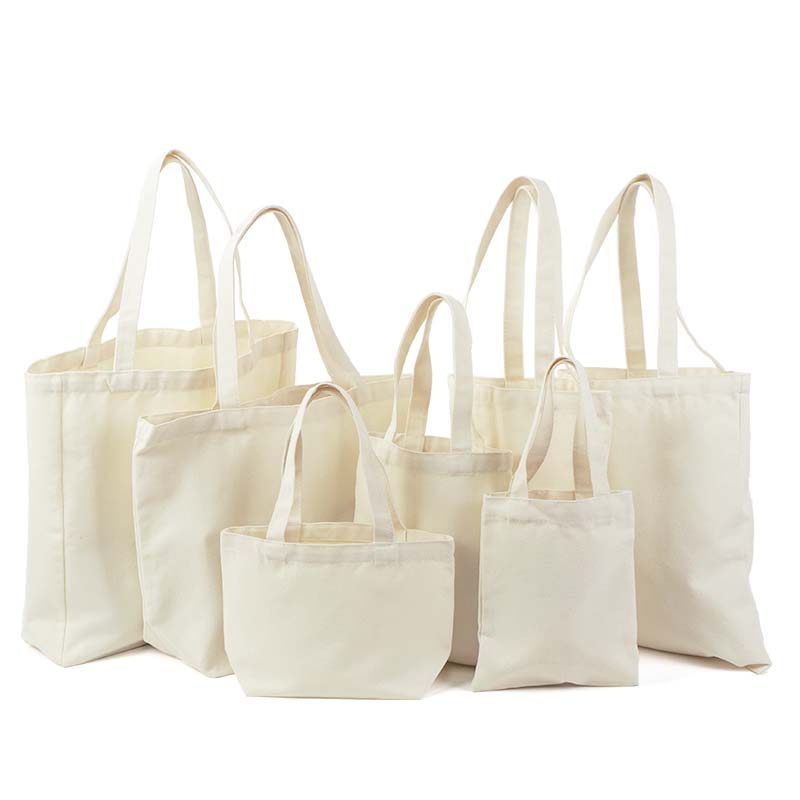
Canvas is a tightly woven fabric commonly made from cotton, although polyester and blended constructions are also available.
For cotton canvas bags, fabric weight is often described in ounces per square yard (oz/yd²) or grams per square meter (GSM).
A general reference range is:
| Canvas Weight | Approximate GSM | Typical Positioning |
|---|---|---|
| 6–8 oz | Approx. 200–270 GSM | Lightweight promotional tote |
| 8–10 oz | Approx. 270–340 GSM | Everyday cotton tote |
| 10–12 oz | Approx. 340–410 GSM | Structured reusable tote |
| 12–16 oz | Approx. 410–540 GSM | Heavyweight / premium canvas |
| 18 oz+ | 610 GSM+ | Extra-heavy or specialist use |
These figures should be treated as general references rather than universal standards.
Actual fabric performance also depends on:
- Yarn thickness
- Weave density
- Finishing
- Washing treatment
- Coating
- Cotton quality
Two fabrics with the same nominal weight can feel and perform differently.
For custom bag projects, buyers should therefore evaluate an actual fabric sample instead of selecting material only from an “oz” number.
Why Are Heavyweight Canvas Bags Becoming More Popular?
1. Tote Bags Are Becoming More Functional
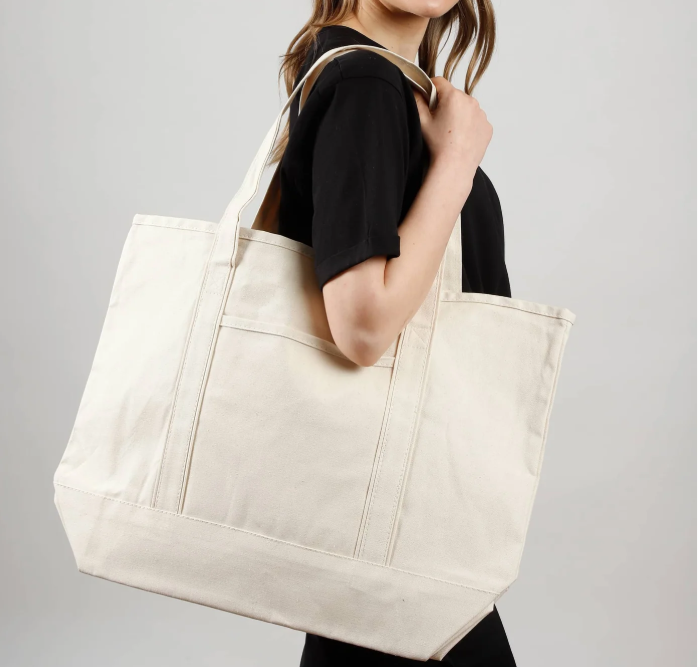
One of the clearest bag trends in 2026 is the return of larger, more practical totes.
Instead of small bags that carry only a phone and wallet, consumers are increasingly using totes for:
- Laptops
- Water bottles
- Lunch boxes
- Books
- Gym clothes
- Groceries
- Travel essentials
This creates a practical problem for lightweight cotton fabric.
A thin tote may work well for a brochure, a few retail purchases or an event giveaway, but it may stretch, sag or lose shape when carrying heavier daily items.
Heavyweight canvas provides a more suitable structure for this type of use.
It helps the bag:
- Maintain its shape
- Support heavier contents
- Resist repeated abrasion
- Provide a more stable base
- Feel more reliable during daily carrying
The increasing popularity of oversized totes therefore naturally supports demand for heavier fabrics.
2. Canvas Bags Are Moving from Promotional Item to Retail Product
Traditional promotional tote bags were often designed around three priorities:
- Low unit cost
- Large print area
- Easy mass distribution
These bags did not necessarily need to remain in regular use for several years.
Today, many companies are taking a different approach.
Instead of giving customers a very lightweight branded bag, they are developing canvas bags that can be:
- Sold in stores
- Included in merchandise collections
- Offered as loyalty products
- Used for limited editions
- Included in premium gift sets
Once a tote becomes a retail product rather than simple packaging, customer expectations change.
The bag is expected to have:
- Better fabric
- Cleaner stitching
- Stronger handles
- Better proportions
- More useful pockets
- Improved shape
- Better finishing
Heavy canvas helps create this higher-value product perception.
3. Heavy Canvas Creates a More Structured Appearance
One of the biggest differences between lightweight cotton and heavyweight canvas is visual structure.
Lightweight cotton tends to:
- Fold easily
- Collapse when empty
- Show wrinkles more clearly
- Create a softer silhouette
Heavy canvas tends to:
- Stand more naturally
- Hold a rectangular or boxy form
- Support wider gussets
- Look more substantial
This is especially useful for modern bag designs such as:
- Boxy grocery totes
- Oversized shopper bags
- Work totes
- Boat-style bags
- Utility totes
- Structured retail bags
For brands that want a minimalist or premium visual style, fabric structure can be as important as the logo itself.
4. Durability Supports Long-Term Reuse
Reusable bags only provide practical value when customers continue using them.
This makes durability an important purchasing factor.
Higher-weight canvas generally provides better resistance to:
- Repeated loading
- Surface abrasion
- Fabric distortion
- Handle stress
- Bottom wear
However, fabric weight alone does not determine bag strength.
A 16 oz canvas bag with poor sewing may still fail earlier than a well-constructed 10 oz bag.
For heavy-duty canvas bags, buyers should also consider:
Handle Construction
Look for:
- Wider cotton webbing
- Strong self-fabric handles
- Box stitching
- X reinforcement
- Larger attachment areas
Bottom Construction
For heavier products, buyers may use:
- Bottom gussets
- Double fabric layers
- Internal reinforcement
- Removable bottom boards
Seam Quality
Stress areas should receive sufficient stitch density and reinforcement.
The goal is to make the entire product suitable for repeated use rather than simply increasing fabric thickness.
5. Heavyweight Canvas Has a More Premium Hand Feel
Material weight directly affects how a customer perceives the bag.
A lightweight tote can feel practical and economical.
A heavy canvas tote usually feels:
- More substantial
- More tactile
- More structured
- More durable
This is one reason heavyweight canvas works well for:
- Fashion brands
- Bookstores
- Coffee brands
- Museums
- Boutique retailers
- Hotels
- Corporate gifting
The material itself contributes to the perceived value of the product.
A relatively simple bag with natural canvas, clean stitching and quality handles can look premium without requiring complicated decorations.
6. Oversized Tote Bags Need Stronger Fabric
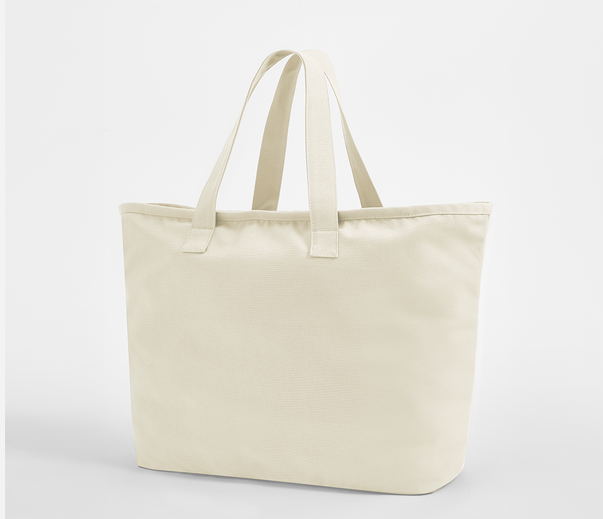
Oversized bags are one of the most visible bag trends in 2026.
Increasing bag size creates additional structural demands.
A larger bag means:
- More fabric surface
- Greater potential carrying weight
- Longer seams
- More pressure on handles
- Higher risk of sagging
If the fabric is too thin, an oversized tote can become shapeless.
Heavy canvas helps support large silhouettes while maintaining a clean structure.
Popular designs include:
Oversized Shopper Tote
Large open compartment with long handles.
Suitable for:
- Daily use
- Shopping
- Work
- Travel
Large Box Tote
Wide bottom and side gussets.
Suitable for:
- Groceries
- Beach use
- Retail merchandise
- Family outings
Work Canvas Tote
Often includes:
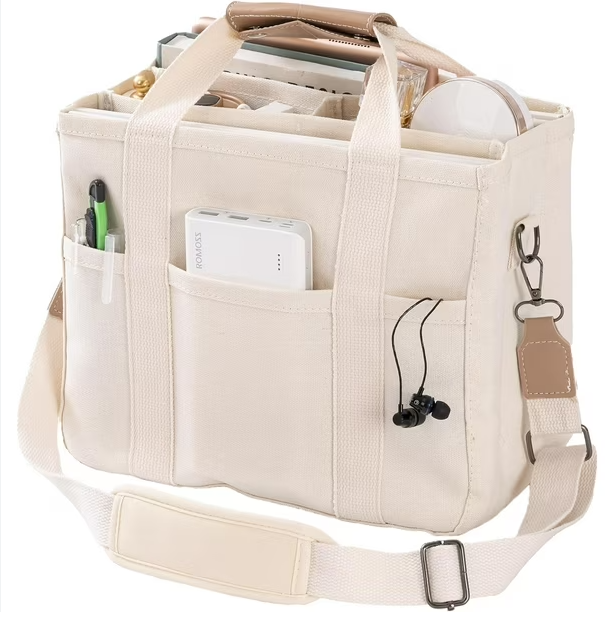
- Laptop compartment
- Inner pockets
- Zipper closure
- Reinforced handles
These functional additions also increase the reason to use a stronger base fabric.
7. Heavy Canvas Works Well with Minimalist Design
Many successful canvas bags are visually simple.
Instead of using multiple decorations, modern canvas tote designs often rely on:
- Good proportions
- Strong fabric
- Neutral colors
- Small logos
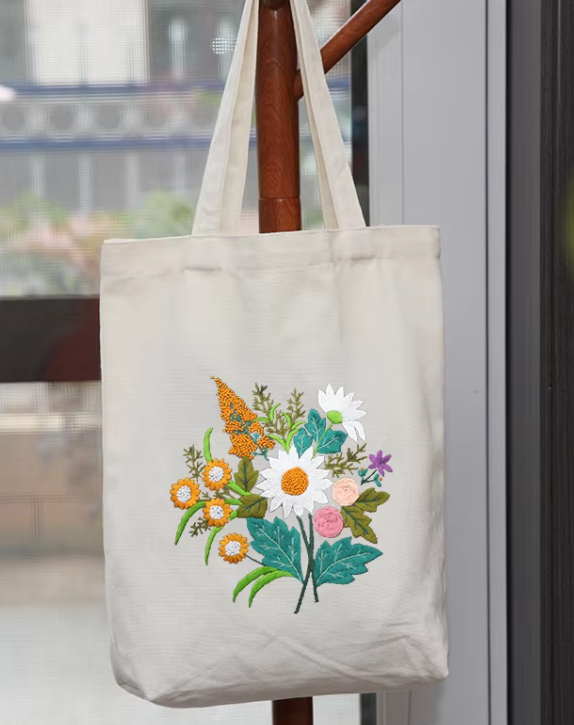
- Embroidery
- Woven labels
- Contrast handles
Heavy canvas works particularly well with this approach because the texture and structure of the material become part of the design.
Natural colors such as:
- Ecru
- Beige
- Khaki
- Olive
- Black
- Navy
remain common, although brighter dyed colors are increasingly used for fashion and seasonal collections.
8. Embroidery and Premium Decoration Work Better on Stable Fabrics
Lightweight cotton is excellent for simple printing, but more complex decoration can require greater fabric stability.
Heavyweight canvas provides a good base for:
- Embroidery
- Chenille embroidery
- Woven patches
- PU patches
- Large screen prints
- DTG artwork
- Appliqué
The thicker fabric reduces distortion around embroidery areas and gives decorative elements more physical presence.
This is particularly useful for brands developing merchandise rather than disposable promotional items.
Heavyweight Canvas vs Lightweight Cotton
Neither option is universally better.
They serve different purposes.
| Factor | Lightweight Cotton | Heavyweight Canvas |
| Weight | Light | Heavy |
| Structure | Soft | Structured |
| Folding | Very easy | Less compact |
| Load Capacity | Light to medium | Medium to heavy |
| Shipping Cost | Lower | Higher |
| Material Cost | Lower | Higher |
| Premium Feel | Basic to medium | Strong |
| Printing | Excellent | Excellent |
| Embroidery | Possible | Usually better |
| Best Use | Events, giveaways | Retail, everyday, premium reuse |
For large promotional programs where low cost and shipping efficiency are priorities, lightweight cotton may still be the better choice.
For retail products expected to remain in regular use, heavier canvas may provide more value.
Which Canvas Weight Should Buyers Choose?
6–8 oz Canvas
Best for:
- Events
- Conferences
- Promotional giveaways
- Lightweight retail packaging
Advantages:
- Economical
- Easy to fold
- Lower freight cost
Not ideal for heavy daily use.
8–10 oz Canvas
Best for:
- General tote bags
- Everyday shopping
- Promotional merchandise
- Bookstores
Provides a good balance between:
- Weight
- Cost
- Durability
10–12 oz Canvas
Best for:
- Retail tote bags
- Grocery bags
- Lifestyle merchandise
- Reusable shopping programs
Provides more structure without becoming excessively heavy.
12–16 oz Heavy Canvas
Best for:
- Premium tote bags
- Oversized totes
- Work bags
- Book bags
- Travel carryalls
- Heavy grocery bags
Advantages:
- Better shape retention
- Stronger premium appearance
- Suitable for reinforced construction
Trade-offs:
- Higher fabric cost
- Higher shipping weight
- More sewing difficulty
18 oz and Above
Extra-heavy canvas is usually unnecessary for ordinary promotional totes.
It may be appropriate for:
- Tool bags
- Utility carriers
- Industrial applications
- Highly structured specialty products
Buyers should avoid choosing extremely heavy fabric simply because “heavier sounds better.”
The material should match the intended use.
Heavyweight Canvas for Grocery and Retail Shopping
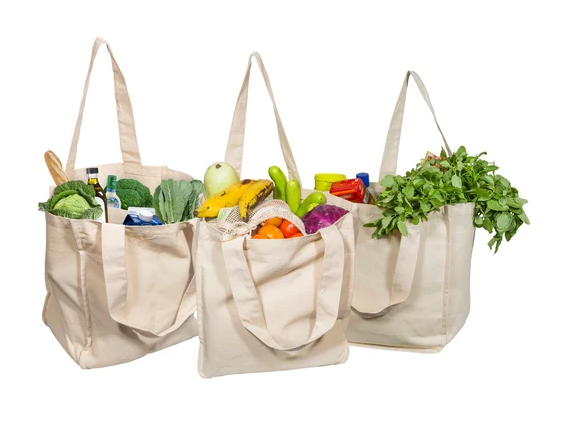
Canvas remains particularly useful for grocery shopping because customers often carry:
- Glass bottles
- Canned food
- Produce
- Packaged goods
- Household products
Suitable structures include:
- Wide bottom gusset
- Long reinforced handles
- Box shape
- Internal bottle dividers
- Outer pockets
For grocery projects, a medium-to-heavy canvas can provide better durability than a lightweight giveaway tote.
However, excessively heavy fabric also increases the empty weight of the bag.
A retailer should balance:
strength + comfort + cost + shipping
rather than simply specifying the maximum available GSM.
Heavy Canvas for Work and Everyday Carry
Another reason canvas bags are moving toward heavier weights is the increasing use of totes as work bags.
A modern work tote may contain:
- Laptop
- Tablet
- Charger
- Water bottle
- Notebook
- Personal accessories
This requires more structure than a traditional flat cotton bag.
Possible additions include:
- Internal laptop sleeve
- Zipper closure
- Key loop
- Bottle pocket
- Interior divider
- Reinforced base
Heavy canvas provides the physical support needed for these functions.
Sustainability: Is Heavier Always Better?
Not necessarily.
Heavy canvas uses more material than lightweight cotton and usually creates:
- Higher product weight
- Higher transportation weight
- More material consumption
Its sustainability value therefore depends strongly on product life and frequency of use.
If a well-designed heavy canvas bag is used hundreds of times, its durability can support a strong reusable model.
If it is produced as a one-time promotional giveaway and rarely used afterward, using more fabric provides little practical benefit.
For sustainability-focused purchasing, buyers should ask:
- Does the application really require heavy canvas?
- Will customers use the bag frequently?
- Is the structure designed to last?
- Can unnecessary accessories be removed?
- Is natural, recycled or certified cotton required?
- Can plastic packaging be reduced?
The best specification is usually the lightest construction that still provides the required product lifetime and performance.
Important Sourcing Considerations
1. Confirm Fabric Weight Before Production
Do not rely only on terms such as:
- Heavy canvas
- Thick cotton
- Premium canvas
Request an actual weight specification and fabric sample.
2. Test the Complete Bag
A fabric specification does not guarantee finished-product strength.
Test:
- Handle attachment
- Bottom seam
- Gusset
- Zipper
- Pocket stitching
according to the expected load.
3. Consider Shrinkage
Natural cotton canvas may shrink after washing.
If the bag needs to be washable, confirm:
- Pre-washing
- Shrinkage tolerance
- Print performance
- Colorfastness
during sample development.
4. Check Printing Compatibility
Dense canvas texture can affect fine details.
For large logos and bold artwork, screen printing usually works well.
For complex artwork, test:
- DTG
- Heat transfer
- Embroidery
on the selected fabric before approving production.
5. Calculate Shipping Impact
Heavy fabric can significantly increase total order weight.
For a large-volume order, moving from a lightweight tote to a 12–16 oz canvas bag can add substantial freight cost.
Buyers should compare:
- Pieces per carton
- Carton dimensions
- Gross weight
- Sea freight
- Air freight
before confirming the final material.
Where Heavyweight Canvas Makes the Most Sense
Heavy cotton canvas is particularly suitable when buyers need:
Premium Retail Merchandise
The bag itself is part of the product range.
Long-Term Reusable Shopping Bags
Durability is more important than the lowest initial price.
Oversized Totes
The structure needs to support larger dimensions.
Work and Travel Bags
The bag carries heavier personal items.
Bookstore and Museum Merchandise
Customers expect the tote to be reused regularly.
Corporate Gifts
The project requires better perceived value.
Grocery and Farmers Market Bags
Strong handles and bottom construction are required.
Custom Heavyweight Canvas Bag Options
INITI produces cotton and canvas bags in different fabric weights and structures for retail, shopping, gifting and everyday-use projects.
Common customization options include:
- Lightweight to heavyweight canvas
- Natural or dyed fabric
- Flat or gusseted structures
- Short or long handles
- Cotton webbing handles
- Interior pockets
- Zipper closures
- Bottom reinforcement
- Screen printing
- DTG printing
- Embroidery
- Woven labels
For heavy canvas projects, fabric weight, handle structure and expected carrying load should be evaluated together during sample development.
This is more reliable than selecting a fabric based only on appearance.
FAQ
What is considered heavyweight canvas for tote bags?
For many custom bag projects, approximately 12–16 oz canvas is generally considered heavyweight. Actual classification varies between suppliers and fabric constructions.
Is 12 oz canvas good for tote bags?
Yes. 12 oz canvas provides a good balance of durability and structure for reusable shopping bags, retail totes and everyday carry products.
Is 16 oz canvas too heavy?
It depends on the application. For oversized, premium or heavy-duty bags, 16 oz may be suitable. For promotional giveaways, it may add unnecessary weight and cost.
Is heavyweight canvas stronger than normal cotton?
Generally yes, because canvas uses a denser woven construction. However, finished bag strength also depends on seams, handles and reinforcement.
Can heavyweight canvas bags be washed?
Many untreated cotton canvas bags can be cleaned, but shrinkage and color change are possible. Washing requirements should be considered during material selection.
Is heavy canvas suitable for printing?
Yes. Heavy canvas performs well with screen printing, DTG, embroidery and other decoration methods, although the selected process should be tested on the actual fabric.
What canvas weight is best for grocery bags?
Medium-to-heavy canvas, often around 10–14 oz depending on design, can work well. The final choice should depend on bag size, expected carrying load and target price.
Conclusion
The popularity of heavyweight cotton canvas bags in 2026 reflects a broader change in how tote bags are being used.
Consumers increasingly expect totes to carry larger loads, support work and travel, and remain useful beyond a single shopping trip or promotional event.
At the same time, oversized and structured totes are becoming more visible in fashion and lifestyle markets.
Heavy canvas responds to these needs by offering:
- Better structure
- Stronger durability
- Higher perceived quality
- Better support for functional features
- Greater suitability for long-term reuse
However, heavier is not always better.
For B2B buyers, the right canvas specification should balance fabric weight with intended use, bag size, reinforcement, customer comfort, production cost and freight.
A well-designed 10 or 12 oz canvas bag may perform better for one project than an unnecessarily heavy 16 oz bag.
The most effective approach is to define how the bag will actually be used first, then select the fabric weight and construction that support that use.