Polypropylene (PP) has quietly become the backbone of the global bag industry. It is not the flashiest material, but it is everywhere: the reusable grocery tote in your trunk, the bulk feed sack on a farm, the promotional giveaway bag from a trade show, and the medical waste container in a clinic. All share the same polymer core.
What makes polypropylene so dominant? A combination of properties that happen to align perfectly with industrial-scale bag production: it is lightweight, water-resistant, chemically inert, tear-resistant, and — critically — one of the most cost-effective synthetic polymers to manufacture at volume. The global PP market surpassed 45 million metric tons annually and continues to grow, driven largely by packaging and textile applications.
This article maps out the ten most significant industrial uses of polypropylene bags, from consumer retail to heavy-duty logistics. Whether you are sourcing bags for a brand, planning a procurement decision, or simply curious about where PP fits in the supply chain, this guide covers the landscape.
What Are Polypropylene Bags?
Before diving into applications, let us clarify what “polypropylene bags” actually means — because the term covers a surprisingly broad product family.
Polypropylene bags are any bags manufactured primarily from polypropylene (PP), a thermoplastic polymer created by polymerizing propylene monomers. PP falls under recycling code #5 and is known for being strong, lightweight, chemically resistant, and among the most cost-effective plastics in mass production.
In the bag industry, PP appears in three main fabric forms:
| Type | Construction | Common Bag Formats | Typical GSM Range |
|---|---|---|---|
| Non-woven PP | Spun-bond fibers bonded by heat/pressure, creating a fabric-like sheet | Tote bags, shopping bags, drawstring bags, garment covers | 30–120 GSM |
| Woven PP | Interlaced PP tapes (flat yarns) in a crisscross weave, often laminated | Bulk sacks, sandbags, fertilizer bags, FIBCs, heavy-duty totes | 50–240 GSM |
| PP Film | Thin, continuous PP sheet (cast or blown film) | Transparent packaging, food pouches, medical sterilization bags | 20–80 microns |
Key difference from other bag materials: Unlike cotton or jute, PP is fully synthetic — it does not absorb water, resists mold and bacteria, and can be engineered with additives (UV stabilizers, flame retardants, anti-static agents) for specific industrial requirements. Unlike polyethylene (PE), PP has a higher melting point (~160°C vs ~120°C) and greater tensile strength, making it suitable for load-bearing applications where PE bags would stretch or fail.
For a deeper dive into the material science behind polypropylene, see this comprehensive polypropylene guide from totebagfactory.com.
1. Retail & Shopping Bags
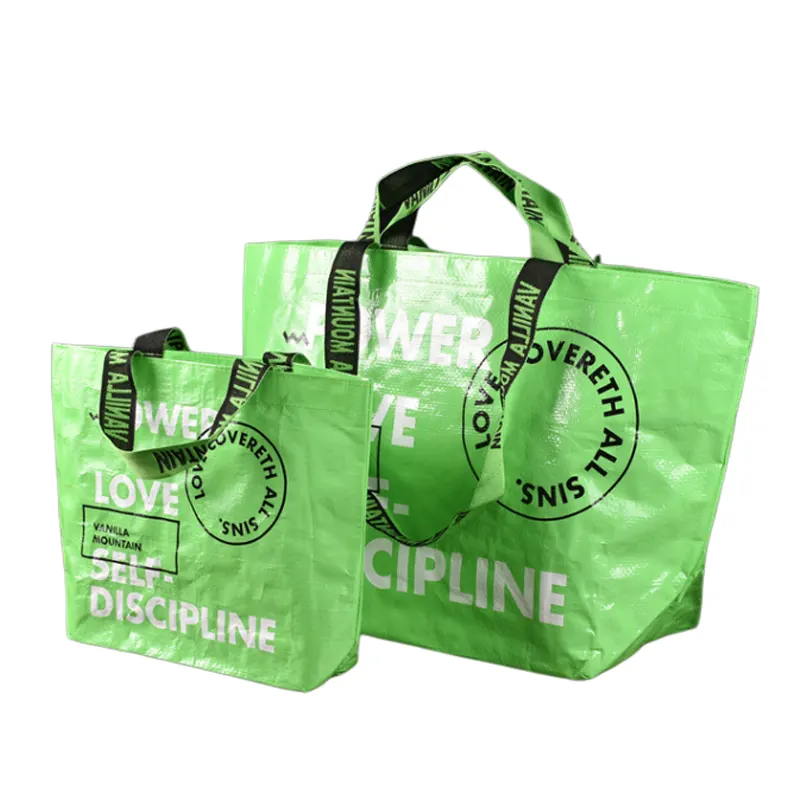
The most visible use case. Non-woven polypropylene shopping bags have become the standard reusable bag in markets worldwide, replacing single-use plastic in jurisdictions with bag bans.
Why PP wins here:
- The non-woven structure provides stitch-like strength without the cost of woven fabric.
- PP accepts full-color printing, making it ideal for retail branding.
- The material holds up under repeated use — a single PP shopping bag can survive hundreds of trips.
Retailers from grocery chains to boutique clothing stores deploy PP tote bags as both a functional product and a mobile billboard. When a customer carries a branded PP tote, the retailer gets impressions on every subway ride, sidewalk, and parking lot.
2. Grocery & Produce Bags
Supermarket shoppers encounter PP in two forms: the heavy-duty reusable grocery tote (non-woven or woven), and lightweight PP mesh or film bags for loose produce.
Key advantages for food retail:
- PP is FDA-compliant for food contact in specific formulations.
- The material resists moisture, preventing condensation buildup around fresh produce.
- Woven PP bags for bulk items (rice, flour, potatoes) provide puncture resistance during transport and stacking.
For organic and farmers’ market vendors, PP produce bags offer a washable, reusable alternative to single-use plastic that aligns with sustainability messaging.

3. Promotional & Trade Show Bags
If you have ever walked a convention floor, you have carried a polypropylene bag. Trade show organizers and exhibitors order PP tote bags and drawstring backpacks by the thousands for one reason: the cost-per-impression is unmatched.
Why PP dominates giveaways:
- Unit costs drop below $1 in bulk orders, even with custom printing.
- The non-woven surface handles screen printing, heat transfer, and sublimation well.
- Lightweight construction keeps shipping costs low when distributing at events.
A single conference can distribute 10,000 branded PP bags. Each bag is carried for months afterwards, generating extended brand exposure far beyond the event booth.

4. Medical & Pharmaceutical Bags
Polypropylene’s chemical resistance and sterilizability make it essential in healthcare settings. Medical-grade PP bags serve roles ranging from biohazard waste disposal to sterile instrument packaging.
Medical applications include:
- Biohazard and infectious waste disposal bags (PP with color-coded labeling).
- Sterilization pouches for surgical instruments (PP film paired with paper backing).
- Specimen transport bags with tamper-evident seals.
- Pharmacy dispensing bags with child-resistant features.
PP is autoclavable at lower temperature ranges and resists the common disinfectants used in clinical environments, including alcohols, bleach solutions, and hydrogen peroxide.

5. Agricultural & Fertilizer Bags
The agricultural sector is one of the largest consumers of woven polypropylene bags. Walk through any farm supply store and you will see PP sacks stacked floor-to-ceiling: seed bags, fertilizer sacks, animal feed bags, and grain storage solutions.
Why agriculture relies on PP:
- Woven PP bags handle loads of 25–50 kg without tearing.
- UV-stabilized PP resists degradation during outdoor storage.
- Laminated PP inner linings prevent moisture ingress for hygroscopic products like fertilizers.
- The material resists rodent damage better than paper or jute alternatives.
Ventilated PP bags are also widely used for produce that requires airflow — potatoes, onions, and citrus being prime examples — preventing mold growth during transport and storage.

6. Construction & Sandbag Applications
When a flood is forecast, the emergency response hinges on polypropylene. Sandbags — woven PP tubes filled with sand or soil — are the frontline defense against rising water. But construction uses extend far beyond flood control.
Construction uses of PP bags:
- Sandbags: Woven PP with UV treatment for temporary flood barriers, erosion control, and military fortifications.
- Debris bags: Heavy-duty PP sacks for construction and demolition waste.
- Cement and mortar bags: PP with a moisture-barrier laminate to keep powder products dry on job sites.
The construction-grade PP bag market demands high tensile strength and consistent stitch quality, as failure during filling or placement creates immediate safety hazards.

7. Food Packaging Bags
Beyond grocery totes, PP enters the food supply chain as primary packaging for bulk ingredients. The material’s moisture barrier properties, combined with food-safe formulations, make it the default choice for many dry goods.
Examples in food packaging:
- Flour and sugar sacks (woven PP with paper or film laminate).
- Coffee bean transport bags (PP with a high-barrier inner layer to preserve aroma).
- Rice and grain bags for both retail and wholesale distribution.
- Snack food packaging (PP film for chips, crackers, and confectionery).
In food applications, PP’s recyclability score (compared to multi-material laminates) is becoming a competitive advantage as packaging regulations tighten in the EU and North America.

8. Sports & Outdoor Gear Bags
Polypropylene’s combination of water resistance, durability, and printability has made it a staple in the sports bag segment. From gym duffels to team gear sacks, PP delivers performance at a fraction of the cost of nylon or polyester.
Sports bag applications:
- Drawstring cinch bags for team sports, gym use, and school athletics.
- Duffel bags with PP outer shells for lightweight travel and fitness.
- Equipment bags (ball bags, mesh gear bags) for organized sports.
- Stadium-approved clear PP bags, now mandatory in many NFL and college venues.
For sports brands and team merchandisers, PP bags offer a high-margin product: the material cost is low, but the perceived value is driven by print quality, design, and brand recognition.

9. Industrial Bulk Packaging (FIBC)
Flexible Intermediate Bulk Containers, or FIBCs — often called “bulk bags” or “super sacks” — are the largest-scale application of woven polypropylene in the world. These massive bags transport 500 kg to 2,000 kg of dry, flowable products.
FIBC applications span multiple industries:
- Chemicals and minerals (sand, gravel, powdered minerals).
- Agricultural commodities (grains, seeds, fertilizers in bulk).
- Construction materials (cement, aggregates).
- Food-grade bulk products (sugar, starch, malt).
FIBCs are engineered for specific load classes and safety factors. Type D FIBCs, for example, include anti-static properties for use in combustible dust environments. The stitching pattern, lift-loop design, and fabric weight are all specified by international standards (ISO 21898).

10. Laundry & Garment Bags
The final sector where PP bags are indispensable: textile care and garment handling. Polypropylene laundry bags, garment covers, and dry-cleaning bags protect fabrics during washing, storage, and transport.
Common use cases:
- Laundry bags: PP mesh bags protect delicate garments in commercial and home washing machines while allowing water and detergent to circulate freely.
- Garment covers: Non-woven PP covers shield hanging clothes from dust, moisture, and insects during storage or shipping.
- Hotel and hospitality: Bulk PP laundry bags for linen collection in hotels, hospitals, and spas.
- Shoe bags: PP drawstring pouches for travel shoe storage and retail packaging.
The breathability of non-woven PP is the key advantage here: unlike sealed plastic bags, PP garment covers allow airflow while still blocking dust and lint.

How Polypropylene Stacks Up: Quick Comparison
| Property | Polypropylene (PP) | Polyethylene (PE) | Jute / Burlap | Cotton Canvas |
|---|---|---|---|---|
| Water resistance | Excellent | Excellent | Poor (absorbs) | Poor |
| Tensile strength | High | Medium | High | High |
| Cost per unit | Low | Very low | Medium | High |
| Print quality | Good | Limited | Limited | Excellent |
| Recyclability | Yes (#5) | Yes (#2/#4) | Biodegradable | Biodegradable |
| UV resistance | Moderate (needs stabilizer) | Low | Low | Moderate |
| Weight (comparable bag) | Light | Very light | Medium-heavy | Heavy |
PP occupies a sweet spot: it is stronger and more printable than PE, cheaper and more weather-resistant than natural fibers, and beats both on weight-to-strength ratio for most bag formats.
Choosing the Right PP Bag for Your Industry
Not all polypropylene bags are the same. Three parameters determine which type fits your application:
1. Fabric Construction
- Non-woven PP: Best for retail, promotional, and lightweight reusable bags. Economical at scale, smooth printing surface.
- Woven PP: Required for bulk, agricultural, construction, and FIBC applications. Higher tensile strength through cross-weave.
- PP Film: For food packaging, medical pouches, and transparent bags.
2. Weight (GSM — grams per square meter) Ranges from 30 GSM (lightweight produce bags) to 200+ GSM (heavy-duty woven sacks). Higher GSM = greater durability and load capacity, but also higher material cost and shipping weight.
3. Additives and Treatments
- UV stabilizers: Essential for outdoor or sun-exposed applications.
- Anti-static agents: Required in combustible environments (FIBC Type D).
- Flame retardants: For construction and industrial safety applications.
- Color masterbatch: For brand-matching and industry-standard color coding.
The Bottom Line
Polypropylene bags are not a single product — they are a material platform that scales from a 50-gram produce bag to a 2-tonne industrial container. The same polymer that carries your groceries also holds back floodwaters and transports pharmaceutical ingredients under sterile conditions.
For procurement managers, brand owners, and importers, understanding the landscape of PP bag applications is not academic — it is a sourcing decision. The right construction, GSM, and treatment combination can reduce per-unit costs by 30% or more compared to standard off-the-shelf alternatives.
If you are sourcing polypropylene bags for your business — whether you need 500 branded totes for an event or 50,000 woven sacks for agricultural distribution — the material choice is the first and most consequential decision in your supply chain.
Frequently Asked Questions
Are polypropylene bags waterproof?
Polypropylene bags are water-resistant, not fully waterproof. Non-woven and woven PP repel water on the surface and will not absorb moisture like cotton or jute, but liquid can seep through stitch holes in woven PP or the porous structure of non-woven fabric under prolonged exposure. For truly waterproof applications, PP bags are often laminated with a thin PP or PE film layer, which seals the surface. Unlaminated PP bags will keep contents dry in light rain or splashes but should not be submerged.
Can polypropylene bags be recycled?
Yes. Polypropylene is identified by recycling code #5 and is accepted by a growing number of municipal recycling programs. Woven PP bags (such as bulk sacks and sandbags) can be mechanically recycled into new PP pellets for use in injection molding, construction materials, or new fiber production. Non-woven PP bags are harder to process through curbside systems due to their fabric-like texture — check with local recyclers. Industrially, PP boasts one of the lowest environmental footprints among plastics, producing less CO₂ equivalent per kilogram than PET, PS, or PVC.
What is the difference between non-woven and woven polypropylene bags?
| Feature | Non-woven PP | Woven PP |
|---|---|---|
| Structure | Spun-bond fibers bonded into a fabric sheet | Interlaced PP tapes in a crisscross weave |
| Feel | Soft, fabric-like, similar to felt | Textured, grid-pattern surface, stiffer |
| Strength | Moderate — suitable for loads up to 5–10 kg | High — handles 25–2,000 kg depending on GSM |
| Print quality | Excellent — smooth surface for full-color graphics | Good — but textured surface limits fine detail |
| Typical use | Tote bags, giveaways, garment covers | Bulk sacks, sandbags, agricultural bags, FIBCs |
| Cost | Lower per-unit cost at volume | Slightly higher, driven by weaving process |
Rule of thumb: If the bag needs to hold more than 10 kg or will be exposed to rough handling, choose woven. For lightweight, brand-forward applications, non-woven is the better option.
How long do polypropylene bags last?
Under normal use, a non-woven PP shopping bag can last 1 to 3 years with regular washing. Woven PP bags used in industrial applications can remain serviceable for 3 to 5 years or more, especially when treated with UV stabilizers. The main factors that shorten lifespan are prolonged sun exposure (PP degrades under UV without stabilizers), sharp-edge abrasion, and overloading beyond the bag’s rated capacity.
Are polypropylene bags safe for food contact?
Yes — with the right specification. Food-grade polypropylene is FDA-approved for direct food contact and is widely used in food packaging (yogurt cups, snack wrappers, bulk ingredient sacks). However, not all PP bags are food-grade by default. When sourcing PP bags for food applications, verify that the manufacturer uses virgin PP resin (not recycled content, unless certified food-grade recycled material) and that any additives (colorants, laminates, coatings) are also food-safe.
What GSM should I choose for my polypropylene bags?
| Application | Recommended GSM |
|---|---|
| Lightweight promo/giveaway totes | 60–80 GSM |
| Standard reusable shopping bags | 80–100 GSM |
| Heavy-duty retail totes | 100–150 GSM |
| Woven sandbags / debris bags | 120–180 GSM |
| Woven bulk sacks (25–50 kg) | 160–240 GSM |
| FIBCs (500–2,000 kg) | 200+ GSM with safety factor rating |
Higher GSM increases durability and load capacity but also raises material cost and shipping weight. For most retail and promotional applications, 80–100 GSM strikes the right balance between cost, feel, and longevity.