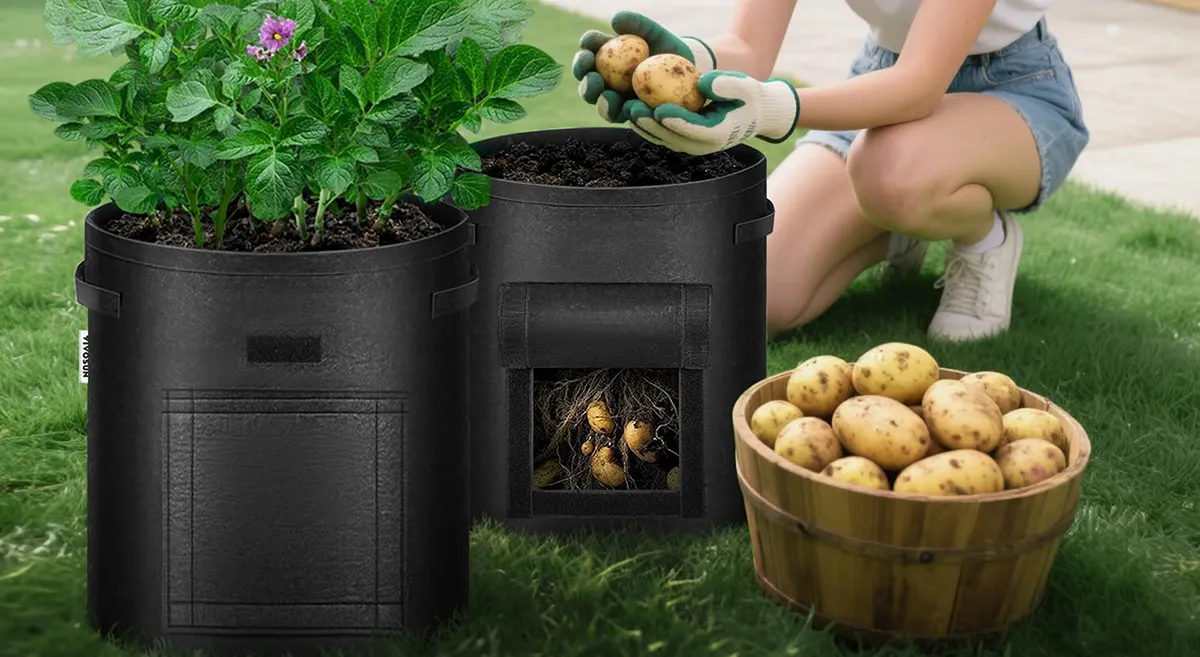
Potatoes are one of the easiest and most rewarding crops to grow, especially when using grow bags. They require less space than traditional garden plots, offer better drainage, and make harvesting simple. But one of the most common questions new gardeners ask is: what size grow bag is best for potatoes?

The answer depends on your available space, the type of potato you want to grow, and how much you want to harvest. This guide will help you decide the perfect size grow bag for your potato plants, explain the benefits of different sizes, and provide practical growing tips to maximize your yield.
Why Grow Bags Are Ideal for Potatoes
Before choosing the right size, let’s quickly look at why grow bags are such a smart option for potato growing:
- Better Drainage: The breathable fabric allows excess water to escape, preventing rot.
- Healthier Roots: Air-pruning ensures stronger, more fibrous root systems.
- Space Efficiency: Perfect for patios, balconies, or small gardens.
- Easy Harvest: Simply tip over the bag or open a harvest flap.
- Mobility: Move bags to sunnier spots or protect them from frost.
With the right size, these benefits translate into healthy plants and plentiful harvests.
What Size Grow Bag for Potatoes?
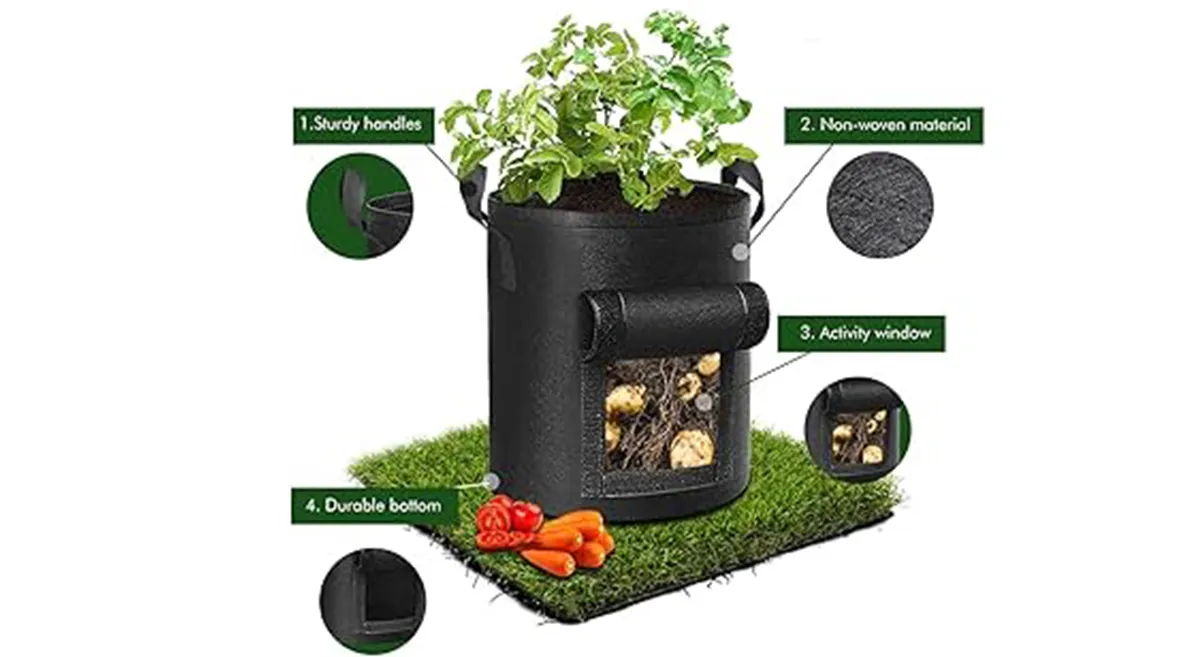
Potatoes need depth and space to develop tubers. Here’s a breakdown of recommended grow bag sizes:
| Grow Bag Size | Capacity (Gallons) | Seed Potatoes per Bag | Expected Yield | Best For |
|---|---|---|---|---|
| Small | 5 Gallons | 1–2 | Low | Beginners, balconies, trial runs |
| Medium | 10 Gallons | 3–4 | Medium | Most home gardeners |
| Large | 15 Gallons | 4–5 | High | Families, regular use |
| Extra-Large | 20+ Gallons | 5–6+ | Very High | Enthusiasts, bulk harvests |
General Rule: Allocate about 2–3 gallons of space per seed potato.
How Many Potatoes Should You Plant Per Bag?
The number of seed potatoes depends on the bag size:
- 5-gallon bag: 1–2 seed potatoes
- 10-gallon bag: 3–4 seed potatoes
- 15-gallon bag: 4–5 seed potatoes
- 20-gallon bag: 5–6 seed potatoes
Overcrowding leads to small tubers and poor yields, while under-planting wastes space.
Step-by-Step: Planting Potatoes in Grow Bags
Step 1: Prepare the Bag
Choose a sunny location and fold down the sides of the bag to 1/3 its height.
Step 2: Add Soil Base
Fill 4–6 inches of light, well-draining soil mix (compost + coco coir + perlite).
Step 3: Place Seed Potatoes
Lay seed potatoes with the eyes facing upward.
Step 4: Cover with Soil
Add 3–4 inches of soil over the seed potatoes and water lightly.
Step 5: Hill as They Grow
As plants reach 6–8 inches tall, add more soil around the stems. Continue until the bag is full.
Factors to Consider When Choosing a Grow Bag Size
Available Space
- Small patios or balconies: 5–10 gallon bags are best.
- Larger gardens: 15–20 gallon bags give higher yields.
Desired Yield
- Want a small trial harvest? Choose 5 gallons.
- Need a steady supply for family meals? Go for 15–20 gallons.
Potato Variety
- Early potatoes (baby/new potatoes): Do well in 5–10 gallon bags.
- Maincrop potatoes (larger tubers): Perform best in 15–20 gallon bags.
Mobility
- Smaller bags are lighter and easier to move.
- Larger bags are heavier but yield more.
Advantages of Different Bag Sizes
| Size | Advantages | Disadvantages |
|---|---|---|
| 5 Gallons | Lightweight, portable, quick crops | Small harvest, limited use |
| 10 Gallons | Balanced size, good yields | Still limited for heavy eaters |
| 15 Gallons | High yields, ideal for families | Heavier to move |
| 20+ Gallons | Maximum harvest, good for storage potatoes | Very heavy, needs more soil |
Tips for Maximizing Potato Yields in Grow Bags
- Use loose, fluffy soil so tubers can expand easily.
- Water consistently—dry soil limits growth, but avoid overwatering.
- Fertilize with potassium-rich feed to encourage tuber development.
- Place bags in full sun for at least 6–8 hours daily.
- Harvest at the right time: baby potatoes after 8–10 weeks, mature ones after 12–16 weeks.
Conclusion
So, what size grow bag should you use for potatoes?
- For beginners or small spaces: 5–10 gallon bags are perfect.
- For bigger harvests and families: 15–20 gallon bags provide the best results.
By choosing the right size, planting the correct number of seed potatoes, and maintaining proper care, you can enjoy a bountiful harvest with minimal effort.
As a grow bag manufacturer, we supply durable, breathable, and eco-friendly bags designed for healthier roots and higher yields. Whether you’re a hobbyist gardener or a large-scale grower, our grow bags are built to support your potato-growing success. Get in touch today to explore our full range and start planting smarter!
FAQ
How many potatoes can I grow in a 10-gallon bag?
You can plant 3–4 seed potatoes in a 10-gallon bag for a medium harvest.
Are bigger grow bags always better for potatoes?
Not necessarily. While bigger bags yield more, they require more soil, water, and space. Choose based on your needs.
Can I grow potatoes in a 5-gallon bag?
Yes, but only 1–2 seed potatoes fit. Expect a smaller harvest.
Do different potato varieties need different bag sizes?
Yes. Early varieties thrive in smaller bags (5–10 gallons), while maincrop varieties prefer larger bags (15–20 gallons).
How deep should a grow bag be for potatoes?
At least 12–15 inches deep to allow tuber development.
Can I reuse the soil from potato grow bags?
It’s better to refresh the soil each season to avoid disease and nutrient depletion.