
A neoprene bag is a bag made from neoprene, a flexible synthetic rubber prized for elasticity, water resistance and cushioning. If you need a material that protects electronics, keeps food warm for a few hours, or gives a soft premium feel for promotional items, neoprene often fits the brief. In this article we explain what neoprene is, how manufacturers turn it into bags, the most common bag types, the real advantages and the trade offs, practical care instructions, and clear sourcing and design tips you can use when you order samples or plan a production run.

What is neoprene?
Neoprene comes from polychloroprene, a family of engineered synthetic rubbers made for durability and dimensional stability. Factories supply neoprene in several formats suited to bags: closed cell foam, open cell foam and laminate constructions where a thin fabric covers one or both outer faces. Typical thickness ranges for bag use run from about 1.5 millimeters to 5 millimeters. Thin sheets work well for lightweight sleeves and slim totes. Thick sheets add padding and thermal insulation but increase weight and cost.
Manufacturers often bond a woven or knitted face cloth, such as nylon or polyester, to the neoprene core to improve printability, abrasion resistance and stitch support. For product designers this laminate option matters: it affects the decorative possibilities and the performance of embroidery, heat transfer or silicone badges.
Common types of neoprene bags and typical uses

Neoprene lunch bags
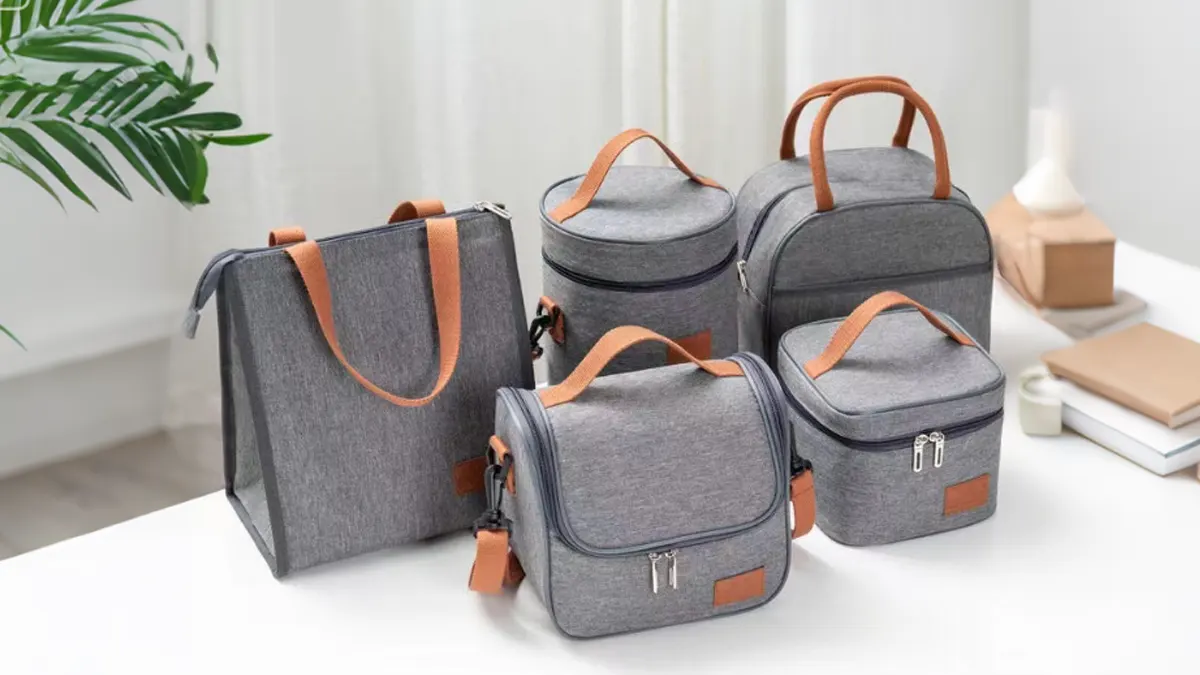
Neoprene retains heat and repels moisture, which makes it a natural choice for lunch bags and cooler pouches. Pair neoprene with an aluminum foil liner or an additional insulating layer to boost thermal performance while keeping the exterior soft and washable. Brands use this combo for corporate gifting, meal subscription kits and retail lunch carriers.
Neoprene laptop sleeves and device sleeves
Neoprene foam absorbs impact and gives a slim protective profile. Customers like lightweight sleeves with padding and soft linings. For premium models add a fleece lining for scratch protection, a reinforced edge for drop resistance and internal pockets for chargers and cables.
Neoprene totes and shopper bags
Designers use neoprene for branded totes and shopper bags where appearance matters. The material keeps a neat silhouette, resists crease marks and feels upscale without heavy structure. Branded neoprene totes work well as gift with purchase items or retail merchandise bags.
Travel and accessory pouches
Neoprene suits wash bags, tech organizers and travel pouches. The water resistant surface wipes clean easily and flexible panels compress into luggage without creating sharp creases. Water resistant zipper tapes and bonded seams raise performance for travel use.
Sport and outdoor inspired accessories
Neoprene matches the demands of gym and outdoor goods, from bottle holders to protective wraps. The material’s heritage in wetsuits makes it naturally fit products that see sweat and damp conditions.
Advantages that matter to buyers
Protection and cushioning
Neoprene foam absorbs impact and reduces shock transfer. If your product needs to protect a device or fragile item, neoprene provides a soft buffer that minimizes abrasion and mechanical stress.
Water resistance and easy cleaning
Neoprene repels splashes and light rain. End users can wipe the surface clean with a damp cloth. For lunch bags and travel pouches that feature heavily in daily routines, easy cleaning lowers returns and raises satisfaction.
Thermal insulation
Because neoprene traps air, it slows heat transfer. That makes it a solid choice for lunch carriers and pouches that benefit from mild insulating qualities. For stronger thermal performance combine neoprene with an inner foil or foam liner.
Soft premium hand feel
Compared with stiff canvas or thin polyester, neoprene feels plush and modern. That tactile quality helps position a product as premium without heavy hardware or quilting, which makes it appealing for lifestyle collections.
Shape retention and elasticity
Neoprene stretches and recovers. You can design snug sleeves that hold a device securely and spring back to shape. Totes retain a clean silhouette even when empty, which simplifies product photography and retail display.
Customization and brandability
Neoprene accepts multiple finishes and decorations: heat transfers, silicone patches, embroidered badges, bonded seams and molded logos. You can cut creative shapes, add reinforced handles or incorporate molded rubber details that strengthen brand identity.
Trade offs and design considerations
Weight and material cost
Thicker neoprene improves protection and insulation but raises material cost and product weight. If your customers care about shipping cost or carry weight, balance protective thickness with desired price points and folded dimensions.
Breathability
Neoprene has limited breathability. Avoid it where air circulation matters or where moisture can trap and cause mildew. If the application requires ventilation, add mesh panels or choose a different material.
Environmental considerations
Neoprene derives from petroleum based chemistry. The market offers some alternatives such as reclaimed neoprene, bio based formulations and limestone derived neoprene, but availability varies by supplier and region. If sustainability matters, include environmental requirements in the RFQ and request certificates or documented take back programs.
Edge finishing and seam strength
Raw neoprene edges can shed foam over time. Manufacturers commonly add binding, heat sealed folds or laminated fabric edges to lock the foam core. Choose seam types and reinforcements carefully for handle and zipper anchor points so the product endures frequent use.
Materials and process comparison
| Feature | Neoprene | Polyester / Canvas | Neoprene composite |
|---|---|---|---|
| Water resistance | High | Low to medium | Very high |
| Cushioning | High | Low | High |
| Weight | Medium to high | Low to medium | Medium |
| Printability | Good with heat transfer | Excellent with screen / digital | Good with process control |
| Typical use case | Device sleeves, lunch bags | Promotional and shopping bags | High end protective products |
Use this table to guide conversations with suppliers. The composite option typically pairs a neoprene core with a woven outer face to improve decoration and seam strength.
Care and cleaning guide you can share with customers
Spot cleaning and light wash
Wipe the surface with a damp cloth and mild detergent. For dirt in seams use a soft brush and rinse lightly. Avoid bleach and aggressive solvents that break down polymer chains.
Hand wash for deeper cleaning
Fill a basin with lukewarm water and a small amount of mild detergent. Submerge the bag briefly and gently knead foam sections. Rinse thoroughly and squeeze out water without wringing. Lay flat to air dry away from direct sunlight.
Avoid high heat
Do not tumble dry, iron or expose the bag to prolonged direct sunlight. Heat accelerates neoprene aging and can alter thickness or shape which compromises fit and protection.
Remove odor
Air dry in a ventilated area. For persistent odors sprinkle baking soda inside the bag for a few hours, then shake or vacuum out the powder and air again. For manufacturers, pre rinse and air products before packing to reduce initial odor complaints.
Storage
Store neoprene bags flat in a cool, dry place. Avoid long term compression beneath heavy items to prevent permanent deformation.
Design and sourcing tips for manufacturers and buyers
Specify thickness and liner early
Tell your supplier the intended use so they can recommend thickness and liners. A 3 to 5 millimeter sheet suits laptop sleeves. A 2 to 3 millimeter sheet works well for lunch bags that remain lightweight. For applications that need higher drop protection, consider internal ribbing or foam inserts.
Ask for material data and samples
Request samples and test reports for density, tensile strength and odor. Samples reveal surface finish, print adhesion and edge quality in ways that specs cannot. Keep sample records indexed for traceability.
Decide decoration method based on surface
If you plan full color photographic graphics, confirm that the neoprene face cloth accepts heat transfer reliably. If you plan embroidery or silicone badges, check substrate support or add a woven face cloth to stabilize stitches.
Prototype multiple iterations
Prototype several times for seam methods, zipper integration and edge finish. Test prototypes with drop tests, load tests and wash cycles. Collect feedback from a small user panel to find usability issues early.
Confirm lead times and MOQ
Neoprene production may require cutting dies and tooling for molded parts. Confirm minimum order quantities, sample lead times and bulk timelines before finalizing terms. Negotiate phased deliveries if you plan market testing.
Establish quality checkpoints
Create a checklist that covers foam uniformity, bonded adhesive lines, seam anchor points, zipper strength and handle attachment. Include tests for exposure to sweat, oils and common detergents. Use pre shipment inspections and in line checks during production.
Conclusion
Neoprene gives a useful mix of protection, comfort and modern feel for many bag products. It answers common design challenges for device sleeves, lunch carriers and brand focused totes. If you want to evaluate neoprene for your product line we can help. We offer material samples, iterative prototypes and scalable production capacity. Contact us with your use case and we will recommend the best thickness, liner and finishing methods to hit your price and performance targets. Send a sample request or a short brief and we will return a suggested spec, sample timeline and a production quote so you can move from idea to market with confidence.
FAQ
Can I print photographic images on neoprene?
Yes. Heat transfer and some digital print methods work, but success depends on surface finish. Ask your manufacturer for a printed sample before the full run.
Will neoprene scratch my laptop screen?
No. A soft fleece or microfiber lining protects a screen from scratches. Avoid hard internal components like metal plates or rough buckles inside the sleeve.
Is neoprene safe for food contact?
Neoprene alone does not usually carry food contact approval. For lunch bags work with your supplier to add an approved food grade inner liner or select materials that meet your market regulations.
How long will neoprene bags last?
With normal use and proper care neoprene bags last several years. Lifespan depends on UV exposure, chemical contact and repeated bending at the same location. For rental or professional use inspect products regularly.
Are there eco friendly neoprene options?
Yes. Manufacturers offer bio based neoprene, limestone derived variants and reclaimed neoprene blends. Availability depends on supplier capabilities and region. If sustainability drives your buying decision include environmental criteria in the RFQ.