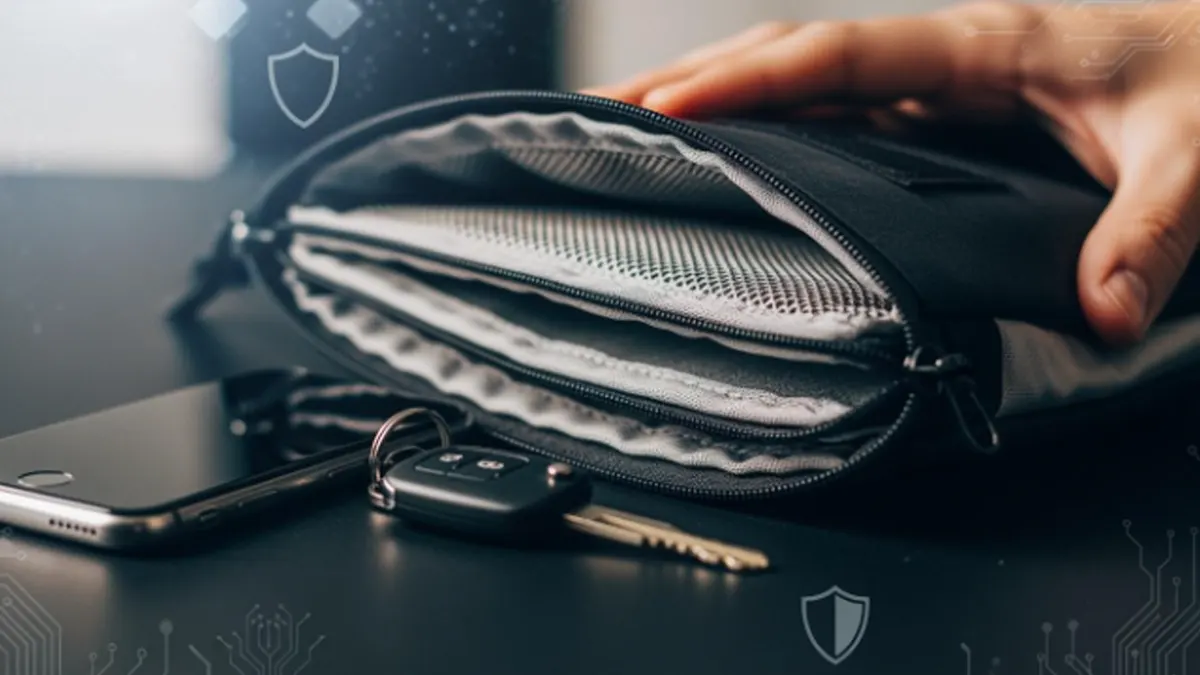
You might ask, what are Faraday bags made of? These bags have layers of copper, aluminum, nickel, Mylar film, and strong plastic. Each material helps block signals you do not want. The kind and quality of these layers are important. For example, copper lets electricity move very well. Aluminum makes the bag light and strong. Nickel makes the bag stronger and stops rust. Mylar film works better when used with metals. The tough outside layers keep things safe inside and help the bag work.
| Material | Properties |
|---|---|
| Copper | Lets electricity move well and works great. |
| Aluminum | Light, cheap, and blocks signals well. |
| Nickel | Makes the bag strong and stops rust. |
| Mylar film | Works better with metals. |
| Durable outer layers | Keep inside safe and help the bag work. |
Key Takeaways
- Faraday bags have layers made of copper, aluminum, nickel, Mylar film, and strong plastic. These layers help block signals that you do not want.
- Copper is the best at carrying electricity. It blocks signals very well and keeps your devices safe.
- Aluminum is light and cheap. Many people use it in Faraday bags. It still blocks signals well.
- Nickel makes the bag stronger and stops it from rusting. This helps the bag last longer.
- Mylar film blocks signals better when mixed with metals. But it can crack if you fold it too much. So you need to be careful with it.
- Tough plastic keeps water and scratches away from the inside layers. This makes the bag last longer.
- Some special fabrics like TitanRF are comfortable and block signals. They are flexible and different from usual materials.
- When you pick a Faraday bag, look for good materials. Test the bag to make sure it blocks signals well.
What Are Faraday Bags Made Of
Conductive Metals
If you ask what are faraday bags made of, you will see that metals like copper, aluminum, and nickel are very important. These metals make a shield. The shield stops signals from getting in or out. Let’s see how each metal helps.
Copper
Copper is special when you look at what are faraday bags made of. Copper lets electricity move through it easily. This means copper absorbs and bounces signals away. It keeps signals from reaching your devices. Copper can be made into mesh or foil layers. These layers scatter electromagnetic energy. If you want strong signal blocking, copper is a good choice.
Tip: For strong protection, pick bags with thick copper layers.
Aluminum
Aluminum is also used in faraday bags. It is lighter than copper and costs less. Aluminum still blocks signals well. It reflects and absorbs electromagnetic waves. Aluminum makes the bag easier to carry. It adds strength without much weight. Many bags use aluminum foil or mesh as main layers.
Nickel
Nickel is found in many faraday bags. It does not conduct as well as copper. But nickel has other good points. Nickel makes the bag stronger and stops rust. This helps the bag last longer. Nickel balances performance and cost. Some bags use nickel silver. Nickel silver mixes good conductivity with resistance to rust. Nickel layers keep the shield strong even with daily use.
Here’s a quick look at how these metals compare:
| Metal | Conductivity Characteristics | Advantages |
|---|---|---|
| Copper | Superior conductivity and RF attenuation performance | Highest electrical conductivity, excellent RF absorption, easy to form |
| Aluminum | Good electrical conductivity, lightweight | Lightweight, lower cost, good strength-to-weight ratio |
| Nickel Silver | Good conductivity, balanced performance, corrosion resistance | Cost-effective alternative to copper, enhanced corrosion resistance |
Each metal brings something special. Faraday bags made with these metals block signals from cell phones, Wi-Fi, and car key fobs.
Mylar Film and Aluminized Mylar
Let’s talk about mylar film. Mylar is found in many faraday bags. Mylar film is a strong and bendable polyester. When mylar is coated with aluminum, it becomes aluminized mylar. This layer is light and blocks signals well.
Mylar film reflects and absorbs electromagnetic waves. Aluminized mylar blocks signals from RFID, GPS, and Wi-Fi. It bends easily, so you can fold the bag. But if you bend it too much, mylar film can crack. Small cracks let signals get through. You need to handle the bag carefully.
- Aluminized mylar blocks lower-frequency signals well.
- It can block up to 72 dB below 1 GHz, which covers most threats.
- At higher frequencies, the shield is weaker, dropping to about 45 dB above 3 GHz.
- Mylar film gets weaker after lots of bending, so check your bag for damage.
If you want a light bag, pick one with mylar film. Just remember, it works best if you do not fold or crush it often.
Plastic and Outer Layers
You may wonder what are faraday bags made of on the outside. The answer is tough plastic layers. These layers protect the metal and mylar inside. They keep out water, dust, and scratches. Some bags use anti-static plastic blends. These blends stop static electricity from hurting your devices.
Here’s a look at some common plastic blends:
| Product Name | Material Composition | Thickness | Signal Blocking Effect | Durability |
|---|---|---|---|---|
| AVAIL Forensics Disposable Faraday Bags | Anti-static metallized PET/Foil/Anti-Static PE blend | 4.5 mil | High level of signal attenuation | Used in military applications |
| Digi-Guard Signal Blocking Faraday Pouch | Double layer of conductive silver/copper/nickel | N/A | 99.99% average signal attenuation | Lightweight and flexible |
Plastic layers do not block signals by themselves. They work with metals and mylar film. This makes the bag last longer and keeps devices safe. If you want a bag for daily use, look for thick, strong plastic outside.
So, when you ask what are faraday bags made of, you are asking about many materials. Conductive metals like copper, aluminum, and nickel block signals. Mylar film and aluminized mylar add flexibility and extra shielding. Tough plastic layers protect everything inside. Each part helps keep your devices safe from unwanted signals.
Specialized Fabrics (e.g., TitanRF)
Some people think Faraday bags only use metal and plastic. That is not true. Some of the best Faraday bags use special fabrics like TitanRF Faraday Fabric. These fabrics look and feel like cloth, but they do more than normal fabric.
Specialized Faraday fabrics mix strong threads with tiny pieces of metal. This makes a material that bends and folds like cloth but blocks signals. Most of these fabrics have silver, copper, or stainless steel woven into the threads. This makes the fabric flexible and strong at blocking signals.
TitanRF Faraday Fabric is different from regular cloth. It meets tough rules for blocking signals, like MIL STD 188-125 and IEEE 299-2006. These rules mean the fabric was tested and works in real life. You can trust it to keep your devices safe.
Here is what makes TitanRF Faraday Fabric special:
| Property | Description |
|---|---|
| Tested & Certified Shielding | Meets MIL STD 188-125 and IEEE 299-2006 standards for proven signal-blocking effectiveness. |
| Waterproof Construction | Built with 600D and 420D TPU materials, which are strong, waterproof fabrics designed to repel water, dirt, and debris, ensuring long-lasting protection. |
TitanRF fabric does more than block signals. It also keeps out water, dirt, and dust. The fabric uses tough TPU layers. These layers help the bag last longer, even if you use it every day.
How do these fabrics compare to regular metal layers? Let’s look:
| Material Type | Signal-Blocking Effectiveness | Comfort Level | Practicality |
|---|---|---|---|
| Specialized Fabrics | Varies, but can block a significant amount of EMF | High | High |
| Traditional Metals | Effective, but may not be as comfortable or practical | Low | Low |
Specialized fabrics are more comfortable and useful than metal sheets. You can sew, cut, or shape them into many kinds of bags or pouches. They feel soft and light, not hard or sharp like metal.
Here are some quick facts about Faraday fabrics:
- Faraday fabric uses conductive metals like silver, copper, and stainless steel.
- The fabric can block a lot of electromagnetic fields (EMF), but not all radiation.
- The shield’s strength is measured in decibels (dB). Higher numbers mean better protection.
- You can use these fabrics for wallets, pouches, tents, or even clothes.
Tip: If you want a Faraday bag that is light, flexible, and strong, pick one made with TitanRF or other special fabrics. You get great signal blocking and a bag that lasts a long time.
Specialized fabrics give you new choices for blocking signals. You do not have to pick between strength and comfort. With TitanRF and other advanced fabrics, you get both.
How Faraday Bags Block Signals
Layered Construction
A faraday bag may look simple, but it is not. It has many layers that work together. The outside layer is tough and keeps water and scratches out. It also blocks some signals. Inside, there are layers made of copper or aluminum. These metals stop signals like Wi-Fi, Bluetooth, and GPS from getting in or out.
The layers work best when they are stacked together. More layers mean better signal blocking. Good faraday bags use two or more layers of special fabric or foil. Some bags even have a soft inside liner to protect your devices. Here is a table that shows what each layer does:
| Layer Type | Functionality |
|---|---|
| Outer Layer | Provides first protection and keeps the bag safe |
| Metal Layers | Copper or aluminum layers block and reflect signals |
| Inner Liner | Adds comfort and keeps devices safe |
All these layers make a strong shield. This shield blocks signals from coming in or going out. You can trust a faraday bag to keep your devices safe from tracking or hacking.
Role of Conductive Metals
The metals inside the bag do most of the work. Copper is very good at letting electricity move. It can absorb and scatter signals before they reach your phone or keys. Aluminum is lighter than copper but still blocks signals well. Both metals help make a wall that stops signals.
You might ask why both metals are used. Each metal has its own job. Copper gives the best shielding. Aluminum makes the bag lighter and easier to carry. When you use both, the bag is strong and easy to use.
Here are some facts about metals in faraday bags:
- Many metal layers block cell signals and Wi-Fi.
- The number and quality of layers matter for blocking.
- Copper and aluminum are important for strong shielding.
If you want a good faraday bag, pick one with many metal layers.
Importance of Mylar Film
You may know mylar from balloons, but it does more in a faraday bag. Mylar is a thin and bendy polyester. It adds another layer of shielding. When used with metals, mylar helps block signals even better. It reflects and absorbs waves, so signals cannot get through.
Mylar is usually an inner layer in the bag. It works with the metal layers to stop signals like GPS, RFID, and Bluetooth. Mylar also keeps the bag light and easy to fold. But if you fold it too much, mylar can crack. So, be careful with your bag.
Here is a table that shows how mylar fits in:
| Layer Type | Material Used | Purpose |
|---|---|---|
| Outer Layer | Durable Material | Physical protection |
| Middle Layer | Copper/Aluminum | Main shielding |
| Inner Layer | Mylar | Extra signal blocking |
When you choose a faraday bag, look for mylar film inside. This small detail helps the bag block signals much better.
Non-Conductive Protection
You might think Faraday bags only use metal to block signals. That’s not the whole story. Non-conductive layers play a big part in making these bags work well. These layers do not block signals by themselves, but they protect the metals inside and help the bag last longer.
Non-conductive protection acts like a shield for your shield. It keeps the metal layers safe from scratches, bending, and moisture. If you use your Faraday bag every day, you want it to stay strong. Non-conductive layers help with that.
Let’s look at some materials you might find in these protective layers:
- Silver Fabric: This fabric feels soft and smooth. It covers the metal mesh and keeps it from touching your devices. Silver fabric also helps stop static electricity from building up.
- Barrier Material: This material adds an extra wall between the metal and the outside world. It keeps water, dust, and dirt away from the shielding layers.
- Clothing: Some Faraday bags use fabric that feels like clothing. This makes the bag soft and easy to carry. You can put your phone or keys inside without worrying about scratches.
- Curtain Panels: These panels act as flexible walls inside the bag. They help keep the shape of the bag and add another layer of safety.
- EMI Tape: This tape seals the edges of the bag. It stops signals from sneaking in through seams or openings. EMI tape also keeps the layers together.
- Berry Compliant Fabric: This special fabric meets strict rules for safety and quality. You might see it in bags made for the military or government.
Tip: If you want your Faraday bag to last, look for one with strong non-conductive layers. These layers keep the metal inside safe and make the bag more comfortable to use.
Non-conductive layers do more than just protect. They also make the bag easier to use. You can open and close the bag without worrying about sharp metal edges. Your devices stay safe from scratches and bumps.
Here’s a quick look at why non-conductive protection matters:
| Feature | Benefit |
|---|---|
| Stops moisture | Keeps metal from rusting |
| Blocks dust and dirt | Keeps shielding layers clean |
| Adds comfort | Makes bag soft and easy to handle |
| Prevents static | Protects sensitive electronics |
| Seals seams | Stops signals from leaking in or out |
You might not see these layers, but they make a big difference. Non-conductive protection helps your Faraday bag work better and last longer. When you pick a bag, check for these hidden helpers. They keep your devices safe and your bag in good shape.
Faraday Bags vs Faraday Cage
Similarities in Materials
You might think a faraday bag and a faraday cage use different things. But they often use the same metals. Both use copper, nickel, and silver to block signals. These metals stop signals you do not want near your devices. Here is a table that shows how these metals are used:
| Material | Usage in Faraday Bags | Usage in Faraday Cages |
|---|---|---|
| Copper | Yes | Yes |
| Nickel | Yes | Yes |
| Silver | Yes | Yes |
So, if you pick a faraday bag or a faraday cage, you get strong signal blocking from these metals.
Differences in Construction
Let’s look at how a faraday bag and a faraday cage are made. There are some big differences. A faraday bag is soft and easy to carry. It looks like a pouch or a small bag. You can fold it and take it anywhere. A faraday cage is much bigger and does not move. It looks like a box or a room made of metal. You cannot fold a faraday cage or put it in your backpack.
Here is a table that shows how they are different:
| Feature | Faraday Bags | Faraday Cages |
|---|---|---|
| Size | Compact and portable | Larger physical enclosures |
| Shape | Flexible, often pouch-like | Rigid, box-like structures |
| Materials Used | Fabric with metallic fibers | Conductive materials like copper or aluminum |
| Functionality | Prevents signals from entering/leaving | Shields sensitive equipment from electromagnetic interference |
A faraday bag uses layers of fabric and metal fibers. A faraday cage uses solid sheets or mesh made of metal. You use a faraday bag for small things like phones. You use a faraday cage for big things like computers or rooms.
Note: If you need to move your protection, a faraday bag is best. If you want to protect a whole room or big machines, you need a faraday cage.
Use Cases
You might wonder when to use a faraday bag or a faraday cage. Here are some ways people use them:
- Faraday bags are good for small electronics. You can keep your phone, passport, or smartwatch safe from hackers. Police and the military use faraday bags to keep data safe and stop remote attacks.
- Journalists use faraday bags to keep their recordings private. Edward Snowden used one to protect important information.
- Regular people use faraday bags to keep their data and privacy safe from wireless threats.
- Faraday cages are better for big jobs. You might see a faraday cage in a lab or a server room. They protect large equipment from electromagnetic interference. A faraday cage is strong but hard to move.
- If you need to shield a whole room or a big machine, a faraday cage is the right choice.
Both a faraday bag and a faraday cage block signals, but they are used for different things. If you want something you can carry, pick a faraday bag. If you need to protect a lot of equipment or a whole space, choose a faraday cage.
Material Quality and Effectiveness
Impact of Metal Type
You might wonder why some Faraday bags block signals better than others. The answer often comes down to the type of metal inside. If you choose a bag with copper or nickel, you get strong signal blocking. These metals work well because they stop signals from passing through. High-grade metals like copper can block a wide range of frequencies, including tough ones like 5G. When you see a bag with multiple layers of these metals, you know your devices have better protection.
Here’s a quick look at how different metals compare:
| Metal Type | Effectiveness |
|---|---|
| Copper | High |
| Nickel | High |
If you want the best shield, pick a bag that uses high-grade metals. You will notice the difference in how well your devices stay safe.
Durability of Mylar and Plastic
You may see mylar and plastic in many Faraday bags. These materials do more than just add strength. Mylar helps block signals, especially when used with metals like copper. It is light and flexible, so you can fold your bag without much trouble. Plastic layers protect the inside from water, dust, and scratches. They also help the bag last longer, even if you use it every day.
But not all mylar and plastic are the same. High-quality mylar stays strong and does not crack easily. Good plastic keeps its shape and does not tear. If you want a bag that lasts, check for thick, durable layers. You will get better protection and a longer lifespan for your bag.
Risks of Low-Quality Materials
You might think all Faraday bags work the same, but that is not true. Low-quality materials can put your privacy at risk. If the metals inside are thin or poorly made, signals can sneak through. Weak mylar or plastic can crack or tear, letting signals reach your devices. This means someone could track you or steal your data without you knowing.
Low-quality bags also wear out fast. They might break down from daily use, chemical spills, or even just bending too much. When that happens, your bag stops working. You lose the protection you need.
Tip: Always invest in a Faraday bag with strong metals, thick mylar, and tough plastic. You will keep your devices safe and avoid unwanted surprises.
Here’s a table to help you see the difference:
| Material Quality | Impact on Signal Blocking | Lifespan of Bag |
|---|---|---|
| High-Quality | Better signal blocking | Longer lifespan |
| Low-Quality | Poor signal blocking | Shorter lifespan |
If you want peace of mind, choose a bag made with the best materials. Your privacy and security depend on it.
Real-World Faraday Bag Examples
Cost-Effective Designs (Aluminum Foil, Aluminized Mylar)
You might want a Faraday bag but worry about cost. You can make a simple pouch at home with aluminum foil. Aluminum foil blocks signals for basic needs. Wrap your phone or key fob in several foil layers. This makes a shield that stops most wireless signals.
Aluminized mylar is another cheap choice. You find it in emergency blankets or food wrappers. Mylar coated with aluminum blocks signals like RFID and Wi-Fi. Fold it into a pouch or line a small bag with it. These designs are light and easy to carry. They work best with several layers. Try not to bend the foil too much.
Tip: If you use tinfoil or aluminum foil, check for holes. Even small cracks let signals through.
Premium Options (TitanRF, Multi-Layered Bags)
If you want stronger protection, look at premium Faraday bags. TitanRF bags and multi-layered designs block signals better than basic ones. These bags use many layers of strong shielding material. You get more coverage and peace of mind.
Premium bags have extra features. Many resist heat and fire. Some keep water out, so your devices stay safe in bad weather. The seams are reinforced. Makers pay close attention to weak spots. You will notice the difference in how they are made.
Here’s what makes premium Faraday bags special:
- Advanced materials like TitanRF fabric block signals well.
- Multiple layers give stronger shielding.
- Extra protection against heat, fire, and water.
- Reinforced seams and careful design stop leaks.
You can trust these bags to keep your devices safe from hackers and tracking.
Customization Possibilities
You may need a Faraday bag for a special reason. Custom bags let you pick materials, layers, and closures that fit your needs. You can choose copper, silver, or nickel for shielding. Each metal has its own strengths.
| Material | Conductivity | Shielding Performance | Durability |
|---|---|---|---|
| Copper | Excellent | Strong | Moderate |
| Silver | Superior | Very Strong | Low |
| Nickel | Good | Moderate | High |
More layers mean better protection. Thick fabric blocks signals better than thin bags. You can pick the closure style. Velcro is simple and strong. Zippers give a tight seal for bigger bags. Magnetic closures are quick and silent.
Double closures add extra safety. Fold the top before sealing with Velcro or a zipper. This blocks signals better than a single closure.
Note: Custom Faraday bags help you protect devices your way. You can match the bag to your needs and style.
You have many choices, from homemade foil pouches to advanced TitanRF bags. Pick the one that fits your budget and security needs.
Choosing the Right Faraday Bag
What to Look For
You want a Faraday bag that really works. Not all bags are the same. Some block signals better than others. When you shop, keep these things in mind:
- Look for high-quality materials. Bags with strong metals and tough plastic last longer.
- Check if the bag uses both conductive and non-conductive layers. This mix gives you the best signal blocking.
- Test the bag with your car key or phone. If the device does not work inside, the bag blocks signals well.
- Pick a bag that feels sturdy. Durability matters if you use it every day.
- Make sure the seams and closures are tight. Loose seams let signals sneak in.
You might see small bags for phones or key fobs. These work well for quick trips or daily use. If you want to protect bigger devices, look for larger options.
Tip: Always test your new Faraday bag at home. Place your phone inside and try to call it. If it does not ring, your bag is doing its job.
Questions for Manufacturers
Before you buy, ask the right questions. Good manufacturers will answer clearly. Here are some smart questions to help you choose:
| Criteria | Questions to Ask Manufacturers |
|---|---|
| Frequency Requirements | What are the frequency bands your Faraday bags are designed to block? |
| Attenuation Benchmarks | Can you provide certified insertion loss data for your products? |
| Shielding Materials and Layering | What materials are used in the construction of your bags, and how many layers of shielding do they have? |
| Closure Type and Seam Construction | What type of closures do your bags use, and how are the seams constructed to ensure integrity? |
| Durability and Comfort | What materials are used for the exterior, and how do they contribute to the bag’s durability? |
| Certifications | Do you have third-party lab reports verifying the performance of your bags? |
| Price vs. Performance | How do your prices compare to similar products on the market, and what features justify the cost? |
You get better results when you ask these questions. You learn if the bag meets your needs and if it is worth the price.
Custom Solutions
Sometimes, you need more than a standard bag. Maybe you want a special size or extra layers. Many companies offer custom solutions. You can choose the materials, the number of layers, and even the closure style. Some people want double closures for extra safety. Others want waterproof fabric or fire-resistant layers.
Custom bags help you protect unique devices or meet special rules at work. You can even add your logo or pick a color that stands out. If you have a special request, talk to the manufacturer. They can help you design a bag that fits your needs.
Note: Custom Faraday bags give you control. You get the right size, the right look, and the best protection for your devices.
Conclusion
You want your devices to be safe from signals. The best faraday bags use strong materials. Good bags block signals well and last a long time. Cheap bags do not work as well and break faster. We make strong faraday bags and can make special ones for you. Always look at the materials before you buy. Your safety depends on picking the right bag!
FAQ
What signals can a Faraday bag block?
A Faraday bag can block signals like Wi-Fi, Bluetooth, GPS, RFID, and cell phone signals. You can use it to protect your devices from hackers and trackers.
Can I wash my Faraday bag?
You should not put your Faraday bag in the washing machine. Wipe it with a damp cloth. Water and soap can damage the metal layers inside.
How do I know if my Faraday bag works?
Put your phone inside the bag. Try to call or text it. If the phone does not ring or get messages, your bag blocks signals well.
Will folding my Faraday bag damage it?
Frequent folding can crack the metal or mylar layers. This can let signals through. Try to keep your bag flat or gently folded to make it last longer.
Can I use a Faraday bag for my car key fob?
Yes! You can keep your car key fob in a Faraday bag. This stops thieves from copying your key’s signal and stealing your car.
Are all Faraday bags waterproof?
Not all Faraday bags are waterproof. Some have special coatings or layers that keep water out. Check the product details before you buy if you need water protection.
Do Faraday bags block all types of electromagnetic radiation?
Faraday bags block most everyday signals, but not all electromagnetic radiation. Very strong or unusual signals might still get through. For most uses, a good bag gives enough protection.
Can I make a Faraday bag at home?
You can make a simple Faraday bag with aluminum foil or aluminized mylar. Homemade bags work for basic needs, but store-bought bags usually block signals better and last longer.