
Introduction
Reusable grocery bags often carry much heavier loads than ordinary promotional totes.
A single shopping trip may include:
- Bottled drinks
- Canned food
- Produce
- Packaged groceries
- Household products
For this reason, buyers should not evaluate a reusable grocery bag only by:
- Fabric thickness
- GSM
- Denier
- Appearance
The finished bag needs to work as a complete load-bearing system.
In practice, the most common stress areas are:
- Handles
- Handle attachment points
- Side and bottom seams
- Bottom panel
- Corners and gussets
A strong fabric can still fail if the handle stitching is weak.
Likewise, strong handles provide little value if the bottom seam opens under load.
Load testing should therefore evaluate the finished bag, not only individual materials.
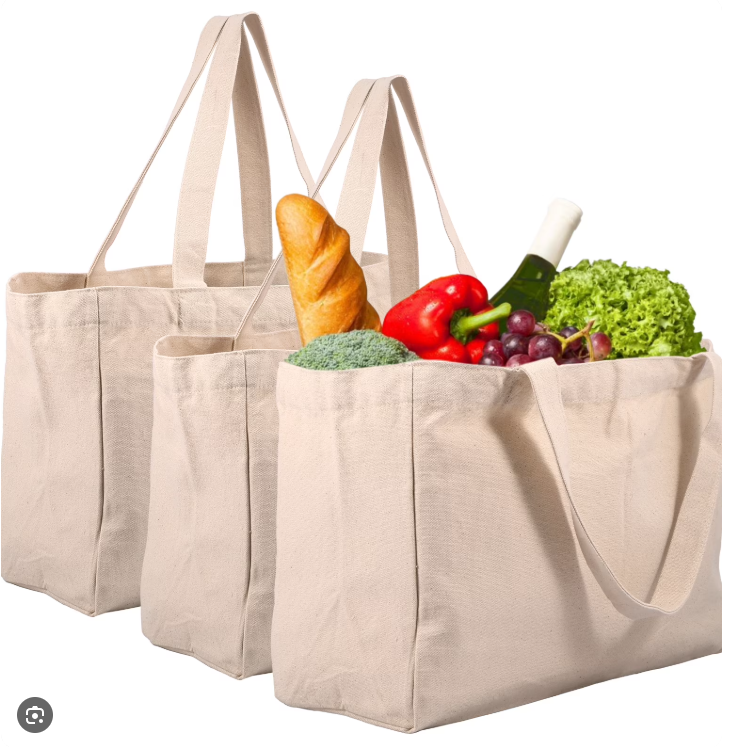
Why Load Testing Matters
Reusable grocery bags are expected to be used repeatedly.
Unlike single-use bags, they may experience:
- Heavy loads
- Repeated lifting
- Repeated folding
- Swinging while walking
- Contact with carts and vehicle trunks
- Abrasion against floors
A bag that survives one static test may still fail after repeated use.
For B2B buyers, load testing helps answer several practical questions:
- Can the bag carry the intended shopping load?
- Are the handles reinforced correctly?
- Do seams open under tension?
- Does the bottom deform?
- Will repeated carrying weaken the structure?
These questions are more useful than asking only:
How strong is the fabric?
The Bag Is Only as Strong as Its Weakest Point
A reusable grocery bag is a system.
Its strength depends on:
fabric + handles + stitching + seams + reinforcement + bottom construction
If any one of these components is weak, the bag can fail.
For example:
A strong PP woven body may survive easily, but poorly attached handles can tear away.
A heavyweight canvas bag may feel durable, but an under-reinforced bottom seam may still open.
This is why finished-bag testing is essential.
Quick Load-Risk Comparison
| Area | Common Stress | Typical Failure |
|---|---|---|
| Handles | Carrying load | Stretching, tearing, breakage |
| Handle Attachment | Concentrated pulling force | Stitch failure, fabric tearing |
| Side Seams | Outward pressure | Seam opening |
| Bottom Seam | Vertical load | Stitch failure |
| Bottom Panel | Concentrated grocery weight | Sagging, tearing, abrasion |
| Corners | Mixed tension and abrasion | Local tearing |
| Gussets | Expansion under load | Seam distortion |
1. Handle Strength
Handles carry nearly the entire weight of the bag.
For this reason, handle material and construction deserve special attention.
Common handle materials include:
- PP webbing
- Polyester webbing
- Cotton webbing
- Self-fabric handles
- Non-woven handles
The correct choice depends on:
- Expected load
- Bag size
- Material
- Product positioning
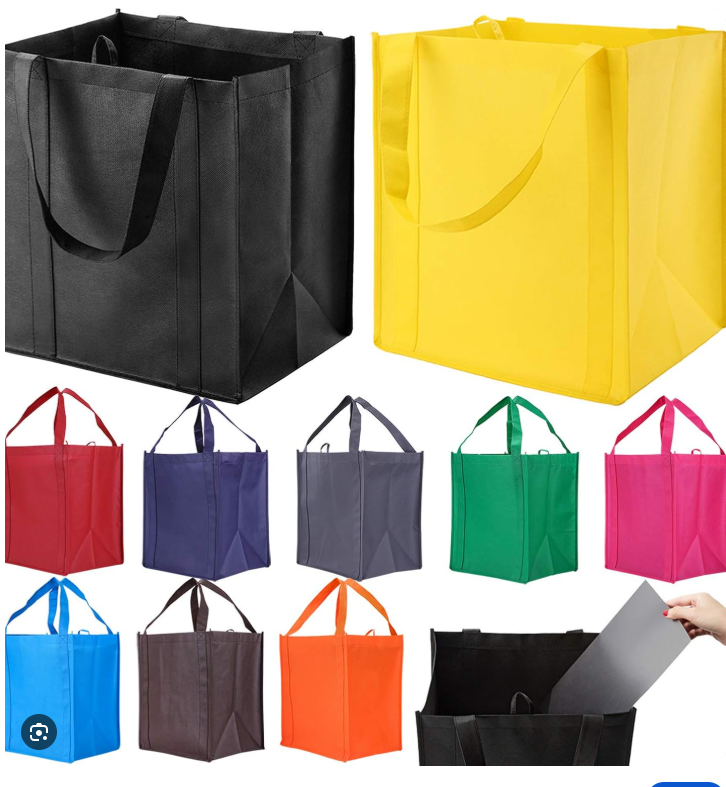
Handle Width
Wider handles distribute force over a larger area.
They can also improve carrying comfort.
For grocery bags, very narrow handles may become uncomfortable when the bag carries:
- Bottles
- Cans
- Heavy food
However, wider handles also increase:
- Material use
- Cost
- Bulk
The correct width should balance:
load + comfort + cost
Handle Thickness
Two handles with the same width may still perform differently.
For example:
- Thin PP webbing
- Heavy polyester webbing
can have different tensile strength and hand feel.
Buyers should specify more than:
25 mm webbing handle
when handle strength is important.
Useful specifications can include:
- Material
- Width
- Thickness
- Weave
2. Handle Attachment Is Often the Real Weak Point
In many grocery bags, the handle itself does not break.
Instead, the failure occurs where the handle connects to the bag.
This area experiences concentrated force every time the bag is lifted.
Common attachment methods include:
- Straight stitching
- Box stitching
- X-box stitching
- Bartack reinforcement
For heavier loads, reinforcement usually improves reliability.
X-Box Stitching
A common reinforced pattern is:
rectangle + diagonal cross
This distributes stress over a wider area.
It is frequently used for:
However, the pattern alone does not guarantee strength.
Performance also depends on:
- Thread
- Stitch density
- Fabric
- Handle overlap
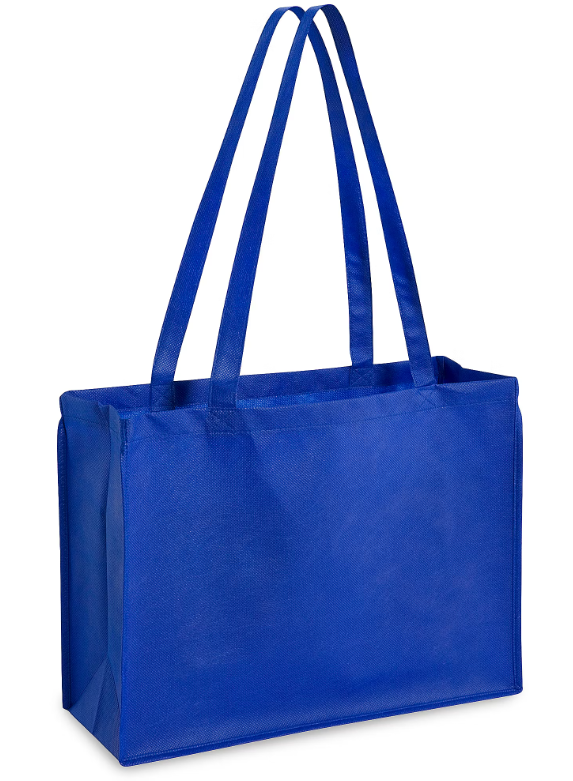
Handle Overlap Length
A short attachment area concentrates stress.
A longer attachment section distributes load more effectively.
For heavy grocery bags, handles may extend farther down the side panels.
Some designs use full-wrap webbing that continues:
- Down the side
- Under the bottom
- Up the opposite side
This structure can provide stronger load distribution.
Full-Wrap Handles
Full-wrap handles are especially useful for:
- Large grocery bags
- Heavy reusable totes
- Bulk-shopping bags
Instead of attaching only near the top, the webbing supports more of the bag body.
This reduces stress on one small attachment point.
The trade-off is:
- More webbing
- More sewing
- Higher cost
3. Seam Strength
Seams connect the main load-bearing panels.
Important areas include:
- Side seams
- Bottom seams
- Gusset seams
- Handle seams
A seam can fail even if the fabric remains intact.
Common causes include:
- Low stitch density
- Weak thread
- Small seam allowance
- Poor edge finishing
Stitch Density
Too few stitches can reduce seam strength.
However, excessive stitching is not automatically better.
Too many needle holes can weaken certain lightweight fabrics.
The correct stitch density depends on:
- Fabric type
- Thickness
- Thread
- Construction
The best solution is a balanced seam rather than simply the highest stitch count.
Thread Quality
Thread should match the product requirement.
Reusable grocery bags generally require stronger thread than disposable promotional bags.
Poor-quality thread can:
- Snap under tension
- Abrade during use
- Fail at corners
Thread quality becomes particularly important when carrying heavy loads repeatedly.
4. Bottom Construction
The bottom carries the weight of everything inside the bag.
Heavy grocery items may concentrate force in a small area.
Examples include:
- Glass bottles
- Canned food
- Detergent
- Beverage containers
The bottom therefore needs to resist:
- Sagging
- Seam stress
- Abrasion
- Puncture pressure
Flat Bottom vs Gusseted Bottom
Flat Bottom
Simple and economical.
Suitable for:
- Lightweight shopping
- Promotional bags
The load concentrates toward the center.
Gusseted Bottom
Provides more usable capacity and better product arrangement.
Suitable for:
- Grocery shopping
- Supermarkets
- Large retail bags
The gusset also creates additional seams that need to withstand load.
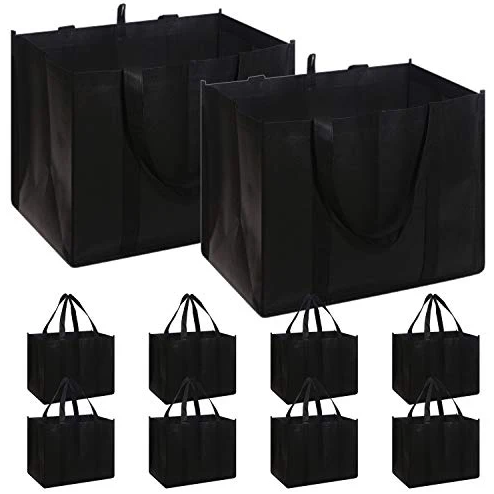
Bottom Boards
Some reusable grocery bags include an internal bottom board.
Common materials may include:
- PP board
- PE board
- Cardboard for lower-cost applications
A bottom board helps:
- Maintain shape
- Distribute weight
- Reduce sagging
It is useful for:
However, the board itself does not increase seam strength.
Double-Layer Bottom
Another option is using two fabric layers at the bottom.
This can improve:
- Abrasion resistance
- Puncture resistance
- Durability
For example:
600D body + double 600D bottom
or
PP woven body + reinforced bottom layer
This is useful when the bag is placed repeatedly on:
- Concrete
- Shopping carts
- Vehicle floors
5. Corners and Gussets
Corners experience multiple directions of stress.
When a bag is fully loaded, the corners may be pulled:
- Downward
- Outward
- Sideways
This makes them common failure points.
Extra attention should be paid to:
- Seam allowance
- Stitching
- Binding
- Fabric reinforcement
For large bags, poorly constructed corners may distort before other areas fail.
Static Load Testing
A static load test is one of the simplest evaluation methods.
The process is generally:
- Fill the bag with a defined weight.
- Suspend or hold the bag by the handles.
- Maintain the load for a specified period.
- Inspect for damage.
The goal is to observe:
- Handle stretch
- Stitch opening
- Seam distortion
- Bottom deformation
Do Not Choose a Universal Test Weight
There is no single correct load for every grocery bag.
The test weight should reflect:
- Bag size
- Material
- Intended use
- Customer requirement
A small promotional tote and a large supermarket bag should not necessarily use the same test condition.
A better method is to define:
expected working load
and then test above that level using an agreed safety margin.
Working Load vs Test Load
These two terms should not be confused.
Working Load
The realistic weight a user is expected to carry.
Test Load
The weight used during evaluation.
The test load may be higher than the expected working load to check structural margin.
The exact relationship should be agreed between buyer and manufacturer.
6. Repeated Lift Testing
Static load testing is useful, but real shopping bags are not held motionless.
Users repeatedly:
- Lift the bag
- Put it down
- Carry it
- Pick it up again
Repeated lift testing better simulates actual use.
A simple cycle may include:
- Load the bag.
- Lift it by the handles.
- Hold briefly.
- Lower it.
- Repeat.
After multiple cycles, inspect:
- Handle attachment
- Thread
- Seams
- Bottom
Why Repeated Testing Matters
Some failures appear only after repeated use.
For example:
- Handle stitching may slowly loosen
- Fabric around the handle may stretch
- Bottom seams may begin opening
- Elastic deformation may increase
A bag that survives one heavy lift can still perform poorly over time.
7. Swing Testing
When users walk, grocery bags move.
This creates dynamic forces that are different from static hanging.
The bag may swing:
- Forward
- Backward
- Sideways
Dynamic movement can increase stress around:
- Handles
- Attachment points
- Corners
For bags marketed for repeated heavy use, dynamic testing can provide useful additional information.
8. Drop Testing
Reusable grocery bags are often placed or dropped onto:
- Floors
- Car trunks
- Shopping carts
A controlled drop test can help identify weaknesses.
The test should use:
- Realistic internal weight
- Defined drop height
- Consistent orientation
After the test, inspect:
- Bottom
- Corners
- Seams
- Handles
The goal is not to create an extreme destructive test, but to simulate realistic handling.
9. Uneven Load Testing
Real groceries rarely distribute weight perfectly.
A bag may contain:
- Two heavy bottles on one side
- Light vegetables on the other
Uneven loading creates concentrated stress.
Testing only with evenly distributed soft weights can underestimate real-world demands.
A useful sample test can therefore include:
- Bottles
- Cans
- Boxed goods
to create more realistic pressure.
10. Sharp-Edge and Puncture Risk
Some grocery items create localized pressure.
Examples include:
- Box corners
- Metal cans
- Plastic packaging edges
The bottom and side panels should be evaluated for:
- Puncture
- Abrasion
- Local tearing
A fabric may perform well in tensile testing but still be vulnerable to sharp internal pressure.
Load Testing by Material Type
Different bag materials tend to fail in different ways.
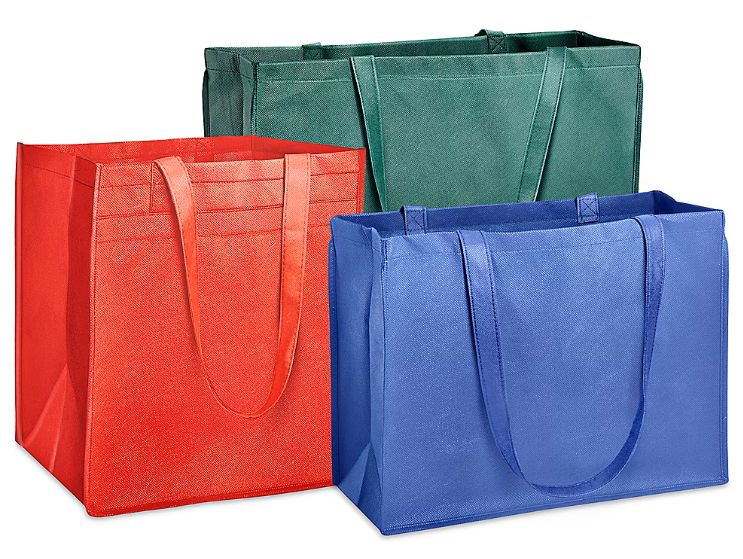
Non-Woven PP
Common issues may include:
- Tearing around handles
- Seam failure
- Material stretching
For heavier loads, buyers should pay particular attention to:
- GSM
- Handle reinforcement
- Stitching
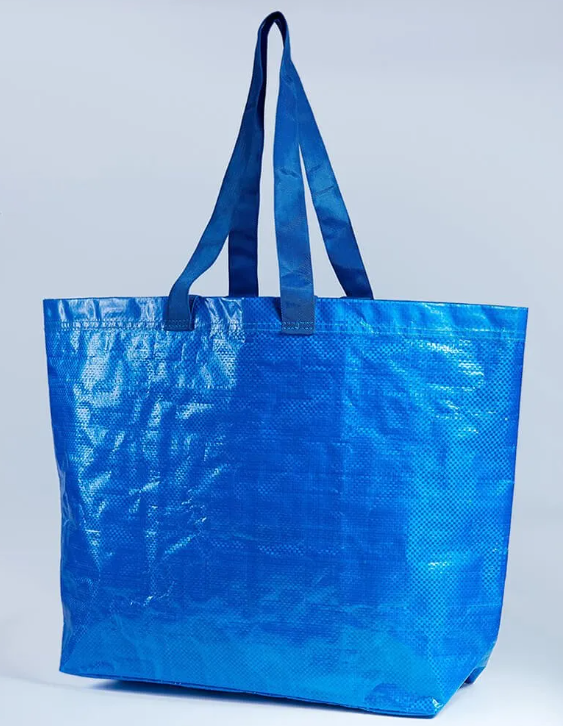
PP Woven
PP woven generally offers strong load performance.
Common stress areas remain:
- Handle attachment
- Seams
- Bottom corners
Its woven structure can provide strong resistance to tearing under grocery loads.
Polyester
Polyester grocery bags can provide good durability.
Performance depends on:
- Denier
- GSM
- Coating
- Construction
For heavy reusable bags, reinforcement may be useful at:
- Handles
- Bottom
- Corners
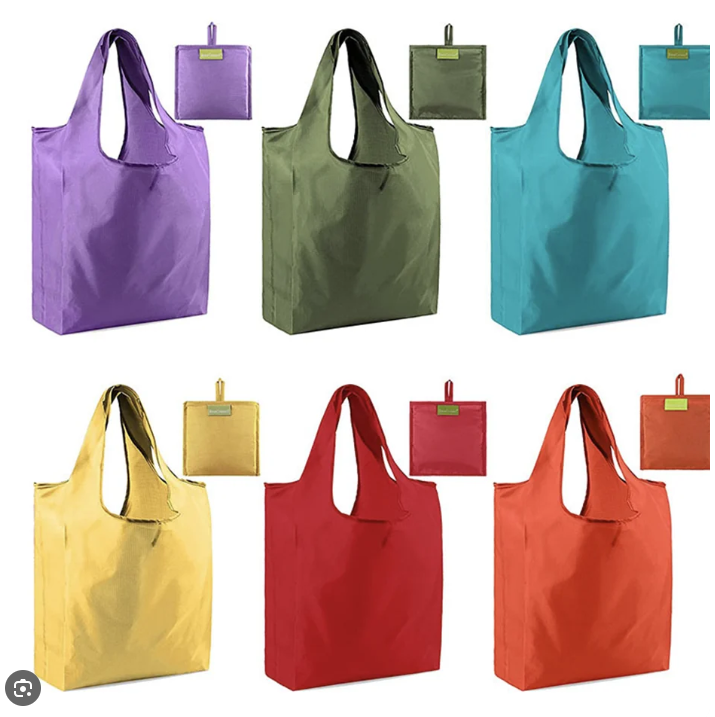
RPET Polyester
RPET should be evaluated in the same way as other woven polyester fabrics.
Recycled content does not automatically determine finished-bag strength.
Buyers should confirm:
- Fabric weight
- Weave
- Construction
- Actual load performance
Cotton and Canvas
Canvas can provide strong load performance, particularly at heavier fabric weights.
However, buyers should still evaluate:
- Handle stitching
- Bottom seams
- Fabric tearing near attachment points
A heavyweight body alone does not guarantee a strong finished bag.
Handle Test Example
A simple internal quality-control process might include:
- Load the bag to the agreed test weight.
- Suspend the bag from both handles.
- Inspect handle attachment after the hold period.
- Repeat the lifting cycle.
- Check for stitch movement or fabric tearing.
The actual weight and cycle count should be defined according to the project.
Avoid publishing arbitrary universal numbers if they have not been validated for that specific design.
Bottom Test Example
For bottom evaluation:
- Load the bag with realistic grocery items.
- Place the bag repeatedly on a hard surface.
- Lift and reposition it.
- Inspect the bottom fabric and seams.
Look for:
- Abrasion
- Sagging
- Seam opening
- Local tearing
This can reveal problems that a simple hanging test misses.
How Much Safety Margin Should a Bag Have?
A bag should not be designed to fail exactly at its intended carrying load.
However, the safety margin should be defined based on:
- Buyer requirement
- Intended market
- Product size
- Material
- Cost target
There is no single universal multiplier appropriate for every reusable shopping bag.
For serious retail programs, buyers should document the agreed test method in the specification.
Passing a Test Does Not Mean Unlimited Load
A common marketing mistake is turning a lab or factory test into an unlimited durability claim.
For example, if a bag survives a certain controlled load test, it does not mean it will always carry that weight under every condition.
Real-world performance changes with:
- Load distribution
- Repeated use
- Abrasion
- Temperature
- User behavior
Performance claims should match the actual test conditions.
11. Handle Comfort Should Also Be Tested
A bag can be structurally strong but uncomfortable.
For heavy grocery loads, check whether handles:
- Dig into the hand
- Twist
- Stretch excessively
Handle width and softness affect user experience.
This is particularly relevant for bags intended for:
- Weekly grocery shopping
- Bulk retail
- Large supermarkets
12. Bag Deformation
A reusable bag should maintain usable shape under load.
Check whether:
- Side panels collapse
- Bottom sags excessively
- Gussets distort
- Handles pull the top edge inward
Some deformation is normal for soft bags.
But excessive deformation can reduce:
- Carrying comfort
- Capacity
- Appearance
13. Testing the Bag Fully Loaded
One common mistake is testing individual parts separately.
For example:
- Fabric tensile test
- Webbing tensile test
These tests are useful, but they do not fully represent the finished product.
The complete bag should be loaded because all components interact.
This is especially important for:
- Large gusseted grocery bags
- Bags with full-wrap handles
- Structured shopping totes
14. Sample Testing Before Bulk Production
Load testing should happen during sampling.
A useful process is:
First Sample
Check general construction.
Revised Sample
Correct weak stress points.
Pre-Production Sample
Confirm the final production specification.
This is much safer than discovering structural problems after thousands of bags have already been produced.
15. Bulk Production Quality Control
Even after the sample passes testing, bulk consistency still matters.
QC should check whether production uses the same:
- Fabric
- Thread
- Webbing
- Stitch pattern
- Reinforcement
If any of these are reduced during bulk production, load performance may change.
The approved sample should therefore remain the reference standard.
Common Failure Modes
Handle Detachment
Usually caused by:
- Insufficient stitching
- Small attachment area
- Weak fabric around the handle
Seam Opening
Possible causes:
- Weak thread
- Incorrect stitch density
- Small seam allowance
Bottom Sagging
Possible causes:
- Thin material
- Large bag dimensions
- Concentrated load
Corner Tearing
Possible causes:
- High local tension
- Poor seam design
- Repeated abrasion
Handle Stretching
Possible causes:
- Low-quality webbing
- Thin self-fabric handles
Understanding the failure mode helps the manufacturer improve the correct area instead of simply increasing fabric weight everywhere.
Reinforcement Should Be Strategic
More reinforcement is not always better.
Excess reinforcement increases:
- Cost
- Weight
- Production time
The better approach is to reinforce the highest-stress areas.
Typical priorities are:
- Handle attachment
- Bottom seam
- Bottom corners
- Side gussets
This provides better value than simply making the entire bag heavier.
Practical Construction Examples
Lightweight Promotional Grocery Bag
Material: Non-woven PP
Handles: Reinforced non-woven or PP webbing
Bottom: Basic gusset
Testing Priority: Handle attachment + seams
Supermarket Reusable Bag
Material: PP woven or laminated non-woven
Handles: PP webbing
Bottom: Reinforced gusset
Testing Priority: Repeated load + handle attachment + bottom
Foldable Grocery Bag
Material: Nylon or RPET polyester
Handles: Self-fabric or lightweight webbing
Bottom: Soft construction
Testing Priority: Seam strength + repeated lifting + fold durability
Heavy-Duty Grocery Tote
Material: Canvas or heavy polyester
Handles: Full-wrap webbing
Bottom: Double layer or bottom board
Testing Priority: High load + abrasion + repeated carry
What Should Buyers Include in the Specification?
For a reusable grocery bag, define:
- Bag dimensions
- Intended load
- Material
- Fabric GSM or denier
- Handle material
- Handle width
- Handle attachment
- Bottom structure
- Reinforcement
- Test method
Instead of writing:
Strong reusable grocery bag
a better specification might state:
Material: Laminated PP woven
Handles: 30 mm PP webbing
Handle Construction: Reinforced X-box stitching
Bottom: Gusseted with reinforced panel
Testing: Finished-bag load test according to agreed buyer requirement
This gives the supplier a much clearer target.
Questions to Ask a Grocery Bag Manufacturer
Useful questions include:
- What is the recommended load for this construction?
- How are the handles reinforced?
- What seam type is used?
- Is the bottom reinforced?
- Can you provide a load-test sample?
- Will bulk production follow the approved sample?
- Can load performance be checked during final inspection?
These questions provide more useful information than asking only:
Is this bag strong?
Custom Reusable Grocery Bags from INITI
INITI develops reusable grocery and shopping bags for:
- Supermarkets
- Grocery chains
- Retail brands
- Promotional programs
- Corporate projects
Material options can include:
- PP woven
- Non-woven PP
- Polyester
- RPET
- Nylon
- Cotton
- Canvas
Construction options can include:
- Reinforced handles
- Full-wrap webbing
- Side and bottom gussets
- Double-layer bottoms
- Bottom boards
- Reinforced seams
For development, buyers can provide:
- Bag dimensions
- Intended load
- Expected contents
- Material preference
- Estimated quantity
- Target price
The bag can then be sampled and tested based on the intended use rather than relying only on fabric specifications.
FAQ
How do you test the strength of a reusable grocery bag?
A common method is to load the finished bag with a defined weight, suspend it by the handles, perform repeated lifting and inspect the handles, seams and bottom for damage.
What is the weakest part of a grocery bag?
Handle attachment points, bottom seams and corners are common failure areas.
Does thicker fabric always make a stronger grocery bag?
No. Handle construction, stitching, seams and bottom reinforcement are equally important.
What is the best handle construction for heavy grocery bags?
Reinforced webbing handles with larger attachment areas or full-wrap construction can provide stronger load distribution.
Are PP woven bags stronger than non-woven bags?
PP woven generally provides stronger tear and load performance, but finished-bag construction still determines actual durability.
Should grocery bags be drop tested?
For products expected to carry heavier loads, controlled drop or dynamic testing can help identify bottom and seam weaknesses.
Can RPET grocery bags handle heavy loads?
Yes, depending on fabric specification and construction. Recycled content alone does not determine bag strength.
What should be tested before bulk production?
Handles, handle attachments, side seams, bottom seams, bottom panel, corners and repeated carrying performance should all be considered.
Conclusion
Reusable grocery bag strength should never be judged by fabric alone.
The most important load-bearing areas are:
handles + handle attachment + seams + bottom construction
A durable bag needs these components to work together.
For reliable evaluation, buyers should combine:
- Static load testing
- Repeated lifting
- Realistic grocery loading
- Bottom and seam inspection
The exact test weight should be based on the product’s intended use rather than a universal number.
A small promotional bag and a large supermarket grocery bag have different requirements.
For B2B development, the most useful process is:
define intended load → design the construction → test the finished sample → correct weak points → use the approved sample as the bulk production standard
This provides much more reliable performance than simply specifying a heavier fabric and assuming the final bag will be strong.


