You want a backpack that lasts a long time, and when considering Nylon vs Polyester Backpack options, nylon stands out. You want it to keep your things dry and look nice every year. nylon is better than polyester for backpacks. Nylon is tougher and lasts longer, providing better protection from bad weather. You will not need to fix it as much. New surveys say most people pick nylon for longer use, especially when comparing Nylon vs Polyester Backpack choices, as they report fewer problems with it. People also care about weight and color, seeking backpacks that are easy to clean. Additionally, they care about the planet, and nylon now uses more recycled materials, making it a smart pick.
Most buyers want their backpacks to last 10 years; they do not want them to last just one season.
Key Takeaways
- Nylon backpacks are stronger and last longer than polyester ones. They are great for outdoor trips and adventures.
- Polyester backpacks cost less money and are easier to clean. They are good for school and daily use.
- Nylon is better at stopping scratches and tears.
- Polyester keeps water away by itself.
- Polyester keeps its bright colors better in the sun. It does not fade as fast as nylon.
- Think about what you need in a backpack.
- Pick nylon if you want it strong and long-lasting.
- Pick polyester if you want it cheap and stylish.
- Both nylon and polyester can be eco-friendly. Some backpacks use recycled nylon or polyester.
- Nylon backpacks need gentle cleaning by hand.
- Polyester backpacks can go in the washing machine.
- Think about how you will use your backpack. This will help you pick nylon or polyester.
Nylon vs Polyester Backpack: Side-by-Side Comparison
You want to know how nylon and polyester backpacks compare. Let’s look at the main material features. This helps you see the differences quickly. You can use this guide to pick the best backpack for you.
Key Features Table
Here is a table that shows how nylon and polyester backpacks are different. You can check durability, water resistance, weight, cost, color retention, maintenance, and sustainability.
| Attribute | Nylon | Polyester |
|---|---|---|
| Durability | Very strong against scratches, lasts longer than polyester. | Good for daily use, but not as tough in hard conditions. |
| Water Resistance | Absorbs water more, but treated nylon keeps water out. | Repels water well, even without extra help. |
| Weight | Lighter and softer, strong for its weight. | Stiffer, keeps its shape better. |
| Cost | Costs 10-15% more because it is harder to make. | Cheaper, easy to find and buy. |
| Color Retention | Colors can fade unless treated. | Colors stay bright and do not fade. |
| Maintenance | Needs gentle cleaning, do not use a washing machine. | Easy to wash, safe for machines. |
| Sustainability | Recycled nylon is not used much. | Many eco-friendly recycled polyester choices. |
Nylon and polyester backpacks have many differences. Nylon backpacks are stronger and lighter. Polyester backpacks are better at keeping water out and are easier to clean. You should look at these features before you choose.
Tip: If you use your backpack in rough places, nylon is better. If you want a bag that stays colorful and is easy to wash, polyester is a good choice.
Tests in labs show nylon and polyester backpacks act differently. In spray tests, polyester with PU coating took in less water than nylon with coating. Nylon with TPU stayed dry longer in light rain. Nylon is 20%–30% harder to tear than polyester if they are the same thickness. Nylon backpacks are tougher, but polyester backpacks keep water out better.
Pros and Cons Overview
Let’s see the main good and bad points of nylon and polyester backpacks. This helps you pick the right one for you.
Nylon Backpacks
| Advantages | Disadvantages |
|---|---|
| Light to carry | Not as stylish as leather or canvas |
| Very strong | Can be more expensive than other bags |
| Keeps water out | Not as green as natural materials |
| Hard to tear or scratch | May lose shape after a while |
| Simple to clean | |
| Breathes better than some fabrics |
Nylon backpacks are strong and light. They last a long time. You may pay more, but they do not break easily. Nylon backpacks are good for hiking and travel. You need to clean them gently. They may not look as cool as other bags.
Polyester Backpacks
| Advantages | Disadvantages |
|---|---|
| Strong and lasts long | Can feel hot and stuffy in warm weather |
| Light and easy to carry | May cause allergies for some people |
| Does not wrinkle, dries fast, resists stains | Releases tiny plastics when washed |
| Great for printing designs | |
| Works for many types of bags | |
| Can be used again, holds heavy things | |
| Many colors and thicknesses |
Polyester backpacks come in many colors and styles. You can wash them easily. They keep their shape well. Polyester backpacks cost less and do not stain easily. They may feel less airy, and they can release tiny plastics when you wash them.
Note: If you want a backpack for school or daily use, polyester is easy to clean and has bright colors. If you need a tough bag for outdoor trips, nylon is better.
You see nylon and polyester backpacks are good for different things. Nylon is best for hard use and long trips. Polyester is great for everyday use and easy cleaning. This comparison gives you the facts so you can choose the right backpack.
Durability: Nylon vs Polyester
When you pick a backpack, you want it to last. Let’s talk about how nylon and polyester stand up to daily life. You’ll see how each material handles scratches, tears, and years of use.
Nylon Durability
Abrasion Resistance
Nylon is famous for its toughness. You can drag a nylon backpack across rocks, toss it in the trunk, or stuff it under your desk. It still looks good. Nylon fibers are strong and flexible. They resist scratches and scrapes better than polyester. If you want a bag for hiking or travel, nylon gives you peace of mind.
Here’s a quick look at how nylon performs in lab tests:
| Test Method | Abrasion Resistance | Tearing Strength |
|---|---|---|
| Martindale (ISO 12947) | 30,000–50,000 rubs | N/A |
| Wyzenbeek (ASTM D4966) | 50,000+ double rubs | N/A |
| Tensile Strength | N/A | 600–900 N |
You can see nylon handles a lot of rubbing and pulling. That’s one of the key benefits of nylon. It’s built for adventure.
Longevity
Nylon backpacks stick around for years. You don’t have to worry about them falling apart after a few trips. Most nylon bags last between 3 and 5 years, even with heavy use. If you choose thicker nylon, like 420D with silicone, your backpack can last up to 5 years.
| Material Type | Avg. Lifespan (Years) |
|---|---|
| Nylon 210D + PU | 3–4 |
| Nylon 420D + Silicone | 4–5 |
You get more value for your money. Nylon keeps its strength and shape longer than polyester.
Polyester Durability
Wear and Tear
Polyester is tough, but not as tough as nylon. You can use a polyester backpack for school or work. It handles books, laptops, and daily bumps. Polyester resists wrinkles and stains. It dries fast if you spill something on it.
But polyester doesn’t fight off scratches as well as nylon. If you use your backpack outdoors, you might see more wear and tear.
Everyday Use
Polyester backpacks work well for everyday life. You can toss them in the washing machine. They keep their color and shape. Most polyester bags last about 2 to 4 years. If you use thicker polyester, you might get up to 4 years.
| Material Type | Avg. Lifespan (Years) |
|---|---|
| Polyester 210D + PU | 2–3 |
| Polyester 420D + Silicone | 3–4 |
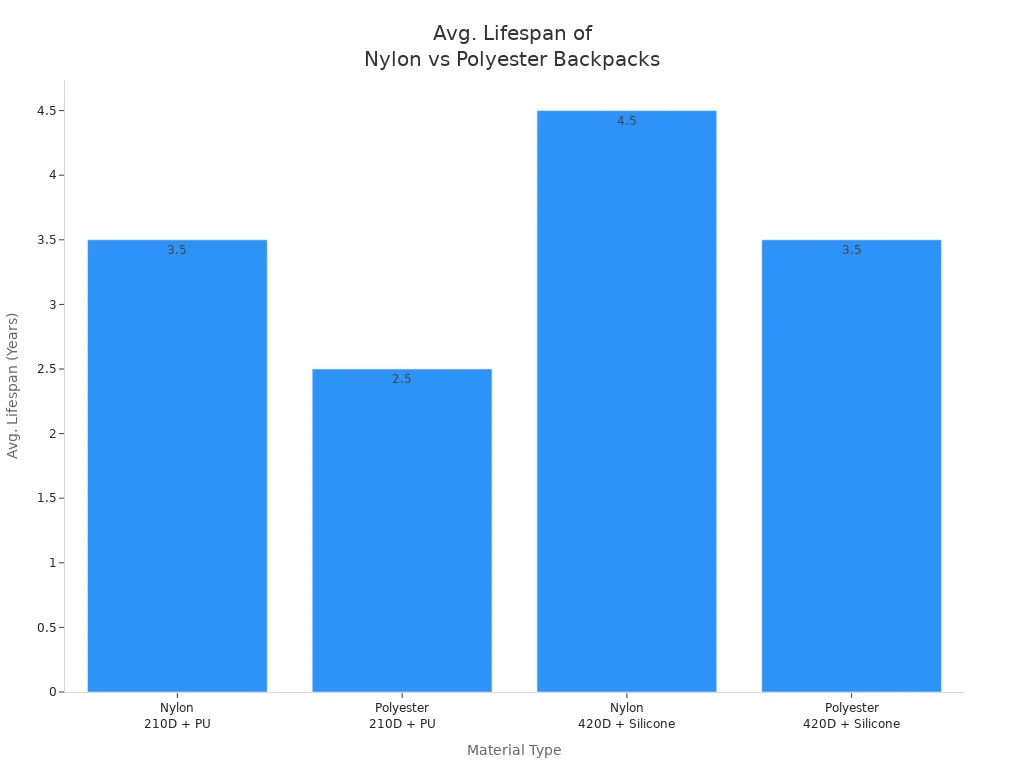
- Nylon backpacks typically last 3 to 5 years.
- Polyester backpacks average around 2 to 4 years.
Tip: If you want a backpack for rough trips, nylon is your best bet. If you need a bag for school or work, polyester does the job.
Which Is Stronger?
You want the strongest backpack for your needs. Nylon wins when it comes to durability and wear resistance. It handles more rubbing, pulling, and outdoor use. Polyester is good for daily life, but nylon stands up to tough conditions.
If you want a backpack that lasts longer and resists damage, nylon is the better choice. You get more years of use and fewer worries about rips or tears.
Water Resistance: Polyester vs Nylon

When you look at polyester vs nylon, water resistance is a big deal. You want your backpack to keep your stuff dry, whether you walk to school or hike in the rain. Let’s see how each material handles water.
Polyester Water Resistance
Natural Hydrophobic Properties
Polyester stands out because it naturally repels water. The fibers do not soak up moisture easily. This is one of the key benefits of polyester. You will notice water beads up and rolls off the surface. That means your things stay dry longer, even if you get caught in a light shower.
Performance in Wet Conditions
Most polyester backpacks come with a special coating. This coating, called DWR (Durable Water Repellent), helps water slide right off. You get good protection from rain and snow. Here’s a quick look at how polyester performs:
| Water Resistance Level | Description |
|---|---|
| Level 1 | Best for protection against light rain and snow flurries. Features a DWR coating that allows water to bead up and roll off. Weak points include zippers and seams. |
- Water-resistant backpacks typically do not have IPX ratings.
- They are designed for modest protection in rainy weather.
You can trust a polyester backpack for daily use, but heavy rain might still get through the seams or zippers. If you want a bag for school or city life, polyester works well.
Nylon Water Resistance
Absorbency and Coatings
Nylon does not repel water as well as polyester on its own. The fibers can soak up some moisture. But you can boost nylon’s water resistance with special treatments. Many nylon backpacks use a polyurethane (PU) coating or a DWR finish. These treatments help water bead up and roll off, just like with polyester. Some high-end nylon bags use a TPU (thermoplastic polyurethane) layer for even better waterproofing. The type of nylon and how tightly it is woven also matter. A dense weave keeps more water out.
Treated vs Untreated Nylon
If you pick a nylon backpack with no coating, it will get wet faster than polyester. Treated nylon, though, can keep your things dry in light to moderate rain. The best nylon backpacks use both a tight weave and a strong coating. You get much better water resistance this way.
Tip: Always check if your nylon backpack has a water-repellent coating. This makes a big difference in wet weather.
Best for Rainy Weather
So, which is better for rain—polyester or nylon? If you compare polyester vs nylon, polyester gives you better water resistance right from the start. You do not need to worry as much about coatings. Nylon can match or beat polyester if it has a good coating, but untreated nylon will not keep you as dry.
If you live in a rainy place or walk outside a lot, choose a polyester backpack for easy water protection. If you want a tough outdoor bag, look for nylon with a strong waterproof coating. Both materials work, but you need to pick the right one for your needs.
Weight and Comfort in Backpacks
Choosing a backpack is not just about how it looks. You want something that feels good on your shoulders and does not weigh you down. Let’s talk about how nylon and polyester compare when it comes to weight and comfort.
Nylon Weight and Feel
Nylon backpacks feel light when you pick them up. The fabric is soft and flexible. You can pack a lot inside, but the bag itself does not add much weight. This makes nylon a favorite for hiking or long walks. You will notice that nylon also feels smooth against your back. It bends and moves with you, so you do not feel stiff or trapped. Many people say nylon bags are easy to carry for hours. If you plan to use your backpack for travel or outdoor trips, nylon helps you stay comfortable.
- Nylon is lightweight.
- The fabric feels soft and flexible.
- It does not trap heat, so your back stays cooler.
Tip: If you carry your backpack for a long time, nylon can help you avoid sore shoulders.
Polyester Weight and Feel
Polyester backpacks usually feel a bit heavier than nylon ones, even if they look the same size. The fabric is thicker and stiffer. This helps the bag keep its shape, but it can feel bulky. Polyester does not breathe as well as nylon. On hot days, your back might get sweaty. Some people like how polyester holds its form, especially if they carry books or a laptop. The bag stands up straight and does not sag.
- Polyester is heavier and stiffer.
- The fabric keeps its shape well.
- It may feel warmer on your back.
Note: If you want a backpack that always looks neat and holds its shape, polyester is a good pick.
Comfort for Daily Use
You want a backpack that feels good every day, not just on special trips. Comfort depends on both the fabric and how you use the bag. Nylon wins for breathability and lightness. You can walk, bike, or run without feeling weighed down. Polyester works well if you need a sturdy bag for school or work, but it may feel less comfy in hot weather.
Here’s how users rate comfort for daily use:
| Material | Comfort Level Description |
|---|---|
| Nylon | Lightweight and breathable, making them more comfortable for long-term carrying. |
| Polyester | Poor breathability may reduce comfort in high temperatures, but offers good shape retention. |
If you want to carry your backpack all day, nylon feels cooler and lighter. Polyester gives you a tidy look and holds heavy items well. Think about how you use your bag most often. That will help you pick the right material for comfort.
Cost Comparison: Nylon vs Polyester Backpack
You want to know how much you’ll spend on a new backpack. Price matters, especially when you want something that lasts. Let’s look at how nylon and polyester compare when it comes to cost.
Nylon Backpack Pricing
Nylon backpacks usually cost more than polyester ones. You pay for extra strength and longer life. Big brands use high-quality nylon for hiking, travel, and tactical bags. Here’s a table showing prices for popular nylon backpacks in 2025:
| Brand | Model | Price |
|---|---|---|
| ULA Equipment | Circuit 68 | $300 |
| REI Co-op | Flash 55 | $199 |
| Osprey | Aether 65 | $320 |
| Gregory | Paragon 60 | $300 |
| Gossamer Gear | Mariposa | $315 |
| Deuter | Aircontact Core 65 | $260 |
| Granite Gear | Crown3 60 | $260 |
| Zpacks | Arc Haul Ultra 60L | $399 |
| REI Co-op | Traverse 60 | $249 |

You see that nylon backpacks from top brands range from $199 to $399. Most cost between $250 and $320. You pay more for extra features and thicker nylon.
Polyester Backpack Pricing
Polyester backpacks cost less. You find many options for school, travel, and daily use. Budget backpacks often use polyester because it’s cheaper to make. You can buy a polyester backpack for as little as $20. Some high-end polyester bags cost up to $120, but most stay under $80.
- Many school backpacks use polyester.
- Travel bags with polyester shells cost less than nylon ones.
- You find recycled polyester in new models, which helps the planet and keeps prices low.
Polyester gives you lots of choices if you want to save money. You don’t have to spend much to get a good-looking backpack.
Tip: If you want a budget-friendly backpack, polyester is the way to go.
Value for Money
You want the best deal for your money. Nylon lasts longer and handles rough use. You pay more, but you get a backpack that stays strong for years. Polyester is lighter and cheaper. It works well for school and city life. Recent upgrades in polyester, like recycled blends and ballistic styles, make these backpacks tougher than before.
Here’s what consumer reports say:
- Polyester is lightweight and affordable, but not as durable as nylon.
- Budget backpacks often use polyester, and new blends last longer than older ones.
- Nylon, especially heavy grades, is best for tactical and outdoor bags.
- Polyester shells are common, but nylon is preferred for strength.
If you want a backpack for hiking or travel, nylon is worth the extra cost. If you need a bag for school or daily use, polyester gives you good value and lots of style choices.
Note: Think about how you use your backpack. Nylon costs more but lasts longer. Polyester saves you money and comes in many colors.
You get what you pay for. Nylon is an investment for tough trips. Polyester is perfect for everyday use and tight budgets.
UV Resistance & Color Retention
Nylon in Sunlight
You might love how tough nylon feels, but sunlight can be its enemy. When you leave your nylon backpack out in the sun, the color can fade faster than you expect. The fabric starts to lose its strength, too. Scientists have tested nylon in outdoor conditions. They found that even strong fabrics can lose up to half their strength after just a month in the sun. You will also notice the color changing. Bright shades turn dull, and white areas can look yellow.
UV damage occurs rapidly to tent fabrics of all weights. After one month of exposure, all the fabrics except one exhibited a measurable drop in tensile strength, with losses ranging from about 5% to a whopping 47%. The weathering was visually obvious as well. The colors faded, the whites turned yellow, and there was general discoloration.
If you use your backpack outside a lot, try to keep it in the shade when you can. Some nylon bags use special coatings to block UV rays, but most will still fade over time.
Polyester Color Retention
Polyester stands out when it comes to keeping colors bright. You can leave a polyester backpack in the sun, and it will hold its color much longer than nylon. The fibers in polyester resist UV rays better. That means your backpack looks new for a longer time, even if you use it every day. You will see less fading, and the colors stay sharp. This makes polyester a favorite for school bags and travel packs that get a lot of sun.
If you want a backpack that keeps its style and color, polyester is a smart choice. You do not have to worry as much about it looking old or washed out.
Best for Outdoor Exposure
You want a backpack that can handle the outdoors. Both nylon and polyester work well, but each has its strengths. Outdoor gear experts have some tips for you:
- For long days outside, both nylon and polyester are good picks. UV-stabilized nylon lasts longer in the sun.
- Polyester works best in places with lots of sunlight, like tropical or high-sun areas.
- Nylon is better if you use your backpack in the shade or need it to handle rough use.
If you spend a lot of time hiking or traveling in sunny places, polyester will keep your backpack looking bright. If you need a bag for camping or rough trails, nylon with a UV coating is a solid choice. Think about where you use your backpack most, and you will find the right material for your adventures.
Maintenance and Cleaning
Taking care of your backpack keeps it looking fresh and helps it last longer. You might wonder if cleaning nylon or polyester is tricky. Let’s break it down so you can keep your bag in top shape.
Cleaning Nylon Backpacks
You can clean a nylon backpack without much fuss. Manufacturers suggest a few simple steps:
- Handwash your bag in cool water with gentle detergent. Soak it for up to 30 minutes, rinse well, and let it air dry.
- If your backpack is tough, you can use a washing machine. Choose warm or cool water and wash with similar colors. Remove it quickly to avoid wrinkles.
- Air dry delicate nylon bags. For sturdy ones, low tumble drying works, but avoid direct sunlight.
- Never use bleach. It can damage the fabric and fade colors.
If you want your nylon backpack to last, handwashing is the safest choice. Machine washing is fine for durable bags, but keep the water temperature around 100°F. Skip the dryer if you can, since high heat can harm the material.
Tip: Always check the care label before you wash your nylon backpack. This helps you avoid surprises.
Cleaning Polyester Backpacks
Cleaning a polyester backpack is easy and quick. You can follow these steps:
- Empty your backpack and shake out any crumbs or dirt.
- Spot-treat stains with mild detergent and warm water. Scrub gently.
- Hand-wash in warm soapy water or use a gentle machine cycle.
- Rinse with cool water to remove all soap.
- Pat dry with towels and let your backpack air dry in a cool, shaded spot.
Polyester handles machine washing well, but gentle cycles work best. You don’t need to worry about wrinkles or shrinking. Just make sure you dry it away from direct sunlight to keep colors bright.
Note: If you want to clean your backpack fast, polyester makes it simple.
Stain Resistance
You might spill juice or drop your backpack in the mud. How do nylon and polyester handle stains? Here’s a quick look:
| Material | Stain Resistance |
|---|---|
| Nylon | Low absorbency prevents deep stains; easy to blot spills. |
| Polyester | Higher absorbency draws stains deeper; requires pre-wash treatment. |
Nylon resists stains better. If you spill something, you can blot it up before it sets. Polyester absorbs more, so stains can go deeper. You may need to treat spots before washing.
If you want a backpack that shrugs off stains, nylon is your best bet. Polyester needs a little more care when it comes to spills.
Taking care of your backpack is easy when you know what to do. Whether you choose nylon or polyester, regular cleaning keeps your bag looking great and ready for your next adventure.
Sustainability and Environmental Impact
Nylon Production Impact
When you pick a nylon backpack, you might think about the planet. Nylon is made from oil, so factories need petroleum to make it. Making nylon uses lots of energy and puts greenhouse gases in the air. This can hurt the environment and adds to air pollution. It also uses up fossil fuels.
But things are getting better. New studies show that using plants like kenaf instead of oil makes nylon cleaner. If factories use these new ways, they can lower greenhouse gases by 61%. They also use 67% less fossil fuel. That is a big step for the planet. If you buy a nylon backpack made with these new methods, you help cut pollution and save resources.
Tip: To help the earth, look for backpacks made with bio-based nylon. These bags have a smaller carbon footprint and are better for the planet.
Polyester Production Impact
Polyester is used in many bags, like school and travel backpacks. But making polyester also hurts the environment. Factories use chemicals and lots of water. Dyeing and treating polyester can make rivers and lakes dirty. The textile industry uses more water than almost any other. It causes 20% of water pollution from factories.
Polyester also sheds tiny plastic fibers when you wash it. These microplastics go into the ocean and hurt sea animals. Polyester makes up 35% of the microplastics in the ocean. Throwing away old bags is another problem. People throw away about 92 million tons of clothes and bags every year. This number keeps going up as people buy more.
Here is a table that shows the main problems with making polyester:
| Impact Area | Description |
|---|---|
| Environmental Burden | Making textiles is hard on the planet. |
| Use-Phase Washing | Washing polyester backpacks adds to pollution. |
| Reuse Strategy | Using your backpack again lowers its impact by 18%. |
| Recycling Impact | Recycling polyester helps reduce harm. |
| Data Gaps | Some problems are hard to measure because of missing data. |
| Consumer Actions | You can help by washing less, reusing, and recycling your backpack. |
And here are some important numbers:
| Statistic | Value |
|---|---|
| Textile Waste | 92 million tons are thrown away each year, and this is rising. |
| Water Consumption | Textile factories use the second most water of any industry. |
| Industrial Water Pollution | 20% of water pollution comes from dyeing and treating polyester. |
| Microplastics | 35% of ocean microplastics come from polyester. |
| Per-Capita Production | Each person uses more polyester every year. |
Note: To help the planet, try to use your polyester backpack longer and wash it less. Recycling also helps a lot.
Recycled Materials
You have more choices now than before. Many brands make backpacks from recycled nylon and polyester. These bags use old fishing nets, bottles, and fabric scraps. Picking recycled materials helps cut waste and saves energy.
Recycled polyester is easy to find. It keeps plastic bottles out of landfills and oceans. Recycled nylon is not as common, but it is growing. Both choices help the planet and support sustainability.
If you want an eco-friendly backpack, look for labels that say “recycled nylon” or “recycled polyester.” These bags use fewer resources and make less pollution. You get a strong, cool backpack and help the earth too.
Choosing recycled materials is a great way to help the planet. You make a difference every time you pick a recycled nylon or polyester backpack.
Eco-Friendly Choice
You want to make a smart choice for the planet when you pick a backpack. Many people ask if nylon or polyester is the best eco-friendly option. The answer is not simple, but you can find a path that works for you and the earth.
Nylon and polyester both come from oil. Factories use a lot of energy to make them. This process creates pollution. When you look for a greener backpack, you should check if the bag uses recycled materials. Recycled polyester and recycled nylon are much better for the environment than new, or “virgin,” versions. They use less energy and keep plastic waste out of landfills and oceans.
Sustainability experts say some materials are even more eco-friendly than nylon or polyester. Here are a few top choices:
- Cotton canvas
- Recycled plastic bottles
- Recycled leather
- Recycled polyester
- Algae-based foam
- Natural cork
- Upcycled rubber
- Recycled cotton canvas
You see recycled polyester on this list. Many brands now use recycled polyester made from old water bottles. This helps reduce plastic waste. You also find recycled nylon in some backpacks. These bags use old fishing nets or fabric scraps. Both recycled polyester and recycled nylon help lower pollution and save resources.
If you want a backpack that is easy on the planet, look for these features:
- Made with recycled polyester or recycled nylon
- Uses less water and energy in production
- Has eco-friendly dyes and finishes
- Comes in simple packaging
You can also help by using your backpack for many years. The longer you use it, the less waste you create. Try to wash your polyester or nylon backpack only when needed. This saves water and stops microplastics from entering rivers and oceans.
Some people want to avoid synthetic materials. You can pick a backpack made from natural fibers like cotton canvas or cork. These materials break down faster in nature. They do not shed microplastics. But they may not last as long as polyester or nylon.
When you shop, check the label. Look for words like “recycled polyester,” “recycled nylon,” or “eco-friendly.” Many brands now show how much recycled content is in each backpack. You can feel good knowing you made a better choice for the earth.
You have many options. Polyester and nylon both have greener versions. Recycled polyester is easy to find and works well for school or travel. Recycled nylon is strong and lasts a long time. Both help you carry your things and protect the planet.
Choosing the Right Backpack Material
Outdoor Use
If you like hiking or camping, you need a strong backpack. The material should handle rough trails and bad weather. Nylon is great for outdoor trips. It does not tear or scratch easily. You do not have to worry about rocks or branches. Many guides say nylon is best for tough adventures. Low-denier nylon is very light. This helps you move fast and carry less.
Polyester is good if you want better water resistance. It keeps your things dry in rain. Polyester also protects from the sun and does not fade quickly. If you care about nature, look for recycled nylon or polyester. This helps protect the planet.
Here are things to check for outdoor backpacks:
- Strong material for rough places
- Good water resistance for wet days
- Light weight for easy carrying
- UV protection for sunny hikes
- Eco-friendly choices for the earth
Tip: If you want the toughest backpack, choose nylon. If you want to save money and need water resistance, polyester is a good pick.
Travel and Commuting
When you travel or go to work, you need a backpack that keeps up. Breathability is important in hot places. Nylon lets air move, so your back stays cool. Nylon is also tough, especially ripstop nylon. Your bag will last in busy airports and trains.
Polyester is used in cheaper travel backpacks. It is heavier and not as strong as nylon. If you need a simple bag for short trips, polyester works well. For long trips, nylon is better. Look for zipper flaps and extra layers. These keep your things safe from rain and bumps.
Note: For daily travel or long trips, nylon is more comfy and strong. Polyester is best for short trips or saving money.
School and Everyday Use
You need a backpack for books, snacks, and daily stuff. Both nylon and polyester work, but each has good points. Here is a table to help you pick for school or daily use:
| Consideration | Nylon | Polyester |
|---|---|---|
| Durability | Very strong, resists damage | Strong, but wears out faster |
| Water Resistance | Blocks water well | Can be treated to block water |
| Weight | Lighter, easy on shoulders | Heavier |
| Cost | Costs more | Cheaper |
| Environmental Impact | Depends on how it is made | Depends on how it is made |
If you want a backpack that lasts all year, nylon is smart. If you want to save money and like bright colors, pick polyester. Always check if the material is recycled for a greener choice.
Remember: The best backpack depends on how you use it. Think about what you need every day and pick the right material for you.
Custom Backpack Services
Sometimes, you want a backpack that fits your life perfectly. Maybe you have a special hobby, need extra pockets, or want your favorite color. You do not have to settle for what you see in stores. Custom backpack services let you design a bag that matches your needs and style.
You can choose the size, shape, and features. Want a padded laptop sleeve? Need a secret pocket for your phone? You can add these details. Some people like to pick the fabric, zipper style, or even the color of the straps. You get to decide what works best for you.
Here’s how custom backpack services work:
- Share Your Ideas: You tell the company what you want. This can be a sketch, a list, or even a photo of a bag you like.
- Pick Your Materials: You choose between nylon, polyester, or other fabrics. You can ask for recycled materials if you care about the planet.
- Select Features: You add things like water bottle holders, extra padding, or special compartments.
- Review the Design: The company shows you a sample or drawing. You can ask for changes before they make the final product.
- Get Your Backpack: After you approve the design, the company makes your custom bag and ships it to you.
Custom backpack services are great for teams, schools, or businesses. You can add logos, names, or special colors. This makes your group stand out and feel connected.
Many companies offer OEM (Original Equipment Manufacturer) and ODM (Original Design Manufacturer) services. OEM means you can put your brand on a backpack the company already makes. ODM lets you create a brand-new design from scratch. Both options help you get a unique product without starting from zero.
Custom backpacks are not just for big orders. Some companies will make just one bag for you. This is perfect if you want a gift or something special for yourself.
If you want a backpack that is truly yours, custom services are the way to go. You get control over every detail. Your bag will fit your life, your style, and your needs.
Final Recommendation: Nylon vs Polyester
Category Winners
You want a clear answer in the nylon vs polyester debate. Let’s break it down by category so you can see which material wins for each need.
| Category | Winner | Why It Wins |
|---|---|---|
| Durability | Nylon | Handles rough use, resists tears and scratches. |
| Water Resistance | Polyester | Repels water naturally, keeps things dry. |
| Weight | Nylon | Feels lighter, easier to carry all day. |
| Cost | Polyester | Costs less, fits most budgets. |
| Color Retention | Polyester | Stays bright, resists fading in the sun. |
| Maintenance | Polyester | Easy to clean, safe for machine washing. |
| Sustainability | Polyester | More recycled options, helps the planet. |
Tip: If you want a tough, lightweight backpack for outdoor adventures, nylon is your best bet. If you care about color, price, and easy cleaning, polyester stands out.
Who Should Choose Nylon?
You should pick nylon if you need a backpack that can handle anything. Do you love hiking, camping, or traveling? Nylon stands up to rocks, branches, and rough ground. You get a bag that lasts for years. Nylon feels light on your back, so you can walk longer without getting tired. If you want a backpack that keeps its shape and strength, nylon is the way to go.
Choose nylon if:
- You spend time outdoors or on the move.
- You want a backpack that resists tears and scratches.
- You need something lightweight for long trips.
- You care about durability more than price.
- You want a bag that can handle heavy loads.
Note: Many pro hikers and travelers trust nylon for their toughest trips.
Who Should Choose Polyester?
You might want polyester if you use your backpack for school, work, or city life. Polyester keeps colors bright, so your bag looks new for a long time. It costs less, which helps if you are on a budget. Polyester also dries fast and resists stains, so you can clean it quickly. If you want a backpack that is easy to care for and comes in many styles, polyester is a smart pick.
Choose polyester if:
- You want a backpack for daily use or school.
- You like bright colors and fun designs.
- You need something affordable.
- You want a bag that is easy to wash.
- You care about eco-friendly options with recycled materials.
Tip: Polyester is great for students, commuters, and anyone who wants a stylish, low-maintenance bag.
You see, the nylon vs polyester choice depends on your lifestyle. Think about how you use your backpack every day. Pick the material that matches your needs, and you will get the best value.
Why Choose Our Custom Backpacks
You want a backpack that fits your life. You do not want to settle for something that almost works. Custom backpacks give you control over every detail. You pick the size, the color, and the features. You decide how many pockets you need. You choose the material that matches your style and your needs.
When you order a custom backpack from us, you get more than just a bag. You get a product made for you. Our team listens to your ideas. We help you design a backpack that solves your problems. Maybe you need a padded laptop sleeve. Maybe you want a hidden pocket for your phone. You can add these features. You can even choose recycled materials if you care about the planet.
Here are some reasons you should choose our custom backpacks:
- Personalized Design: You create a backpack that matches your taste. You pick the colors, the zippers, and the straps.
- Quality Materials: You select nylon, polyester, or other fabrics. We offer recycled options for eco-friendly choices.
- Unique Features: You add special compartments, water bottle holders, or extra padding. You get what you need for school, travel, or outdoor adventures.
- Branding Options: You can add your logo, team name, or favorite design. This is perfect for schools, businesses, or sports teams.
- Expert Support: Our designers help you every step of the way. You see a sample before we make your final backpack.
You do not have to worry about getting stuck with a boring bag. You get a backpack that stands out and works for you.
We offer OEM and ODM services. OEM lets you put your brand on a proven design. ODM gives you the freedom to create something new from scratch. You get flexibility and control. You can order one backpack or a hundred. We make sure every bag meets your standards.
Choosing a custom backpack means you get a product that lasts. You do not waste money on bags that break or do not fit your needs. You get a backpack that supports your lifestyle. You feel proud every time you use it.
If you want a backpack that is truly yours, our custom service is the answer. You get quality, style, and support. You make the choices. We do the work. Your perfect backpack is just a design away.
Conclusion
You’ve seen how nylon and polyester offer different strengths. Experts say polyester works best for everyday use, while nylon stands out for tough jobs. Think about how you use your backpack and what matters most to you. Quality, eco-friendly choices, and custom designs help you get the perfect fit. As a professional backpack manufacturer, we offer custom designs, materials, and branding options to help you get the perfect fit. If you want a unique bag built for your needs, our team can create it just for you—reach out anytime to get started.
FAQ
What makes nylon backpacks last longer?
Nylon fibers resist scratches and tears. You can use your backpack for years without seeing much damage. Outdoor fans trust nylon for tough trips.
Can polyester backpacks handle rain?
Polyester repels water well. You will see water bead up and roll off. For heavy rain, look for extra coatings or rain covers.
Which material is lighter for daily use?
Nylon feels lighter on your shoulders. You can carry it all day without getting tired. Polyester is heavier but keeps its shape better.
How do I clean my backpack?
You can handwash nylon with mild soap and cool water. Polyester works well in the washing machine on a gentle cycle. Always air dry for best results.
Is recycled material available for backpacks?
Many brands now offer recycled nylon and polyester options. You help the planet by choosing these eco-friendly backpacks.
Will the color fade in sunlight?
Polyester keeps colors bright longer. Nylon may fade or turn yellow if you leave it in the sun. For outdoor use, pick polyester or UV-treated nylon.
Can I customize my backpack?
You can design your own backpack with custom services. Choose the size, color, and features that fit your needs. Add logos or special pockets for a personal touch.
Tip: Always check the care label before washing your backpack. This helps you avoid damage and keeps your bag looking new.