When we talk about non woven bags vs woven bags, the real difference is in how they are made and how they perform. Non woven bags are light, affordable, and great for promotions. Woven bags are strong, long lasting, and perfect for heavy duty use. In this guide, we will walk you through the key differences so you know exactly which bag works best for your business.

What Is a Non Woven Bag
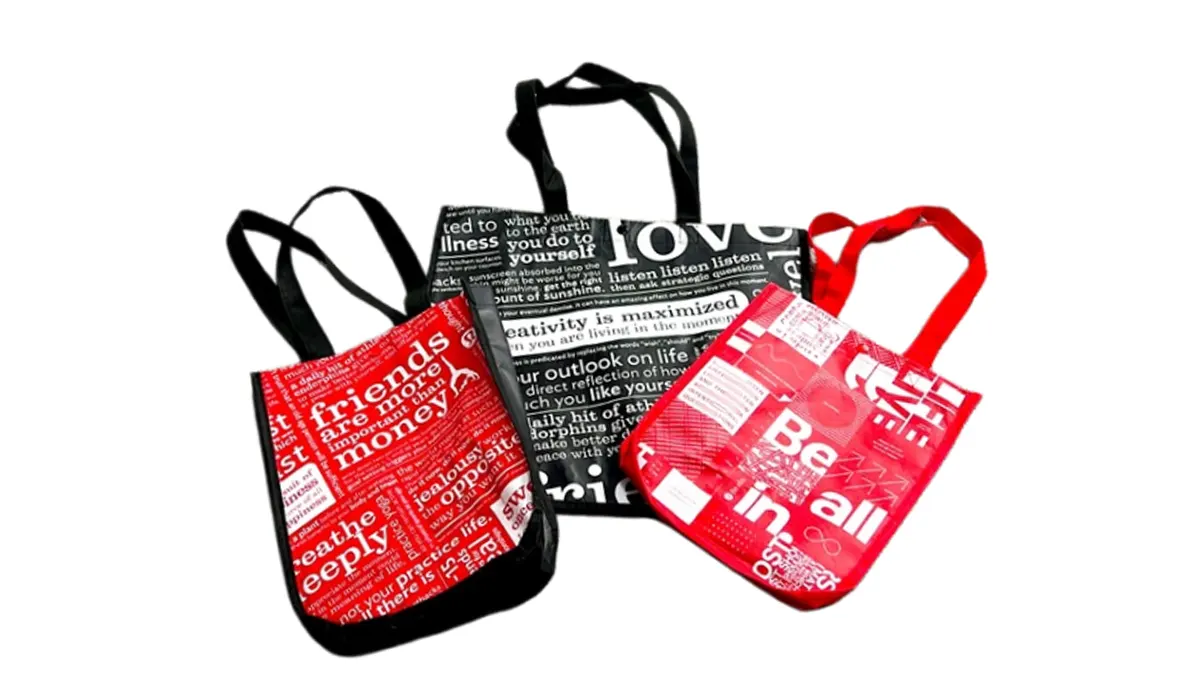
A non woven bag is made from polypropylene fibers that are pressed together with heat instead of being woven like cloth. The result is a light, soft bag that is easy to print with logos. That is why you often see them in supermarkets and trade shows. They are affordable, reusable, and a smarter choice than single use plastic bags.

Key Features of Non Woven Bags
| Feature | Why It Matters |
|---|---|
| Lightweight | Easy to carry and comfortable in daily use |
| Smooth surface | Perfect for printing colorful logos and designs |
| Reusable | Can be used many times, more eco friendly than throwaway plastic bags |
| Affordable | Low cost to produce, ideal for bulk orders and promotional events |
Where You Usually See Them
| Common Use | Example Scenarios |
|---|---|
| Supermarket shopping bags | Carrying groceries or daily essentials |
| Trade show giveaways | Companies handing out branded bags at events |
| Promotional retail bags | Clothing shops or brands adding logos for exposure |
| Light packaging | Wrapping or packing lightweight goods |
What Is a Woven Bag
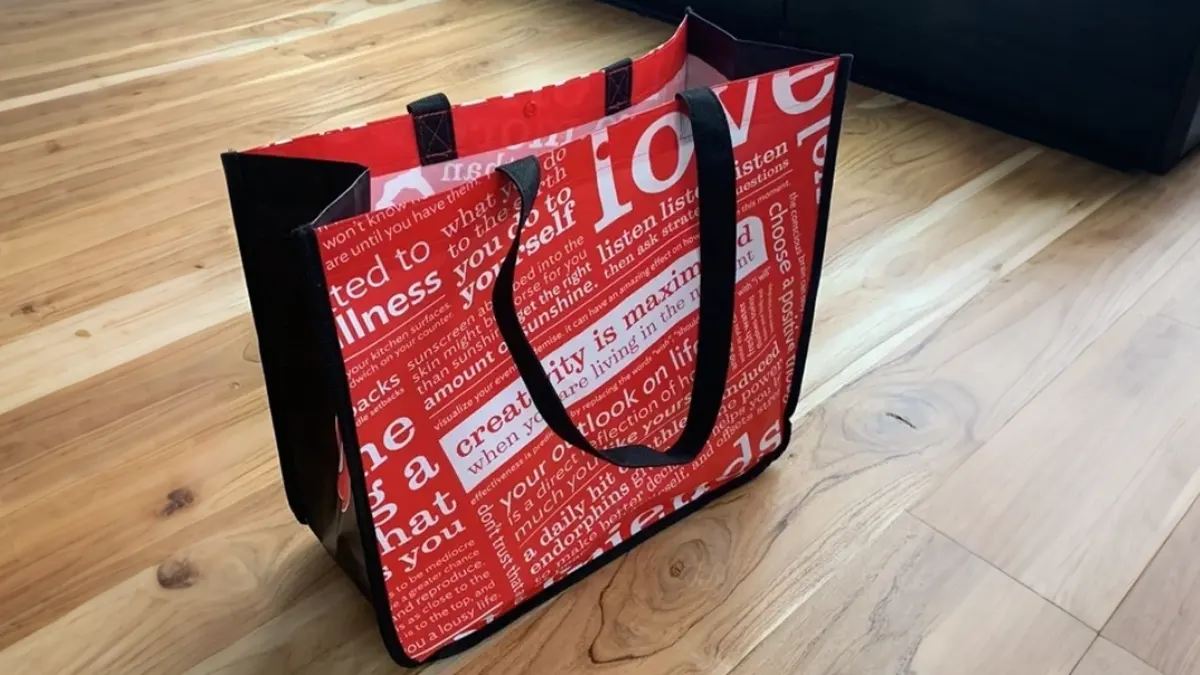
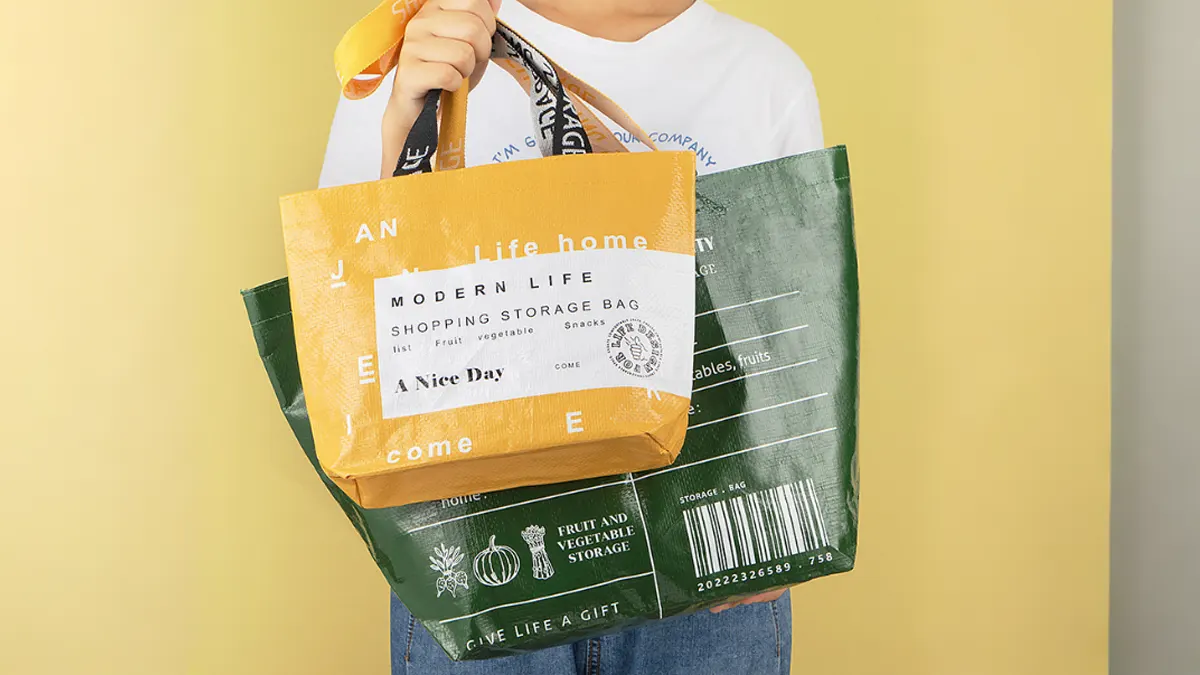
A woven bag is made by weaving polypropylene threads together to create a strong fabric. The material is then cut, laminated if needed, and stitched into a reusable shopping or promotional bag. These bags feel sturdier than non woven bags and are designed to carry heavier loads while still looking neat.

Key Features of Woven Tote Bags
| Feature | Why It Matters |
|---|---|
| Strong and durable | Can carry heavier items without tearing, perfect for groceries or books |
| Long lasting | Designed for repeated use, often lasting years with proper care |
| Moisture resistant | Laminated versions protect against water and stains |
| Customizable | Supports lamination printing for colorful, high resolution designs |
Where You Usually See Them
| Common Use | Example Scenarios |
|---|---|
| Shopping tote bags | Supermarkets, retail stores, daily grocery use |
| Promotional giveaways | Branded bags at events or trade shows |
| Travel and casual use | Durable carry bag for books, clothes, or essentials |
| Eco friendly alternatives | Sold as reusable substitutes for plastic bags |
Manufacturing Process
Understanding how these bags are made is key to seeing why they are different.
Non Woven Bag Manufacturing
- Polypropylene resin is melted and spun into fibers.
- Fibers are laid randomly on a sheet.
- Heat and pressure bond them together into non woven fabric.
- The fabric is cut into panels and stitched into bags.
This process is fast and inexpensive. That is why non woven bags are affordable and good for promotions.
Woven Bag Manufacturing
- Polypropylene resin is melted and spun into threads.
- Threads are woven into fabric using looms.
- The woven fabric is laminated if moisture resistance is needed.
- The fabric is cut and stitched into bags.
This process takes more time and steps, but the result is a much stronger fabric that can handle heavy loads.
Durability and Strength
Here is where the biggest difference lies.
Non woven tote bags are strong enough for everyday shopping, carrying clothes, or small groceries. Most can hold around 5 to 10 kilos depending on thickness. They work well for casual use but are not meant for very heavy loads.
Woven tote bags feel sturdier in your hand. Thanks to the tightly woven fabric, they can carry more weight — groceries, books, or even heavier items for daily errands. With lamination, they also resist moisture, which adds to their lifespan. Many people reuse them for years without worrying about tearing.
In short: if you want a light and budget friendly bag for promotions or simple shopping, go with non woven. If you need something more durable that your customers can use again and again, woven tote bags are the smarter choice.
Cost Difference
- Non woven bags: Cheap to make, fast to produce, and great for large giveaways or supermarket distribution.
- Woven bags: More expensive because of the weaving and lamination process, but the durability makes them cost effective for long term use.
If you are hosting an event and need 10,000 logo printed bags to hand out, non woven is your friend. If you are a rice mill that needs to pack 50 kilo bags for export, woven is the clear choice.
Printing and Customization
Non Woven Bags
Because the surface is smooth, they are very easy to print on. You can use:
- Screen printing
- Heat transfer
- Digital printing
This makes them popular for promotions, because the logo comes out sharp and colorful.
Woven Bags
The fabric is textured, so direct printing is harder. That is why woven bags are often laminated with a smooth film. This not only makes them water resistant but also creates a perfect surface for high quality printing.
Environmental Impact
Many people today want eco friendly options. So how do these two compare?
- Non woven bags: Reusable and recyclable, but they usually last a few months to a year depending on use. If they are discarded too early, the eco benefits are reduced.
- Woven bags: Much more durable, which means fewer bags are needed over time. This lowers overall waste. Laminated woven bags are less biodegradable, but still recyclable.
Both are better than single use plastics, but woven bags win on longevity.
Applications in Detail
Non Woven Bags Applications
- Grocery stores hand them out as reusable shopping bags.
- Companies print logos for promotional giveaways.
- Event organizers distribute them at trade shows.
- Retail shops use them as packaging for clothing.
Woven Bags Applications
- Food companies use them for rice, flour, sugar.
- Agriculture uses them for seeds and fertilizer.
- Logistics companies pack heavy items in woven sacks.
- Some supermarkets sell them as heavy duty shopping bags.
Comparison Table
| Feature | Non Woven Bag | Woven Bag |
|---|---|---|
| Structure | Fibers bonded with heat and pressure | Threads woven into strong fabric |
| Durability | Medium, lasts months | High, lasts years |
| Printing | Easy, smooth surface | Needs lamination for smooth surface |
| Cost | Low, perfect for bulk promotions | Higher, but cost effective long term |
| Common Uses | Shopping, events, promotions | Food packaging, agriculture, heavy industry |
How to Choose
The choice comes down to use case:
- Need low cost, customizable bags for an event or promotion? Go with non woven.
- Need tough, heavy duty bags for packaging and logistics? Go with woven.
Think about your customer, your budget, and how many times you expect the bag to be reused.
Conclusion
Choosing between non woven bag vs woven bag is not about which one is absolutely better. It is about what you need. Non woven bags are budget friendly, customizable, and perfect for promotions and everyday shopping. Woven bags are strong, durable, and built for industries that need reliable packaging for heavy products.
At INITI, we have over 16 years of experience manufacturing both non woven bags and woven bags. We provide OEM and ODM services, full customization in size, material, color, and printing. We serve wholesalers, retailers, and brands worldwide.
FAQs
Which is more eco friendly, non woven or woven bags?
If you care about sustainability, both non woven and woven bags are a better choice than single use plastic. The difference comes down to how many times you reuse them. Woven bags are stronger and can last for years, which means fewer bags are produced and thrown away over time. Non woven bags are cheaper and popular for promotions, but because they are lighter, they may wear out sooner. That does not make them bad, it just means they need to be used responsibly. The key to eco friendliness is reuse, so whichever bag you choose, the more times it is used, the better it is for the environment.
Can both types be customized with logos?
Yes, both non woven and woven bags can be customized, but the methods are a little different. Non woven bags have a smooth surface that absorbs inks well, so screen printing, digital printing, or even heat transfer works beautifully. This is why you often see them at trade shows with colorful brand logos. Woven bags are tougher because of their textured fabric. To get a sharp, professional print, they are usually laminated first. The lamination creates a flat surface where you can add high resolution images and bright designs. Both options work for branding, it just depends on the look and feel you want.
Which one is better for carrying heavy items?
If your goal is to carry heavy loads, woven bags are the clear winner. Their fabric is made from threads woven tightly together, giving them incredible strength. That is why industries use woven sacks for rice, flour, fertilizer, and other bulk products. They can handle 20 to 50 kilos easily without tearing. Non woven bags, by comparison, are lighter and better suited for groceries, clothes, or giveaways. They can still carry a good amount of weight, but they are not meant for industrial use. Think of it like this: non woven is perfect for daily shopping, while woven is built for hard work.
Are woven bags waterproof?
By themselves, woven bags are not waterproof. The fabric has tiny gaps between the threads, so water can seep through. However, many woven bags are laminated with a thin plastic film, which makes them water resistant. Laminated woven bags can protect the contents from moisture, rain, or damp conditions during storage and transport. That is why food and agriculture industries often prefer laminated woven packaging. So if you need water protection, ask for laminated woven bags, and you will have durability plus extra safety against moisture.
What is the main price difference?
Price is often one of the first questions buyers ask. Non woven bags are cheaper upfront because the production process is simple and fast. They are ideal if you need thousands of bags for giveaways, promotions, or supermarket distribution. Woven bags cost more because the fabric takes longer to produce and is often laminated. But they last much longer, which makes them cost effective in the long run. Think of it this way: with non woven you pay less per unit but may need to replace them more often, while with woven you pay more upfront but get years of reuse and reliability.