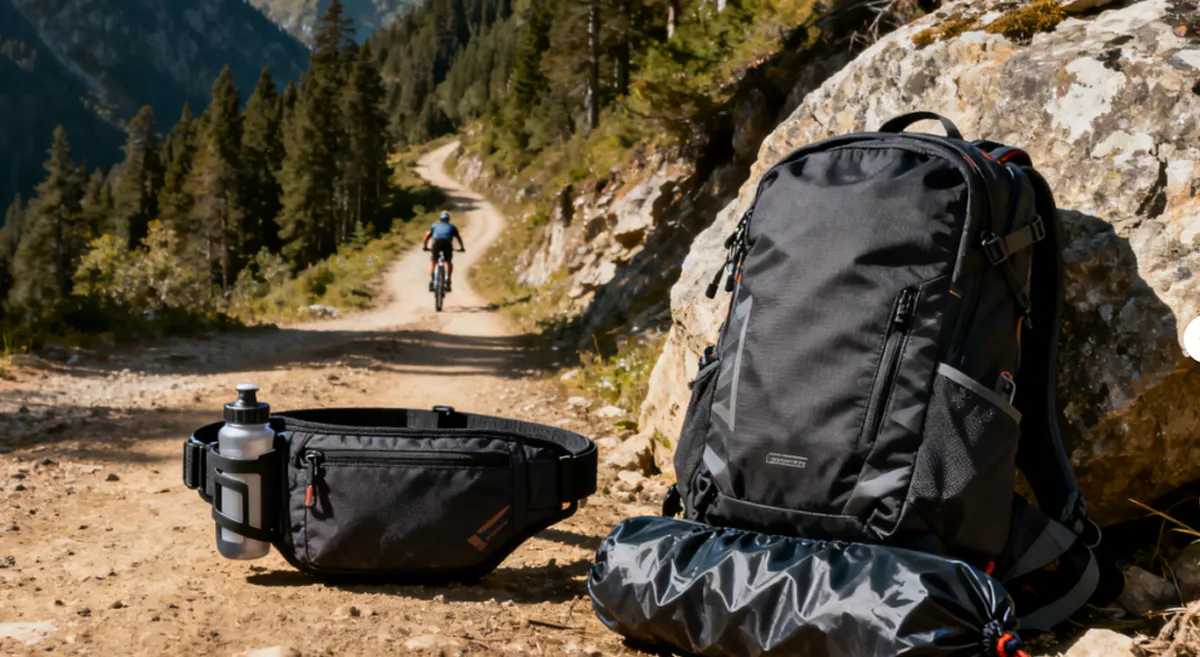
You might wonder if you should grab a hip pack or a backpack for your next mountain bike ride. The answer depends on your needs. If you want to keep things light and enjoy quick access to your tools, a hip pack gives you more freedom and less sweat. For longer rides or when you need to carry extra gear, a backpack can handle more weight and keep your load steady. Check out this quick table to see how the main features stack up:
| Hip Bag | Backpack |
|---|---|
| More freedom of movement | More storage space |
| Less shoulder pressure | Better load distribution |
| Lighter overall | Fits bigger hydration bladders |
| Better ventilation | Back protection in a fall |
| Easier pocket access | More stability in rough terrain |
Choosing between mtb hip pack vs backpack comes down to what feels right for your ride.
Key Takeaways
- Pick a hip pack for short rides. It keeps your stuff light. You can grab things quickly.
- Use a backpack for longer rides. It lets you carry more gear, food, and water. It feels comfortable.
- A hip pack lets air flow better. Your back stays cool. You sweat less on hot days.
- Backpacks spread weight better. They work well for heavy things. They help on long rides.
- Think about how long you will ride. Decide what gear you need. This helps you choose between a hip pack or backpack.
- Hip packs must fit tight. This stops them from bouncing. It makes rough trails more comfy.
- Hydration choices are different. Hip packs work for short rides. Backpacks hold bigger water bladders for long trips.
- Try both pack types. See which one feels best. Pick what fits your riding style and comfort.
MTB Hip Pack vs Backpack: Quick Comparison
Pros & Cons Overview
When you look at mtb hip pack vs backpack, you see some clear differences in how each one works for mountain biking. You want to know what makes each option stand out. Here’s a quick look at the main pros and cons for both:
| Aspect | Hip Pack Pros | Hip Pack Cons | Backpack Pros | Backpack Cons |
|---|---|---|---|---|
| Functionality | Easy to wear; you can add or remove layers without taking it off. | Not much space for extra layers; less back protection if you fall. | Carries more gear; great for long rides. | Too much for short trips; you might carry more than you need. |
| Size and Capacity | Light and compact. | Limited storage for big items. | Comes in many sizes for different needs. | Can get heavy if you pack too much. |
| Versatility | Simple and focused on essentials. | Not as useful for all-day adventures. | Works for many activities and longer trips. | Sometimes too bulky for quick rides. |
| Comfort | Less pressure on your shoulders and back. | Can bounce if not fitted well. | Spreads weight across your back and hips. | Might hurt if you have back or shoulder pain. |
| Accessibility | Quick access to snacks, tools, and phone. | Smaller pockets mean less organization. | Lots of pockets for organizing your stuff. | Harder to grab things fast—you need to take it off. |
Tip: If you want to keep things simple and light, a hip pack might be your best friend. If you plan to ride all day and need more gear, a backpack will help you carry everything.
Key Differences
You might wonder what really sets these two packs apart. The answer comes down to weight, storage, and hydration. Here’s a quick table to help you see the main differences:
| Feature | Mountain Bike Hip Packs | Backpacks |
|---|---|---|
| Weight Distribution | Spreads weight across your hips and lower back. | Spreads weight across your shoulders and back. |
| Hydration Options | Holds water bottles or small hydration bladders. | Fits larger hydration bladders for long rides. |
| Storage Capacity | Best for essentials—tools, snacks, phone, and a small jacket. | Holds extra layers, food, tools, and more gear. |
You will notice that a hip pack feels lighter and gives you more freedom to move. You can grab your snacks or tools without stopping. A backpack gives you more space and better support for heavy loads. It works well for longer rides or when you need to carry a lot.
If you ride short trails and want to stay cool, a hip pack keeps your back open to the air. If you plan to be out for hours or need to bring lots of stuff, a backpack makes sure you have everything you need.
Backpack: Best Uses

Storage Capacity
When you want to carry more on your ride, a backpack really shines. You get plenty of space for all your essentials and more. Most mountain bike backpacks offer storage from 7 to 25 liters. That means you can pack for a short spin or a full-day adventure.
| Backpack Type | Total Capacity |
|---|---|
| Bladder (1.5L) | 12 L |
| No Bladder | ~2.2 L |
| Bladder (1.5L) | 4.5 L |
| Bladder (3L) | 20 L |
| N/A | 5 Litres |
Extra Gear & Layers
You never know when the weather might change. With a backpack, you can bring extra layers, a rain jacket, or even a warm hat. This is perfect for long trips or rides in the mountains where the weather can surprise you.
Food & Tools
Long rides mean you need more snacks and tools. You can stash energy bars, sandwiches, and a full tool kit. You might even have room for a small first aid kit. This helps you stay prepared for anything the trail throws at you.
Tip: If you love exploring new trails or riding all day, a backpack gives you the space you need for extra gear and food.
Hydration Options
Staying hydrated is key on any ride. Backpacks make it easy to carry more water, so you can ride longer without stopping.
Large Bladders
Most mountain bike backpacks fit hydration bladders from 1.5 to 3 liters. Here’s a quick look at some popular sizes:
| Hydration Pack | Capacity |
|---|---|
| Dakine Shuttle 6 | 2L |
| Dakine Drafter 10 | 3L |
| Camelbak LOBO | 2L |
| Camelbak MULE | 3L |
| Albek Haul 3 | 1.5L |
| Albek Haul 4 | 2L |
You can choose a bladder size that matches your ride. Some packs even let you swap bladders for different trips.
Long Ride Support
Many hydration systems make drinking easy. CamelBak’s Big Bite valves and HydraPak’s circular bite valves let you sip water without stopping. Some packs, like the Osprey Syncro 12, have quick-release buttons for fast refills. Others, like the Thule Vital 6, have clever hose return systems. You can even use the on/off switch on some reservoirs with gloves on.
Comfort & Fit
A good fit makes your ride more fun. Backpacks help you carry weight without feeling off balance.
Weight Distribution
A backpack spreads weight across your shoulders and back. This helps you stay stable, even when you carry a lot. You won’t feel the load bouncing around as much as with a waist pack.
Adjustable Straps
You can adjust the straps to fit your body. This keeps the backpack snug and stops it from shifting. Some riders notice more sweat on their back or sore shoulders after a long ride. If you pick a pack with padded straps and a good fit, you can ride longer with less fatigue.
Note: If you plan to ride for hours or need to bring lots of gear, a backpack offers the best mix of storage, hydration, and comfort.
Hip Pack: Best Uses
Minimalist Setup
Essentials Only
You want to keep things simple on your ride. A hip pack helps you carry just what you need. Most hip packs hold under 4 liters, so you can fit your phone, snacks, a small tool kit, and maybe a light jacket. You do not have to worry about extra weight or bulky pockets. Riders often choose a hip pack for shorter rides when they only need the basics. You can leave your big backpack at home and focus on the trail.
- Phone, keys, and wallet fit easily.
- Snacks and a multi-tool stay close.
- Small first aid items tuck inside.
Lightweight Feel
A hip pack feels light around your waist. You do not get weighed down by heavy straps or big compartments. You move freely and enjoy the ride without feeling bulky. Many riders say a hip pack makes them forget they are even wearing it. You can pedal faster and climb easier with less weight holding you back.
Tip: If you want to ride fast and keep your load light, a hip pack is a smart choice.
Comfort & Sweat Reduction
Less Back Coverage
You know how a backpack can make your back sweaty. A hip pack solves that problem. It sits low on your hips and leaves your back open to the air. You get better ventilation and stay cooler, especially on hot days. Some riders say they never have a wet back when they use a hip pack. The materials also help wick away sweat and dry quickly.
- More airflow keeps you comfortable.
- Less sweat means you feel fresh longer.
Freedom of Movement
A hip pack gives you more freedom to move. You do not have shoulder straps pulling or shifting. You can twist, turn, and jump without feeling restricted. The compact design lets you handle technical trails and sharp corners with ease. You stay balanced and agile, which makes your ride more fun.
Note: A snug fit is important. If your hip pack fits well, it stays stable and does not bounce around.
Accessibility
Quick Access
You want to grab your snacks or tools fast. A hip pack makes that easy. The pockets sit right at your waist, so you reach down and pull out what you need. You do not have to stop or take off your pack. Some riders even carry a small hydration bladder in their hip pack for rides over two hours. You can hydrate yourself or your dog without digging through a big bag.
- Easy access to snacks and tools.
- Hydration is simple and quick.
Easy On/Off
Putting on a hip pack takes just a few seconds. You buckle it around your waist and you are ready to go. Taking it off is just as fast. You do not have to mess with shoulder straps or adjust anything. This makes a hip pack perfect for quick rides or when you want to get moving right away.
Tip: If you want a pack that is easy to use and does not slow you down, try a hip pack on your next ride.
Backpack Versus Hip Pack: Which to Choose?
Ride Length & Gear Needs
When you decide between a backpack versus hip pack, start by thinking about how long you plan to ride and what you need to carry. If you’re heading out for a quick spin or a short trail, you want to keep things light. Packing only the essentials helps you stay agile on your bike. A hip pack works best for short to medium rides where you only need a few items like snacks, a multi-tool, and your phone. The Dakine Hot Laps pack comes in different sizes, so you can pick one that fits your gear without feeling bulky.
If you’re planning a longer adventure or a day hiking trip, you’ll need more supplies. A backpack gives you extra space for food, layers, and a first aid kit. For longer rides, it’s smart to pack extra gear to stay safe and comfortable. Some riders use modular packing, adding or removing items based on the route and weather. Essentials for short rides include basic tools and water, while longer rides call for more comprehensive gear.
Here’s a quick list to help you match your pack to your ride:
- Short rides: Carry minimal essentials like water, snacks, and a multi-tool.
- Medium rides: Add a light jacket, phone, and small first aid kit.
- Long rides: Bring extra layers, food, larger tool kits, and more water.
The amount of gear you carry changes with the ride length and difficulty. If you only need hydration and a few tools, a hip pack is perfect. If your storage needs are extensive, a backpack is the way to go.
Hydration Preferences
Hydration plays a big role in the mtb hip pack vs backpack gear debate. If you’re riding for hours or tackling tough terrain, you need to drink more water. Backpacks are popular for long tours because they hold bigger hydration bladders and let you carry drinks, food, and gear all in one place. Hip packs work well for shorter rides when you only need a water bottle and a few small tools.
Your hydration needs change with ride duration and intensity. On longer rides, especially in hot weather, you should drink before you feel thirsty. Some riders need more water than others, depending on their body and the conditions. As you ride longer and burn more energy, you’ll want to sip water more often.
Here’s a simple guide:
- Short rides: A hip pack with a small bottle or bladder is enough.
- Long rides: A backpack with a large hydration bladder keeps you going.
If you’re planning a daypack adventure or a multi-hour ride, choose a pack that matches your hydration style.
Comfort Considerations
Comfort can make or break your ride. The weight and fit of your pack affect how you feel on the trail. On flat routes, carrying extra weight doesn’t slow you down much. On hilly or technical trails, a heavy pack can tire you out and make it harder to maneuver your bike. Less weight means better handling and quicker moves to dodge obstacles.
A hip pack feels lighter and gives you more freedom to move. You won’t have shoulder straps pulling or shifting, so you stay comfortable and cool. If you fit your hip pack snugly, it won’t bounce around. A backpack spreads weight across your shoulders and back, which helps on longer rides but can cause fatigue if you pack too much.
Here’s a quick look at how terrain affects your pack choice:
| Terrain Type | Recommendations |
|---|---|
| Hard Pack Dirt | Fun and fast-paced riding; test your skills with a lighter pack. |
| Snow | Use fat bikes; lower tire pressure; smooth pedaling; pack for warmth. |
| Mud | Keep weight centered; steady pace; deep treads; pack only what you need. |
| Sand | Maintain speed; smooth pedaling; choose a pack that won’t weigh you down. |
| Loam | Softer tires for traction; light pack for agility. |
| Wet | Lower tire pressure; be cautious; pack for safety and comfort. |
| Dry | Keep weight back; lower center of gravity; choose a pack that fits snugly. |
If you want to ride fast and stay comfortable, pick a pack that matches your style and the terrain. Whether you choose a hip pack or a backpack, make sure it fits well and doesn’t slow you down.
Tip: Try both pack types on different rides to see which feels best for you. Your comfort and gear needs may change with each adventure.
Practical Scenarios
You might still wonder which pack fits your riding style. Let’s look at some real-world situations to help you decide.
Imagine you’re heading out for a quick morning ride. You want to move fast and keep things light. A hip pack works great here. You can stash your phone, a repair kit, and a snack. Some riders even use hip packs to carry cameras. This keeps your gear safe from bumps and vibrations on rough trails. If you plan to take photos along the way, you’ll find a hip pack makes it easy to grab your camera without stopping for long.
Now, picture a longer adventure. You’re riding for several hours and need more water, food, and maybe a rain jacket. A daypack or backpack gives you the space for extra layers and a bigger hydration bladder. You can pack energy bars, a first aid kit, and tools for any trail surprises. Many riders choose backpacks for all-day trips or when the weather might change. You stay prepared and comfortable, even if the ride gets tough.
Some riders like to use vest packs for rides that last between two and five hours. These packs offer more storage than a hip pack but feel lighter than a full backpack. You get room for water, snacks, and a light jacket. The EVOC Hydro Pro 3 Vest is a popular choice for longer outings because it balances comfort and capacity.
Here’s a quick table to help you match your pack to your ride:
| Ride Type | Best Pack Choice | What You Can Carry |
|---|---|---|
| Short (<2 hours) | Hip pack | Phone, repair kit, snack, camera |
| Medium (2-5 hrs) | Vest pack | Water, snacks, light jacket |
| Long (5+ hours) | Backpack/daypack | Extra layers, food, tools, first aid |
Tip: If you want quick access to essentials like energy bars or your phone, a hip pack keeps everything close. For longer rides, a backpack or daypack helps you carry more and stay hydrated.
You might find that your choice changes with each ride. Sometimes you want to travel light and enjoy the freedom of a hip pack. Other times, you need the storage and support of a backpack. The mtb hip pack vs backpack debate comes down to what you need for your adventure. Try different setups and see what feels best for you.
Conclusion
Choosing between a hip pack and a backpack depends on your ride. Hip packs keep things light and comfy for short trips. Backpacks carry more gear for longer adventures. You should always match your pack to your ride style. Check out this table to help you decide:
| Factor | Description |
|---|---|
| Length of ride | Quick errands or all-day journeys? |
| Needed supplies | Just snacks or full gear? |
| Basic essentials | Always bring a tube, patch kit, pump, and tire irons. |
We make MTB hip packs and backpacks and offer custom wholesale with full OEM/ODM support from design to function. You get expert help, strict quality, and flexible order sizes.
FAQ
What’s the main difference between a hip pack and a backpack for mountain biking?
You carry a hip pack around your waist. You wear a backpack on your shoulders. Hip packs feel lighter and give you quick access. Backpacks hold more gear and water.
Can I fit a hydration bladder in a hip pack?
Some hip packs fit small hydration bladders. You usually carry a water bottle instead. If you need lots of water, you should pick a backpack.
Will a hip pack bounce while I ride?
A snug hip pack stays put. If you adjust the straps, you keep it stable. Loose packs bounce more, especially on rough trails.
Which pack keeps me cooler on hot days?
Hip packs leave your back open. You get more airflow and less sweat. Backpacks cover your back and trap heat.
What should I pack for a short ride?
You need water, snacks, a multi-tool, and your phone. A hip pack holds these items. You stay light and fast.
Are backpacks better for long rides?
Backpacks work best for long rides. You carry extra layers, food, and bigger hydration bladders. You stay prepared for anything.
Can I use both packs together?
You can use both if you need extra space. Some riders wear a hip pack for quick access and a small backpack for more gear.
How do I choose the right pack for my ride?
Think about your ride length, gear needs, and comfort. Try both packs on different trails. You’ll find what works best for you.