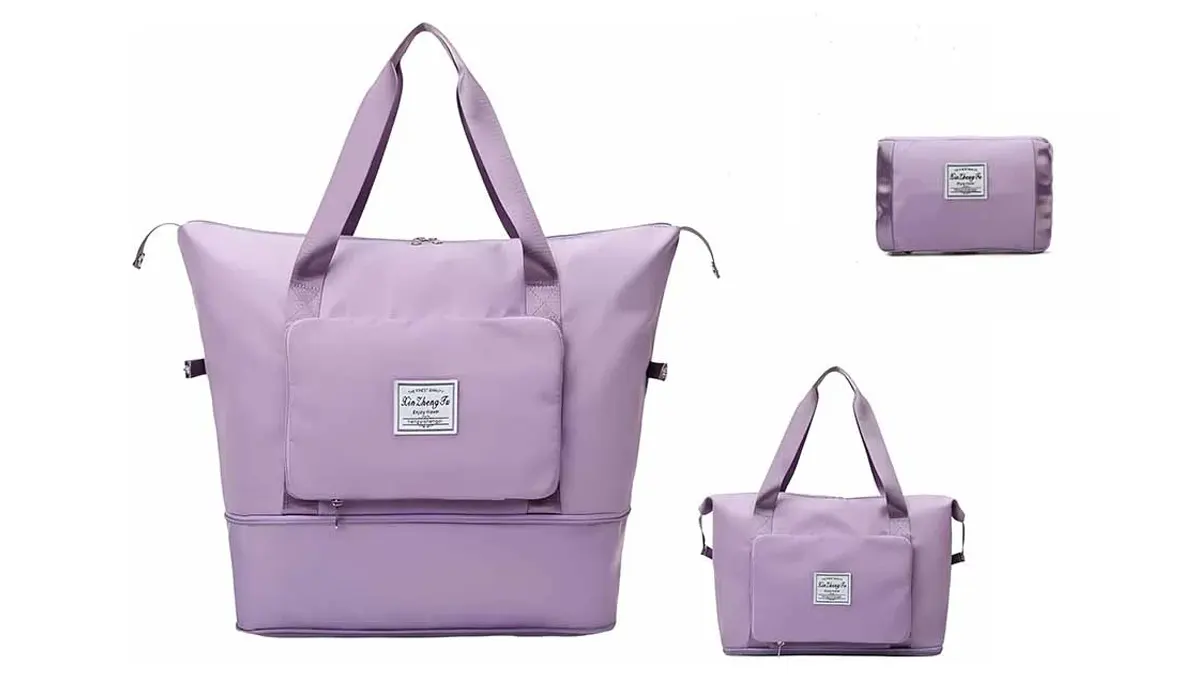

You may ask, is nylon fabric stretchy? Yes, nylon can stretch a bit. This helps clothes and bags feel comfy and fit better. Here is how nylon’s stretch helps things you use every day:
| Property | Benefit |
|---|---|
| Elasticity | Moves with you, makes things more comfy |
| Shape retention | Looks good even after many washes |
| Lightweight | Feels light, not heavy or thick |
| Strength and durability | Lasts longer and keeps its shape |
Key Takeaways
- Nylon fabric can stretch. This makes it comfy for clothes and bags.
- Nylon keeps its shape well, even after many washes. Your things will look nice for a long time.
- Nylon is light, so it is easy to carry. It does not feel heavy.
- Nylon is strong and tough. It lasts longer than many other fabrics.
- If you want more stretch, pick nylon mixed with spandex. This mix makes it even more flexible.
- The way nylon is woven changes how much it stretches. Knits stretch more than wovens.
- To keep nylon nice, wash it in cold water. Do not use high heat to dry it.
- Nylon is a good pick for activewear and bags. It gives you stretch, strength, and style.
Is Nylon Fabric Stretchy?
You may wonder if nylon fabric can stretch. Yes, it can stretch, but not as much as spandex. Nylon stretches more than polyester. Nylon is special because it is elastic and strong. You can bend and pull nylon, and it goes back to its shape. That is why nylon is used in sports clothes, bags, and other items.
Nylon’s Elasticity
Structure and Flexibility
Nylon stretches because of its special structure. Inside nylon, there are long chains called polyamide molecules. Some parts are soft, and some are tough. The soft parts help nylon stretch. The tough parts make nylon strong. This mix lets nylon stretch without breaking or losing shape.
- Nylon stretches and returns to its shape.
- Nylon is good for things that need to bend.
- Nylon feels smooth and bends easily, so it works well for bags and clothes.
Here is a table that shows how nylon compares to other fibers:
| Parameter | Nylon | Polyester | Acrylic |
|---|---|---|---|
| Durability | High | Moderate | Moderate |
| Flexibility | High | Low | Low |
| Moisture Wicking | Moderate | High | Low |
| Warmth | Moderate | Low | High |
| Softness | Moderate | Low | High |
| Cost | Moderate | Low | Moderate |
| UV Resistance | Low | High | Moderate |
| Sustainability | Recyclable | Recyclable | Limited |
Nylon is flexible and strong. That is why people pick nylon for things that need to stretch and last.
Recovery After Stretch
When you pull nylon, it goes back to normal. Nylon is elastic, so it recovers after being stretched. Nylon does not sag or lose its shape. This is important for bags, sports gear, and clothes that get used a lot.
Nylon can return to its shape because of its molecules. The amide links help nylon stay strong and stretchy. Nylon keeps looking good, even after many uses.
Factors Affecting Stretch
Weave and Knit Types
How nylon is made changes how much it stretches. Knit nylon stretches more. Woven nylon is tighter and stretches less. Knits are good for sports clothes and stretchy bags. Woven nylon is better for strong backpacks and luggage.
Fabric Thickness
Thicker nylon does not stretch much. Thin nylon stretches more. If you want a bag that moves with you, pick thin nylon. If you want a bag that keeps its shape, choose thick nylon.
Here is a table that shows how much nylon can stretch:
| Test Method | Specimen Size | Elongation (%) |
|---|---|---|
| ASTM D5034 Grab | 100 × 50 mm | 20–30 |
| ASTM D5037 Strip | 25 × 150 mm | 15–25 |
Nylon fabric can stretch a good amount compared to other fibers.
Tip: If you want more stretch, look for nylon mixed with spandex or elastane. This mix makes the fabric stretch a lot and go back to normal. Nylon-spandex blends are great for bags and sports clothes that need extra stretch.
Mixing nylon with spandex makes the fabric stretch and recover better. You get nylon’s strength and moisture-wicking, plus spandex’s stretch. Nylon-spandex blends are popular for swimwear, sports bags, and travel gear.
Nylon is stretchy, but how much it stretches depends on how it is made and what it is mixed with. If you want clothes or bags that move with you, nylon is a good choice.
Is Nylon Stretchy Compared to Other Fabrics?
When you shop for clothing or bags, you probably notice lots of different fabrics. You might wonder how nylon stacks up against other popular materials when it comes to stretch. Let’s break it down so you can see why nylon is such a favorite for activewear and everyday gear.
Nylon vs Polyester
Stretch and Recovery
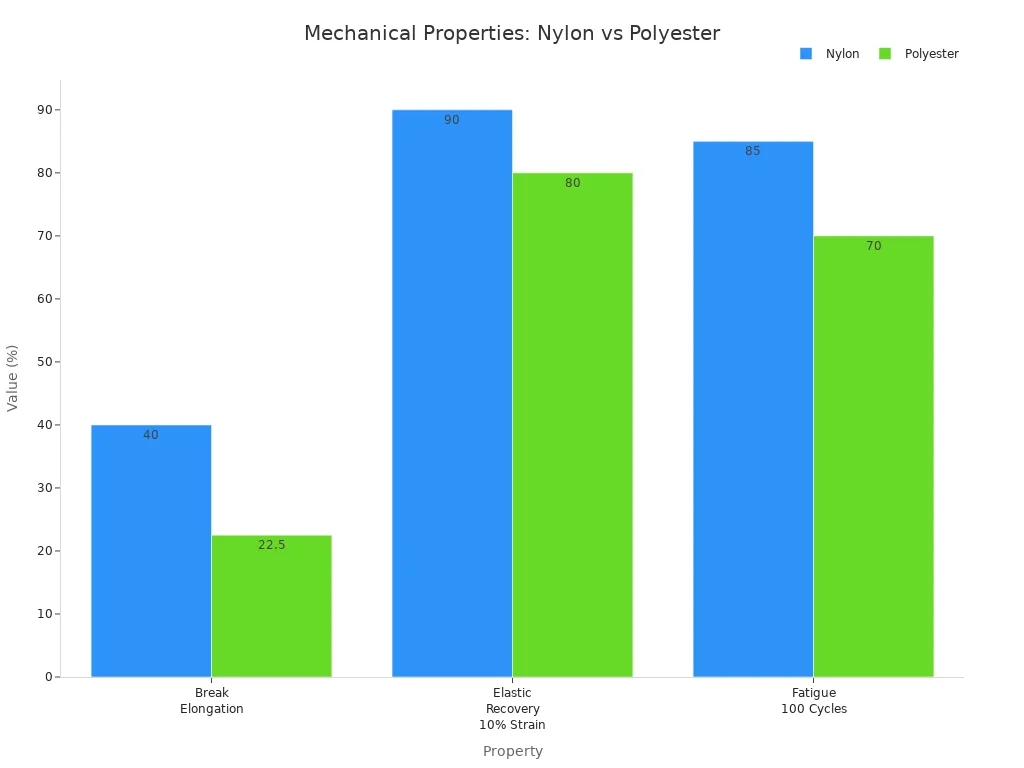
If you compare nylon vs polyester, you’ll spot some big differences in stretch and recovery. Nylon stretches more than polyester, which means it moves with you better. Polyester feels stiffer and doesn’t bounce back as well after you pull it. Nylon’s elasticity helps it snap back into shape, so your bag or jacket won’t sag or look worn out.
Check out this table to see how nylon and polyester perform:
| Property | Nylon | Polyester |
|---|---|---|
| Break Elongation (%) | 30–50 | 15–30 |
| Elastic Recovery at 10% Strain (%) | >90 | ~80 |
| Fatigue After 100 Cycles (Recovery %) | >85 | ~70 |
Nylon’s higher break elongation and recovery mean you get a fabric that stretches and returns to its shape again and again. Polyester is tough, but it doesn’t have the same bounce. That’s why you see nylon in activewear and gear that needs to flex.
Nylon vs Cotton
Natural vs Synthetic Stretch
Now let’s look at nylon vs cotton. Cotton feels soft and breathable, but it doesn’t stretch much. Nylon is synthetic and built for elasticity. If you pull cotton, it might stretch a little, but it won’t snap back like nylon. Cotton can lose its shape over time, especially if you use it for bags or clothing that get lots of wear.
Here’s a quick comparison:
| Property | Nylon | Cotton |
|---|---|---|
| Origin | Synthetic | Natural |
| Strength | High | Moderate |
| Elasticity | High | Low |
| Stretch Behavior | Stretches and recovers shape | Softer but less durable under stress |
| Breathability | Moderate | High |
You’ll notice nylon is stronger and more elastic. Cotton is great for comfort, but nylon wins if you want a fabric that stretches and keeps its shape. That’s why nylon in activewear is so popular.
Nylon vs Spandex
Maximum Stretch Potential
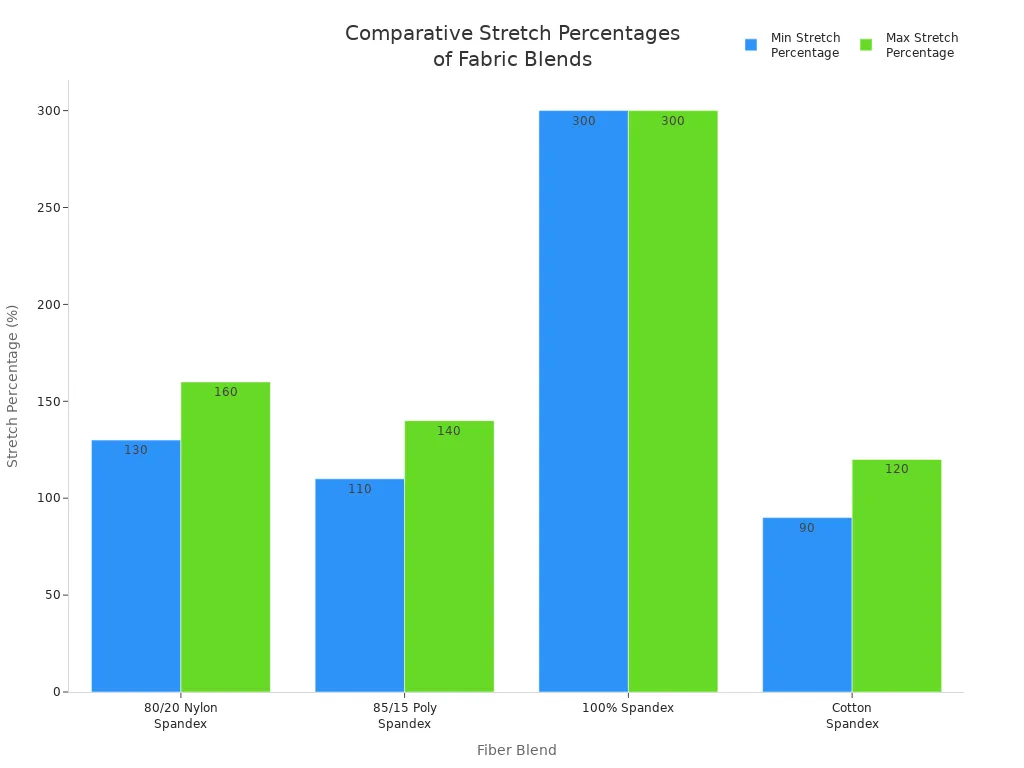
If you want maximum stretch, you need to look at nylon vs spandex. Spandex is the king of stretch. It can stretch up to three times its length and snap right back. Nylon can’t stretch as much, but it’s still pretty flexible. When you blend nylon with spandex, you get a fabric that’s smooth, strong, and super stretchy.
Take a look at this table to see how different blends compare:
| Fiber Blend | Typical Stretch (%) | Recovery (%) | Key Benefit |
|---|---|---|---|
| 80/20 Nylon-Spandex | 130–160 | 95–98 | Smooth, strong, premium feel |
| 85/15 Poly-Spandex | 110–140 | 90–95 | Fast drying, budget-friendly |
| 100% Spandex | 300+ | 100 | Rare in pure form, shaping layers |
| Cotton-Spandex | 90–120 | 85–90 | Natural hand feel, casual wear |
You can see nylon-spandex blends stretch a lot and recover almost perfectly. Pure spandex stretches the most, but you don’t usually find it alone in bags or clothing. Nylon blends give you the best mix of durability and stretch.
Tip: If you want a bag or jacket that stretches but stays strong, look for nylon blended with spandex. You’ll get comfort, flexibility, and a premium feel.
Nylon vs Other Stretchy Fabrics
When you compare nylon vs other stretchy fabrics, you’ll see nylon stands out for its balance of stretch, strength, and shape retention. Spandex gives you the most stretch, but nylon is more durable and easier to care for. Polyester is less stretchy, and cotton is soft but not elastic. Nylon is a smart choice for gear that needs to move with you and last a long time.
So, if you want a fabric that stretches, recovers, and feels good, nylon is a top pick. You’ll find it in activewear, bags, and clothing that need to keep up with your busy life.
Nylon vs Other Stretchy Fabrics
Unique Properties of Nylon Fabric
Elasticity and Resilience
When you look at nylon, you see a fabric that stands out among other stretchy fabrics. Nylon gives you a special mix of elasticity and resilience. You can stretch nylon, and it snaps right back into shape. This makes it perfect for things you use every day, like bags, jackets, and sports gear.
Here are some nylon fabric properties that make it unique:
- You get extremely stretchy characteristics of nylon, so your gear moves with you.
- Nylon is highly durable. It resists wear and tear, so your bag or clothes last longer.
- The fabric dries quickly. You stay cool and dry, even during workouts.
- Nylon is lightweight but strong. You can carry heavy loads without worrying about rips.
- It resists abrasions, chemicals, mildew, and moths. Your nylon items stay fresh and clean.
- The fabric is easy to clean and wrinkle-resistant. You spend less time on care.
You notice nylon in performance wear, leggings, and fitted apparel. These items need flexibility and strength. Nylon gives you both.
Shape Retention
Shape retention is another reason you might choose nylon over other fabrics. After you stretch nylon, it returns to its original form. You can wash nylon many times, and it keeps its fit. This is important for activewear and bags that get used a lot.
Nylon and spandex both offer great shape retention. You get a comfortable fit that lasts. Your clothes and bags look good, even after repeated use.
Tip: If you want a bag or jacket that keeps its shape and stays comfortable, nylon is a smart choice.
When to Choose Nylon
Comfort and Versatility
You might wonder when nylon is the best option. Nylon works well when you need comfort and versatility. The fabric feels smooth against your skin. You can use nylon for many styles and colors, so you get lots of design choices.
Here’s a table to help you see why nylon is great for bags:
| Feature | Description |
|---|---|
| Strength | Nylon has high tensile strength. You can carry heavy loads with confidence. |
| Durability | The fabric withstands wear and tear. Your bag lasts longer. |
| Water Resistance | Nylon repels water. Your belongings stay dry. |
| Cost-Effectiveness | Nylon is affordable. You get good value for your money. |
| Versatility in Design | You can choose from many styles and colors. Nylon adapts easily. |
| Long-Term Performance | Nylon maintains quality over time. You stay satisfied with your purchase. |
You see nylon in travel bags, gym bags, and everyday carry items. The fabric gives you the stretch you need, plus strength and style. Nylon is a top pick when you want gear that lasts and feels good.
If you want a fabric that stretches, recovers, and stands up to daily life, nylon is hard to beat. You get the best of both worlds: stretchy comfort and lasting durability.
Nylon-Spandex Blends
Why Blend Nylon with Spandex in Bags?
Have you ever wondered why so many bags use a nylon and spandex blend? You get a fabric that stretches, feels comfortable, and lasts a long time. Nylon gives you strength and durability. Spandex adds extra stretch and flexibility. When you mix these two, your bag can handle heavy loads, move with you, and keep its shape.
Here’s a quick look at the main reasons for blending nylon and spandex in bags:
| Benefit | Description |
|---|---|
| Stretchability | The blend provides enhanced stretch, making the fabric more flexible. |
| Durability | Nylon’s strength combined with spandex’s elasticity results in a durable fabric. |
| Comfort | The combination offers a comfortable fit, ideal for bags and accessories. |
You get a bag that feels good to carry, stretches when you need it, and stands up to daily use.
Enhanced Flexibility and Shape Retention
When you choose a nylon spandex blend, you notice how flexible your bag feels. The nylon and spandex mix creates a fabric that moves with you. You can bend, twist, or stretch your bag, and it snaps right back. This blend is soft and smooth, so it feels nice against your skin. You don’t have to worry about your bag losing its shape, even after many uses.
Nylon spandex blends combine strength with flexibility. Spandex gives the fabric exceptional stretch, so your bag adapts to your movements. Nylon keeps everything strong and durable. This is important for activewear and bags you use every day. Your bag stays comfortable and keeps its fit over time.
You’ll love how nylon and spandex work together. The fabric stretches easily, but it doesn’t sag or wear out. You get a bag that looks new, even after lots of adventures.
Tip: If you want a bag that stretches and keeps its shape, look for nylon spandex blends. You’ll get comfort, flexibility, and long-lasting style.
Common Applications
Travel and Outdoor Bags
You need a bag that can handle travel and outdoor adventures. Nylon and spandex blends make travel bags flexible and tough. The fabric stretches to fit extra gear, but it doesn’t tear or lose shape. You can pack your bag full, and it still feels light and easy to carry. Nylon spandex blends resist water and dry quickly, so your things stay safe.
Sports and Gym Bags
Activewear and gym bags need to stretch and move with you. Nylon spandex blends are perfect for these bags. The fabric stretches when you stuff in shoes, clothes, or gear. It bounces back and keeps everything secure. You get a bag that feels soft, stretches for easy packing, and stands up to sweaty workouts.
Everyday Carry Bags
You use everyday bags for school, work, or errands. Nylon and spandex blends make these bags comfortable and stylish. The fabric stretches to fit books, snacks, or tech. It keeps its shape, so your bag always looks neat. Nylon spandex blends are easy to clean and last a long time, even with daily use.
Nylon spandex blend bags give you the best of both worlds. You get stretch, comfort, and durability for every adventure.
Uses of Nylon Fabric
You see nylon everywhere. This fabric pops up in bags, clothes, and gear you use daily. Nylon fabric stands out because it offers stretch, strength, and style. Let’s look at how you can use nylon in different types of bags and gear.
Everyday and Lifestyle Bags
Tote Bags and Crossbody Bags
You want a bag that feels light and looks good. Nylon tote bags and crossbody bags give you both. The fabric resists dirt and water, so you can carry your things without worry. Nylon stretches a bit, so you can fit more inside. You find these bags easy to clean. Just toss them in the wash, and they come out looking fresh.
Travel and Utility Bags
Travel bags need to handle rough trips. Nylon fabric makes these bags tough and flexible. You can pack a lot, and the bag stretches to fit your stuff. The fabric keeps water out, so your things stay dry. You notice that nylon travel bags weigh less than leather or canvas. This makes your journey easier.
Backpacks and Luggage
Backpacks and luggage made from nylon give you strength and comfort. The fabric stretches enough to hold books, clothes, or gear. Nylon resists tears and scratches. You can use these bags every day, and they keep their shape. The lightweight feel helps you carry more without feeling tired.
Performance and Technical Gear
Nylon fabric shines in performance gear. You need bags and clothing that work hard for you. Nylon gives you that edge.
| Property | Description |
|---|---|
| Strength | Nylon is strong and abrasion-resistant, retaining over 50% of its strength after extensive wear. |
| Lightweight | Weighs less than natural fibers, enhancing comfort and mobility for outdoor activities. |
| Weather Resistance | Naturally water-repellent and quick-drying, keeping users dry in various weather conditions. |
| Ease of Maintenance | Cleans easily with soap and water, allowing for quick recovery after outdoor use. |
| Breathability | Prevents condensation buildup, ensuring comfort during high exertion activities. |
Outdoor and Waterproof Bags
You need a bag that stands up to rain and mud. Nylon outdoor bags keep your gear dry. The fabric dries fast, so you don’t have to wait long after a storm. You can hike, camp, or travel with these bags. Nylon stretches just enough to fit extra supplies. You get comfort and protection in one package.
- Hiking boots use nylon to reduce fatigue over long distances.
- Tents made from nylon withstand harsh weather and don’t hold moisture.
- Jackets with nylon fabric keep you dry and let your skin breathe.
- Activewear uses nylon for stretch and moisture-wicking, so you move freely.
Specialty Uses
Nylon fabric does more than just make regular bags. You see it in specialty designs that need extra features.
Reinforced or Coated Nylon for Structured Bags
You want a bag that keeps its shape. Reinforced nylon or coated nylon fabric gives you structure and durability. These bags resist water, mildew, and insects. You can use them in humid places, and they stay fresh. The coating adds strength, so your bag lasts longer.
- Durability: Nylon stands up to heavy use and rough handling.
- Versatility: You can dye nylon in many colors or treat it to look like other materials.
- Water Resistance: Nylon keeps your things dry, even in wet weather.
- Mildew, Fungi & Insect Resistance: Nylon fabric works well in damp places.
- Lightweight: You get a strong bag that doesn’t weigh you down.
- Easy Maintenance: Nylon bags resist dirt and clean up fast.
Nylon–Spandex Fabric for Hybrid or Compact Designs
You want a bag that stretches and fits anywhere. Nylon–spandex blends give you that flexibility. The fabric stretches to hold odd-shaped items. You can fold or roll these bags, and they bounce back to their shape. Hybrid designs use nylon fabric for strength and spandex for extra stretch. You get a compact bag that works for travel, sports, or daily use.
Tip: If you want a bag that stretches, stays strong, and looks stylish, try nylon–spandex blends. You get comfort, durability, and easy care.
Nylon fabric gives you options for every need. You find it in bags for school, travel, sports, and special uses. The stretch, strength, and easy care make nylon a smart choice for your next bag.
Caring for Stretchy Nylon
Taking care of your stretchy nylon bags and clothes helps them last longer and keeps them looking fresh. You want your gear to stay flexible and strong, so let’s talk about the best ways to wash, dry, store, and use nylon fabric.
Washing and Drying Tips
Temperature and Handling
You might wonder how to wash nylon without ruining its stretch. The secret is to keep things gentle and cool. Here’s what you should do:
- Hand wash or use a delicate cycle with cold water. This protects the fibers and keeps the fabric stretchy.
- Use a mild detergent made for cold water. Turn your items inside out before washing to prevent pilling.
- For stains, treat them with a laundry pre-treatment or a paste of detergent and water. Let it soak, then wash as usual.
- Tumble dry on low heat if you must use a dryer. Air drying is even better for keeping the shape.
- Never use chlorine bleach, hot water, or fabric softener. These can break down the fibers and ruin the stretch.
Tip: Always check the care label before washing. If you’re not sure, hand washing in cold water is the safest choice.
Maintaining Stretch
Storage and Wear
You want your nylon items to stay stretchy and comfortable. How you store and wear them makes a big difference. Try these best practices:
- Wash nylon separately on the cold setting. This helps avoid static and keeps the fabric smooth.
- Lay knits flat to dry, or hang them up. Don’t bunch them up in a pile.
- Store your bags and clothes in a cool, dry place—between 60°F and 75°F is ideal.
- Keep nylon away from humidity. Damp basements or attics can cause mold and mildew.
- Never expose nylon to high heat. This can shrink the fabric and make it lose its stretch.
Note: If you use your nylon bag for workouts or travel, let it air out after each use. This keeps it fresh and helps the fabric recover its shape.
Mistakes to Avoid
Overstretching and Chemicals
Some habits can damage your nylon gear and make it lose its stretch. Here are common mistakes you should avoid:
- Don’t use hot water or high dryer temperatures. These can shrink the fibers and make your bag sag.
- Skip the fabric softener. It coats the fibers and reduces moisture-wicking, which is important for sports bags.
- Never use bleach. It weakens both synthetic and natural fibers, causing them to break down.
- Don’t iron nylon on high heat or with steam. Use low heat if you must iron, and avoid pressing hard.
- Avoid overstretching your bag or clothes. Stuffing them too full or pulling too hard can damage the elastic fibers.
Tip: Treat your nylon gear gently, and it will stay stretchy, strong, and good-looking for years.
Taking care of stretchy nylon isn’t hard. Just remember to wash with cold water, dry gently, store in a cool place, and avoid harsh chemicals. Your bags and clothes will thank you with long-lasting comfort and style.
Conclusion
You’ve seen that nylon stands out for its stretch, strength, and durability. Check out this quick comparison:
| Material | Stretchiness | Durability | Moisture-Wicking |
|---|---|---|---|
| Nylon | Low | High | High |
| Spandex | Very High | Moderate | Low |
Choosing the right nylon or blend boosts your bag’s performance and lifespan. Remember to wash gently, air dry, and store in a cool place to keep your gear looking new. As a Professiona bag manufacturer, I offer custom features like logo branding, color choices, and special pockets. Want a bag that fits your needs? Reach out anytime!
FAQ
Can nylon fabric stretch a lot?
Nylon stretches more than polyester but less than spandex. You get moderate stretch, which helps your bag or clothes move with you. If you want extra stretch, look for nylon blended with spandex.
Does nylon lose its shape after stretching?
You don’t have to worry. Nylon snaps back to its original shape after you stretch it. The fabric keeps its fit and looks good, even after many uses.
Is nylon good for sports bags?
Yes! Nylon works great for sports bags. You get a lightweight, strong, and stretchy fabric. It resists water and dries quickly, so your gear stays safe.
How do I wash nylon to keep it stretchy?
Wash nylon in cold water on a gentle cycle. Skip bleach and fabric softener. Air dry or use low heat. This keeps the fibers strong and stretchy.
Can nylon fabric shrink?
Nylon rarely shrinks. High heat can cause some shrinkage, though. Always use cool water and low dryer settings to protect your bag or clothes.
What makes nylon better than cotton for bags?
| Nylon | Cotton |
|---|---|
| Stretches | Stiff |
| Dries fast | Holds water |
| Lasts longer | Wears out |
You get more durability and stretch with nylon. Cotton feels soft but doesn’t last as long.
Is nylon safe for sensitive skin?
You can wear nylon if you have sensitive skin. The fabric feels smooth and doesn’t cause irritation for most people. If you have allergies, check for blends or coatings.