Wondering how to start a bag business? You can enter a booming market, with the global bag industry set to reach over $63 billion by 2035 and steady yearly growth. Picking the right niche, making a plan, building your brand, designing, sourcing, launching, and marketing all matter for real success. Companies like INITI, known for eco-friendly and customizable bags, show that you can stand out. Take your first step today—your bag business journey starts with a clear process.
Key Takeaways
- Find your niche by looking at market trends and what customers want. Pick eco-friendly choices to get more buyers.
- Make a unique selling point (USP) that sets your bags apart. Show what makes your products different from others.
- Write a strong business plan with clear goals. Set goals for sales and growth to help you move forward.
- Know your budget and ways to get money. Plan for startup costs and look at different ways to fund your business.
- Pick the best pricing strategy to make a profit. Think about cost-plus, value-based, and psychological pricing.
- Build a strong brand with a name and logo people remember. Tell your brand story so customers feel connected to you.
- Design your bags for what customers need. Use sustainable materials and new features to stand out.
- Start your online store the right way. Sell in many places and use social media to reach more people.
Find Your Niche
Choosing the right niche is the first big step in your bag business journey. You want to find a space where your ideas fit, and where customers are looking for something new. Let’s break down how you can do this.
Market Trends
Analyze Demand
Start by looking at what’s hot in the bag world right now. Many people want bags that are not only stylish but also eco-friendly. Shoppers care about the planet, so they look for bags made from recycled or reusable materials. You’ll also notice that some bag types bring in higher profits than others. Check out this table to see which bags have the best margins:
| Bag Type | Gross Margin (%) |
|---|---|
| Technical dry bags | 60–70% |
| Neoprene backpacks | 60–70% |
| Fireproof/smell-proof bags | 60–70% |
| Travel backpacks | 45–60% |
| Leather handbags | 45–60% |
| Basic drawstring/tote bags | 30–50% |
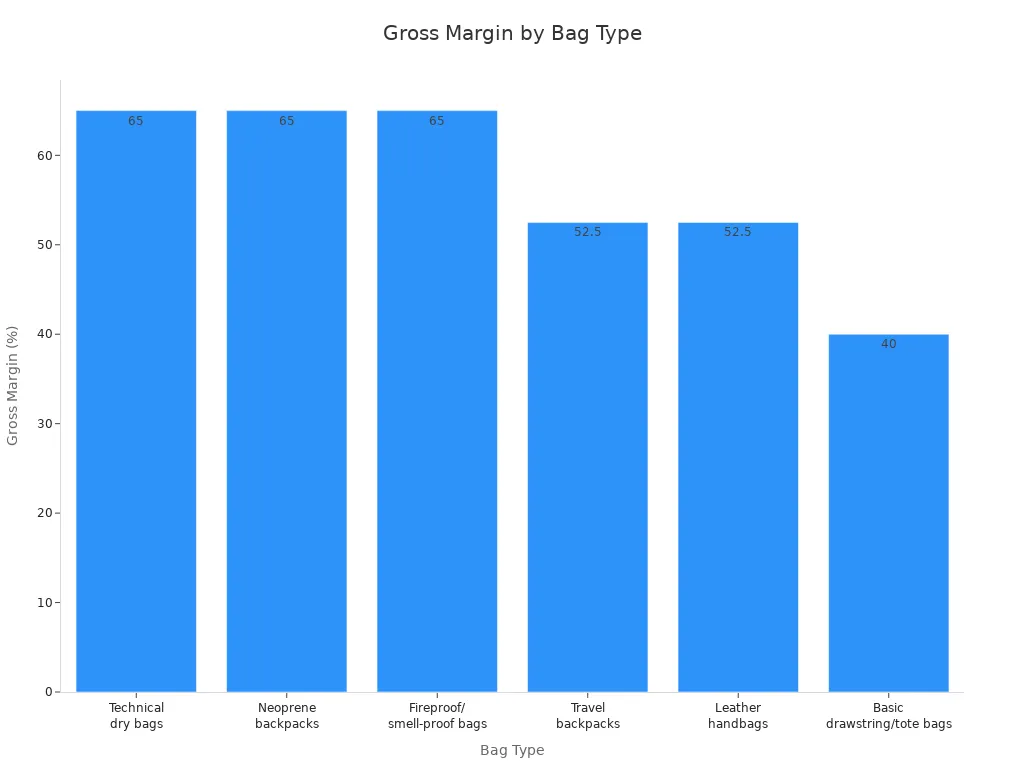
You can see that technical dry bags and neoprene backpacks offer the highest margins. Tote bags and drawstring bags are also popular, especially if you want to focus on eco-friendly options.
Tip: Bags made from recycled or reusable materials are in high demand. Many shoppers now choose these over single-use plastic bags.
Study Competitors
Look at other brands in your chosen niche. What are they doing well? Where do they fall short? You can learn a lot by checking their websites, reading reviews, and seeing how they market their products. This helps you spot gaps in the market and find ways to stand out.
Unique Selling Point
What Sets You Apart
Your unique selling point (USP) is what makes your bag business special. Maybe you use only recycled materials, or you offer custom designs. Big brands like Mansur Gavriel and Dior became famous by launching unique bags that everyone wanted. A strong USP helps you grab attention and build loyal customers.
Here’s a quick guide to finding your USP:
| Method | Description |
|---|---|
| Understand Ideal Customer | Know who you want to sell to and what they need. |
| Differentiate Product | Add features or designs that no one else offers. |
| Communicate USP | Make sure everyone knows what makes your bags different. |
- A clear USP helps you stand out.
- It keeps your marketing focused.
- Customers remember you for what makes you unique.
Target Audience
Think about who will buy your bags. Are they students, busy parents, travelers, or eco-conscious shoppers? When you know your audience, you can design bags that fit their needs and style. This makes your marketing easier and your products more appealing.
How to Start a Bag Business Plan
A strong business plan is your roadmap for success. It helps you stay focused, make smart decisions, and track your progress as you grow. Let’s break down the main parts you need to cover when you want to know how to start a bag business.
Set Goals
Setting clear goals gives your bag business direction. You want to know what you’re aiming for, so you can measure your progress and celebrate wins along the way. Here are some common goals new bag brands set:
- Plan ahead so you stay productive and organized.
- Understand market demand by researching what types of bags people want.
- Offer a variety of high-quality bags that meet customer needs.
- Promote your business to get noticed and attract buyers.
You can also set specific targets, like launching a new eco-friendly tote bag line, reaching a certain number of sales in your first year, or building a strong online presence. When you set goals, make them clear and realistic. For example, you might aim to sell 500 bags in your first six months or get your products into three local stores.
Tip: Start with small, achievable goals. As your bag business grows, you can set bigger targets.
Budget & Funding
Knowing your budget is key when you start a bag business. You need to figure out how much money you’ll need and where it will come from. Startup costs can vary, but here’s a quick look at what you might expect:
- Raw materials & inventory: $3,000 to $20,000
- Workshop & equipment: $2,500 to $15,000
- E-commerce & website: $1,000 to $10,000
- Marketing & branding: $3,000 to $15,000
- Working capital: $5,000 to $20,000
A small online bag business can often get started with $15,000 to $25,000. If you want to go bigger, you might need $30,000 to $75,000 or more.
When it comes to funding, you have several options:
- Traditional loans from banks or the Small Business Administration (SBA)
- Grants, like those from the National Association for the Self-Employed or the Amber Grant for Women
- Fintech funding from companies like PayPal or American Express Business Blueprint
Think about what works best for you. Some people use savings, while others look for outside help. Make sure you have enough money to cover your first few months, so you don’t run into trouble before your bag business takes off.
Pricing
Pricing your bags the right way helps you make a profit and attract customers. There are a few strategies you can use. Check out this table to see how different pricing methods work:
| Pricing Strategy | Description | Impact on Profitability |
|---|---|---|
| Cost-Plus Pricing | Add a markup to your costs to set the final price. | Covers your costs and gives you a steady profit margin. |
| Value-Based Pricing | Set prices based on what customers think your bags are worth. | Lets you charge more if people see extra value in your bags. |
| Psychological Pricing | Use prices like $19.99 to make products seem cheaper. | Can boost sales and make your brand feel more appealing. |
| Dynamic Pricing | Change prices based on demand or season. | Helps you earn more during busy times and move stock when sales are slow. |
You might start with cost-plus pricing to make sure you cover your expenses. As your brand grows, you can try value-based or psychological pricing to increase profits. Always keep an eye on what your competitors charge, and remember to highlight what makes your bags special—like eco-friendly materials or custom designs, just like INITI does.
Note: A good pricing strategy can set you apart and help your bag business succeed.
Operations
Running a bag business needs more than just good ideas. You must plan how things will work each day. Operations include making bags and getting them to customers. Let’s look at what you should think about.
First, choose how you will make your bags. Will you sew them, hire help, or use a manufacturer? Many new brands work with manufacturers like INITI. This lets you focus on design and marketing. Experts can handle making the bags. If you want eco-friendly or custom bags, find partners who care about these things. INITI uses sustainable materials and offers many ways to customize. This can help your business stand out.
Next, set up your supply chain. You need to get materials, keep track of inventory, and plan shipping. This can be hard if you use special or recycled fabrics. Make a list of suppliers and check if they are reliable. Good suppliers help you avoid delays and keep quality high.
Here are some common problems you might face:
- Market saturation makes it hard to get noticed.
- Supply chain issues can slow down making or sending bags.
- Gross margin pressures mean you must watch costs and keep profits healthy.
- You need to sell on different platforms, like online stores and social media, for an omni-channel presence.
- Customers want sustainable products, so you must adapt to these demands.
- Fashion trends change fast, so you need to stay flexible.
To keep things running well, make a simple daily checklist:
| Task | Why It Matters |
|---|---|
| Check inventory | Avoid running out of bestsellers |
| Review orders | Make sure every order gets shipped |
| Track shipments | Keep customers happy with updates |
| Monitor quality | Catch problems before they grow |
| Respond to feedback | Build trust and improve your brand |
Tip: Use digital tools to track inventory and orders. This saves time and helps you spot problems early.
Always look for ways to get better. Ask customers what they like or want changed. Watch your competitors and learn from them. If you keep your operations strong, your bag business can grow.
Build Your Brand
Building your brand is one of the most exciting steps in your bag business journey. A strong brand helps you stand out in the crowded fashion world. It tells your story, shows your values, and connects you with customers who care about what you offer.
Name & Logo
Your brand name is the first thing people notice. Pick a name that is easy to remember and fits your bag business. Think about words that show your style or mission. If you want to focus on eco-friendly bags, choose a name that hints at sustainability or green living.
Next, design a logo that matches your brand. A good logo makes your bag business look professional and trustworthy. Here are some popular logo types you can use:
| Logo Type | Description |
|---|---|
| Text Logos | Flexible typography that can adapt to many formats, showing your brand name in full or short form. |
| Illustration Logos | Artistic images that share your brand’s values and history, adding depth to your look. |
| Shape Logos | Unique shapes or symbols that help people spot your brand and remember it. |
A great logo works on your website, social media, and even on your bags. It helps your bag business become a true fashion brand.
Brand Story
Your brand story is what makes you different. Share why you started your bag business. Maybe you care about the planet, or you love fashion and want to create something new. Tell your story in a way that feels real and honest.
Customers love brands that care about more than just selling products. When you talk about your passion for eco-friendly bags or your dream to change the fashion world, people listen. They want to support brands that share their values.
Tip: Be open about your journey. Show your wins and your challenges. This builds trust and makes your brand feel human.
Brand Elements
Brand elements are the things that make your bag business easy to spot. These include your colors, fonts, packaging, and even the way you talk to customers. If you want to attract eco-conscious shoppers, focus on sustainability in every part of your brand.
- Use eco-friendly bags and packaging to show your commitment.
- Pick materials like organic cotton, recycled paper, or jute for your products.
- Custom-printed bags turn your customers into walking ads for your brand.
- Show your green values in your website, social media, and product tags.
Many shoppers now look for brands that care about the environment. They trust companies that use sustainable packaging and honest messages. When you build your brand around these ideas, you boost your reputation and grow your bag business. In fact, 73% of global consumers prefer brands that focus on sustainability. This can help you win loyal fans and stand out in the fashion world.
Design Your Bags

Designing your bags is where your creativity shines. This step lets you turn your ideas into real products that set your bag business apart. You get to choose the look, feel, and features that make your bags special.
Sketch Ideas
Start by sketching your ideas on paper or a tablet. Draw different shapes, sizes, and styles. Think about what your customers want. Maybe they need a sturdy tote for groceries or a stylish bag for school. Look at brands like INITI for inspiration. Their tote bags show how eco-friendly materials and custom designs can make a big impact.
When you sketch, keep these best practices in mind:
- Use sustainable materials like organic cotton, natural jute, or recycled plastic.
- Make sure your bags are strong enough for daily use.
- Design bags that can be recycled or even composted when they wear out.
You can also add unique features. Try pockets, adjustable straps, or bold prints. These details help your bag business stand out.
Prototypes
Once you have your sketches, it’s time to make prototypes. A prototype is a sample bag you can touch and test. This step helps you see if your design works in real life.
Prototypes let you:
- Test your ideas and make changes before you start full production.
- Get feedback from friends, family, or even future customers.
- Improve things like strap length or pocket size based on real use.
Many designers find that prototypes lead to better bags. You might notice that a handle needs to be longer or a zipper should be stronger. Each change makes your final product better and helps your bag business grow.
Finalize Designs
After testing your prototypes, you can finalize your designs. Pick the best materials for your bags. Some popular eco-friendly choices include:
- Cork, which is lightweight and water-resistant.
- Recycled plastic, which keeps bottles out of landfills.
- Organic cotton, which feels soft and lasts a long time.
- Piñatex, made from pineapple leaves.
- Hemp, which is strong and mold-resistant.
Choose features that match your brand’s values. If you want to focus on sustainability, use materials that are biodegradable or recyclable. If you want to offer something unique, add custom prints or special pockets.
When you finish your designs, you’re ready to move forward in your bag business. Your creative ideas and smart choices will help you build a brand people love.
Source Materials & Manufacturing

Getting the right materials and finding a good manufacturer is very important. You need partners who care about quality and the environment. This helps your bag business do well. Let’s see how you can build a strong base for your products.
Find Suppliers
Begin by looking for suppliers who share your values. Pick partners who follow rules and care about nature. Use this checklist to help you choose:
- Compliance: Check if suppliers obey all laws, including those for the environment and workers.
- Policies: Find suppliers with strong rules for protecting nature and treating people well.
- Performance: Ask how they track their progress on being green and fair.
- Improvement: Pick suppliers who always try to do better for the planet and workers.
Tip: Suppliers who care about these things help your bag business stand out. They also help you earn trust from customers.
Choose Manufacturers
Choosing a manufacturer is a big step for your bag business. You want someone who makes great bags and meets your needs. INITI is a good example. They have over 16 years of experience. They also have certifications like ISO 9001, BSCI, SEDEX, and SGS. These show they care about quality, fairness, and the environment.
Here are some important certifications to look for:
- ISO 9001: Shows the manufacturer has good quality control.
- BSCI: Means they treat workers fairly and follow social rules.
- SEDEX: Supports fair and honest supply chains.
- GRS: Means they use recycled materials.
A manufacturer with these certifications will help your bag business grow. They will also keep your products high quality.
| Certification | What It Means |
|---|---|
| ISO 9001 | Quality management |
| BSCI | Social compliance |
| SEDEX | Ethical supply chain |
| GRS | Recycled materials |
Place Orders
When you are ready to order, make a clear plan. First, know what you want for your bags. Think about the size, material, and design. Next, check if your manufacturer can handle your order. Look at how much they can make, how fast they work, and if they offer custom options.
Before making a big order, ask for samples. Test the quality and see if it meets your standards. Read reviews and talk to other customers to learn about the manufacturer’s reputation. Compare prices, but also think about what you get, like fast shipping or extra help.
- Know what you need for each bag.
- Check if the manufacturer can meet your needs.
- Test the product quality and look at certifications.
- See what others say about them in the industry.
- Think about the total value and cost.
Note: Working with a trusted partner like INITI means you get high-quality, eco-friendly bags on time. This helps your bag business run well and keeps your customers happy.
Start a Bag Business Online
Taking your bag business online opens up a world of customers. You can reach people everywhere, show off your designs, and build your brand. Let’s walk through how you can set up your online shop and make your first sales.
Build Store
You want your online store to look great and work smoothly. Start by picking a platform like Shopify or WooCommerce. These tools help you build a shop without needing to code. Look at INITI’s website for ideas. Notice how they use clear photos, simple menus, and easy-to-read product details. Your store should make shopping easy and fun.
Here’s a simple step-by-step plan to get your store ready:
- Find your niche and decide what makes your bags special.
- Learn about your target audience. What do they like? What problems do your bags solve?
- Curate a collection of bags that show off your style and quality.
- Build a digital storefront with bright photos and clear product descriptions.
- Create a brand name and logo that people will remember.
- Set up marketing tools to help new customers find you.
Tip: Use high-quality images and show your bags from different angles. This helps shoppers trust your products.
Sales Channels
You don’t have to sell only on your website. Many bag businesses use different sales channels to reach more people. Here’s a quick look at some popular options:
| Sales Channel | Benefits |
|---|---|
| Amazon | Huge customer base, trusted by shoppers. |
| eBay | Great for auctions and unique bags. |
| Etsy | Perfect for handmade or custom bags. |
| Shopify | Lets you control your brand and store. |
| Social Media | Connects you directly with fans and buyers. |
| Google Shopping | Boosts your visibility in search results. |
Try a few channels to see what works best for your bag business. Social media is great for sharing new designs and getting feedback. Etsy is perfect if you make custom or eco-friendly bags.
Launch Plan
A strong launch can help your bag business get noticed fast. You want people to feel excited about your new store. Here are some ways to make your launch a success:
- Host a launch event online. Show your bags in action and answer questions live.
- Let people sign up early for special deals or first access.
- Share your story and what makes your brand unique.
- Ask for feedback from early shoppers to improve your products.
You can also build excitement before you open. Post sneak peeks on social media. Gather ideas from your followers. Build a small community that feels connected to your brand. When you finally launch, these fans will be ready to buy and share your bags with others.
Note: Careful planning and a personal touch can turn your first customers into loyal fans.
Market & Grow
Marketing Plan
You want your bag business to get noticed. A smart marketing plan helps you reach more people and build a loyal following. Start by sharing your brand story. Tell everyone why you care about eco-friendly bags and how your products help the planet. People love brands that stand for something real.
Here are some top strategies that work well for eco-friendly bag brands:
- Talk about your sustainability goals and show how you protect the environment.
- Stay honest and open with your customers. Trust grows when you share your process.
- Use content marketing. Write blog posts or make videos about your journey and your bags.
- Connect with people on social media. Share photos, answer questions, and join conversations.
- Teach your audience about why sustainability matters.
- Team up with other green brands to reach more people.
When you use these ideas, you help your bag business stand out. You also build trust and loyalty with your customers.
Customer Relationships
Strong customer relationships keep your bag business growing. You build trust by being honest and clear. When you talk with your customers and listen to their feedback, they feel valued. Try to learn what your customers like and what they need. Offer products and services that fit their style.
Personal touches make a big difference. You can send welcome messages to new buyers or check in after a sale. Loyalty programs and special offers show your customers you care. Give discounts or early access to new designs as a thank you for their support.
Great service keeps people coming back. When you solve problems quickly and treat every customer with respect, you build a community around your brand.
Track & Improve
You need to know what works and what needs to change. Tracking key numbers helps you see how your bag business is doing. Here are some important things to watch:
| KPI Name | Description |
|---|---|
| Inventory Turnover Rate | Shows how fast you sell and restock bags. |
| Gross Profit Margin | Tells you how much money you keep after costs. |
| Customer Retention Rate | Measures how many buyers come back again. |
| Average Order Value (AOV) | Shows how much customers spend each time they shop. |
| Net Promoter Score (NPS) | Finds out if customers would recommend your brand to others. |
Keep an eye on these numbers. If you see a drop, ask your customers what you can do better. Stay curious about new trends. Watch what other brands do and try new ideas. Your bag business will grow when you keep learning and improving.
Start a Handbag Line
Starting a new product line can feel exciting and a little overwhelming. If you want to start a handbag line, you need a clear plan. You can use INITI’s tote bags as a great example. They show how eco-friendly materials and custom designs can help your bag business stand out in the world of fashion. Let’s walk through the steps you need to take to start a handbag line that gets noticed.
Product Selection
When you start a handbag line, you want to pick products that fit your brand and attract customers. Here are some things you should think about:
- Materials: Choose from leather, canvas, suede, nylon, or polyester. Each one gives your handbag a different look and feel.
- Ethical Practices: Use eco-friendly materials and support fair labor. Many shoppers care about how their handbags are made.
- Brand Identity: Make sure your handbags match your brand’s style. This helps people remember your bag business.
- Market Trends: Watch what’s popular in the handbag and fashion world. Styles change fast, so stay up to date.
You can look at INITI’s tote bags for ideas. They use sustainable materials and offer lots of choices. This makes it easy to start a handbag line that fits today’s fashion trends.
Customization
Customization is a big trend in the handbag market. When you start a handbag line, you should let customers add their own touch. People love handbags with monograms, patches, or special designs. They want something that feels unique. You can offer choices in color, material, and design. This makes every handbag feel personal. Many shoppers also want eco-friendly options, so using green materials helps your bag business and the planet. Customization lets your customers show off their style and feel good about their fashion choices.
Brand Expansion
Once you start a handbag line, you can think about growing your brand. You might add new styles, like crossbody bags, clutches, or backpacks. You can also offer more customization, such as different sizes or extra pockets. This keeps your handbag line fresh and exciting. As your bag business grows, you can reach new customers and explore new fashion trends. Try teaming up with other brands or running special collections. This helps your handbag line stay popular and keeps your brand moving forward.
Tip: Always listen to your customers. Their feedback can help you improve your handbag line and make your bag business a leader in the fashion world.
Now you know how to start a bag business from scratch. You just need to follow the steps—plan, build your brand, design your bags, find good suppliers, launch online, and market your products. If you want inspiration, check out INITI’s story. You can start today by researching your niche or sketching your first design. Learning how to start a bag business is your first step toward success!
FAQ
What is the first step to start a bag business?
You should pick your niche. Decide what kind of bags you want to sell and who will buy them. This helps you stand out and makes planning easier.
How much money do I need to start a bag business?
Most people start with $15,000 to $25,000. This covers materials, website, and marketing. You can start smaller if you sell online or make bags yourself.
Can I customize my bags for my brand?
Yes! You can add your logo, choose colors, and pick special features. Many manufacturers, like INITI, offer full customization so your bags match your brand style.
Are eco-friendly bags popular with customers?
Absolutely! More shoppers want bags made from recycled or natural materials. Eco-friendly bags help the planet and attract customers who care about sustainability.
How do I find a reliable bag manufacturer?
Look for companies with good reviews and certifications like ISO9001 or SGS. Ask for samples before you order. INITI is a trusted choice for custom, eco-friendly bags.
What types of bags sell best online?
Tote bags, backpacks, and cosmetic bags are top sellers. People love bags that are useful, stylish, and easy to carry every day.
How long does it take to launch my bag business?
You can launch in as little as 2–3 months if you plan well. Design, sourcing, and building your online store take the most time. Stay organized and set clear deadlines.
Can I sell bags worldwide?
Yes, you can! Online stores let you reach customers everywhere. Work with manufacturers who ship globally, like INITI, to make international sales easy.