
A drawstring bag is one of the simplest yet most practical sewing projects. It’s compact, versatile, and can be used for countless purposes—storing jewelry, carrying makeup, organizing travel items, or even gifting small treats. If you are new to sewing, making a small drawstring bag is the perfect beginner project. And if you’re experienced, it’s a quick and satisfying way to use leftover fabric.

In this guide, you’ll learn everything you need to know about making a small drawstring bag: the materials you’ll need, different design variations, detailed step-by-step instructions, customization ideas, and tips to ensure your bag looks professional. By the end, you’ll be confident enough to create your own unique bags for everyday use or as thoughtful handmade gifts.
Why Make a Drawstring Bag?
Before diving into the instructions, let’s look at why drawstring bags are so popular:
- Beginner-Friendly: Requires only basic sewing skills—straight stitches, hemming, and simple seams.
- Quick Project: A bag can be completed in less than an hour once you know the steps.
- Customizable: Choose your own fabric, size, and style. Add embroidery, patches, or decorative cords.
- Practical: Useful for storing jewelry, cosmetics, dice, small toys, earbuds, or even reusable shopping bags.
- Eco-Friendly: Reusable alternative to plastic or disposable bags.
A small drawstring bag is also a fantastic way to practice precision sewing on a manageable project before moving on to larger bags or clothing.
Materials You’ll Need
To make a small drawstring bag, you don’t need expensive tools. Most items are already part of a basic sewing kit.
| Material / Tool | Purpose |
|---|---|
| Fabric (cotton, linen, or canvas) | Main body of the bag |
| Sewing machine or hand needle | Stitching the seams and casing |
| Thread (matching or contrasting) | For sewing; choose durable quality thread |
| Fabric scissors | Cutting fabric cleanly |
| Pins or clips | Holding fabric layers together |
| Measuring tape or ruler | Ensuring accurate dimensions |
| Iron | Pressing seams for a polished look |
| Cord, ribbon, or shoelace | The drawstring closure |
| Safety pin | Threading the cord through the casing |
Optional: decorative trims, fabric markers, or embroidery thread for customization.
Choosing the Right Fabric
Your choice of fabric affects the look and function of the bag.
- Cotton: Easy to work with, widely available, and machine washable. Perfect for beginners.
- Linen: Gives a natural, rustic appearance. Best for lightweight storage.
- Canvas or denim: Sturdier fabric that makes the bag durable enough for heavier items.
- Satin or silk: Elegant option, often used for gift bags or jewelry pouches.
Tip: If you’re new to sewing, start with cotton. It’s forgiving and easier to handle compared to slippery or heavy fabrics.
Step-by-Step Instructions
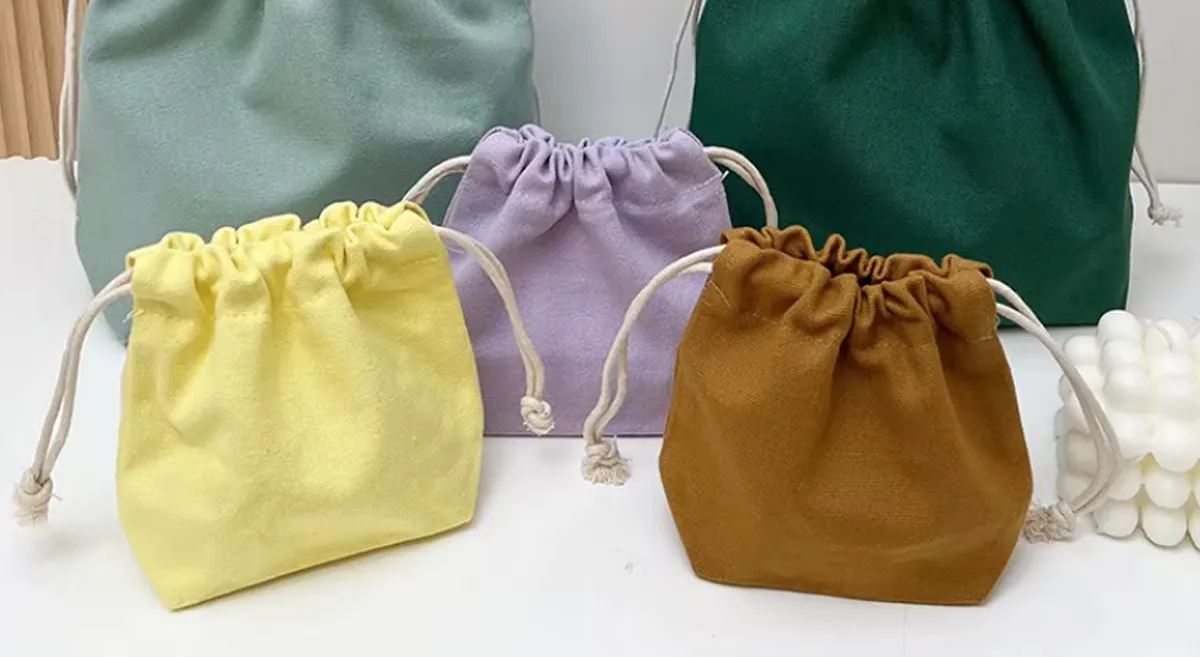
Here’s the full process for making a simple small drawstring bag. The finished size in this example will be approximately 7 inches x 9 inches (18 cm x 23 cm), but you can easily adjust the measurements.
Step 1: Cut Your Fabric
- Cut two rectangles measuring 8 inches x 10 inches (20 cm x 25 cm).
- This allows for seam allowances and leaves you with a finished bag close to 7×9 inches.
- If you prefer a lined bag, cut four pieces (two for outer fabric, two for lining).
Step 2: Prepare the Edges
- Use pinking shears or zigzag stitch along the raw edges to prevent fraying.
- Press the fabric pieces with an iron for easier handling.
Step 3: Create the Casing
- On the shorter side (top edge) of each rectangle, fold the edge down about ½ inch (1.25 cm) and press with an iron.
- Fold again about 1 inch (2.5 cm) to create a neat casing for the drawstring.
- Sew along the folded edge close to the bottom of the fold, leaving a channel wide enough for your cord.
Step 4: Sew the Bag Body
- Place the two rectangles right sides together (patterned sides facing inward).
- Pin along the sides and bottom edges, leaving the top (casing side) open.
- Sew along the sides and bottom with a ½ inch (1.25 cm) seam allowance.
- Reinforce the corners by backstitching to add strength.
Step 5: Finish the Seams
- Trim excess fabric at the corners for a sharper finish.
- Press the seams open with an iron to reduce bulk.
- Optionally, topstitch around the bag edges for durability.
Step 6: Insert the Drawstring
- Attach a safety pin to one end of your cord or ribbon.
- Thread it through the casing on one side, pull it all the way around, and exit at the same side.
- Repeat with another cord starting from the opposite end so the bag has two pull strings (one on each side).
- Knot the ends of each cord to prevent fraying.
Step 7: Turn and Finish
- Turn the bag right side out.
- Pull the drawstrings to cinch the top.
- Press the bag lightly with an iron for a neat finish.
Congratulations—you now have a functional, handmade drawstring bag!
Design Variations
Once you master the basic method, you can experiment with different styles:
- Lined Bag: Add a lining for extra strength and a professional look.
- Boxed Corners: Sew across the corners at the bottom to create a flat base.
- Patchwork Style: Use fabric scraps to make a colorful, unique bag.
- Embellished Bag: Add embroidery, applique, or fabric paint for decoration.
- Double Drawstring: Insert cords on both sides so the bag closes more securely.
This flexibility makes drawstring bags a wonderful creative project—you can make one for every purpose.
Tips for Success
- Always press your fabric as you go. It makes sewing easier and gives a polished look.
- Use a cord stopper if you want adjustable drawstrings without knots.
- Choose sturdy thread if you’re making a bag for heavier items.
- If gifting, consider using themed fabrics (holiday prints, floral patterns, or metallic finishes).
- Practice on scrap fabric before cutting your main pieces.
Practical Uses for Small Drawstring Bags
Small drawstring bags are surprisingly versatile. Here are just a few ways you might use them:
- Storing jewelry while traveling
- Organizing makeup or toiletries
- Carrying coins or cash
- Holding dice, cards, or small board game pieces
- Replacing disposable gift wrap
- Storing earbuds or small electronics
- Carrying reusable utensils or straws
- Keeping keys and accessories together in a larger tote
The beauty of these bags is their adaptability—they can be casual, elegant, playful, or practical depending on your design.
Conclusion
Making a small drawstring bag is a rewarding project that combines functionality with creativity. With just a bit of fabric, thread, and cord, you can create a versatile bag suitable for storage, organization, or gifting. The process is simple enough for beginners yet allows endless opportunities for customization.
Whether you need a travel pouch, a gift bag, or a way to organize clutter, a handmade drawstring bag is the perfect solution. Once you make one, you’ll likely find yourself making several more in different fabrics and sizes.
FAQ
How long does it take to make a small drawstring bag?
If you’re a beginner, expect about 45–60 minutes. Once you’re experienced, you can finish one in 20–30 minutes.
What’s the best fabric for a beginner project?
Cotton is the easiest to handle and widely available. It’s stable, doesn’t slip, and can be machine washed.
Do I need a sewing machine?
No, but it helps. A sewing machine speeds up the process and makes neater seams. You can sew by hand using backstitching for strength.
Can I make a drawstring bag without sewing?
Yes, with fabric glue or iron-on adhesive tape, though it won’t be as durable as a sewn bag.
How do I stop the drawstring cord from fraying?
Knot the ends tightly or seal them with fabric glue, nail polish, or heat (if using synthetic cord).
What size should I cut the fabric?
It depends on your desired finished size. Add about 1 inch (2.5 cm) for seam allowances and extra for the casing.
Can I wash my drawstring bag?
Yes, if the fabric and cord are washable. Cotton bags can usually be machine washed, but delicate fabrics like silk should be hand washed.