
Introduction
When buyers receive quotations from several bag manufacturers, the first comparison is usually unit price.
For example:
- Supplier A: USD 3.20
- Supplier B: USD 3.55
- Supplier C: USD 3.90
It is easy to assume that Supplier A offers the best deal.
But custom bag sourcing is rarely that simple.
A lower price may result from differences in:
- Fabric weight
- Coating
- Zippers
- Webbing
- Reinforcement
- Printing
- Packaging
- Quality control
There is another factor that is even easier to overlook:
Is the supplier reliable enough to safely handle the order?
A quotation is not valuable if the buyer later faces:
- Deposit risk
- Material substitutions
- Poor bulk quality
- Production delays
- Unresponsive communication
- No effective solution after shipment
For B2B buyers, a useful quotation comparison should therefore answer four questions:
- Are all suppliers quoting the same product?
- What is the real total cost?
- Is the supplier reliable and financially safe to work with?
- Can the supplier consistently deliver the approved product on time?
Only after these questions are answered does unit price become meaningful.
A Better Quote Comparison Framework
Instead of comparing suppliers using only:
Unit Price
use this four-part framework:
Specification → Total Cost → Supplier Reliability → Execution Risk
Each stage answers a different question.
Specification
Are suppliers quoting the same product?
Total Cost
What will the order really cost after all charges are included?
Supplier Reliability
Is the company real, stable, transparent and safe to pay?
Execution Risk
Can it produce the required quality and deliver on schedule?
This structure prevents buyers from choosing a seemingly cheap quotation that creates much larger problems later.
1. Start With the Same Specification
The first rule is simple:
You cannot compare prices until you know the suppliers are quoting the same product.
Every manufacturer should receive the same RFQ.
A good RFQ should include:
- Product type
- Dimensions
- Quantity
- Material
- Fabric weight
- Color
- Logo artwork
- Printing
- Handles or straps
- Zippers
- Pockets
- Lining
- Padding
- Packaging
- Testing requirements
- Destination
If one supplier receives a complete specification while another receives only a product photo, their quotations are not directly comparable.
Example: Why the Cheapest Quote May Not Be the Cheapest Product
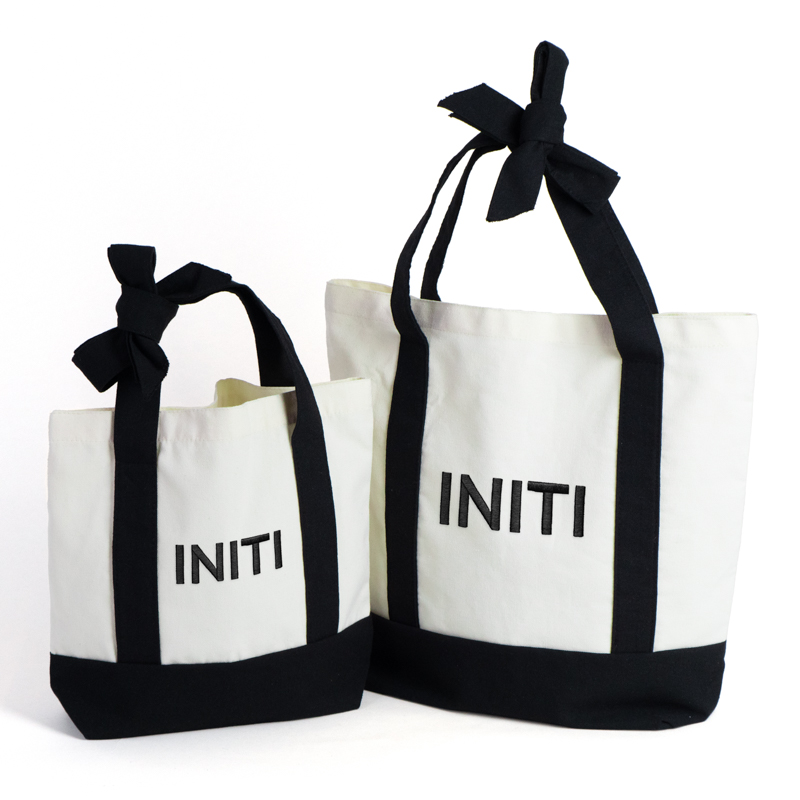
Suppose three manufacturers quote 5,000 cotton tote bags.
| Specification | Supplier A | Supplier B | Supplier C |
|---|---|---|---|
| Unit Price | USD 2.20 | USD 2.55 | USD 2.80 |
| Fabric | Cotton | Cotton | Cotton |
| Fabric Weight | 6 oz | 10 oz | 12 oz |
| Handles | Basic | Reinforced | Heavy cotton webbing |
| Printing | 1 color | 2 colors | 2 colors |
| Packaging | Bulk | Individual bag | Individual bag |
Supplier A is clearly cheaper.
But these are not three quotations for the same tote bag.
They are three different products.
The first job is therefore to normalize the specification.
2. Compare the Exact Material
Descriptions such as:
- Polyester
- Canvas
- Nylon
- RPET
- Non-woven
are too general.
For example, polyester could mean:
- 210D
- 420D
- 600D
- 900D
- 1680D
Canvas may vary significantly in weight and construction.
Ask each supplier to specify:
- Material type
- Denier or GSM
- Weave
- Coating
- Recycled content if applicable
A lower quotation may simply use a lower material specification.
3. Compare Fabric Weight
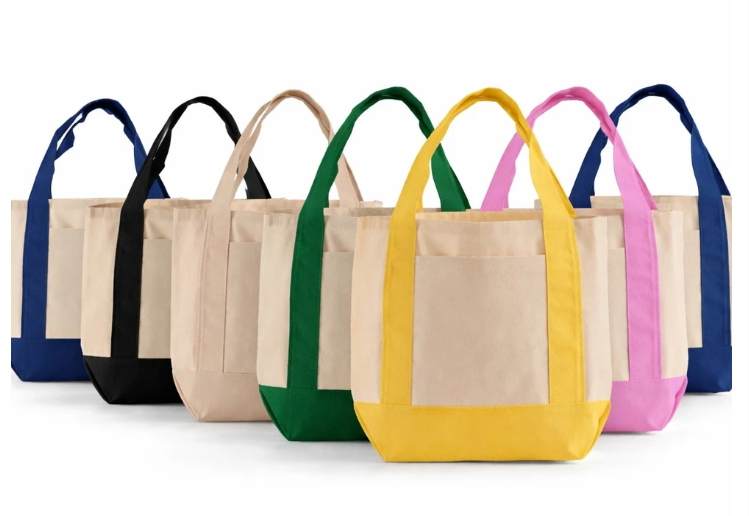
Fabric weight often explains large price differences.
Examples include:
Cotton / Canvas
- 6 oz
- 8 oz
- 10 oz
- 12 oz
- 16 oz
Non-Woven
- 60 GSM
- 80 GSM
- 100 GSM
- 120 GSM
Higher fabric weight usually means:
- More raw material
- Higher cost
- Different hand feel
- Different durability
A buyer should not compare an 80 GSM non-woven bag directly with a 120 GSM version and treat the lower price as better purchasing.
4. Compare Coatings and Lamination
The base fabric is only one part of the material specification.
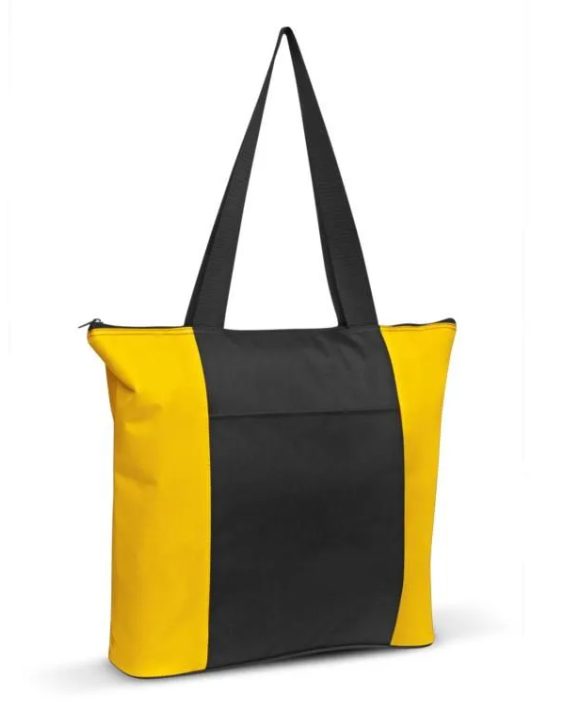
Possible additional treatments include:
- PU coating
- PVC backing
- TPU lamination
- Water-repellent treatment
- BOPP lamination
These affect:
- Water resistance
- Weight
- Appearance
- Durability
- Cost
For example:
600D polyester
and
600D polyester with PU coating
are not the same product.
5. Compare Dimensions
Small size differences can change material consumption significantly.
For example:
40 × 35 × 10 cm
and
45 × 40 × 15 cm
may both be described as “large tote bags,” but the second product uses considerably more material.
For gusseted bags, confirm:
- Width
- Height
- Side gusset
- Bottom gusset
Never compare prices using vague size descriptions such as:
Medium
Large
Standard size
6. Compare Construction
Construction directly affects:
- Durability
- Labor cost
- Production time
Check whether the quotation includes:
- Single or double stitching
- Bartacks
- Reinforced stress points
- Binding
- Bottom reinforcement
- Internal boards
- Edge finishing
A basic promotional bag and a reinforced retail bag can use the same outer material but have very different manufacturing costs.
7. Compare Handles and Straps
Handles are frequently one of the hidden differences between quotations.
Compare:
- Material
- Width
- Length
- Thickness
- Padding
- Attachment method
For example:
25 mm PP webbing
and
38 mm reinforced polyester webbing
are not equivalent.
For heavier bags, handle attachment is especially important because this is often where failure occurs first.
8. Compare Zippers and Hardware
Do not accept specifications such as:
Good zipper
Standard buckle
Ask for actual details.
For zippers, compare:
- Size
- Coil type
- Slider
- Puller
- Reverse or standard construction
- Water-resistant treatment
For hardware, compare:
- Plastic vs metal
- Material grade
- Finish
- Thickness
- Custom mold requirements
These differences can materially affect cost.
9. Compare Lining, Padding and Insulation
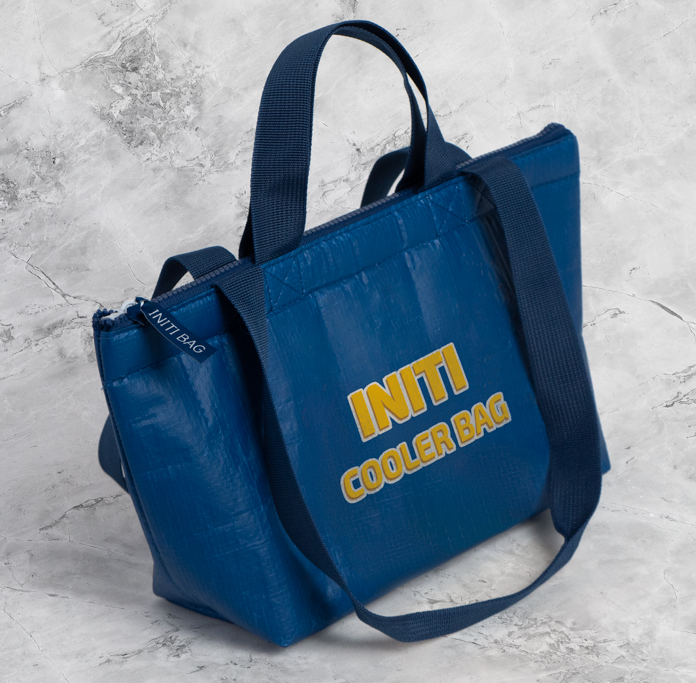
For products such as:
internal materials matter.
Compare:
Lining
- Polyester
- RPET
- PEVA
- TPU
Padding
- EPE
- EVA
- Sponge foam
Insulation
- Foam type
- Thickness
- Foil or PEVA lining
A quotation saying only “padded” is not enough.
10. Compare Printing Methods
Different suppliers may quote different printing processes.
Possible options include:
- Screen printing
- Heat transfer
- Sublimation
- Digital printing
- BOPP laminated printing
- Embroidery
Each method has different:
- Setup cost
- Unit cost
- Color capability
- Appearance
- Durability
Make sure all suppliers are quoting the same artwork using an equivalent printing process.
11. Separate One-Time Charges From Unit Cost
Some suppliers include setup fees in the quotation.
Others charge separately for:
- Printing screens
- Plates
- Molds
- Custom hardware
- Tooling
For repeat orders, this matters.
Compare:
one-time development costs
and
repeat production costs
separately.
12. Compare Packaging
Packaging can create meaningful cost differences.
Possible options include:
- Bulk packing
- Individual polybag
- Recycled polybag
- Paper sleeve
- Retail box
A supplier quoting bulk packing should not be compared directly with another supplier quoting individual retail packaging.
13. Compare Carton Efficiency
For bulky bag products, carton packing affects freight.
Check:
- Pieces per carton
- Carton dimensions
- Gross weight
Poor packing efficiency can increase:
- Air freight
- Courier charges
- Container space
- Warehousing cost
A slightly higher unit price may still create a lower delivered cost if packaging is more efficient.
14. Compare MOQ at the Same Quantity
Unit price changes significantly with quantity.
Do not compare:
Supplier A: 10,000 pcs
with
Supplier B: 2,000 pcs
at the same unit-price level.
Request multiple quantity tiers when necessary:
| Quantity | Price |
|---|---|
| 1,000 pcs | |
| 3,000 pcs | |
| 5,000 pcs | |
| 10,000 pcs |
This shows how pricing changes with production volume.
15. Check Material MOQ
Finished-product MOQ and material MOQ are not always the same.
Custom components may require higher minimums, including:
- Custom fabric colors
- Custom zipper colors
- Printed lining
- Webbing
- Metal hardware
For example, a supplier may accept:
1,000 finished bags
but require material sufficient for:
3,000 bags
Ask who pays for excess material and whether it can be stored for repeat orders.
16. Compare Sample Cost and Sample Capability
Sample cost should not be evaluated by price alone.
A higher sample fee may include:
- New pattern development
- Custom material sourcing
- Printing setup
- Courier
More important questions are:
- Is the sample fee refundable?
- How many revisions are included?
- Are production materials used?
- Can the supplier follow a tech pack accurately?
Sampling performance is often the first real test of supplier capability.
17. Compare Lead Time Correctly
Ask suppliers to separate:
- Sampling time
- Material preparation time
- Production time
- Inspection time
Also ask when production lead time starts.
Possible starting points include:
- Deposit received
- Artwork approved
- Material confirmed
- Pre-production sample approved
A simple statement such as:
30 days
is not enough.
Supplier Reliability Should Be a Core Part of the Comparison
Once product specifications and commercial terms are understood, the next question becomes:
Is this supplier safe and reliable enough to receive the order?
For a B2B buyer, this matters because custom orders often require:
- Deposit payment
- Material commitment
- Long production cycles
- Custom development
The financial exposure can be much larger than the unit-price difference between suppliers.
18. Verify the Company
Before paying a new supplier, confirm basic company information.
Check whether:
- Company name is consistent
- Registered address is clear
- Business documents match the quotation
- Contract company matches the invoice
- Payment beneficiary is explainable
The company name appearing on:
- Quotation
- Invoice
- Contract
- Bank account
should make commercial sense.
If the names are different, ask for an explanation before payment.
19. Verify Who Is Actually Manufacturing the Bags
A supplier may be:
- Factory
- Trading company
- Sourcing company
- Factory with outsourced production
None of these models is automatically bad.
The important thing is transparency.
Buyers should know:
- Where production happens
- Who controls quality
- Who owns the sample room
- Whether key processes are outsourced
A capable trading company may manage production very well.
A factory may also outsource processes such as:
- Printing
- Embroidery
- Lamination
- Hardware
The issue is not whether outsourcing exists.
The issue is whether the supplier can control it.
20. Verify Payment Safety
Payment deserves special attention.
Be cautious if a supplier suddenly requests payment to:
- Personal account
- Unrelated company
- Different country
- Recently changed beneficiary
Any change to payment instructions should be verified through a second communication channel.
For example:
If bank information changes by email, confirm it through:
- Known phone number
- Video call
- Existing contact channel
Do not rely only on a single email message.
21. Check Factory Capability
A supplier may have a good website but limited capability for your specific product.
Ask whether the factory regularly produces:
- Tote bags
- Backpacks
- Cooler bags
- Gym bags
- Cosmetic bags
- Storage bags
Complex backpacks and simple shopping bags require different manufacturing experience.
Useful checks include:
- Sample room
- Sewing lines
- Cutting equipment
- QC team
- Production capacity
The best supplier is usually one that already understands the product category.
22. Check Certification Carefully
Buyers may require:
- SEDEX
- BSCI
- ISO
- GRS
- Other customer-specific standards
Do not confirm compliance only from a logo shown on a website.
Check whether:
- Certificate is valid
- Company name matches
- Factory address matches
- Scope is relevant
For recycled products, confirm whether certified material is actually included in the quoted price.
23. Check Export Experience
Experience with the buyer’s target market can reduce execution problems.
A supplier familiar with:
- Europe
- North America
- Middle East
- Japan
- Australia
may better understand requirements relating to:
- Labeling
- Packaging
- Testing
- Carton marks
- Shipping documentation
Export experience does not automatically guarantee quality, but it can reduce avoidable mistakes.
24. Look for Production Consistency
One common sourcing problem is:
Excellent sample, different bulk production.
Before confirming the order, clarify that the approved sample will become the production standard.
Useful control methods include:
- Golden sample
- Approved material swatches
- Pantone confirmation
- Approved hardware
- Signed specification sheet
This reduces the chance that materials are silently replaced after the order is placed.
25. Evaluate Communication Reliability
Reliable suppliers usually communicate clearly before they receive an order.
Look at whether they:
- Identify missing specifications
- Ask relevant technical questions
- Confirm changes in writing
- Explain problems directly
- Avoid vague answers
A supplier that always says:
No problem.
without asking technical questions is not necessarily easier to work with.
Sometimes it means they have not reviewed the project carefully.
26. Check How the Supplier Handles Problems
Every manufacturing project can encounter problems.
The important question is:
What happens when something goes wrong?
Possible issues include:
- Material delay
- Printing error
- Color mismatch
- Quality defects
- Short shipment
Ask how the supplier normally handles:
- Rework
- Replacement
- Credit
- Production delay
A reliable supplier should have a clear problem-resolution process.
27. Consider Business Continuity
For larger orders, buyers should also consider whether the supplier can maintain production.
Useful questions include:
- Does the factory rely heavily on subcontracting?
- Are key materials sourced from one supplier only?
- Is peak-season capacity limited?
- Is there backup production capacity?
This matters particularly for seasonal projects.
A Christmas or promotional order delivered one month late may have little commercial value.
28. Compare Production Capacity
Ask suppliers about:
- Monthly output
- Sewing capacity
- Current production schedule
- Peak-season workload
A factory may offer an attractive quotation but already be operating near full capacity.
This can increase the risk of delayed production.
29. Compare Quality-Control Systems
Ask how quality is checked at different stages.
A typical process may include:
Incoming Inspection
Checking:
- Fabric
- Zippers
- Hardware
- Color
In-Line Inspection
Checking:
- Sewing
- Dimensions
- Construction
Final Inspection
Checking:
- Appearance
- Function
- Packaging
A supplier with stronger QC may have slightly higher production costs but lower defect risk.
30. Compare Testing Requirements
If your project requires testing, make sure it is included consistently.
Possible tests include:
- Load test
- Seam strength
- Tensile strength
- Colorfastness
- Chemical testing
- Recycled-content verification
Testing fees and sample requirements can affect both cost and lead time.
31. Compare Incoterms
A quotation is not complete without the trade term.
Common terms include:
- EXW
- FOB
- CIF
- DDP
For example:
USD 3.50 EXW
cannot be directly compared with:
USD 3.70 FOB
because the second quotation may already include:
- Inland transport
- Export handling
- Port charges
Normalize all quotations to the same Incoterm.
32. Calculate Landed Cost
The lowest factory price is not always the lowest final cost.
Consider:
- Unit price
- Packaging
- Tooling
- Inland transportation
- Freight
- Duty
- Local delivery
For example:
Supplier A
Product: USD 3.00
Packing: USD 0.10
Freight allocation: USD 0.70
Landed cost: USD 3.80
Supplier B
Product: USD 3.25
Packing: Included
Freight allocation: USD 0.40
Landed cost: USD 3.65
Supplier B has the higher factory price but lower delivered cost.
33. Put a Value on Quality Risk
Suppose one supplier is USD 0.20 cheaper.
For 10,000 pieces, the saving is:
USD 2,000
That sounds significant.
But imagine the lower-cost supplier creates:
- Higher defect rate
- Late delivery
- Replacement cost
- Customer complaints
The USD 2,000 saving can disappear very quickly.
Cheap purchasing and low total cost are not always the same thing.
34. Put a Value on Supplier Risk
There is an even bigger issue.
A supplier that is USD 0.20 cheaper is not truly cheaper if the buyer faces a higher risk of:
- Losing the deposit
- Receiving non-conforming goods
- Missing the product launch
- Having no effective remedy after shipment
For larger custom orders, supplier reliability may matter much more than a small unit-price difference.
A Practical Supplier Comparison Table
A useful comparison sheet might look like this:
| Item | Supplier A | Supplier B | Supplier C |
|---|---|---|---|
| Unit Price | |||
| Material | |||
| Fabric Weight | |||
| Coating | |||
| Dimensions | |||
| Handles | |||
| Zippers | |||
| Lining | |||
| Printing | |||
| Packaging | |||
| MOQ | |||
| Sample Fee | |||
| Production Lead Time | |||
| Testing Included | |||
| Incoterm | |||
| Payment Terms | |||
| Company Verified | |||
| Factory Verified | |||
| Certificates Verified | |||
| Export Experience | |||
| Quality-Control Process | |||
| Approved Sample Control | |||
| Problem Handling |
This provides a much clearer view than simply placing three unit prices next to each other.
Use a Four-Step Comparison Process
Step 1: Technical Comparison
Check:
- Material
- Weight
- Dimensions
- Construction
- Components
- Printing
- Packaging
Question:
Are they actually quoting the same product?
Step 2: Commercial Comparison
Compare:
- Unit cost
- MOQ
- Sample cost
- Tooling
- Payment
- Lead time
- Incoterm
- Landed cost
Question:
What is the true commercial cost?
Step 3: Supplier Reliability Comparison
Check:
- Company identity
- Factory identity
- Payment account
- Certification
- Export experience
- Business continuity
Question:
Is this supplier safe and reliable enough for us to place the order?
Step 4: Execution Risk Comparison
Evaluate:
- Sample performance
- Communication
- QC
- Production capacity
- Bulk consistency
- Delivery reliability
- Problem-solving capability
Question:
Can this supplier execute the project successfully?
Example: Comparing Three Backpack Suppliers
Imagine three factories quoting a custom laptop backpack.
Supplier A
Price: USD 8.20
- 600D polyester
- EPE padding
- Standard zipper
- Basic packaging
Company information is limited and the supplier requests payment to an unrelated account.
Supplier B
Price: USD 9.10
- 600D PU-coated polyester
- EVA padding
- No. 8 zipper
- Reinforced straps
- Individual polybag
Factory information, payment account and quality-control process are clearly documented.
Supplier C
Price: USD 9.60
- RPET 600D
- Certified recycled material
- EVA padding
- Water-resistant zipper
- Reinforced bottom
- Recycled packaging
The three suppliers are not offering the same product.
Supplier A also introduces a commercial risk that cannot be evaluated only by price.
The correct conclusion is not:
A is cheapest.
The correct conclusion is:
The specifications and supplier conditions must first be normalized before price can be meaningfully compared.
When Should Buyers Negotiate?
Negotiation should happen after the product specification is aligned.
Instead of saying:
Another supplier is USD 0.50 cheaper.
say:
Both quotations now use 600D RPET, EVA padding, the same zipper and packaging. Can you review your price for 5,000 pieces?
This allows the supplier to review cost without quietly reducing the specification.
What If One Supplier Is Much Cheaper?
A significantly lower quotation deserves investigation.
Possible legitimate reasons include:
- Better material purchasing
- Higher efficiency
- Existing stock
- Lower margin
But possible problems include:
- Lower material weight
- Different components
- Missing packaging
- Lower QC standard
- Quotation error
Ask the supplier to reconfirm the complete specification.
What If One Supplier Is More Expensive?
Higher price does not automatically mean better quality.
The supplier may have:
- Higher overhead
- Smaller production scale
- Different margins
The objective is not to choose:
- The cheapest supplier
- The most expensive supplier
The objective is to choose:
A reliable supplier that can deliver the required specification at a competitive total cost with acceptable execution risk.
Questions to Ask Before Selecting a Bag Manufacturer
Before placing the order, confirm:
- Is the material specification clear?
- Is fabric weight confirmed?
- Are zippers and hardware specified?
- Is printing included?
- Is packaging included?
- Are tooling and testing fees clear?
- Is the production company verified?
- Does the payment beneficiary match the commercial relationship?
- Are required certificates valid?
- Is the sample approved as the bulk standard?
- Is production capacity sufficient?
- Is the lead time realistic?
- What happens if bulk quality does not match the sample?
- Are there any additional charges not included?
If these questions are answered clearly, quotation comparison becomes much safer.
Red Flags
Be cautious when a supplier:
- Provides only a unit price
- Refuses to specify fabric weight
- Uses vague component descriptions
- Changes material without approval
- Cannot explain company or factory structure
- Requests payment to an unexplained third-party account
- Provides certificates that do not match the production company
- Promises unrealistic lead times
- Cannot explain a large price difference
- Avoids written confirmation of specifications
One red flag does not always mean the supplier is unsuitable, but unexplained inconsistencies should be resolved before payment.
A Better RFQ Example
Instead of sending:
Please quote this bag.
send:
Product: Custom gym duffel bag
Size: 50 × 28 × 25 cm
Quantity: 3,000 / 5,000 pcs
Outer Fabric: 600D polyester with PU coating
Lining: 210D polyester
Logo: 1-color screen print, 15 × 8 cm
Features: Shoe compartment + wet pocket
Zipper: No. 8 nylon coil
Packaging: Individual polybag
Destination: Hamburg, Germany
Quotation Term: FOB Ningbo
Also request:
- Company name
- Factory location
- Sample lead time
- Production lead time
- QC process
- Payment terms
This allows buyers to compare both:
the product
and
the supplier behind the product.
Custom Bag Quotation Support from INITI
INITI develops custom bags for:
- Retail brands
- Importers
- Promotional companies
- Corporate programs
- Supermarkets
- Travel and outdoor brands
Product categories include:
- Tote bags
- Backpacks
- Cooler bags
- Gym bags
- Crossbody bags
- Cosmetic bags
- Travel bags
- Storage bags
Buyers can provide:
- Product drawing or reference sample
- Dimensions
- Estimated quantity
- Material preference
- Logo artwork
- Required features
- Packaging requirements
If all details have not been finalized, buyers can first provide the intended use and target quantity.
Material and construction options can then be discussed before the quotation is finalized.
FAQ
Why do different bag manufacturers give very different prices?
Because suppliers may be quoting different materials, fabric weights, components, printing, packaging, quality standards or commercial terms.
Should I choose the cheapest bag manufacturer?
Not automatically. First confirm that specifications are equivalent and then evaluate supplier reliability, total cost and execution risk.
How can I tell whether a bag supplier is reliable?
Check the company identity, production location, payment information, certification, export experience, samples, communication and quality-control process.
Is a factory always safer than a trading company?
Not necessarily. What matters is whether the supplier is transparent about where production occurs and whether it can control quality and delivery.
What should I check before paying a deposit?
Confirm the company name, contract, invoice and payment account. Any unexplained change in beneficiary information should be verified before payment.
How can I compare quotations fairly?
Provide all suppliers with the same dimensions, materials, components, quantity, printing, packaging and trade terms.
Does a higher price mean better quality?
No. Higher cost can come from materials, construction, overhead or margin. Quality must be verified separately.
Why is supplier reliability important if the sample is good?
Because the supplier still needs to reproduce the approved sample consistently in bulk production, meet the delivery schedule and resolve problems if they occur.
Conclusion
Comparing bag manufacturers only by unit price creates an incomplete sourcing decision.
A more reliable process is:
Specification → Total Cost → Supplier Reliability → Execution Risk
First, confirm that every supplier is quoting the same:
- Material
- Fabric weight
- Dimensions
- Construction
- Components
- Printing
- Packaging
Then compare:
- Unit cost
- MOQ
- Sample cost
- Tooling
- Freight
- Incoterm
- Landed cost
Next, verify whether the supplier itself is:
- Legitimate
- Transparent
- Financially safe to work with
- Capable of producing the product
Finally, evaluate whether it can consistently deliver:
- Approved quality
- Required quantity
- Correct specifications
- On-time shipment
The best quotation is therefore not simply the lowest number.
It is the quotation from a supplier that can deliver the required product specification at a competitive total cost with acceptable commercial and production risk.
In many B2B projects, paying slightly more to a reliable manufacturer can be significantly cheaper than saving a small amount per unit and later dealing with:
- Defects
- Delays
- Rework
- Lost deposits
- Missed launch dates
Price matters.
But price only becomes meaningful after the product and the supplier behind that price have both been verified.


