
Wondering how many liters backpack for hiking you need? Check out these quick guides:
| Trip Type | Liter Range |
|---|---|
| Day Hike | 15-30 liters |
| Overnight (1-3 nights) | 30-50 liters |
| Multi-Day (3-5 nights) | 50-80 liters |
| Extended (5+ nights) | 70+ liters |
Tip: Backpack fit depends on your torso length. Measure from the base of your neck to your lower back, then choose a size that matches. Try on different sizes for the best comfort!
Key Takeaways
- Choose a backpack size based on your trip type: 15-30L for day hikes, 30-50L for overnight trips, and 50L+ for multi-day adventures.
- Fit matters! Measure your torso length to find a backpack that sits comfortably on your hips, not your shoulders.
- Pack smart: Only bring essential gear to avoid overpacking, which can lead to discomfort and fatigue.
- Test different backpacks in-store. Load them with weight and walk around to ensure comfort and balance.
- Consider the weather. Larger packs are necessary for winter hikes due to extra gear for warmth and safety.
- Review your gear after each trip. Adjust your packing list based on what you used and what you didn’t.
- Stay organized with compartments. A well-organized pack helps you find gear quickly and keeps your load balanced.
- Remember, a bigger backpack isn’t always better. Choose a size that fits your needs to enhance your hiking experience.
How Many Liters Backpack for Hiking
Day Hikes: 15-30L
If you plan a day hike, you want a backpack that holds between 15 and 30 liters. This size gives you enough space for water, snacks, a light jacket, and a first aid kit. Most hikers find a 30L pack perfect for longer day trips. Your choice depends on trip length, comfort, and how much gear you carry. A smaller pack feels lighter and helps you move faster. If you like to bring extra layers or a camera, go for the higher end of this range.
- A 30L backpack works well for most day hikes.
- Choose a pack that fits your body for better comfort.
- Think about what you really need to bring.
Tip: Try on different sizes to see what feels best for your back and shoulders.
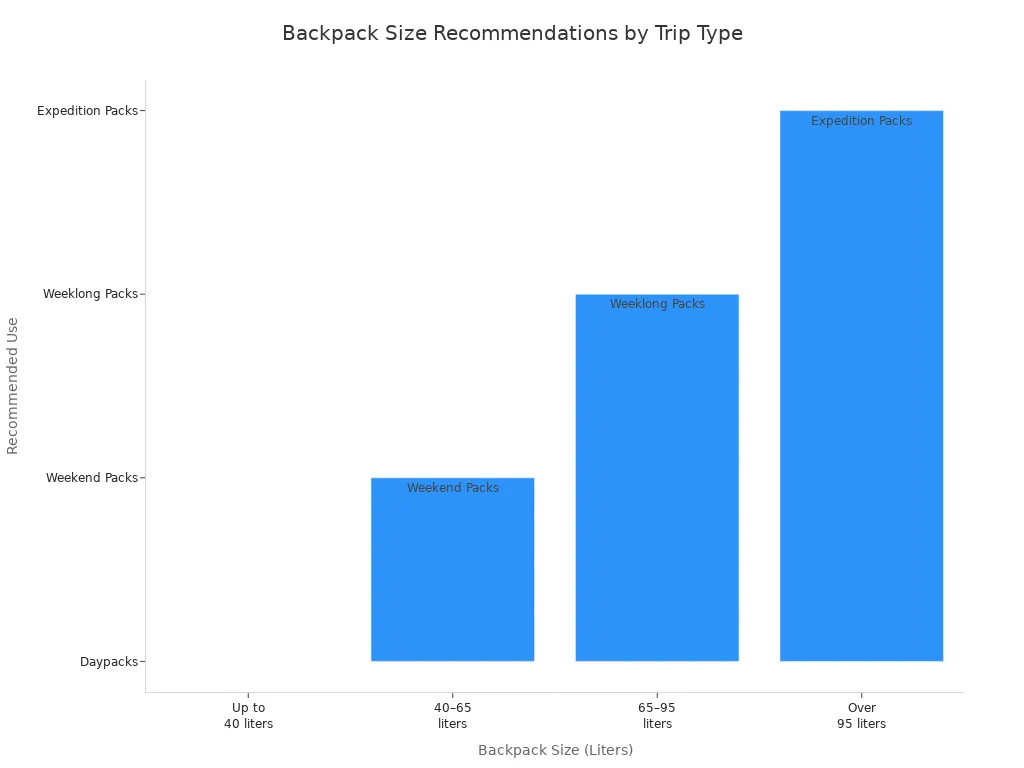
Here’s a quick look at how outdoor brands recommend backpack sizes for different trips:
| Backpack Size (Liters) | Recommended Use | Description |
|---|---|---|
| Up to 40 liters | Daypacks | Great for short hikes, fishing, or minimalist camping. |
| 40–65 liters | Weekend Packs | Fits a sleeping bag and small tent for 1-3 nights. |
| 65–95 liters | Weeklong Packs | Holds more gear and comfort items for longer trips. |
| Over 95 liters | Expedition Packs | Best for mountaineers or winter treks with lots of supplies. |
Overnight: 30-50L
For overnight hikes, you need a bit more space. A 30-50L backpack lets you pack a sleeping bag, a small tent, food, and extra clothes. Most weekend trips (1-3 days) fit well in this range. If you wonder how many liters backpack for hiking overnight, this is the sweet spot.
| Trip Duration | Recommended Size |
|---|---|
| Weekend hikes (1-3 days) | 30L – 50L |
| Week-long trips (4-7 days) | 50L – 70L |
| Extended travel (2+ weeks) | 70L+ |
When you pack for an overnight trip, keep these tips in mind:
- Pack only what you need. Leave non-essentials at home.
- Use gear that serves more than one purpose.
- Pick lightweight items to save your back.
- Layer your clothing for changing weather.
- Keep heavier items close to your back for balance.
- After each trip, review your gear and adjust for next time.
Note: A well-packed 30-50L backpack makes your hike more enjoyable and keeps you moving with ease.
Multi-Day: 50-65L
Multi-day hikes, usually 3 to 5 nights, call for a bigger pack. You want a backpack between 50 and 65 liters. This size holds extra food, more clothing, and bulkier gear. If you hike in winter or need to carry special equipment, you might need a pack closer to 65 liters or even more. When you ask how many liters backpack for hiking longer trips, this range covers most needs.
For multi-day hikes, you often carry:
- A tent and sleeping bag
- Cooking gear and food for several days
- Extra clothing layers
- Water and a filter
- First aid and safety items
Carrying a larger pack brings new challenges. You may feel tired faster or notice sore muscles and joints. Heavy packs can slow you down and make recovery harder, especially as you get older. Always balance comfort with the weight you carry. Choose only what you need and pack smart.
Remember: The right backpack size helps you enjoy your adventure and avoid injury.
If you still wonder how many liters backpack for hiking fits your trip, think about your gear, trip length, and comfort. The right size makes all the difference.
Extended: 65L+
When you plan an extended hiking trip, you need a backpack that holds at least 65 liters. These large packs give you the space for extra food, clothing, and gear. If you hike for more than five nights or travel in winter, you will find this size essential.
You might wonder why you need so much space. On long trips, you carry more meals, a bigger sleeping bag, and extra layers for warmth. Winter hikes demand even more room for bulky jackets, insulated pads, and maybe even snow gear. The extra volume helps you stay prepared for changing weather and unexpected situations.
Tip: Always check your gear list before packing. Only bring what you truly need. A bigger pack can tempt you to overpack.
Here are some reasons you might choose a 65L+ backpack:
- You plan to hike for a week or longer.
- You need to carry food for many days.
- You want to pack a four-season tent or winter sleeping bag.
- You expect cold or wet weather and need extra clothing.
- You travel with kids or share group gear.
A larger backpack lets you fit everything, but it comes with trade-offs. As your pack gets bigger, the weight goes up. Heavy packs slow you down and make hiking harder. You might feel tired sooner or struggle with balance on rough trails. Overpacking is a common problem with large backpacks. You may end up carrying things you do not need, which adds to your load.
| Backpack Size | Best For | What You Can Pack |
|---|---|---|
| 65L–80L | 5–10 day trips | Extra food, winter gear, group equipment |
| 80L+ | Expeditions, mountaineering | Specialized gear, bulk supplies |
You should always test your loaded pack before your trip. Walk around your home or yard. Adjust the straps and see how the weight feels. If it feels too heavy, remove some items. Your comfort matters most on long hikes.
Remember: A bigger backpack is not always better. Choose the size that matches your trip, your gear, and your body. Stay safe and enjoy your adventure!
Backpack Sizes by Trip
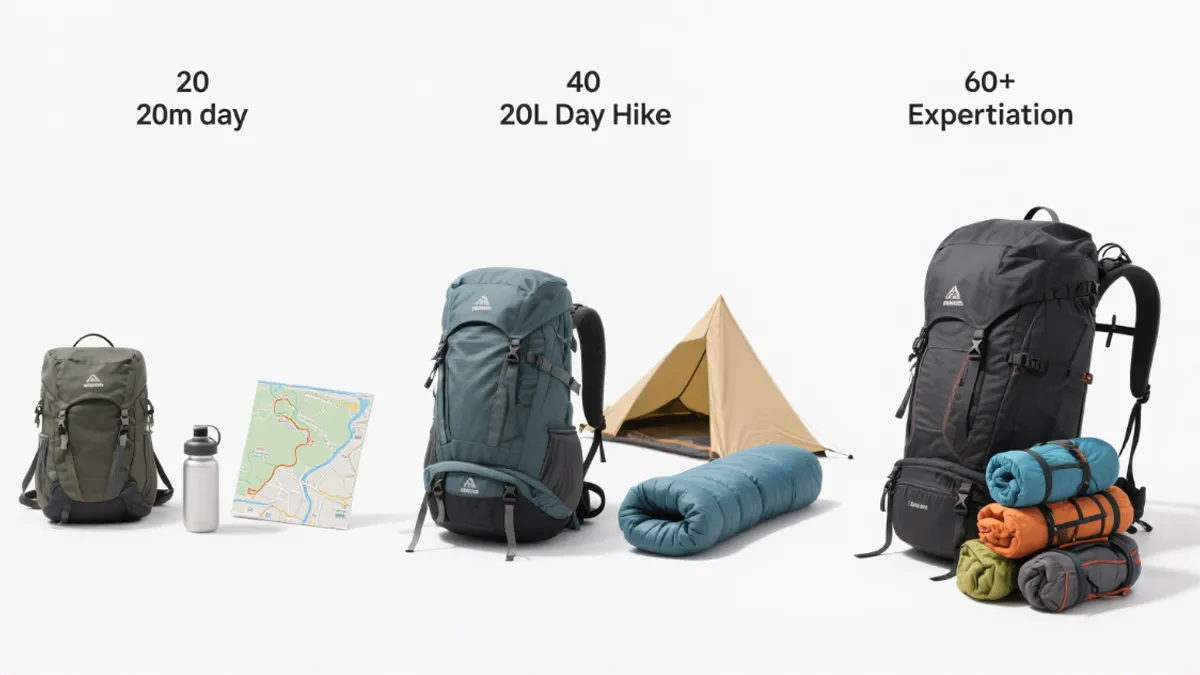
Short Hikes: Under 20L
You want a light pack for short hikes. Most hikers choose backpack sizes under 20 liters for half-day or full-day trips without overnight stays. These packs keep things simple and easy to carry. You can fit water, snacks, a rain jacket, and a small first-aid kit. You might also toss in a headlamp, your phone, keys, and a map. Here’s a quick look at what you can expect:
| Backpack Size | Suitable For | Typical Gear |
|---|---|---|
| < 20 L | Half-day to full-day hikes | Water (1-3L), snacks/lunch, rain jacket or fleece, small first-aid kit, headlamp, phone/keys, map |
You stay light on your feet with a small pack. You don’t need to worry about extra weight slowing you down. If you like to move fast and keep things simple, this size works best.
Tip: Always check your gear before heading out. You want to make sure you have the basics, but don’t overpack.
Day Trips: 30L
For a full day on the trail, you need a bit more space. Backpack sizes around 30 liters give you room for extra food, layers, and maybe a camera. You can pack a lunch, a rain shell, and a few comfort items. This size is perfect if you plan to hike all day and want to be ready for changing weather. You can also fit a hydration system and some emergency gear.
A 30L pack keeps things organized. You don’t have to cram everything in. You can find what you need quickly. If you hike with friends or family, you might carry a little extra for them, too.
Note: Try on different packs at the store. You want one that fits your body and feels good when loaded.
Winter Day Trips: 40L
Winter hikes bring new challenges. You need more gear to stay safe and warm. Backpack sizes around 40 liters hit the sweet spot for cold-weather day trips. You can fit insulated clothing, crampons, and even snowshoes. This size balances space and weight, so you don’t feel overloaded.
- A 40L pack holds bulky jackets and extra layers.
- You can stash winter boots, gloves, and hats.
- There’s room for emergency gear like a bivy sack or stove.
You want enough space for everything, but you don’t want a pack that’s too big. A 40L backpack keeps your gear organized and easy to reach. You stay comfortable and prepared for whatever winter throws at you.
Tip: Pack your heaviest items close to your back. This helps you stay balanced on icy trails.
Common Male Sizes: 40-65L
When you look for a hiking backpack, you might notice that many male hikers choose packs between 40 and 65 liters. This size range works well for a lot of different trips. You get enough space for your gear, but you don’t feel weighed down. If you plan to hike for several days, you need room for food, clothes, and maybe a tent. A 40-65L backpack gives you that flexibility.
Why do so many guys pick this size? You want a pack that fits your body and matches your adventure. If you hike for three to five nights, you need space for extra meals and layers. If you go on longer trips, you might want a bigger pack, but most people find 40-65L just right for comfort and capacity.
Here’s a quick look at how these sizes match up with different hiking needs:
| Backpack Size | Purpose/Use Case | Key Features |
|---|---|---|
| 50-70L | Multi-day trips (3-5 nights) | Room for gear and food for several days |
| 60-80+L | Extended expeditions (5+ nights) | Extra volume for food, clothing, and gear |
| 70-80L | Very long trips/heavy loads | Designed for stability and comfort under heavy weight |
You might wonder what makes a 40-65L pack so popular. Here are some reasons:
- You can fit a sleeping bag, tent, and cooking gear.
- You have space for extra clothes and rain gear.
- You can carry enough food and water for several days.
- You get pockets and compartments for easy organization.
Tip: Try on different packs before you buy. You want a backpack that sits well on your shoulders and matches your torso length. A good fit helps you hike longer without pain.
If you hike in cold weather or carry group gear, you might want a pack closer to 65 liters. If you travel light or hike in summer, a 40-liter pack could be enough. Your packing style matters, too. Some hikers like to bring comfort items, while others go minimalist.
You should also think about your body size and strength. A bigger pack can hold more, but it also weighs more. You want to balance space with comfort. If you feel tired or sore, try packing less or switching to a smaller backpack.
Many outdoor brands design 40-65L backpacks with adjustable straps, padded hip belts, and ventilation panels. These features help you stay comfortable on the trail. You can adjust the fit and shift the weight to your hips, which makes hiking easier.
Note: Always check the weather and your gear list before you pack. If you expect rain or cold, add layers and waterproof items. If you hike with friends, share gear to save space.
Choosing the right backpack size helps you enjoy your trip and stay safe. You want a pack that fits your needs and feels good on your back. Try different options and see what works best for you.
Factors for Choosing the Right Backpack
Gear Needs
Essential vs. Optional
When you pick a backpack for hiking, you need to think about what gear is truly essential. Start with the basics: water, food, a first-aid kit, and weather protection. These items always go in your pack. Optional gear, like a camera or extra snacks, depends on your personal style and the length of your trip. If you hike for just a few hours, a small daypack works well. For longer adventures, you need more space for sleeping gear and cooking supplies.
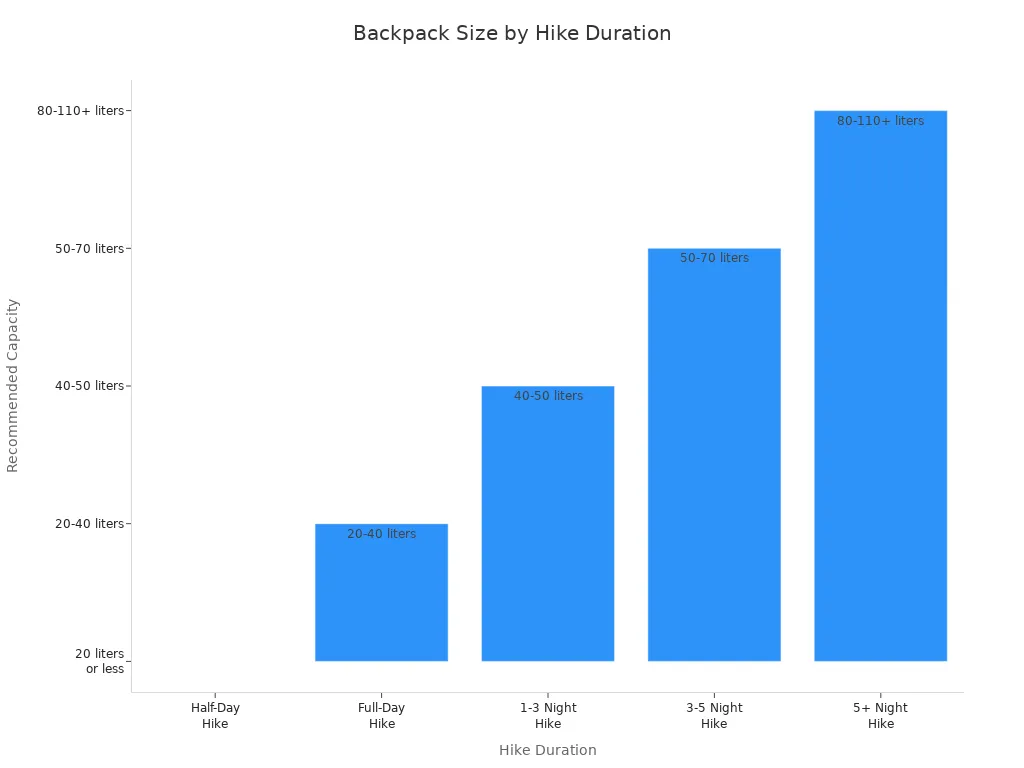
Here’s a quick guide to match your hike duration with backpack size:
| Duration of Hike | Recommended Backpack Capacity |
|---|---|
| Half-Day Hike (<4 hours) | 20 liters or less |
| Full-Day Hike (>4 hours) | 20-40 liters |
| 1-3 Night Hike | 40-50 liters |
| 3-5 Night Hike | 50-70 liters |
| 5+ Night Hike | 80-110+ liters |
If you want to see how backpack size changes with trip length, check out this chart:
Packing only what you need keeps your load light and helps with comfort. You move easier and enjoy your hike more. If you add too many optional items, your pack gets heavy and less comfortable.
Weather & Season
Cold or Wet Conditions
Weather plays a big role in choosing your backpack. In summer, you can use a smaller pack because your gear is lighter. You need breathable fabrics and fewer layers. Spring and fall mean you need flexible clothing, so your backpack needs a bit more space. Fall hikes work best with lightweight gear that fits in a compact pack.
Winter is different. You need a bigger backpack to fit insulated jackets, gloves, and maybe even snow gear. Cold or wet conditions demand extra clothing and waterproof items. If you hike in winter, plan for a pack that holds more gear. This helps you stay warm and dry, which adds to your comfort on the trail.
Tip: Always check the weather before you pack. Adjust your backpack size to fit the season and conditions.
Packing Style
Minimalist vs. Comfort
Your packing style affects the backpack you choose. If you like to go minimalist, you carry only the basics. You pick a simple pack with fewer compartments. This keeps your load light and helps you move fast. Ultralight packs skip extra features that add weight.
If you prefer comfort, you might bring more gear. Heavier packs often have more pockets and support. These features help you organize your stuff and make carrying heavy loads easier. Some packs offer special designs for women, which improve weight distribution and stability. The fit and adjustability of your pack matter a lot for comfort, especially on long hikes.
Test your pack before you hit the trail. Adjust the straps and see how it feels. A good fit means better comfort and less soreness. Choose a style that matches your needs and makes your hike enjoyable.
Remember: The right packing style and backpack size help you stay comfortable and keep your gear organized.
Torso Length
Getting the right backpack fit starts with knowing your torso length. Many hikers focus on the pack’s volume, but if the pack doesn’t match your body, you’ll feel uncomfortable fast. You might notice the shoulder straps don’t sit right, or there’s a gap that makes the pack pull away from your back. This happens a lot with unisex packs, which often have longer torsos. If you’re shorter or have a smaller frame, you’ll want a pack designed for your size, like the deuter Trail 28 SL, which fits specific torso lengths.
So, how do you measure your torso length? It’s easier than you think! Just follow these steps:
- Tilt your head forward and find the bony bump at the base of your neck. This is your C7 vertebra.
- Place your hands on your hips and find the top of your hip bones—this is your iliac crest.
- Ask a friend to measure the distance between these two points. That’s your torso length.
Most backpack brands use torso length to size their packs. You’ll see sizes like “small,” “medium,” or “large,” but always check the actual measurements. Here’s a quick guide:
| Torso Length (inches) | Pack Size |
|---|---|
| 15.5″ or less | Small |
| 16″–18.5″ | Medium/Regular |
| 19″ or more | Large/Tall |
Tip: Always try on a loaded pack before you buy. Walk around the store and adjust the straps. The hip belt should sit on your hips, not your waist, and the shoulder straps should hug your shoulders without gaps.
A good backpack fit means the weight sits on your hips, not your shoulders. You’ll hike longer and feel less tired. If you share gear or hike with kids, make sure everyone’s pack matches their torso length. This helps prevent sore backs and keeps everyone happy on the trail.
Remember, measuring your torso only takes a few minutes, but it makes a huge difference in comfort. Don’t just guess—grab a tape measure and check before you pick your next hiking backpack!
Hiking Backpack Decision Guide
Step-by-Step Checklist
Choosing the right backpack for your hike can feel tricky, but you can make it simple with a clear checklist. Outdoor experts suggest you follow these steps to match your needs to the best size backpack. Use this table to guide your decision:
| Step | Consideration |
|---|---|
| 1 | Determine the duration of the hike |
| 2 | Assess the amount of gear needed |
| 3 | Choose a pack size (10-20 liters for shorter hikes) |
| 4 | Consider the climate (hydration pack for hot weather) |
| 5 | Ensure the pack fits well |
| 6 | Evaluate activity type and features required |
Start by thinking about how long you plan to hike. A short walk needs less space than a week-long adventure. Next, look at your gear. Do you need a tent, sleeping bag, or just snacks and water? Pick the best size backpack for your trip. For hot days, you might want a hydration pack. Always check that your hiking backpack fits your body. Finally, think about any special features you want, like extra pockets or a rain cover.
Tip: If you want to know how to choose daypacks, focus on your trip length and what you need to carry. The right backpack makes your hike much more enjoyable.
Fit and Comfort
A perfect hiking backpack should feel like it was made just for you. Fit and comfort matter most, especially on long trails. Here’s how you can check if your hiking backpack fits well:
- Gather a soft measuring tape, a mirror, or ask a friend to help. Write down your measurements.
- Find the bony bump at the base of your neck (C7 vertebra). Place your hands on your hips to find the top of your hip bones (iliac crest). Measure the distance between these two points. This is your torso length.
- Make sure you start and end at the right spots. Keep the tape straight and level.
- Double-check your measurement. If you feel unsure, ask a store expert for help.
Carrying a misfit hiking backpack can cause back and shoulder pain. When you measure your torso, you protect your health and make hiking more fun. The best hiking backpacks come in different sizes, so you can find one that matches your body. Always try on your pack with some weight inside. Adjust the straps and hip belt until the pack hugs your back. The weight should rest on your hips, not your shoulders.
Note: If you want the best backpacking pack, always check the fit first. A good fit means you can hike longer and feel better at the end of the day.
When you choose a backpack, remember that comfort is key. The perfect hiking backpack will let you move easily and keep your gear organized. If you follow these steps, you will find the right backpack for any adventure. Whether you choose daypacks for short trips or hiking daypacks for longer journeys, always check the fit and comfort before you hit the trail.
Common Mistakes
Overpacking
Overpacking happens to almost every hiker at some point. You might feel tempted to bring extra clothes, snacks, or even a book, just in case. But carrying too much can quickly turn your hike into a struggle. When you stuff your backpack with unnecessary items, you add weight that slows you down and makes every step harder.
Here are some common overpacking mistakes:
- Not packing your backpack correctly
- Failing to adjust the suspension system
- Distributing weight unevenly, which leads to discomfort
You might also find yourself packing things like:
- Extra clothing you never wear
- Too many consumables
- Car camping gear instead of lightweight hiking gear
- Books or bulky first aid kits
Overpacking can lead to sore muscles, back pain, and even injuries. Uneven weight distribution makes your hike uncomfortable and can cause you to lose balance. You may also tire out faster and enjoy your trip less. Try to stick to a packing list that matches your hike and double-check your gear before you leave.
Tip: Lay out all your gear before packing. Remove anything you do not absolutely need for your trip.
Underpacking
Underpacking can be just as risky as overpacking. If you forget essential items, you might find yourself in trouble when the weather changes or if you get injured. Many beginners underestimate what they need, especially on familiar trails.
| Risk Type | Description |
|---|---|
| Lack of emergency gear | Not carrying a first aid kit can lead to serious problems if you get hurt. |
| Inadequate preparation | You might skip emergency planning, thinking the trail is safe and easy. |
| Missing essentials | Forgetting a whistle or space blanket can put you at risk in an emergency. |
You should always pack for the unexpected. Even short hikes can turn dangerous if you do not have the right gear. Make a checklist and review it before every trip.
Note: It is better to carry a little extra safety gear than to risk being unprepared.
Ignoring Fit
Many hikers ignore backpack fit, but this mistake can ruin your hike. If your pack does not match your torso length or body shape, you will feel uncomfortable fast. A poor fit can change your posture and put extra strain on your back and joints.
You might notice:
- Your backpack feels heavy and pulls on your shoulders
- You develop back pain or sore muscles
- Your body feels out of balance, making hiking harder
Studies show that carrying a heavy or poorly fitted backpack can lead to long-term back problems. You might even risk injury if you hike often with the wrong pack. Always measure your torso and try on different packs before you buy. Adjust the straps and hip belt until the weight sits on your hips, not your shoulders.
Remember: The right fit keeps you comfortable and safe on every hike. Take the time to find a backpack that feels just right for you.
Quick Tips for the Right Backpack
Try Before Buying
You want your hiking backpack to feel just right. The best way to make sure is to try it on before you buy. When you visit a store, you can check the material, test the zippers, and see how the straps fit your shoulders. You get a real sense of comfort and quality. Many hikers agree with this approach. Surveys show that 87% of hikers feel satisfied with their backpack choice, and almost half say they are very satisfied. Most people who feel unhappy with their backpack mention problems like poor waterproofing or discomfort. You can spot these issues by trying the backpack in person.
Here are some reasons why trying before buying works so well:
- You can check if the backpack fits your torso and hips.
- You get to feel the padding and see if it supports your back.
- You can test the pockets and see if your gear fits.
- You notice if the straps dig into your shoulders or if the pack feels too heavy.
- You can walk around the store and see how the backpack moves with you.
Many shoppers in Korea and Japan prefer to try backpacks in-store. About half of them want to touch the material and check the design before making a decision. This hands-on approach helps you avoid surprises later. If you try the backpack first, you can avoid common complaints and feel more confident about your choice.
Tip: Load the backpack with some weight at the store. Walk around, bend, and stretch. Make sure it feels comfortable in every position.
Adjust for Preferences
Your hiking style shapes your backpack choice. You might like to move fast and keep things light, or you may want extra comfort and space for gear. Personal preferences matter a lot when you pick a backpack. Some hikers choose minimalist packs for speed and freedom. Others want more pockets, padding, and features for longer trips.
Think about what you need most:
- Do you prefer a small pack for day hikes or a larger one for multi-night adventures?
- Do you want lots of compartments for organization, or do you like a simple design?
- Are you packing for yourself, or do you share gear with a partner or group?
- Do you need special features like hydration sleeves, rain covers, or extra ventilation?
Your ideal backpack size depends on your plans. If you hike for a day, you need less space than someone camping for a week. Packing habits also differ. You might carry only the basics, while your friend brings extra snacks and gadgets. There is no single “best” backpack for everyone. You need to balance features with your comfort and adventure goals.
Here’s a quick way to match your preferences:
- Decide how long your hike will last.
- List the gear you want to bring.
- Choose a pack size that fits your needs.
- Try different styles and see which feels best.
- Adjust straps and compartments for your comfort.
Conclusion
You now know how to pick the right backpack size for any hike. Here’s a quick guide:
| Hiking Trip Type | Liter Range |
|---|---|
| Day Hiking | 10 – 30 L |
| Short Weekend Backpacking | 30 – 45 L |
| Big Backpacking Trip | 45 – 70 L |
Use this checklist and test the fit before you decide. The right backpack depends on comfort and purpose. At INITI, we do more than offer ready styles — we manufacture backpacks with custom fabrics, sizes, compartments, and branding to match your market. With full OEM and ODM support, you get factory-direct quality and reliable supply. Choose with confidence and make every adventure a success.
FAQ
How do I know if my backpack fits correctly?
You should feel most of the weight on your hips, not your shoulders. The hip belt should sit on your hip bones. The shoulder straps should hug your shoulders without gaps. Try walking around with a loaded pack to check for comfort and balance.
Can I use a school backpack for hiking?
You can use a school backpack for short, easy hikes. It works for carrying water, snacks, and a jacket. For longer or tougher hikes, you need a hiking backpack with better support, padding, and features like a hip belt and chest strap.
What size backpack do I need for a weekend trip?
For a weekend trip, you usually need a backpack between 30 and 50 liters. This size lets you pack a sleeping bag, tent, food, and extra clothes. If you pack light, you can use a smaller pack. If you want more comfort, go bigger.
Is a bigger backpack always better?
A bigger backpack gives you more space, but it can tempt you to overpack. Carrying extra weight makes hiking harder and less fun. Choose a backpack that fits your trip and gear. Pack only what you need to stay comfortable and safe.
How much should my loaded backpack weigh?
Your loaded backpack should weigh no more than 20% of your body weight. For example, if you weigh 150 pounds, keep your pack under 30 pounds. A lighter pack helps you move easier and reduces the risk of pain or injury on the trail.
Do I need a women’s-specific backpack?
If you have a shorter torso or narrower shoulders, a women’s-specific backpack can fit better. These packs have shaped straps and hip belts for comfort. Try both regular and women’s packs to see which feels best for your body.
What features should I look for in a hiking backpack?
Look for padded shoulder straps, a hip belt, and adjustable back length. Side pockets, hydration sleeves, and rain covers add convenience. Ventilation panels help keep your back cool. Choose features that match your hiking style and needs.
Can I use one backpack for all types of hikes?
You can use one backpack for many hikes if it fits well and holds your gear. For short hikes, use a smaller pack or leave out extra items. For longer trips, make sure your backpack has enough space and support for heavier loads.