

When you step onto the golf course, you might wonder how many clubs in a golf bag you can bring.
The maximum number of clubs you can carry in your golf bag is 14. This is based on Rule 4 of the official golf rules established by the United States Golf Association (USGA) and applies to both professional and amateur golf tournaments.
You do not have to fill your bag with 14 clubs. Many golfers choose fewer clubs to match their style or skill level. Knowing this rule helps you avoid penalties and keeps the game fair for everyone. If you want to improve your game, understanding club selection and the rules will give you a strong start.
Key Takeaways
- You can have up to 14 clubs in your golf bag. If you use more than 14 clubs, you get a penalty. Penalties can lower your score. Using fewer clubs can help you think of new ways to play. It can also make your game better. The 14-club rule makes the game fair for everyone. It helps players use skill instead of just equipment. Putting your clubs in order by type helps you find them fast. This keeps your game moving smoothly. Custom golf bags let you pick features that match your style. They also fit your needs. Always count your clubs before you start playing. This helps you avoid penalties and stay focused. Knowing how to pick clubs is important. It helps you get better and plan your game on the course.
How Many Clubs in a Golf Bag

Official Limit
You might wonder how many clubs in a golf bag you can bring to the course. The answer is simple. You can carry up to 14 clubs during any round of play. This rule applies whether you play in a local tournament or a professional event. If you carry more than 14 clubs, you face penalties. In stroke play, you get a two-stroke penalty for each hole where you break the rule, up to four strokes. In match play, you lose one hole for each breach, up to two holes.
Tip: Always count your clubs before you start your round. This habit helps you avoid penalties and keeps your game on track.
The 14-club limit encourages you to think about your strategy. You must choose clubs that fit your style and the course conditions. There are no restrictions on the types of clubs you carry, as long as they meet the Equipment Rules. You can mix drivers, woods, irons, hybrids, wedges, and a putter.
Quick Facts:
- Maximum of 14 clubs allowed in your golf bag.
- The rule applies to all levels of play.
- Penalties for exceeding the limit can affect your score or match result.
Who Sets the Rule
The rule about how many clubs in a golf bag comes from two main organizations. The United States Golf Association (USGA) and The R&A set and maintain the rules for golf equipment. These groups work with manufacturers to make sure every club meets the standards. You must use clubs that conform to these rules if you want to play in official events.
| Organization | Responsibility |
|---|---|
| The R&A | Sets rules for golf equipment, including clubs. |
| USGA | Collaborates with manufacturers to ensure specifications are clear and adhered to. |
You need to check your clubs before you play. If you use non-conforming clubs or carry too many, you risk penalties or even disqualification. The USGA and R&A update their rules regularly, so staying informed helps you play your best.
Fewer Than 14 Clubs
You do not have to fill your bag with 14 clubs. Many golfers choose to carry fewer clubs for different reasons. Carrying fewer clubs can make your bag lighter and easier to carry. You might find more enjoyment in creating shots with the clubs you have. Some players see their scores improve because they focus on mastering a smaller set. Practicing with fewer clubs can also help you learn new skills.
- You enjoy more creativity with shot-making.
- You get better practice opportunities.
- You may see your scores improve.
- Your bag feels lighter and easier to carry.
Golfers often leave out clubs that are harder to hit. For example, many players skip the 3 wood when they want a simpler setup.
| Commonly Omitted Club | Reason |
|---|---|
| 3 Wood | Many golfers find it difficult to hit effectively. |
You decide how many clubs in a golf bag works for you. Some beginners start with just a few clubs to keep things simple. As you gain experience, you can add more clubs to match your needs and style. Remember, the rules let you choose, so build your bag to fit your game.
Why the Limit Exists
Strategy
When you think about how many clubs in a golf bag you can carry, you might wonder why the rule exists at all. The answer comes down to strategy. Years ago, golfers started carrying more and more clubs, especially after steel shafts became popular. Some players even brought over 18 clubs to big tournaments like the 1935 U.S. Open. With so many options, golfers could rely on having a club for every possible shot. This made the game less about skill and more about equipment.
The 14-club limit encourages you to make smart choices. You must decide which clubs fit your strengths and the course you play. Instead of carrying a club for every distance, you learn to use your clubs in creative ways. This rule helps you develop your skills and become a better golfer. You also get to practice shot-making and adaptability, which are important parts of the game.
Tip: Try playing a round with fewer clubs. You might discover new ways to use your favorite clubs and improve your overall game.
Fairness
The 14-club rule also keeps the game fair for everyone. Before the rule, wealthy golfers could afford to carry many clubs, while others could not. This created an uneven playing field. The rule makes sure that skill, not money, decides who wins.
Here’s how the 14-club limit supports fairness:
| Key Aspect | Explanation |
|---|---|
| Skill Development | You must refine your skills with a limited set of clubs, which helps you become more adaptable and creative. |
| Fairness and Strategy | The rule encourages you to make strategic decisions based on your strengths and the course. |
| Accessibility and Affordability | Golf becomes more accessible for beginners, since you do not need to buy a lot of equipment. |
By limiting how many clubs in a golf bag you can use, the rule gives everyone a fair chance to compete, no matter their budget or experience.
Pace of Play
The 14-club rule also helps keep the game moving. When players carry too many clubs, they spend more time choosing which one to use. This slows down the round for everyone. With a set limit, you make decisions faster and keep up the pace. Caddies also benefit, since lighter bags are easier to carry. This makes the game more enjoyable for you and everyone else on the course.
Note: A faster pace of play means less waiting and more fun for all golfers.
History
You might wonder how the rule of 14 clubs in a golf bag came to be. The story goes back almost a century. In the early days of golf, players did not have a set limit. Some golfers carried only a handful of clubs, while others brought as many as they could fit in their bags. This led to big differences in how the game was played.
Let’s look at some key moments that shaped the rule:
| Year | Description |
|---|---|
| 1916 | Chick Evans won the U.S. Open with only seven clubs, showing skill mattered more than numbers. |
| 1930s | Golfers switched from hickory to steel shafts. Steel shafts made clubs less flexible, so players started carrying more clubs to cover every shot. |
| 1934-35 | Lawson Little carried 26 clubs during his championship wins. This showed how far things had gone before the rule. |
| 1938 | The USGA set the 14-club limit to stop players from bringing too many clubs. |
| 1939 | The R&A adopted the same rule, making it official worldwide. |
In the 1930s, golf equipment changed quickly. When steel shafts replaced hickory, you could no longer shape every shot with just a few clubs. Golfers started adding more clubs to handle different distances and situations. Some players, like Lawson Little, carried up to 26 clubs during big tournaments. This made the game less about skill and more about having the right tool for every shot.
The USGA saw this trend and decided to act. In 1938, they introduced the 14-club rule. The R&A followed in 1939. These changes made the game fairer and more focused on your ability, not just your equipment. You now have to think carefully about which clubs to bring. The rule encourages you to develop your skills and make smart choices.
Fun Fact: Chick Evans won a major championship with only seven clubs. This proves you do not need a full set to play great golf.
Today, the rule of 14 clubs in a golf bag helps keep the game balanced. You get to choose your best clubs, but you also need to rely on your creativity and practice. The history behind this rule shows how golf has always tried to balance skill, fairness, and fun. When you pick your clubs, you become part of this long tradition.
Penalties
Stroke Play
When you play stroke play, you need to pay close attention to the number of clubs in your golf bag. The rules are clear and strict. If you carry more than 14 clubs, you face a penalty. The penalty is two strokes for each hole where you have too many clubs. The maximum penalty you can receive is four strokes for the round.
- You can only have 14 clubs in your bag.
- If you use or carry more than 14, you get a two-stroke penalty for each hole.
- The most you can be penalized is four strokes, even if you break the rule on more holes.
For example, if you play four holes with an extra club, you will get eight penalty strokes. However, the rules cap the penalty at four strokes. This rule keeps the game fair and makes sure everyone follows the same standards.
Tip: Always count your clubs before you tee off. This simple habit can save you from costly mistakes.
Match Play
Match play uses a different penalty system for carrying too many clubs. If you discover the mistake during your round, you lose the hole where the violation is found. The maximum penalty is the loss of two holes, no matter how many holes you played with extra clubs.
Here is a quick comparison of penalties:
| Format | Penalty Description | Maximum Penalty |
|---|---|---|
| Stroke Play | Two strokes per hole for a maximum of four strokes | 4 strokes |
| Match Play | Loss of the hole where the violation is spotted | 2 holes lost |
If you realize you have too many clubs, you must take the extra club out of play right away. Rule 4.1c explains how to do this. You need to declare the club out of play to your opponent or a referee. If you do not follow this step, you may face further penalties.
Note: In match play, quick action can limit your penalty and help you stay focused on your game.
Avoiding Mistakes
You can avoid penalties by following a few simple steps. Start by counting your clubs before every round. Make this a habit, just like checking your golf balls or tees. If you borrow a club or switch bags, double-check your total.
Here are some easy ways to stay within the rule of 14:
- Lay out your clubs at home and count them before packing your bag.
- Use a club organizer or divider in your golf bag to keep track.
- If you add a new club, remove another to stay at 14.
- Remind your playing partners to check their bags, too.
Staying organized helps you focus on your swing, not on counting clubs.
By following these tips, you can play with confidence and avoid unnecessary penalties. Knowing how many clubs in a golf bag you can carry—and sticking to the rule—keeps your game fair and fun for everyone.
Club Selection
Typical Setup
When you build your golf bag, you want to make sure you have the right mix of clubs. Most professional golfers use a setup that covers every distance and shot type. You can use this as a guide to create your own bag.
Here is a table showing the most common club setup found in professional golfers’ bags:
| Club Type | Quantity |
|---|---|
| Driver | 1 |
| Fairway Woods | 2 |
| Iron Set (4-9) | 6 |
| Wedges | 4 |
| Putter | 1 |
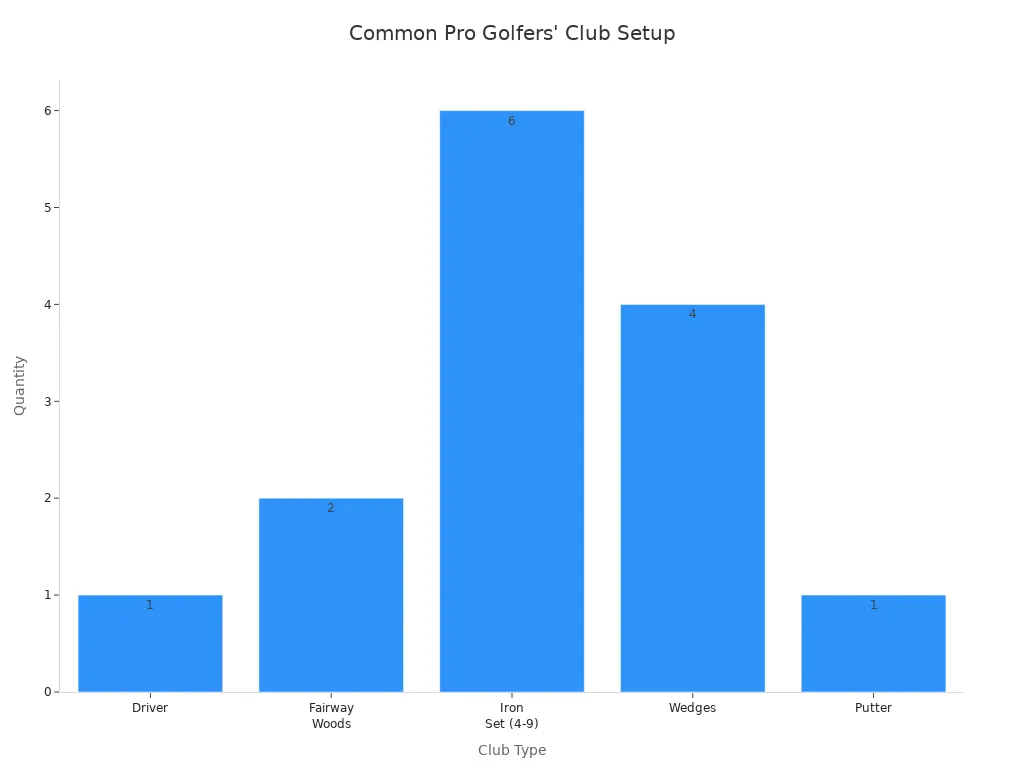
You might notice that this setup adds up to 14 clubs. This matches the rule for how many clubs in a golf bag you can carry. Each club serves a special purpose and helps you handle different situations on the course.
Driver
The driver is the longest club in your bag. You use it to hit the ball off the tee on long holes. The driver helps you get the most distance. Most golfers carry one driver. You want to practice with your driver to learn how to control your shots.
Tip: Choose a driver with a larger clubface if you are new to golf. This makes it easier to hit the ball.
Woods
Fairway woods help you hit long shots from the fairway or rough. Most golfers carry two woods, usually a 3-wood and a 5-wood. These clubs have bigger heads and longer shafts than irons. You use woods when you need distance but want more control than a driver.
- 3-wood: Good for long fairway shots.
- 5-wood: Useful for shorter fairway shots or tricky lies.
Hybrids
Hybrids combine features of woods and irons. They are easier to hit than long irons. Many golfers replace their 3-iron or 4-iron with a hybrid. Hybrids help you get the ball in the air and land softly on the green.
Note: If you struggle with long irons, try using a hybrid instead.
Irons
Irons make up the core of your golf bag. Most players carry six irons, from 4-iron to 9-iron. Irons help you hit shots from the fairway, rough, or even the tee on short holes. Each iron covers a different distance.
- 4-iron: Longest iron, good for long approach shots.
- 9-iron: Shortest iron, used for short approach shots.
Professional golfers often focus their practice on mid-irons. Amateurs tend to use all their irons evenly.
Wedges
Wedges help you with short shots around the green. Most golfers carry four wedges: pitching wedge, gap wedge, sand wedge, and lob wedge. Each wedge has a different loft, which changes how high and far the ball goes.
- Pitching wedge: Good for approach shots.
- Gap wedge: Fills the distance between pitching and sand wedge.
- Sand wedge: Helps you escape bunkers.
- Lob wedge: Useful for high, soft shots.
Tip: Practice with your wedges to improve your short game.
Putter
The putter is the most important club for finishing each hole. You use it on the green to roll the ball into the hole. Most golfers carry one putter. You want to choose a putter that feels comfortable in your hands.
- Blade putter: Simple design, good for straight putts.
- Mallet putter: Larger head, helps with alignment.
You can see that each club has a special job. When you select your clubs, think about your strengths and the courses you play most often. This helps you build a bag that matches your game.
Customizing
When you want to get the most out of your golf bag, customizing your club selection can make a big difference. You do not have to settle for the standard set. You can build a set that matches your swing, your body, and your playing style. Customizing your clubs helps you play better and enjoy the game more.
Golfers often choose custom clubs for several reasons. You might want more distance or better control. You may want to hit straighter shots or feel more comfortable during your swing. Custom clubs can help you achieve these goals. Here are some benefits you can expect:
- Enhanced distance and control: Custom clubs work with your natural swing speed. You can hit the ball farther and more consistently.
- Better shot accuracy: Clubs that fit your swing path help you hit more accurate shots.
- Consistent feel across the set: Clubs matched to your measurements give you the same feel with every swing.
- Reduced risk of injury: Properly fitted clubs lower the chance of strain or discomfort.
You can customize many parts of your golf clubs. Each part affects how the club feels and performs. Here are some options you can consider:
- Head style: Choose a head shape that matches your skill level and shot preference.
- Lie angle: Adjust the angle to fit your posture and swing.
- Club loft: Pick the right loft for your desired ball flight.
- Swing weight: Find a balance that feels comfortable in your hands.
- Grip size: Select a grip that fits your hand size.
- Grip material: Try different materials for better comfort or control.
- Shaft material: Choose between steel or graphite for weight and flexibility.
- Shaft length: Match the shaft length to your height and arm length.
- Set make-up: Decide which clubs to include based on your needs.
- Shaft flex: Pick a flex that suits your swing speed.
Tip: Visit a professional club fitter to get measured and tested. You can learn which club features work best for you.
Customizing your golf bag does not mean you need expensive equipment. You can start by changing one or two clubs. You might swap a long iron for a hybrid or try a new grip size. As you gain experience, you can adjust more parts of your set. You will notice improvements in your game and feel more confident on the course.
If you want to follow the rule of 14 clubs in a golf bag, customizing helps you make every club count. You can select clubs that fill gaps in your distances and suit your favorite shots. You can also remove clubs you rarely use. This way, your golf bag becomes a tool that supports your strengths and helps you play your best.
Customizing your club selection is a smart way to improve your golf experience. You get clubs that fit you, help you avoid injury, and make the game more enjoyable. You can start small and make changes as you learn more about your swing and your needs. Your golf bag should reflect your style and help you reach your goals on the course.
Golf Bags
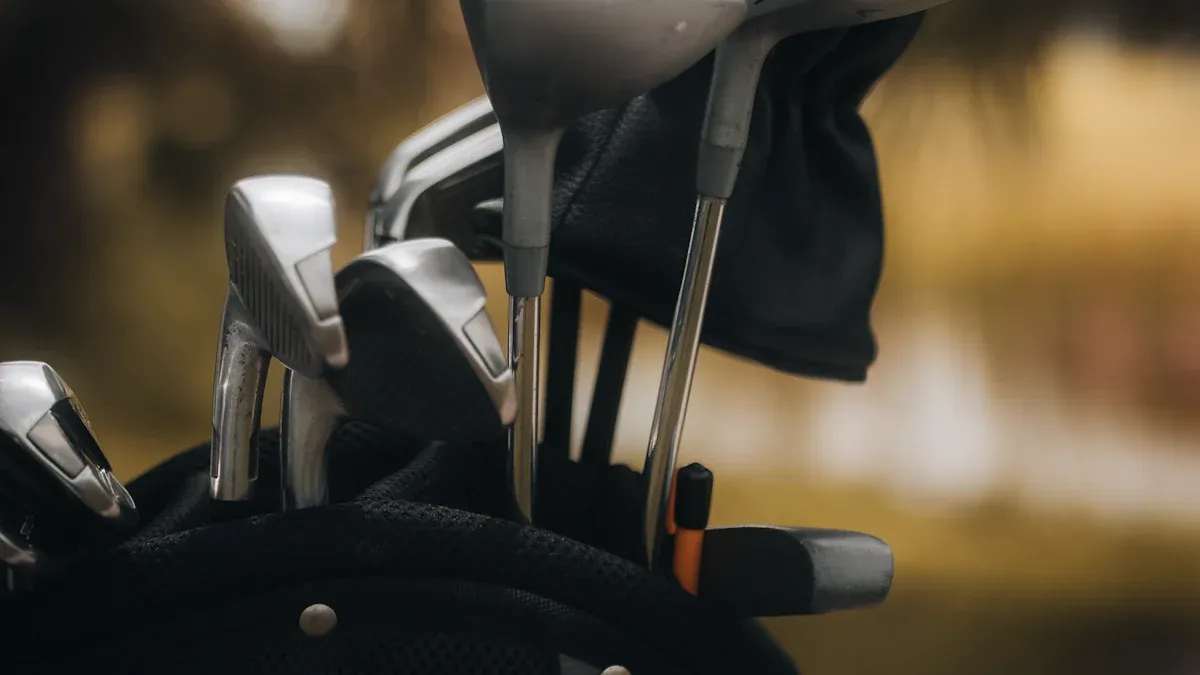
Types
When you choose a golf bag, you want one that fits your style and needs. Golf bags come in several main types, each with its own strengths. Here are the most common options you will find:
- Tour Bags: These bags offer the most space and premium features. You often see professional players use them. They are heavy but hold everything you need for a tournament.
- Pencil Bags: These bags are small and lightweight. They work well if you carry only a few clubs. Many juniors and seniors like pencil bags for their simplicity.
- Cart Bags: These bags are designed for use with golf carts. They have lots of pockets and extra space. Cart bags are heavier, so you usually do not carry them far.
- Carry Bags (Stand Bags): These are the most popular bags for everyday golfers. They are lightweight and have a retractable stand. You can carry them easily around the course.
Tip: If you walk the course, a carry bag or pencil bag keeps things light. If you ride in a cart, a cart bag gives you more storage.
Features
The right features in a golf bag make your round smoother and more enjoyable. You want a bag that helps you organize your clubs and gear. Here are some important features to look for:
- Organize your clubs by type for quick access.
- Look for designated pockets for balls, tees, gloves, and valuables.
- A systematic layout helps you find what you need fast and keeps your game moving.
Many bags offer different divider systems. A 14-way bag gives each club its own slot and full-length divider. This protects your clubs from damage and makes them easy to grab. A 6-way bag has fewer dividers, so it feels lighter and more compact, but you may need to stack some clubs together.
| Divider System | Club Protection | Weight | Organization Level |
|---|---|---|---|
| 14-way | High | Heavier | Excellent |
| 6-way | Moderate | Lighter | Good |
Note: If you want the best club protection, choose a 14-way divider. If you prefer a lighter bag, a 6-way divider may suit you better.
Organization
Good organization helps you play your best golf. When you know where every club sits, you save time and avoid mistakes. Most golfers use a simple system to arrange their clubs:
- Place your longest clubs—driver, fairway woods, and hybrids—in the top section of your bag.
- Put your mid-irons (3-iron through 7-iron) in the middle section.
- Store your short irons and wedges (8-iron, 9-iron, pitching wedge, sand wedge, lob wedge) in the bottom section.
- Use the putter well if your bag has one. If not, place your putter where you can reach it easily.
🏌️♂️ Keeping your clubs organized by section helps you follow the rule of 14 and makes every shot easier to plan.
You can also use the pockets for accessories. Keep balls, tees, and gloves in their own spots. This way, you spend less time searching and more time playing. A well-organized golf bag supports your game and helps you enjoy every round.
Custom Golf Bags
OEM/ODM
When you want a golf bag that truly fits your needs, you might look into OEM (Original Equipment Manufacturer) or ODM (Original Design Manufacturer) options. These services let you create a golf bag that matches your style, preferences, and even your brand if you want something unique. Many golfers choose custom golf bags because they want more than just a standard design. With OEM/ODM, you can select the features, colors, and materials that work best for you.
You can work with a manufacturer to design every detail. For example, you might want a special divider system to organize your clubs according to the rule of 14. You can add extra pockets for your range finder, gloves, or snacks. Some companies even let you add your name or logo to your bag. Custom golf bags help you stand out on the course and keep your equipment organized.
Tip: If you play in tournaments or travel often, a custom golf bag can make your experience smoother and more enjoyable.
Benefits
Custom golf bags offer many advantages over off-the-shelf options. You get to choose the features that matter most to you. This means your bag can match your playing style and personal needs. Here are some key benefits:
- Better Organization: You can design the bag with the right number of dividers and pockets. This helps you keep track of how many clubs in a golf bag you carry and makes it easy to find what you need.
- Comfort: You can select the strap style and padding that feel best for you. A comfortable bag makes walking the course much easier.
- Durability: Custom bags often use higher-quality materials. This means your bag can handle regular use and last longer.
- Personal Style: You can pick colors, logos, and designs that show off your personality or team spirit.
- Efficiency: With a bag built for your needs, you spend less time searching for clubs or accessories and more time focusing on your game.
A custom golf bag can help you follow the rule of 14 by giving each club its own place. You also get storage that fits your routine, whether you carry extra balls, rain gear, or snacks.
Choosing a Custom Bag
Selecting the right custom golf bag takes some thought. You want a bag that fits your equipment and your style of play. Here are important factors to consider:
- Bag type
- Weight
- Size
- Storage options
- Durability
- Dividers
- Pockets
- Straps
- Style
- Price
Think about how much equipment you carry. If you bring a range finder, extra gloves, or rain gear, you need a bag with enough pockets. More storage can add weight, so balance your need for space with comfort. Look for a bag that feels good to carry and stands up to regular use.
You should also consider how you organize your clubs. A bag with the right divider system helps you keep track of your clubs and follow the rule of 14. Choose a style that matches your personality, and set a budget that works for you.
Note: A well-chosen custom golf bag can make every round more enjoyable and help you play your best.
You now know the rule: you can carry up to 14 clubs in your golf bag. This helps you play fair and make smart choices on the course. Organize your clubs, pick the ones that fit your style, and keep your bag tidy for every round.
- Count your clubs before you play.
- Choose clubs that match your skill level.
- Try custom golf bags for better organization.
We support golfers with OEM/ODM custom golf bags. If you want a bag designed for your needs, contact us to learn more!
FAQ
How many clubs can you have in a golf bag?
You can carry up to 14 clubs in your golf bag. This rule, called the “rule of 14,” helps keep the game fair for everyone. You can choose fewer clubs if you want.
What happens if you carry more than 14 clubs?
If you carry more than 14 clubs, you get a penalty. In stroke play, you get two penalty strokes for each hole, up to four strokes. In match play, you lose up to two holes.
Can you use any type of club in your bag?
Yes, you can use any type of club as long as it follows the official equipment rules. You can mix drivers, woods, irons, hybrids, wedges, and a putter to fit your game.
Do beginners need all 14 clubs?
No, beginners do not need all 14 clubs. You can start with fewer clubs, like a driver, a few irons, a wedge, and a putter. This makes learning the game easier and less confusing.
What is the best way to organize clubs in a golf bag?
You should place your longest clubs at the top, mid-irons in the middle, and wedges and putter at the bottom. This setup helps you find each club quickly and keeps your bag balanced.
Are there different types of golf bags?
Yes! You can choose from tour bags, cart bags, carry bags, and pencil bags. Each type has different features. Pick one that matches how you play and how many clubs you carry.
Why should you consider a custom golf bag?
A custom golf bag lets you choose the features, colors, and dividers you want. You can organize your clubs better and show off your style. Custom golf bags also help you follow the rule of 14 more easily.
Can you change clubs during a round?
No, you cannot add new clubs during a round. You must finish with the clubs you started with. If a club breaks by accident, you can repair it, but you cannot replace it.