
Introduction
Foldable shopping bags are designed around a simple idea:
A full-size reusable bag should become small enough to carry when it is not in use.
The fabric matters, but the folding structure often determines whether users actually find the bag convenient.
Common designs include:
- Built-in pouch
- Elastic strap
- Button closure
- Zip-fold construction
All four can make a shopping bag compact, but they create different trade-offs in:
- Folding speed
- Packed size
- Production cost
- Durability
- Appearance
- Ease of use
For B2B buyers, the best design depends on how the bag will be distributed and used.
A supermarket giveaway, travel accessory and premium retail reusable bag do not necessarily need the same folding system.
Quick Comparison
| Design | Folding Speed | Compactness | Cost | Durability | User Experience | Typical Use |
|---|---|---|---|---|---|---|
| Built-In Pouch | Medium | Excellent | Medium | Very good | Organized | Retail, travel, premium promotions |
| Elastic Strap | Fast | Good | Low | Good | Very simple | Grocery, promotional, everyday use |
| Button Closure | Medium | Good | Low to medium | Good | Familiar | Retail, gifts, promotional programs |
| Zip-Fold | Slower | Excellent | Higher | Very good | Neat and secure | Premium retail, travel, branded merchandise |
1. Built-In Pouch Design
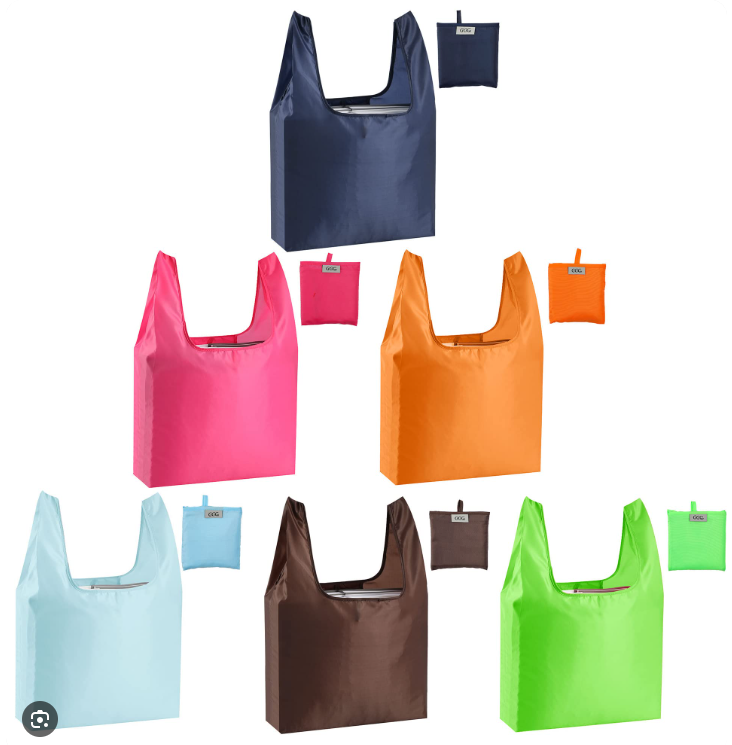
A built-in pouch is one of the most common foldable shopping bag structures.
The bag includes a small pocket or pouch attached directly to the body.
After use, the shopping bag is folded and pushed into the pouch.
The pouch then becomes the outer package.
How a Built-In Pouch Works
A typical process is:
- Flatten the shopping bag.
- Fold the sides inward.
- Fold the bag toward the attached pouch.
- Turn or push the bag into the pouch.
- Close the pouch if a zipper or flap is included.
The pouch may be:
- Sewn into the inside of the bag
- Attached near the bottom
- Integrated into a pocket
- Positioned between the handles
Advantages of a Built-In Pouch
Very Compact
The pouch controls the final packed shape.
This helps create a product that fits easily into:
Difficult to Lose
Because the pouch is attached to the bag, users are less likely to lose the storage case.
Good Branding Area
The pouch itself can carry:
- Logo
- Small print
- Label
This creates visibility even when the bag is folded.
Neat Appearance
The folded product looks organized and ready for retail display.
Limitations of a Built-In Pouch
The user has to fold the bag reasonably neatly.
If the folds are too large, the bag may be difficult to push into the pouch.
Production is also more complex than a simple elastic strap because the manufacturer must add:
- Extra fabric
- Additional sewing
- Pouch construction
The cost difference is usually modest but becomes relevant for very large promotional orders.
Best Applications for Built-In Pouch Bags
This design works particularly well for:
It is a strong choice when compactness and presentation are both important.
2. Elastic Strap Design
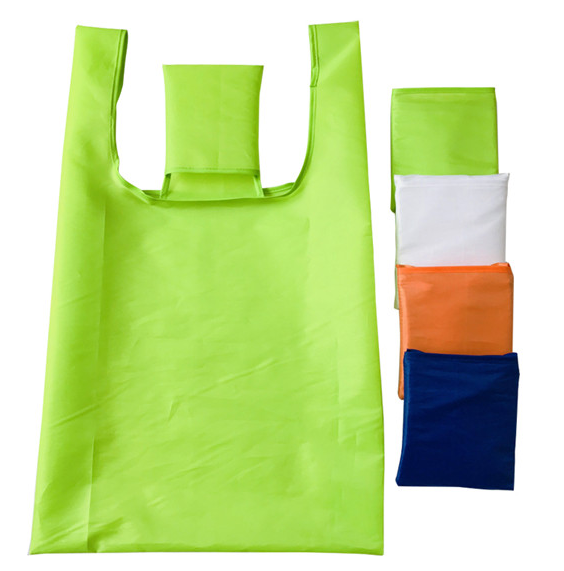
An elastic strap is one of the simplest folding systems.
A short elastic loop or band is sewn to the bag.
The user folds or rolls the bag and stretches the elastic around it.
How an Elastic Fold Works
The process is usually:
- Flatten the bag.
- Fold or roll it.
- Pull the elastic around the folded bag.
There is no separate pouch.
This makes the design extremely simple.
Advantages of Elastic Closure
Very Fast
The user does not need to fit the bag into a specific pocket.
The bag can often be rolled rather than precisely folded.
Low Cost
The design requires only:
- Elastic
- Small attachment seam
This makes it suitable for:
- Large promotions
- Supermarket programs
- Low-cost reusable bags
Low Additional Weight
Very little extra material is added.
This is useful for ultralight foldable shopping bags.
Limitations of Elastic Closure
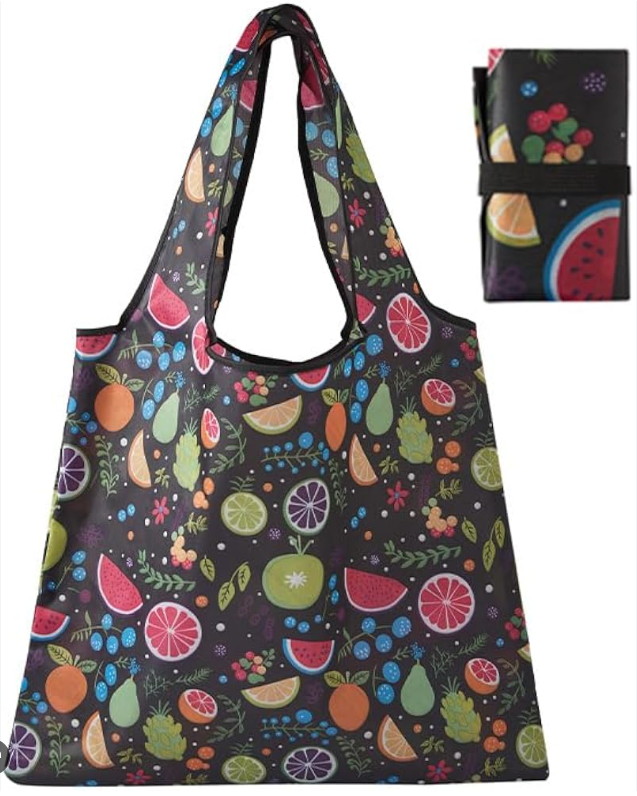
Elastic can lose tension after repeated use.
Performance depends on:
- Elastic quality
- Width
- Stretch recovery
- Stitching
Low-quality elastic may:
- Stretch permanently
- Break
- Detach
The folded shape may also be less neat than a pouch or zip-fold design.
Best Applications for Elastic Fold Bags
Elastic is especially suitable for:
- Everyday grocery bags
- Mass promotional programs
- Lightweight travel bags
- Simple reusable shopping bags
It works well when the main priorities are:
speed + low cost + simplicity
3. Button Closure Design
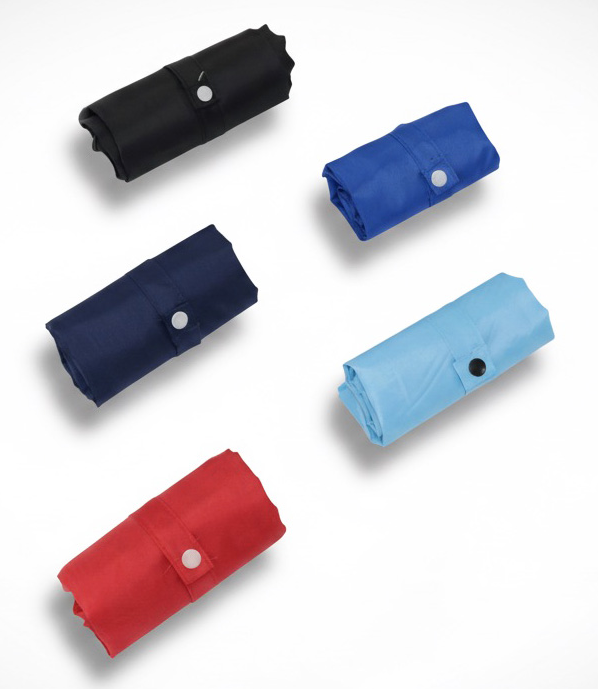
Button-fold bags use a button or snap to keep the folded bag closed.
Common closure options include:
- Plastic snap button
- Metal snap
- Loop and button
- Webbing tab with snap
The bag is folded into a compact rectangle and secured with the closure.
Advantages of Button Closure
Simple User Experience
Most users immediately understand how to operate a button closure.
Neat Folded Shape
A fixed button position encourages the bag to fold into a relatively consistent shape.
Low Additional Cost
The system is more structured than elastic but still relatively economical.
Good Retail Appearance
The closure can contribute to a cleaner folded presentation.
Limitations of Button Closure
The bag usually needs to be folded in a specific way so the button aligns correctly.
If the user folds the bag incorrectly, the closure may not reach.
The button also creates a local stress point.
Poor construction can cause:
- Snap tearing out
- Fabric damage
- Loose attachment
For thin materials, reinforcement around the button may be useful.
Plastic Snap vs Metal Snap
Plastic Snap
Advantages:
- Lightweight
- Lower cost
- Rust-free
Suitable for:
Metal Snap
Advantages:
- More premium feel
- Stronger visual appearance
Suitable for:
- Retail products
- Premium merchandise
However, metal snaps add:
- Cost
- Weight
and may not be necessary for basic foldable bags.
Best Applications for Button-Fold Bags
Button closures work well for:
- Retail reusable bags
- Corporate gifts
- Promotional programs
- Fashion-oriented shopping bags
They offer a useful middle ground between simple elastic and more complex zip-fold construction.
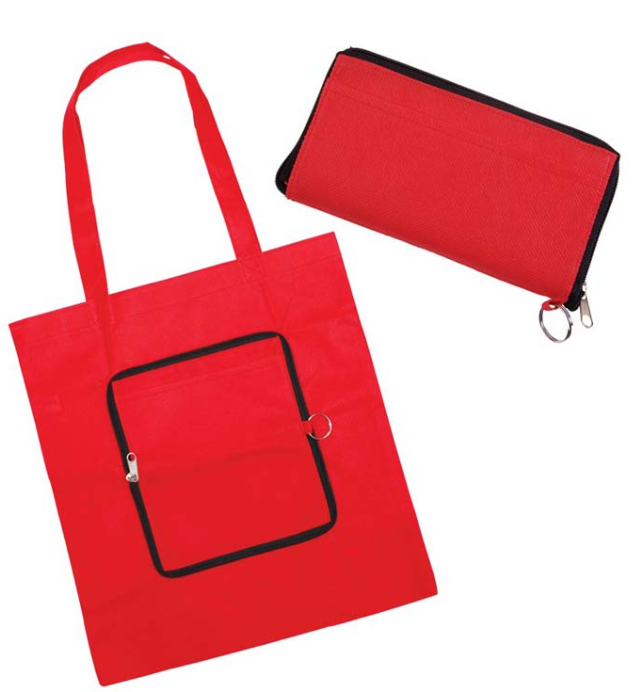
4. Zip-Fold Design
Zip-fold bags use a zipper to turn part of the bag into a storage case.
The folding section may be built into:
- Front pocket
- Bottom panel
- Internal pocket
Once folded, the zipper closes around the packed bag.
This often creates the most secure and polished folded form.
How Zip-Fold Bags Work
A typical sequence is:
- Flatten the bag.
- Fold the body toward the integrated pocket.
- Turn the pocket around the folded bag.
- Close the zipper.
Some designs use a two-sided zipper so the same zipper functions differently when the bag is:
- Open
- Folded
This requires more careful pattern development.
Advantages of Zip-Fold Construction
Secure Closure
The bag remains contained inside the folded package.
Clean Retail Presentation
The folded product can look almost like:
- Small pouch
- Wallet
- Travel accessory
Good Protection
The zipper helps keep the folded bag organized inside another bag.
Strong Premium Positioning
Zip-fold designs often feel more developed than simple strap systems.
Limitations of Zip-Fold Construction
This is usually the most complex option.
It requires:
- Zipper
- Extra sewing
- Accurate folding pattern
- More production operations
This increases:
- Cost
- Sample development
- Production time
The zipper can also become a failure point if quality is low.
Best Applications for Zip-Fold Bags
Zip-fold structures are particularly suitable for:
- Premium reusable bags
- Travel products
- Airline or hotel merchandise
- Fashion retail
- Higher-value corporate gifts
They make more sense when the folded product itself is part of the buyer experience.
Compactness: Which Design Folds Smallest?
Both pouch and zip-fold designs can achieve very compact results.
However, the actual folded size depends heavily on:
- Fabric thickness
- Bag dimensions
- Handles
- Gussets
- Reinforcement
For example, a lightweight nylon pouch bag may fold much smaller than a thick laminated shopping bag with a zipper system.
The closure method alone does not determine compactness.
Which Design Is Fastest to Fold?
In general:
Elastic strap is usually the fastest.
The user can often simply:
- Fold
- Roll
- Wrap the elastic
A button system usually requires slightly more alignment.
A pouch requires more controlled folding.
Zip-fold normally takes the most steps.
For grocery shoppers who repeatedly open and close the bag, folding speed can be an important usability factor.
Which Design Looks Most Premium?
Zip-fold and built-in pouch designs usually provide the cleanest retail presentation.
A folded pouch can look like a complete small accessory rather than simply a compressed bag.
Button closures can also look polished when:
- Snap placement is clean
- Folding is symmetrical
Elastic is usually the most functional rather than premium-looking option.
Which Design Is Cheapest?
For equivalent bag materials and sizes, the general production-cost order is often:
Elastic → Button → Pouch → Zip-Fold
However, this is not a fixed pricing rule.
Actual cost depends on:
- Closure quality
- Pouch size
- Zipper
- Fabric
- Order quantity
For example, a premium metal snap can cost more than a very simple pouch construction.
Which Design Is Most Durable?
Durability depends primarily on the weakest component.
Pouch
Usually durable because the storage component is fabric-based.
Main risks:
- Pouch seam failure
- Excessive stuffing
Elastic
Main risk:
- Loss of elasticity
Button
Main risk:
- Closure detachment
- Fabric tearing around attachment
Zip-Fold
Main risk:
- Zipper failure
- Stitching around zipper
A simple structure is not always less durable.
Good components and reinforcement matter more.
Fabric Choice Affects Folding Design
Different folding systems work better with different fabrics.
Common foldable bag materials include:
- Nylon
- Polyester
- RPET polyester
Very lightweight fabrics are easier to use with:
- Pouches
- Elastic
Slightly more structured fabrics can work well with:
- Button closure
- Zip-fold systems
Heavy fabrics may become too bulky regardless of the closure method.
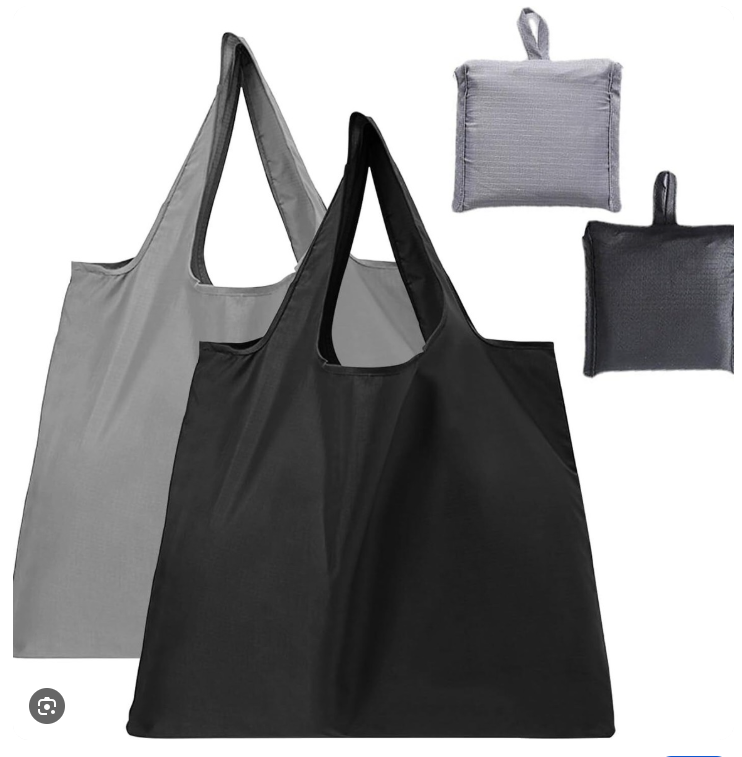
Pouch Design with Nylon
Lightweight nylon works particularly well with built-in pouch construction.
Advantages include:
- Low volume
- Soft folding
- Strong strength-to-weight performance
This combination is common for:
- Travel bags
- Pocket shopping bags
Pouch Design with RPET
Lightweight RPET can also work well with a built-in pouch.
It is particularly useful for:
- Retail sustainability programs
- Promotional programs using recycled material
Buyers should verify that the fabric is light enough to fold comfortably into the pouch.
Elastic Design with Lightweight Polyester
This is one of the most economical structures.
A typical specification might use:
- 190T polyester
- Small elastic loop
The final product can be:
- Lightweight
- Cheap
- Easy to distribute
This is appropriate for very large promotional orders.
Button Design with RPET
A button closure can create a cleaner retail-oriented folded shape.
For example:
Lightweight RPET bag + sewn tab + snap button
This works well for:
- Supermarket merchandise
- Eco campaigns
- Corporate gifting
Zip-Fold with Nylon or Polyester
Zip-fold designs need a material that can tolerate repeated folding around the zipper construction.
Lightweight:
- Nylon
- Polyester
- RPET polyester
can all work.
The fabric should not be so thick that the zipper becomes difficult to close.
Does the Storage System Reduce Bag Capacity?
Usually only slightly.
However, integrated pockets and zipper sections consume some material and internal space.
A large pouch may create:
- Extra seam
- Local bulk
This is usually minor for foldable shopping bags, but it should still be considered during development.
Built-In Pouch vs Separate Pouch
Some foldable bags come with a completely separate pouch.
This can create a cleaner shopping bag structure.
However, the pouch can easily be:
- Lost
- Forgotten
For this reason, an attached pouch is generally more practical for everyday use.
A separate pouch makes more sense when the pouch has a second function, such as:
- Coin purse
- Accessory pouch
- Key holder
Elastic Loop vs Elastic Band
There are several elastic configurations.
Small Loop
Simple and lightweight.
Best for:
- Small folded bags
Wide Elastic Band
Provides stronger compression.
Best for:
- Slightly bulkier bags
The elastic should not be too tight because excessive tension can distort the folded bag.
Button Position Matters
For button-fold bags, the closure position determines the folding sequence.
If placed incorrectly, users may struggle to align the bag.
During sampling, buyers should test:
- Number of folds
- Button alignment
- Final folded size
A visually clean closure can still create poor usability if the folding process is awkward.
Zipper Direction Matters
In zip-fold designs, zipper direction affects ease of operation.
Important considerations include:
- Where the zipper starts
- Whether the zipper can catch folded fabric
- Whether the puller is accessible when folded
This is one reason zip-fold products usually require more sample development than elastic or button designs.
Branding on Foldable Bags
The folding system changes where branding is visible.
Built-In Pouch
The folded pouch can carry a small logo.
This gives the brand visibility even when the bag is stored.
Elastic
The main logo is generally hidden once the bag is folded.
Button
The folded surface can be designed so the logo remains visible.
Zip-Fold
The outer folded pocket can provide a strong branding area.
For retail merchandise, this may influence which design is selected.
Packaging Considerations
Foldable bags already reduce product volume.
This helps with:
- Carton efficiency
- Retail display
- Freight
The folding method can further influence packing.
Pouch and zip-fold designs usually produce:
- More consistent folded dimensions
Elastic systems may create:
- Slightly less consistent shapes
For retail boxes or display trays, consistent folded size can be useful.
Best Design for Supermarket Programs
For supermarkets, common priorities include:
- Cost
- Fast use
- Reusability
Good options include:
Elastic Strap
Best when low cost and fast folding matter.
Built-In Pouch
Better when the supermarket wants a more finished retail product.
Best Design for Promotional Programs
For mass giveaways, elastic and button designs are often practical.
They offer:
- Simple construction
- Lower cost
- Easy branding
Pouch construction may be justified for higher-value corporate gifts.
Best Design for Travel
Travel users often carry foldable bags inside:
- Suitcases
- Handbags
- Backpacks
For this reason, built-in pouch and zip-fold designs are strong options.
They keep the bag:
- Compact
- Organized
- Protected
Best Design for Retail Merchandise
Retail buyers may prioritize:
- Appearance
- Branding
- Perceived value
Built-in pouch and zip-fold designs usually provide stronger presentation.
The product can feel like a small reusable accessory rather than a basic giveaway.
Practical Specification Examples
Promotional Foldable Shopping Bag
Material: Lightweight polyester
Folding System: Elastic loop
Priority: Low cost + fast folding
Supermarket Reusable Bag
Material: Lightweight RPET
Folding System: Button closure
Priority: Reusable function + simple retail presentation
Travel Foldable Bag
Material: Lightweight nylon
Folding System: Built-in pouch
Priority: Compact size + low weight
Premium Retail Foldable Bag
Material: RPET or nylon
Folding System: Zip-fold pocket
Priority: Premium presentation + secure storage
What Should Buyers Check During Sampling?
Foldable bags should be tested in both:
- Open condition
- Folded condition
Important checks include:
Folding Time
Can a first-time user fold the bag without instructions?
Folded Size
Is the packed size appropriate for the intended use?
Closure
Does the:
- Elastic
- Button
- Zipper
work without excessive force?
Repeated Folding
Fold and unfold the sample repeatedly.
Check:
- Elastic recovery
- Button attachment
- Zipper operation
- Pouch seams
Bag Function
The folding feature should not reduce the strength of the main shopping bag.
Common Buyer Mistakes
1. Choosing the Smallest Possible Pouch
If the pouch is too tight, users may struggle to repack the bag.
2. Using Low-Quality Elastic
The product may work well initially but become loose after repeated use.
3. Placing the Button Without Testing the Folding Sequence
This can create an awkward product.
4. Using a Heavy Zipper on an Ultralight Bag
The closure can become disproportionately heavy and expensive.
5. Prioritizing Compactness Over Usability
A bag that folds extremely small but takes too long to repack may not be convenient in everyday shopping.
Which Foldable Shopping Bag Design Should Buyers Choose?
Choose a built-in pouch when:
- Compactness matters
- Organized storage is important
- A cleaner retail appearance is required
- The bag is used for travel or frequent daily carry
Choose an elastic strap when:
- Cost is important
- Fast folding matters
- The project is promotional or high-volume
Choose a button closure when:
- A structured folded shape is preferred
- Cost needs to remain moderate
- The product is for retail or corporate gifts
Choose a zip-fold design when:
- Premium presentation matters
- The folded bag needs to stay securely closed
- Higher development and production cost is acceptable
Custom Foldable Shopping Bags from INITI
INITI develops foldable shopping bags for:
- Retail brands
- Supermarkets
- Travel programs
- Promotional companies
- Corporate gifts
Material options can include:
- Nylon
- Polyester
- RPET polyester
Foldable structures can include:
- Built-in pouch
- Elastic closure
- Button closure
- Zip-fold pocket
Customization can include:
- Bag dimensions
- Folding size
- Handle structure
- Gussets
- Logo printing
- Pouch size
- Closure type
- Packaging
For product development, buyers can provide:
- Intended application
- Target quantity
- Preferred material
- Required folded size
- Branding requirements
- Target price
If the folding structure is not finalized, different closure options can be sampled and compared before bulk production.
FAQ
What is the easiest foldable shopping bag design to use?
Elastic closure is usually the fastest and simplest because the user can fold or roll the bag and secure it with the elastic.
Which folding design is most compact?
Built-in pouch and zip-fold designs can create very compact and consistent folded shapes, although fabric thickness has a major influence.
Which foldable bag design is cheapest?
Elastic systems are generally the most economical because they use very few additional components.
Which design is best for travel?
Built-in pouch designs are especially practical because they remain compact and organized inside luggage or handbags.
Are zip-fold shopping bags more durable?
Not automatically. They can be durable, but zipper quality and construction become additional failure points.
Can RPET be used for foldable shopping bags?
Yes. Lightweight RPET polyester is commonly suitable for pouch, elastic, button and zip-fold designs.
Can the pouch be used as an internal pocket when the bag is open?
Yes. Many built-in pouch designs are developed so the storage pouch also functions as an internal pocket during use.
Which design is best for supermarket promotions?
Elastic or button closures are often suitable for cost-sensitive programs, while built-in pouches provide a more polished product.
Conclusion
The folding system changes how a reusable shopping bag feels before and after use.
The four common structures serve different priorities:
Built-In Pouch
Best for:
- Compactness
- Travel
- Organized storage
- Retail presentation
Elastic Strap
Best for:
- Low cost
- Fast folding
- High-volume promotions
Button Closure
Best for:
- Simple operation
- Moderate cost
- Structured folded appearance
Zip-Fold
Best for:
- Premium presentation
- Secure closure
- Retail merchandise
For buyers, the most important comparison is not simply:
Which design folds the smallest?
A better question is:
Which design gives the right balance of folding speed, compactness, cost and durability for the target user?
For mass promotional programs, a simple elastic closure may be the most practical solution.
For travel or premium retail programs, a built-in pouch or zip-fold structure may provide a better user experience and stronger perceived value.
The folding system should therefore be selected together with:
fabric weight + bag size + branding + target price
rather than treated as a decorative feature added at the end of development.


