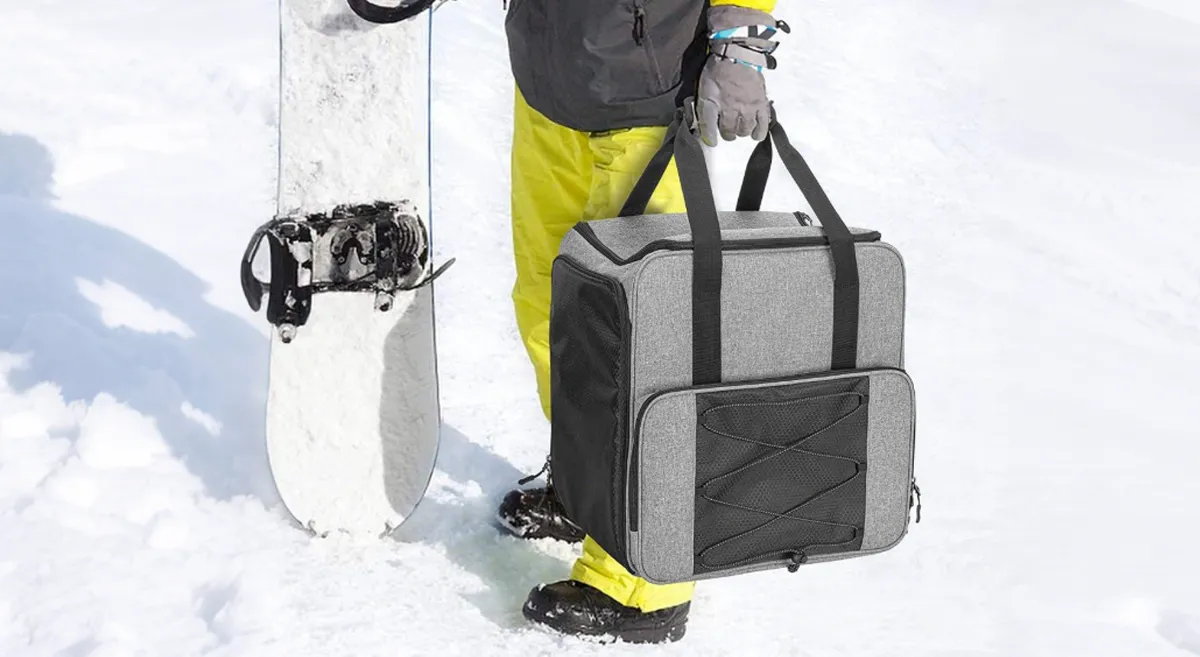
You probably wonder, does a ski bag and boot bag count as one when you check in at the airport. Most major airlines let you check both as a single item if you follow their weight and packing rules. Airlines charge extra fees for bags that are too heavy or too large. Take a look at some typical fees:
| Condition | Fee (USD) |
|---|---|
| Oversized (over 80 inches) | $75 |
| Overweight (18-32 kg) | $50 |
| Bags (71-100 pounds) | $75 |
If you try to sneak extra clothes or gear into your bags, you might pay more. Always bring your boots and important clothing on board to avoid lost luggage.
Key Takeaways
- Most big airlines let you check a ski bag and a boot bag as one item if you follow their weight and packing rules.
- Keep both bags together under 50 pounds to avoid extra fees.
- Always look at your airline’s rules before you pack, because rules can be different.
- Only put ski equipment in your ski and boot bags.
- If you add clothes or other things, you might have to pay more.
- Weigh and measure your bags at home so you do not get surprised at the airport.
- You can bring your helmet in your carry-on to stay safe and save space in your checked bags.
- If your bags are too big or heavy, you will have to pay extra fees, and these can cost a lot.
- You can also think about shipping your gear or renting equipment at your destination to make travel easier.
Does a ski bag and boot bag count as one?
Typical Airline Rules
You might ask, does a ski bag and boot bag count as one when you fly? Most major airlines say yes. They let you check both bags together as one checked item if you follow their rules. This means you can bring your skis and boots without paying for two separate bags. You just need to make sure you pack only your ski gear in these bags. If you try to sneak in extra clothes or other items, the airline might charge you extra fees.
Tip: Always check your airline’s website before you pack. Some airlines have small differences in their rules.
Weight and Size Limits
Airlines want your ski bag and boot bag to stay under certain weight and size limits. If you go over, you pay more. Most airlines set the combined weight limit at 50 pounds (23 kg). The size limit can change depending on the airline, but it usually falls between 115 inches (292 cm) and 118 inches (300 cm) when you add up the length, width, and height. Here’s a quick look at what you might see:
| Airline Policy | Weight Limit | Size Limit |
|---|---|---|
| Major Airlines | 50 pounds (23 kg) | 115 inches linear (292 cm) |
| Economy Class | 23 kg (50 lb) | 300 cm (118 in) |
| Business Class | 32 kg (70 lb) | 300 cm (118 in) |
| Various Airlines | 50 pounds (23 kg) | 79 inches (220 cm) |
| Various Airlines | N/A | 62 inches (158 cm) |
If you keep your ski bag and boot bag under these limits, you should not have any problems. Always weigh your bags at home before you leave. This helps you avoid surprises at the airport.
Packing Restrictions
You need to follow some packing rules if you want the answer to “does a ski bag and boot bag count as one” to stay yes. Airlines want you to pack only your skis, poles, and boots in these bags. Some airlines allow a helmet or a small accessory, but most do not want you to add clothes or other gear. If you try to hide extra items, the airline staff might notice. They could charge you extra or even make you repack your bags.
Note: If you are not sure what you can pack, call your airline before your trip. It is better to ask than to pay extra fees later.
So, does a ski bag and boot bag count as one? For most airlines, yes—if you follow their rules. Keep your bags under the weight and size limits, and only pack ski equipment. This way, you can travel with your gear and avoid extra charges.
U.S. Airline Policies
Delta Air Lines
Delta Air Lines makes it pretty easy for you to travel with your ski gear. You can check one ski bag and one boot bag as a single item. Delta’s policies say you must pack only your skis, poles, and boots in these bags. If you add extra stuff, you might pay more. The combined weight of both bags should not go over 50 pounds. If your bags weigh more, Delta will charge you an overweight fee. You should measure your bags before you leave home. Delta allows you to bring one set of checked ski equipment per passenger. You can find more details on their website, but most travelers find Delta’s rules clear and simple.
Tip: Delta recommends you pack your boots in a separate boot bag for better protection. You can carry your helmet in your carry-on if you want.
United Airlines
United Airlines also lets you check a ski bag and a boot bag as one item. Their policies look a lot like Delta’s. You need to keep the combined weight under 50 pounds. If you go over, United will charge you extra. United wants you to pack only ski equipment in these bags. If you try to sneak in clothes or other gear, you might pay more. United’s size limit for checked ski equipment is 62 linear inches for each bag, but they often make exceptions for sports gear. You should check United’s website before you fly, because their rules sometimes change.
Here’s a quick table to compare Delta and United:
| Airline | Bags Counted as One | Weight Limit | Size Limit |
|---|---|---|---|
| Delta | Yes | 50 lbs | 115 linear inches |
| United | Yes | 50 lbs | 62 linear inches* |
*United often allows larger bags for sports equipment.
American Airlines
American Airlines has some special rules for ski bags and boot bags. You can check both as one item, but you need to follow their policies closely. If your checked bag with skis goes over 50 pounds and you add extra items, American will count it as two checked bags instead of just one overweight bag. That means you pay more. You should only pack your skis, poles, and boots. American Airlines does not let elite status customers use their extra baggage allowance for sports equipment. Even if you have ConciergeKey or Executive Platinum status, you still need to follow the same rules for ski gear.
- If your ski bag and boot bag together weigh more than 50 pounds, you pay for two bags.
- Only ski equipment should go in these bags.
- Elite status does not help with sports gear fees.
Note: Always check American’s website before you travel. Their policies can change, and you do not want surprises at the airport.
You can see that each airline has its own way of handling ski bags and boot bags. You should read the policies before you pack. This helps you avoid extra fees and makes your trip smoother.
Southwest Airlines
If you fly with Southwest Airlines, you get a pretty sweet deal for your ski trip. You can check your ski bag and boot bag as part of your regular baggage allowance. Southwest gives you two checked bags for free. That means you can bring your ski gear without worrying about extra fees, as long as you follow their rules.
Here’s what you need to know:
- You can check your ski bag and boot bag together as one item.
- Both bags must stay under 50 pounds each.
- Each bag should not be bigger than 62 inches when you add up the length, width, and height.
- If your bags fit these limits, you pay nothing extra.
Southwest makes it easy for you to travel with your ski gear. You don’t have to pay for oversized bags if you keep them within the size and weight limits. If you pack only your skis, boots, and poles, you should be fine. You can also bring your helmet, but it’s best to pack it in your carry-on to keep it safe.
Tip: Always weigh your bags at home before you leave. This helps you avoid surprises at the airport.
If you go over the weight or size limit, Southwest will charge you a fee. So, keep your packing simple. Don’t try to sneak in extra clothes or gear. Stick to ski equipment, and you’ll save money.
Southwest stands out because you get two free checked bags. Most other airlines charge for checked bags, so this can save you a lot. If you travel with family or friends, everyone gets the same deal. You can focus on your trip, not on baggage fees.
Alaska Airlines
Alaska Airlines also treats skiers well. You can check your ski bag and boot bag as one piece of equipment. Alaska waives oversize fees for ski gear, which means you don’t pay extra if your bags are a little bigger than usual. You just need to keep the combined weight under 50 pounds.
Here’s a quick look at Alaska Airlines’ ski baggage rules:
| Airline | Basic Policy | Weight Limit | Size Restrictions | Special Considerations | Fees |
|---|---|---|---|---|---|
| Alaska Airlines | Waives oversize fees for ski equipment | 50 lbs (23 kg) | Bags over 115 inches get oversize fees | Defines “one piece” as ski bag AND boot/helmet bag Fee exceptions for Mileage Plan members and Alaska Visa cardholders Special allowances for travel within Alaska | Standard checked baggage fees (from $35) No oversize fees for ski equipment under 50 lbs |
Alaska lets you pack your skis, boots, and helmet together. You can use a separate boot or helmet bag, and it still counts as one checked item. If you have Alaska’s Mileage Plan or their Visa card, you might get extra fee waivers. If you travel within Alaska, you get even more special allowances.
Note: Alaska Airlines does not charge oversize fees for ski equipment under 50 pounds. You only pay the regular checked bag fee, which starts at $35.
If your bags go over 50 pounds, you pay an overweight fee. If your bags are longer than 115 inches, you pay an oversize fee, unless it’s ski equipment. Alaska makes it easy for you to bring your gear, so you can focus on your adventure.
Both Southwest and Alaska Airlines give you great options for traveling with ski equipment. You just need to follow their rules, keep your bags under the limits, and pack only ski gear. This way, you avoid extra charges and enjoy your trip.
International Airline Rules
Lufthansa
If you fly with Lufthansa, you get some nice perks for your ski trip. Lufthansa lets you check one ski bag and one boot bag together as one item on most international routes. You do not pay extra for this if you follow their rules. You need to pack only your skis, poles, and boots in these bags. If you travel on a non-U.S. route, you get one set of ski equipment for free. On U.S. routes, Lufthansa counts your ski gear as regular checked baggage. You might pay a fee if you go over your baggage allowance.
Here’s a quick look at Lufthansa’s ski equipment policy:
| Route Type | Ski Equipment Policy |
|---|---|
| Non-U.S. Routes | One ski equipment item (ski/snowboard bag + boot bag) free |
| U.S. Routes | Counts as normal checked baggage |
Tip: Always check your ticket for baggage allowance. If you fly economy, you usually get one free checked bag. If you bring ski gear on a U.S. route, it uses up your free bag allowance.
Lufthansa wants you to keep your bags under 23 kg (50 lbs). If you go over, you pay an overweight fee. You should not pack extra clothes or gear in your ski bags. Stick to ski equipment, and you will avoid extra charges.
British Airways
British Airways also makes it easy for you to travel with ski gear. You can check one ski bag and one boot bag as one item. British Airways lets you include your ski equipment as part of your checked baggage allowance. You do not pay extra if you stay within your weight limit. The airline sets the weight limit at 23 kg (50 lbs) for economy class. If you travel in business class, you get a higher limit.
You need to pack only your skis, poles, and boots in your bags. If you add other items, British Airways might charge you extra. The airline does not allow you to use your sports equipment allowance for other gear. You should weigh your bags before you leave home.
- One ski bag and one boot bag count as one checked item.
- Weight limit is 23 kg (50 lbs) for economy.
- Only ski equipment allowed in these bags.
Note: British Airways recommends you pack your helmet in your carry-on for safety.
Air Canada
Air Canada welcomes skiers with clear rules. You can check one ski bag and one boot bag as one item. Air Canada includes your ski equipment in your regular checked baggage allowance. You do not pay extra if you follow the rules. The combined weight of both bags must stay under 23 kg (50 lbs). If you go over, Air Canada charges an overweight fee.
You should pack only your skis, poles, and boots in these bags. Air Canada does not allow extra clothing or gear. If you try to sneak in other items, you might pay more. The airline wants you to keep your bags simple.
- Ski bag and boot bag count as one checked item.
- Weight limit is 23 kg (50 lbs).
- Only ski equipment allowed.
Tip: Always check Air Canada’s website before you travel. Rules can change, and you want to avoid surprises.
If you follow these rules, you can travel with your ski gear easily. You save money and avoid stress at the airport.
Other Carriers
When you travel with airlines outside the big names like Lufthansa, British Airways, or Air Canada, you might wonder if the rules change. The answer is yes, sometimes they do. Each airline sets its own policy for ski and boot bags. You need to check before you fly, but you can spot some common patterns.
Most international carriers treat your ski bag and boot bag as one checked item. This sounds great, but you still need to watch the weight and size. If you go over the limit, you pay extra. Some airlines have stricter rules than others. For example, Frontier counts your ski bag and boot bag as one piece, but if your ski bag weighs more than 25 pounds, you pay an extra fee. Spirit Airlines looks at the size first. If your bag is longer than 62 inches, you pay an oversized fee, no matter what is inside.
Here’s a quick look at how some other carriers handle ski and boot bags:
| Airline | Policy Description | Fees/Weight Limit |
|---|---|---|
| Frontier | Ski bag and boot bag count as one piece; ski bag over 25 lbs incurs extra fee. | Additional bag fee for overweight. |
| Spirit | All bags over 62 inches are considered oversized. | Oversized bag fees apply. |
| United | Allows checking ski bag and boot bag as a set; part of checked bag allowance. | $35-$40 for additional checked bag. |
| American | Same as United. | $35-$40 for additional checked bag. |
| Delta | Same as United. | $35-$40 for additional checked bag. |
| Southwest | Ski and boot bags may travel for free as one set; depends on fare and status. | $35 for first bag, $45 for second. |
You see that most airlines let you check your ski bag and boot bag together. The catch comes with the weight and size. Frontier sets a lower weight limit than others. Spirit focuses on the length of your bag. United, American, and Delta all treat ski gear as part of your regular checked baggage. You pay the same fee as you would for any other bag. Southwest stands out because you might get your ski gear checked for free, depending on your ticket and status.
Tip: Always weigh and measure your bags before you leave home. Airlines use different scales and tape measures. You do not want a surprise fee at the airport.
Some airlines let you bring a helmet in your boot bag. Others want you to carry it on the plane. If you are not sure, call the airline or check their website. Rules change often, and staff at the counter follow the latest updates.
If you travel with a budget airline, expect stricter rules. Low-cost carriers often charge more for oversized or overweight bags. They may not allow any exceptions for sports equipment. You need to pack smart and keep your gear simple.
You can avoid most problems by following these steps:
- Pack only your skis, boots, and poles in your ski and boot bags.
- Keep your bags under the airline’s weight and size limits.
- Check the airline’s website for the latest rules.
- Bring your helmet in your carry-on if you are not sure.
Traveling with ski gear takes a little planning, but you can make it easy. Know the rules, pack light, and enjoy your trip!
Size, Weight, and Packing Tips
Standard Limits
When you pack for flying with skis, you need to know the size and weight rules. Most airlines want your ski bag and boot bag to stay under 50 pounds combined. Some airlines allow a little more, but 50 pounds is the safest number. You should measure your bags at home. Add up the length, width, and height. Most airlines set the limit between 115 and 118 inches. If your bags are bigger, you might pay extra.
Here’s a quick checklist for standard limits:
- Weigh your ski bag and boot bag together.
- Measure the total size of each bag.
- Check your airline’s website for their rules.
- Use a luggage scale for best results.
Tip: If you travel with family, each person gets their own allowance. You can split gear between bags to stay under the limit.
Avoiding Overweight Fees
Nobody likes surprise fees at the airport. You can avoid overweight charges with a few smart moves. First, pack only what you need for flying with skis. Leave heavy extras at home. Use a digital scale to check your bags before you leave. If your bag is close to the limit, move some items to your carry-on.
Try these tricks to keep your bags light:
- Pack only skis, boots, and poles in your checked bags.
- Put your helmet and goggles in your carry-on.
- Wear your ski jacket on the plane.
- Use lightweight bags instead of hard cases.
- Remove any extra straps or covers that add weight.
Note: Airlines charge $50 or more for overweight bags. Weigh your bags twice to be sure.
What Not to Pack
Airlines have strict rules about what you can put in your ski and boot bags. Some items are not allowed, even if they fit. You should never pack lighters or torches for applying ski wax. These items are banned by most airlines. If you pack them, security might take them away.
Here’s a table of items you should leave out:
| Prohibited Item |
|---|
| Lighters or torches for applying ski wax |
You should also avoid packing clothes, snacks, or electronics in your ski bags. Airlines want only ski equipment inside. If you add extra stuff, you might pay more or have to repack at the airport.
Tip: Always check your airline’s list of prohibited items before you pack. If you are not sure, ask the airline or look online.
Packing smart helps you travel with less stress. You save money and keep your gear safe. Follow these tips, and you’ll have a smooth trip every time.
How to Avoid Extra Charges
Booking and Declaring Gear
You want to save money when you fly with your ski gear. The best way is to plan ahead during booking. Airlines have clear rules for ski and boot bags, but you need to follow them closely. Here are some steps you can take:
- Check your airline’s sports equipment policy before you buy your ticket. Each airline has its own rules for ski bags and boot bags.
- Book your flight early and declare your ski equipment when you reserve your seat. This helps the airline prepare for your gear.
- Pack only approved items in your ski and boot bags. Most airlines count one pair of skis or one snowboard and one equipment bag as one checked item. Your equipment bag should include skis or snowboard, boots, bindings, and a helmet.
- Keep your bags under the 50-pound weight limit. If you go over, you pay extra fees.
- Distribute your gear and clothing between your ski bag, boot bag, and carry-on. Many ski and boot bags have space for extra clothing, which can help you avoid bringing another checked bag.
- If you pack non-approved items, the airline may treat your bag as a regular checked bag and charge you more.
Tip: Always weigh your bags at home before you leave. This helps you avoid surprises at the airport.
Communicating with Airlines
Talking to your airline can make your trip smoother. You should reach out before you travel if you have questions about their baggage rules. Here’s how you can do it:
- Call the airline’s customer service or use their online chat. Ask about their ski equipment policy and confirm what counts as one checked item.
- Double-check if your ticket includes free checked bags or if you need to pay extra for sports equipment.
- Ask if you need to declare your ski gear in advance or if you can just show up at the airport.
- Request written confirmation of your baggage allowance. You can print this out or save it on your phone.
- If you have special gear or oversized bags, ask about extra fees and how to avoid them.
Note: Airline staff follow the latest rules. If you are not sure, get answers before you pack.
Loyalty Programs
You can save money by joining airline loyalty programs. Some airlines offer fee waivers for ski and boot bags if you have their credit card or belong to their rewards program. These programs give you perks like free checked bags, priority boarding, and extra baggage allowance. If you travel often, signing up can help you avoid extra charges and make your trip easier. Always check if your airline offers these benefits and use them when you fly with ski gear.
Pro tip: If you have a rewards card, mention it when you check in. You might get your ski bags checked for free!
What if They Don’t Count as One?
Sometimes, airlines will not let you check your ski bag and boot bag as one item. This can feel frustrating, but you still have good options. Let’s look at what you can do if you face this situation.
Alternative Packing
You can get creative with your packing to avoid extra fees. Here are some smart ways to pack your gear:
- Combine your ski boots with your skis in the same bag. This reduces the number of bags you need to check.
- Use light and soft gear, like jackets or pants, to fill empty spaces in your ski bag. Place clothing on top of your skis for extra padding.
- Roll larger clothing items. This saves space and helps protect your equipment.
- If you have a lot of bulky outerwear or more than one pair of skis, consider using a duffel bag for those items.
- Stuff everything you can into your ski or snowboard bag. Roll your ski clothes and spread them out evenly.
- Use stuff sacks or lightweight dry bags for small items like socks and underwear. This keeps things organized and easy to find.
- Pick a durable ski bag with wheels. Some bags can carry more than one pair of skis or a snowboard. Try to choose a bag that weighs less than seven pounds. This makes it easier to move around the airport.
Tip: Always check your airline’s rules before you pack. Some airlines may open your bag to check what’s inside.
Shipping Gear
If packing everything into one bag does not work, you can ship your ski gear to your destination. Many skiers use this option, especially for long trips. Here are some pros and cons to help you decide:
Pros:
- You avoid airline baggage fees.
- You do not have to carry heavy gear through the airport.
- Your equipment can arrive on time if you plan ahead.
Cons:
- Shipping can cost extra, especially if you need a specific pickup time.
- You must plan in advance so your gear arrives before you do.
- There is a chance of delays or problems during shipping.
- If you choose to ship your gear, use a reliable service and track your package. This gives you peace of mind.
Renting at Destination
Renting ski equipment at your destination is another easy option. Many ski resorts and shops offer a wide range of gear. Here’s what you can expect:
- Rental prices depend on the type of skis you pick. You can choose standard or premium options.
- Most rental packages start around $50 to $70 per day. High-end gear usually costs about $100 per day.
- For example, a full rental package at Waterville Valley costs about $60 per day. At Aspen Snowmass, it’s closer to $100 per day.
- Prices often change based on the day. You might pay less midweek and more on weekends or holidays.
- Some shops, like Base Mountain Sports, offer packages from $30 to $100 per day. Bronze packages start at $33, silver at $41, and gold at $50 per day.
- If you rent for a week, expect to pay between $150 and $250.
Renting can save you the hassle of traveling with gear. You also get to try new equipment and find what works best for you.
No matter what you choose, you have options. With a little planning, you can enjoy your ski trip without extra stress or surprise fees.
Pre-Flight Checklist
Getting ready for your ski trip means more than just packing your gear. You want to make sure everything goes smoothly at the airport. Here’s a simple checklist to help you avoid problems and extra fees.
Confirm Airline Policy
Before you head out, take a few minutes to check your airline’s rules. Every airline has its own way of handling ski and boot bags. You don’t want surprises at the check-in counter. Here’s what you should look for:
- Check the airline’s baggage policy for ski and boot bags. Some airlines count them as one checked baggage item, while others treat them separately.
- Look for any fees or weight limits. Most airlines set a limit for checked baggage, usually around 50 pounds.
- Make sure your ski bag and boot bag qualify as a single checked baggage item. If not, you might pay extra.
- If you’re flying internationally, see if you need extra protection for your equipment. Customs rules can make things tricky.
Tip: Print out or save the airline’s baggage policy on your phone. You can show it to staff if there’s any confusion.
Inspect Bags
You want your gear to arrive safely. Take time to inspect your bags before you leave home. Look for any tears, broken zippers, or loose straps. If you find damage, fix it or use a different bag. A sturdy bag protects your skis and boots from rough handling.
- Check the wheels and handles. You’ll need them to move your bags through the airport.
- Make sure your ski bag closes tightly. Loose ends can catch on conveyor belts.
- Put a name tag on each bag. If your checked baggage gets lost, staff can find it faster.
- Use padding inside your ski bag. Soft clothes or bubble wrap help prevent scratches.
Pro tip: Take a photo of your bags before you check them in. If something goes missing, you have proof for the airline.
Prepare Documents
You need the right documents for a smooth trip. Keep everything organized and easy to reach. Here’s what you should bring:
- Your boarding pass and ID. You’ll need these at check-in and security.
- Your baggage claim ticket. This helps you track your checked baggage.
- Any paperwork for sports equipment. Some airlines ask for a special tag or form for ski gear.
- Your travel insurance details. If your checked baggage gets lost or damaged, insurance can help.
- Copies of your airline’s baggage policy. Staff may ask for proof if there’s a dispute.
Note: Keep your documents in a small folder or pouch. You can grab them quickly when you need them.
Following this checklist helps you avoid stress and keeps your ski trip on track. You’ll breeze through the airport and get to the slopes faster!
Conclusion
You can bring your ski bag and boot bag as one checked item on most airlines if you follow their baggage rules. Always look at airline policies before you travel, because these rules can change. Use the tips in this guide to help you avoid extra baggage fees and keep your allowance safe. If you want a ski bag or boot bag that works for you, think about getting a custom one. Here are some good things about custom bags:
| Advantage | Description |
|---|---|
| High-Performance Materials | Strong fabrics like 900D TPU nylon and ballistic 1680D fabric last longer. |
| Customization Options | You can order small amounts and make your ski bag and boot bag fit your needs. |
| Rapid Prototyping | You can get your bag made quickly, sometimes in just 15 days, if you need it fast. |
| Factory-Direct Pricing | You save money by buying straight from the maker. |
| Cold-Weather Testing | Bags are tested in very cold weather, down to –30 °C, so they work well for skiing. |
We make ski bags and boot bags. You can get custom, wholesale, OEM, and ODM services at factory prices. Contact us to make your own ski bag and boot bag for your next trip.
FAQ
Can you pack clothes in your ski equipment bags?
You should only pack ski equipment in your ski bag and boot bag. Most airlines do not allow extra clothes in these bags. If you add clothing, you might pay extra fees or have to repack at the airport.
Do all airlines count a ski bag and boot bag as one checked luggage item?
Most airlines count your ski bag and boot bag as one checked luggage item if you pack only ski equipment. Always check your airline’s rules before you travel. Some airlines have different policies for checked luggage.
What happens if your ski equipment bags are overweight?
If your ski equipment bags go over the weight limit, airlines will charge you an overweight fee. You should weigh your ski equipment at home before you leave. This helps you avoid surprise charges at the airport.
Can you bring ski equipment as carry-on luggage?
Most airlines require you to check your ski equipment. You cannot bring skis or poles as carry-on. You can carry your helmet or goggles in your hand luggage. Always check with your airline before flying.
How do you protect your ski equipment during travel?
You should use padded ski bags for your ski equipment. Wrap your skis and poles with soft clothing for extra protection. Make sure your boot bag closes tightly. Airlines handle checked luggage roughly, so good packing keeps your ski equipment safe.
Do airlines allow transporting ski equipment internationally?
Yes, airlines let you travel with ski equipment on international flights. You must follow their size and weight rules. Some airlines offer free checked luggage for ski equipment on certain routes. Always check the airline’s website for details.
What should you do if your ski equipment gets lost?
If your ski equipment does not arrive, report it to the airline right away. Keep your baggage claim ticket. Airlines will help you track your checked luggage. You can ask for compensation if your ski equipment is lost or damaged.
Can you check more than one set of ski equipment?
Some airlines allow you to check more than one set of ski equipment, but you may pay extra fees. You should check your airline’s policy before booking. Always pack each set of ski equipment in separate bags for easy handling.
Tip: Always label your ski equipment bags with your name and contact information. This helps airlines return lost checked luggage quickly.
| Item | Allowed in Checked Luggage | Allowed in Carry-On |
|---|---|---|
| Skis | Yes | No |
| Ski Poles | Yes | No |
| Ski Boots | Yes | Sometimes |
| Helmet | Yes | Yes |
| Goggles | Yes | Yes |