
Introduction
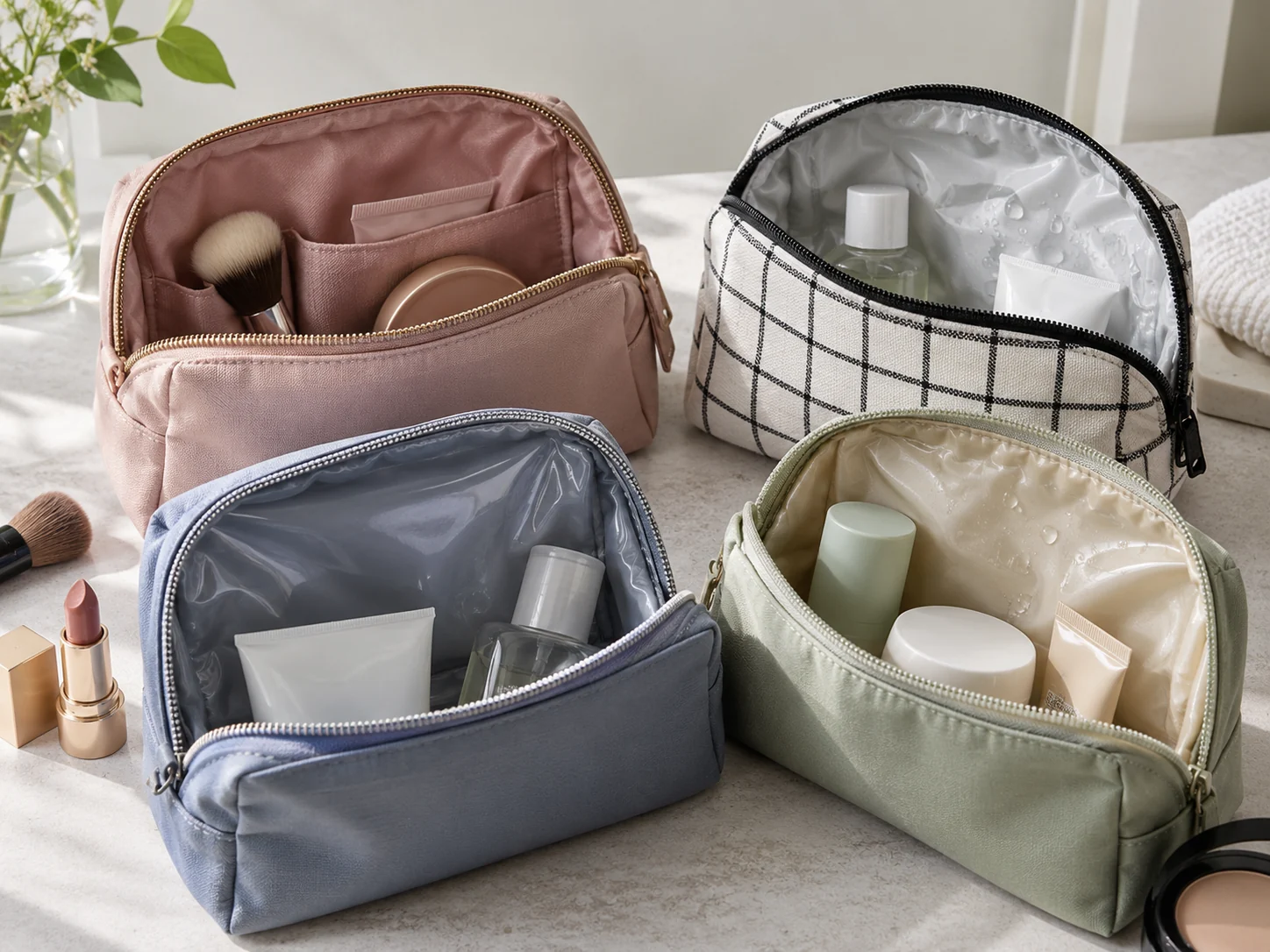
The outer fabric receives most of the attention when developing a cosmetic bag.
Buyers often focus on:
- Canvas
- Polyester
- Nylon
- PU
- PVC
- TPU
But the lining can be just as important.
Cosmetic bags regularly come into contact with:
- Foundation
- Powder
- Lipstick
- Skincare products
- Toiletries
- Brushes
- Leaking bottles
A lining that looks good when new may become difficult to clean after repeated use.
For this reason, cosmetic bag lining should be selected according to:
- Cleaning requirement
- Moisture resistance
- Product positioning
- Flexibility
- Cost
- Durability
Common options include:
- Polyester
- PEVA
- TPU
- Coated polyester
Each material serves a different type of project.
Why Cosmetic Bag Lining Matters
The lining performs several functions.
It protects the outer material from:
- Makeup residue
- Small spills
- Moisture
- Sharp product edges
It also affects:
- Interior appearance
- Hand feel
- Cleaning
- Product life
For a promotional makeup pouch, a basic polyester lining may be enough.
For a travel toiletry bag that may hold:
- Shampoo
- Lotion
- Liquid foundation
an easy-clean moisture-resistant lining may provide more value.
The correct material depends on how the bag will actually be used.
Quick Comparison
| Material | Cleaning | Moisture Resistance | Flexibility | Durability | Cost | Typical Use |
|---|---|---|---|---|---|---|
| Polyester | Moderate | Low to moderate | Good | Good | Low | Standard cosmetic bags |
| Coated Polyester | Good | Good | Good | Good | Low to medium | Everyday makeup bags |
| PEVA | Easy | Good | Good | Moderate to good | Medium | Toiletry and wet-item bags |
| TPU | Very easy | Very good | Excellent | Very good | Higher | Premium cosmetic bags |
1. Polyester Lining
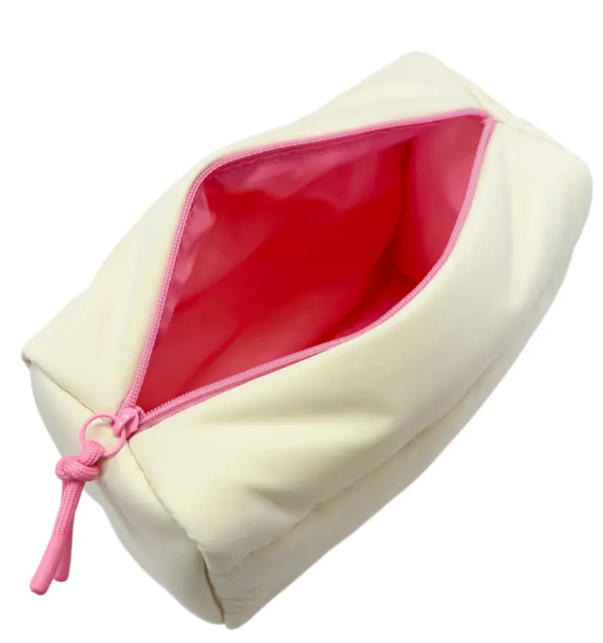
Polyester is one of the most common cosmetic bag lining materials.
It is widely used because it is:
- Lightweight
- Flexible
- Easy to sew
- Cost-effective
Common constructions may include:
- 190T polyester
- 210D polyester
- Lightweight woven polyester
Polyester works well for general cosmetic bags where strong liquid resistance is not required.
Advantages of Polyester
Polyester lining offers several practical benefits.
Low Cost
It is generally economical, making it suitable for:
- Promotional bags
- Gift sets
- Mass-market cosmetic bags
Easy Sewing
Polyester works well with conventional bag manufacturing processes.
It can be used around:
- Zippers
- Internal pockets
- Binding
- Dividers
Good Color Options
It can be produced in many colors to match:
- Outer fabric
- Brand identity
- Product collection
Limitations of Polyester
Standard polyester is not the easiest material to clean.
Makeup products may leave stains such as:
- Foundation
- Mascara
- Lipstick
Woven fabric can absorb residue into the surface texture.
If a bottle leaks, liquid may also penetrate through:
- Fabric
- Stitch holes
- Seams
For products where liquid spills are likely, standard polyester may not provide enough protection.
When Polyester Is Suitable
Choose standard polyester when:
- Budget is important
- The bag mainly stores dry cosmetics
- The product is promotional
- Easy cleaning is not the main selling point
It remains one of the most practical choices for basic cosmetic pouches.
2. Coated Polyester
Coated polyester provides a middle option between conventional textile lining and film-type materials.
A coating may help create a smoother, more moisture-resistant surface.
Possible benefits include:
- Easier wiping
- Better stain resistance
- Reduced liquid absorption
This makes coated polyester useful for buyers who want a more functional lining without moving to PEVA or TPU.
Why Coated Polyester Can Be Practical
It keeps the textile structure of polyester while improving usability.
Compared with standard woven lining, it can be:
- Easier to clean
- More moisture-resistant
- Better suited to toiletries
It is also usually easier to sew than some film materials.
3. PEVA Lining
PEVA is commonly used when buyers want a smooth, wipe-clean interior.
It is frequently used in:
- Toiletry bags
- Cosmetic bags
- Wet-item pockets
- Cooler bags
For cosmetic applications, its main advantage is easy cleaning.
A spill can often be wiped from the surface instead of being absorbed into a woven fabric.
Advantages of PEVA
Easy Cleaning
PEVA has a relatively smooth surface.
This helps with products such as:
- Liquid foundation
- Lotion
- Shampoo
- Skincare products
Moisture Resistance
PEVA provides a stronger barrier to moisture than ordinary woven polyester.
Flexible Construction
It can be used for:
- Main lining
- Internal pockets
- Wet sections
Limitations of PEVA
PEVA is not automatically the strongest lining material.
Performance depends on:
- Thickness
- Quality
- Construction
Very thin PEVA can:
- Wrinkle
- Tear at stress points
- Feel less premium
It may also require careful sewing because repeated needle penetration can weaken thin film around seams.
When PEVA Is Suitable
PEVA works well for:
- Travel toiletry bags
- Family cosmetic organizers
- Medium-price makeup bags
- Products marketed around easy cleaning
It is especially useful when buyers want better liquid protection without the cost of TPU.
4. TPU Lining
TPU is often selected for premium cosmetic and toiletry bags.
It provides a combination of:
- Flexibility
- Moisture resistance
- Abrasion resistance
- Smooth cleaning
Compared with many basic film materials, TPU usually feels softer and more durable.
Advantages of TPU
Very Easy to Clean
TPU has a smooth surface that is well suited to wiping.
This is useful for cosmetic products where accidental spills are common.
Good Flexibility
TPU can bend repeatedly without feeling excessively stiff.
This is useful for:
- Soft pouches
- Travel organizers
- Premium toiletry bags
Good Durability
Properly specified TPU provides good resistance to:
- Repeated folding
- Abrasion
- Everyday handling
Limitations of TPU
The main disadvantage is cost.
TPU is usually more expensive than:
- Standard polyester
- Coated polyester
- PEVA
This makes it more suitable for:
- Premium retail products
- Beauty brands
- Travel collections
rather than low-cost promotional cosmetic bags.
PEVA vs TPU
This is one of the most common decisions for easy-clean cosmetic bags.
| Factor | PEVA | TPU |
|---|---|---|
| Cleaning | Easy | Very easy |
| Flexibility | Good | Excellent |
| Moisture Resistance | Good | Very good |
| Durability | Moderate to good | Very good |
| Premium Feel | Moderate | Higher |
| Cost | Medium | Higher |
PEVA provides good value.
TPU provides better performance and a more premium positioning.
5. What Does “Easy-Clean” Really Mean?
“Easy-clean” should not be treated as a material name.
It describes a practical surface characteristic.
An easy-clean lining should ideally allow users to:
- Wipe away makeup
- Remove moisture
- Clean small spills
without requiring full washing.
Materials with smoother surfaces generally perform better.
These include:
- PEVA
- TPU
- Coated polyester
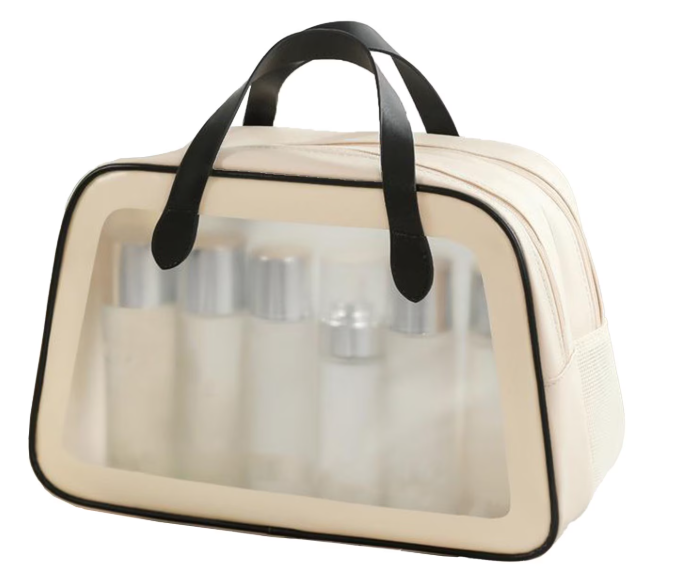
Why Surface Texture Matters
A rough woven surface can trap:
- Powder
- Cream
- Pigments
A smoother surface reduces the number of places where residue can remain.
This is why easy-clean linings often use:
- Film
- Coated fabric
- Laminated surfaces
rather than untreated woven fabric.
6. Moisture Resistance vs Waterproof Construction
A moisture-resistant lining does not automatically make the cosmetic bag waterproof.
Even if PEVA or TPU is used, water may still pass through:
- Stitch holes
- Seams
- Zippers
- Openings
For most cosmetic bags, the goal is not full waterproofing.
The practical goal is usually:
Prevent small spills from quickly soaking into the outer fabric.
This distinction should also be reflected in product descriptions.
7. Seam Construction
Seams are one of the main weak points in lined cosmetic bags.
A bag may use a water-resistant lining but still leak at stitched areas.
Possible approaches include:
- Conventional stitching
- Bound seams
- Reduced seam lines
- Welded construction for suitable materials
For standard cosmetic bags, conventional stitching is usually sufficient.
For more demanding wet-item products, buyers may consider stronger seam protection.
8. Lining Thickness
Thickness affects:
- Hand feel
- Durability
- Weight
- Cost
A very thin lining may feel cheap and wear faster.
A very thick lining may add unnecessary bulk.
The correct thickness depends on:
- Bag size
- Product positioning
- Expected use
For small makeup pouches, lightweight material is usually enough.
For larger toiletry organizers, stronger lining may be more appropriate.
9. Cleaning Makeup Stains
Different cosmetic products behave differently.
Powder
Usually easy to remove from smooth surfaces.
Foundation
Can penetrate woven fabric and leave visible staining.
Lipstick
May leave oil-based residue.
Mascara
Can be difficult to remove from light-colored textile lining.
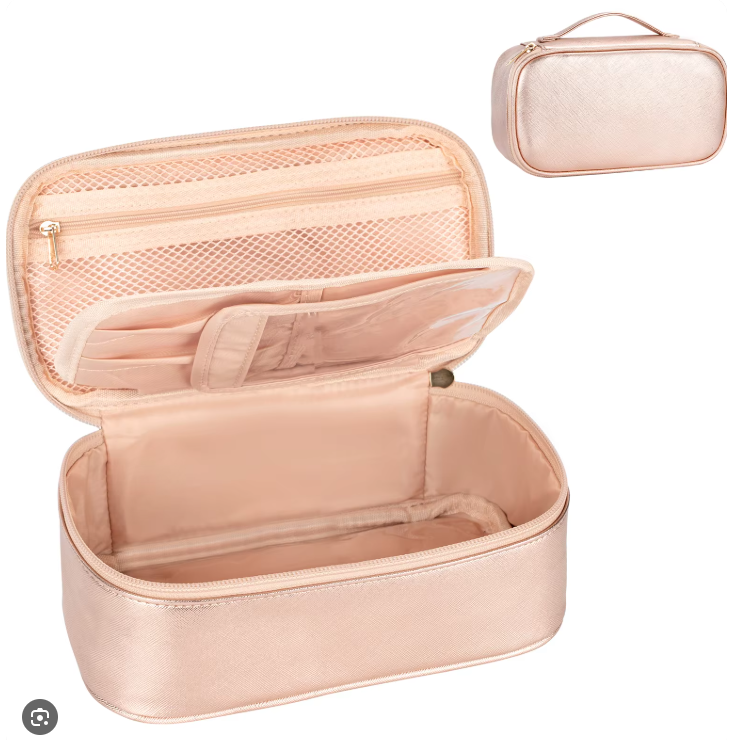
For this reason, premium cosmetic bags often benefit from:
- Smooth lining
- Darker interior color
- Easy-clean coating
10. Interior Color
Lining color also affects usability.
Light colors make it easier to see items inside the bag.
However, they also show stains more clearly.
Dark colors can hide:
- Foundation marks
- Powder
- Minor cosmetic residue
A practical balance might include:
- Medium gray
- Beige
- Dusty pink
- Dark navy
depending on brand positioning.
11. Polyester for Promotional Cosmetic Bags
Promotional cosmetic bags usually prioritize:
- Cost
- Logo visibility
- Large order quantity
Standard polyester lining is often sufficient.
The buyer may not need premium liquid protection if the product is primarily a giveaway.
A typical construction might be:
Outer: Polyester or cotton
Lining: 190T polyester
Closure: Nylon zipper
This keeps the product economical.
12. PEVA for Travel Toiletry Bags
Toiletry bags are more likely to contain liquids.
Common contents include:
- Shampoo
- Lotion
- Toothpaste
- Skincare
For these products, PEVA can provide a practical upgrade.
A typical construction might be:
Outer: 600D polyester
Lining: PEVA
Closure: Nylon zipper
This gives the bag:
- Better moisture resistance
- Easier cleaning
- Controlled cost
13. TPU for Premium Beauty Bags
Premium beauty brands may want:
- Better hand feel
- Better cleaning
- Higher perceived quality
TPU can support this positioning.
A typical product might use:
Outer: PU or premium polyester
Lining: TPU
Hardware: Metal zipper puller
The lining becomes part of the product’s premium experience rather than simply a hidden interior layer.
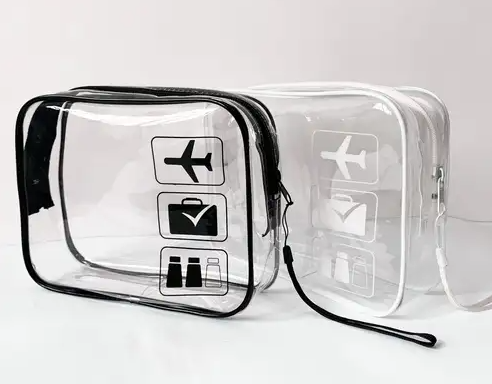
14. Clear TPU Cosmetic Bags
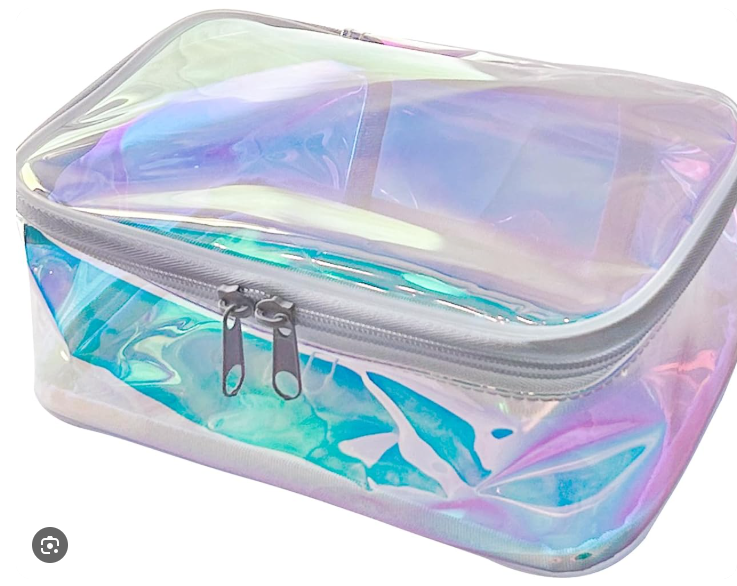
TPU can also be used as an outer or internal clear material.
This is common in:
When used as a clear panel, TPU can provide:
- Good flexibility
- High transparency
- Easy cleaning
However, this is different from using TPU purely as an internal lining.
15. Internal Pocket Materials
Not every internal pocket needs to use the same lining material.
For example:
Main Compartment
PEVA
Brush Pocket
Polyester
Small Zipper Pocket
Mesh
This mixed-material approach can reduce cost while keeping important areas easy to clean.
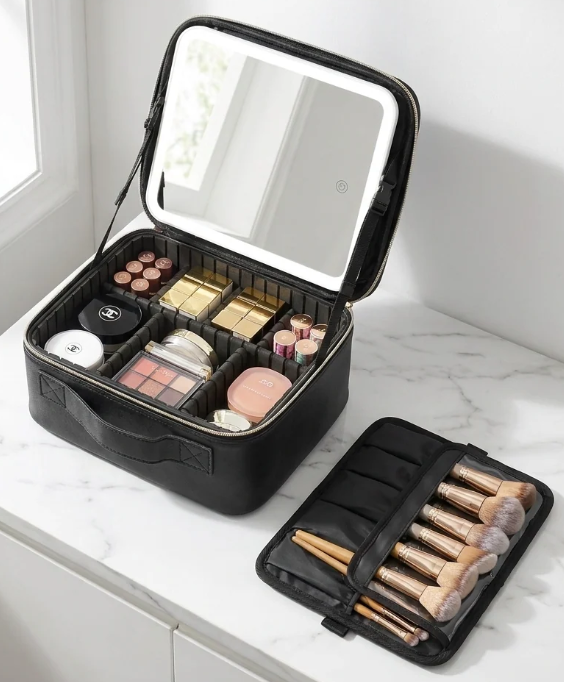
16. Brush Compartments
Cosmetic brushes can carry:
- Powder
- Foundation
- Pigment
A dedicated brush section may benefit from:
- Smooth lining
- Protective flap
- Easy-clean surface
PEVA or TPU can be useful around brush storage because residue can be wiped away more easily.
17. Wet and Dry Sections
Larger cosmetic or travel bags may include:
- Dry cosmetic compartment
- Wet toiletry compartment
For example:
Dry section: Polyester lining
Wet section: PEVA or TPU lining
This creates functional separation without requiring expensive material throughout the entire bag.
18. Cost Considerations
Lining material affects price, but the difference is usually only one part of the total bag cost.
Other major cost factors include:
- Outer material
- Zippers
- Hardware
- Printing
- Number of pockets
- Binding
- Labor
For a simple cosmetic pouch, premium lining may represent a more noticeable share of total cost.
For a complex organizer, construction labor may matter more.
19. Do Not Choose TPU Automatically
TPU is a strong material, but it is not always necessary.
For a low-cost promotional cosmetic pouch, TPU may add cost without adding enough buyer value.
Likewise, standard polyester may be perfectly suitable for:
- Dry makeup
- Gift sets
- Promotional projects
Material selection should follow:
use + price point + cleaning requirement
not simply the most premium available option.
20. How to Specify Cosmetic Bag Lining
Avoid writing only:
Waterproof lining
A better specification would be:
Lining: PEVA
Use: Toiletry and liquid cosmetic storage
Requirement: Smooth wipe-clean surface
Color: Light gray
Construction: Fully lined main compartment
For a premium option:
Lining: TPU-coated material
Requirement: Flexible, easy-clean interior
Use: Travel beauty organizer
This gives the manufacturer a much clearer development target.
Practical Material Recommendations
Basic Promotional Cosmetic Bag
Lining: Polyester
Priority: Low cost + simple construction
Everyday Makeup Bag
Lining: Coated polyester
Priority: Better cleaning + reasonable cost
Travel Toiletry Bag
Lining: PEVA
Priority: Moisture resistance + easy cleaning
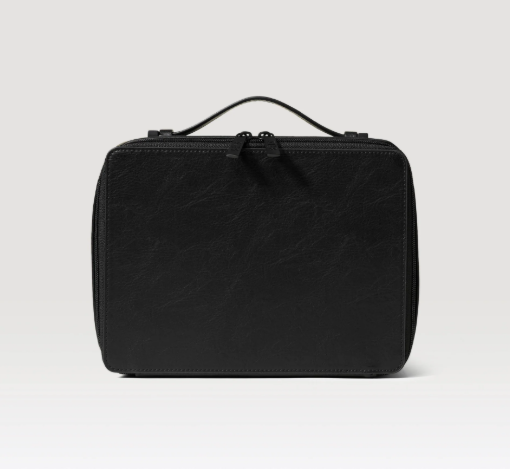
Premium Cosmetic Organizer
Lining: TPU
Priority: Durability + premium feel + easy cleaning
What Should Buyers Check During Sampling?
Do not evaluate only the appearance.
Test the lining with actual use.
Wipe Test
Apply a small amount of:
- Foundation
- Lotion
- Water
and check how easily it can be removed.
Flex Test
Fold and open the lining repeatedly.
Check for:
- Cracking
- Delamination
- Permanent creasing
Seam Test
Inspect areas around:
- Zippers
- Corners
- Internal pockets
Odor Check
Some film materials may have noticeable odor depending on formulation and production.
Evaluate the final sample, especially for beauty and personal-care programs.
Common Buyer Mistakes
1. Choosing White Lining Without Considering Stains
White looks clean when new but may show cosmetic residue quickly.
2. Calling Every Smooth Lining Waterproof
Smooth or laminated material may resist moisture without making the entire bag waterproof.
3. Choosing the Cheapest PEVA
Very thin PEVA may wrinkle or tear more easily.
4. Using TPU Where Polyester Would Be Enough
This can increase cost without improving the buyer experience enough to justify it.
5. Ignoring Seam Construction
Even a high-performance lining can leak through stitched seams.
Which Lining Should Buyers Choose?
Choose polyester when:
- Cost is the main priority
- Cosmetics are mostly dry
- The bag is promotional
- Easy cleaning is not critical
Choose coated polyester when:
- Better wipeability is needed
- A textile feel is preferred
- Budget remains important
Choose PEVA when:
- Moisture resistance matters
- Toiletries are stored
- Easy cleaning is important
- Mid-range pricing is required
Choose TPU when:
- Premium positioning matters
- Frequent cleaning is expected
- Flexibility and durability are important
- Higher material cost is acceptable
Custom Cosmetic Bag Development from INITI
INITI develops cosmetic and toiletry bags for:
- Beauty brands
- Skincare companies
- Retail programs
- Travel brands
- Promotional projects
- Gift sets
Lining options can include:
- Polyester
- Coated polyester
- PEVA
- TPU
Custom structures can include:
- Brush compartments
- Wet pockets
- Internal dividers
- Clear sections
- Zipper pockets
- Easy-clean interiors
Buyers can provide:
- Intended use
- Bag dimensions
- Expected contents
- Material preference
- Estimated quantity
- Target price
If the lining material has not been finalized, different options can be sampled and compared based on cleaning, moisture resistance and cost.
FAQ
What is the most common cosmetic bag lining material?
Polyester is one of the most common choices because it is lightweight, economical and easy to sew.
Which lining is easiest to clean?
TPU and PEVA are generally easier to wipe clean than untreated woven polyester.
Is PEVA waterproof?
PEVA itself can provide a strong moisture barrier, but a stitched cosmetic bag is not automatically waterproof because water may enter through seams and zippers.
Is TPU better than PEVA?
TPU generally offers better flexibility and durability, but it usually costs more.
Is polyester suitable for toiletry bags?
It can be used, but coated polyester, PEVA or TPU may provide better performance when liquids are frequently stored inside.
Which lining is best for premium cosmetic bags?
TPU or high-quality coated polyester can support more premium positioning.
Can different lining materials be used in one bag?
Yes. For example, the main compartment may use polyester while a wet pocket uses PEVA.
Should cosmetic bag lining be dark or light?
Both can work. Light colors improve visibility, while darker colors hide stains more effectively.
Conclusion
The best cosmetic bag lining depends on how the product will actually be used.
Polyester is practical for:
- Promotional bags
- Dry cosmetics
- Cost-sensitive programs
Coated polyester offers a useful middle ground when buyers want:
- Better cleaning
- Textile feel
- Controlled cost
PEVA is a strong option for:
- Toiletry bags
- Moisture-prone contents
- Easy-clean interiors
TPU is better suited to:
- Premium cosmetic bags
- Frequent cleaning
- Higher durability requirements
For most buyers, the decision should be based on:
cleaning + moisture resistance + durability + cost
rather than assuming the most expensive lining is always the best.
A well-selected lining improves not only the appearance of the bag when new, but also how easy it is to maintain after months of real use.


