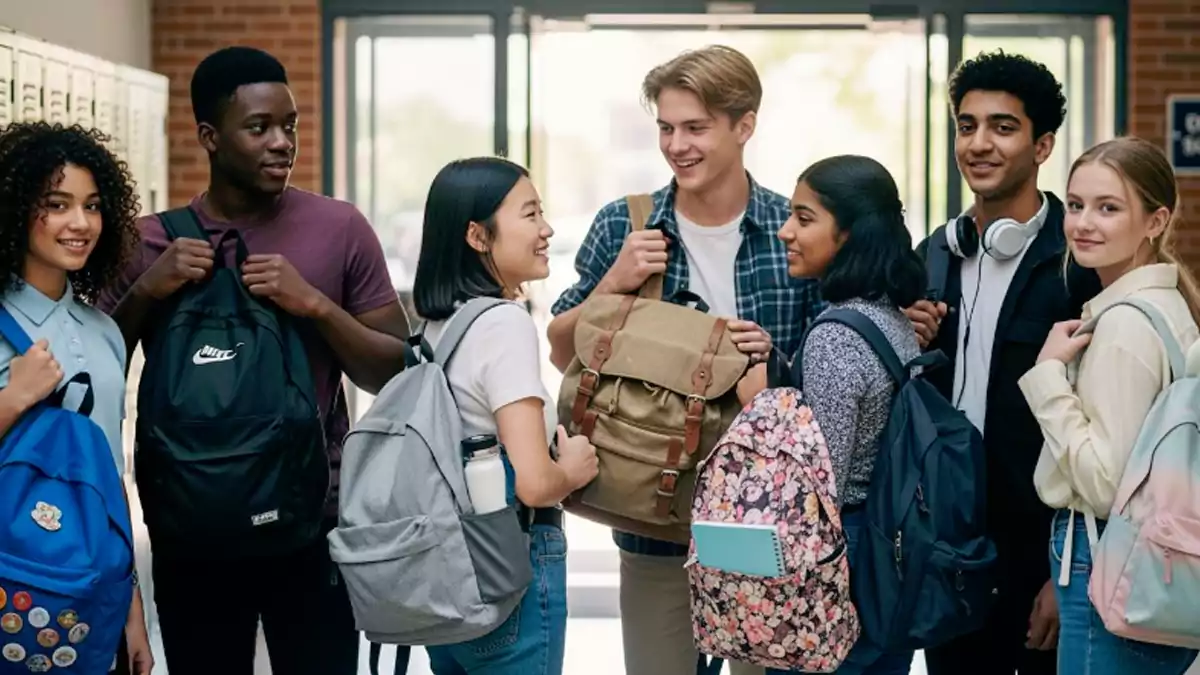
You want the best high school backpacks for back-to-school, but picking one isn’t just about looks. Comfort matters a lot. Over a third of students say their school backpack causes back pain, especially when it weighs more than 15% of their body weight. Female students and those with scoliosis feel this even more. When you shop for back-to-school, check for padded straps, sturdy materials, and roomy compartments. Look for lightweight designs and styles that match your personality. Most parents and students agree that quality, durability, and ergonomic features make the best high school backpacks. If you find a school backpack that fits well, keeps your stuff organized, and looks cool, you’re set for back-to-school. Want the best backpacks for high school? Start with comfort and style.
- Durable fabrics like nylon or polyester keep your school backpack strong.
- Multiple pockets help you stay organized during back-to-school.
Tip: Try on the school backpack before buying to make sure it feels lightweight and comfy.
Key Takeaways
- Pick a backpack with padded straps. This helps you feel comfortable and stops back pain.
- Find backpacks made from strong materials like nylon or polyester. These materials make your backpack last longer.
- Choose a backpack that is 20-30 liters in size. This size fits your school supplies but is not too heavy.
- Look for backpacks with many compartments. This keeps your things neat and easy to find.
- Think about ergonomic designs. These help you stand straight and spread the weight.
- Add patches or pins to your backpack. This shows your style and makes it unique.
- Make sure your backpack is water-resistant. This keeps your stuff safe from spills.
- Let students help pick their backpack. This helps them find one they like and will use.
Comfort Features in the Best High School Backpacks
Padded Shoulder Straps
Cushioning Benefits
You want your school days to feel easy, not painful. That’s why padded shoulder straps matter so much. When you pick a backpack with wide, padded straps, you give your shoulders a break. Research shows that these straps help spread the weight across your shoulders. Heavy backpacks without proper support can cause injuries and strain. Wide, padded straps make your load feel lighter and boost your comfort. You can walk from class to class without feeling sore or tired. If you carry a lot of books, padded straps keep your shoulders from hurting. You’ll notice the difference right away.
Adjustable Fit
You can adjust padded straps to fit your body. This makes your backpack sit just right. If your backpack hangs too low or too high, you might feel uncomfortable. Adjustable padded straps let you change the length so the backpack sits just below your shoulders and above your waist. You get a comfortable backpack that feels like it was made for you. When you adjust the padded straps, you keep the weight close to your body. This helps prevent back pain and makes carrying your backpack easier. You can tighten or loosen the padded straps depending on what you wear or how much you carry.
Ergonomic Back Design
Breathable Panels
You don’t want your back to get sweaty or hot. Breathable panels help air flow between your backpack and your back. This keeps you cool and comfortable. If you walk a lot or have gym class, breathable panels make a big difference. You stay dry and feel fresh all day. Breathable panels also add a layer of comfort, so your backpack doesn’t stick to your skin.
Contoured Shape
A contoured shape fits the curve of your back. This design gives you extra comfort and support. Ergonomic backpacks help you stand tall and keep good posture. You don’t have to worry about slouching or leaning forward. Check out this table to see how ergonomic back designs help you:
| Evidence Point | Description |
|---|---|
| Reduced Shift in Center of Gravity | Ergonomic bags keep the load close to your body, so you stay balanced and avoid muscle strain. |
| Improved Biomechanics | These backpacks let you move naturally, lowering the risk of discomfort and injury. |
| Even Weight Distribution | The design spreads weight across your back and shoulders, so you don’t get tired as fast. |
| Better Posture | You stand straighter and feel less strain on your spine. |
| Reduced Muscle Fatigue | Supportive features keep your muscles from getting tired too soon. |
| Improved Movement Patterns | You walk and move easily, without extra stress. |
| Enhanced Comfort | Padded straps and lumbar support make your backpack feel great all day. |
Proper Weight Distribution
Sternum and Waist Straps
You can use sternum and waist straps to keep your backpack steady. These straps help spread the weight across your chest and hips. You don’t have to carry everything on your shoulders. Sternum straps stop the backpack from sliding around. Waist straps take some weight off your back and shoulders. You feel more comfortable, especially if you carry heavy items. When you use these straps, you get a comfortable backpack that feels lighter and easier to carry.
Even Load Carrying
You need to watch how much you put in your backpack. Doctors say you should not carry more than 10% to 15% of your body weight. For example:
- High school students should not carry more than 15% of their body weight in their backpacks.
- It is recommended to limit backpack weight to 10% of body weight, with a maximum of 20% considered safe according to medical societies.
- Appropriate weight limits are typically no more than 10% of a child’s body weight to prevent injuries.
- Backpacks should not exceed 15% of a child’s body weight, meaning a 100-pound child should carry no more than 15 pounds.
If you follow these tips, you protect your back and stay comfortable. Even load carrying keeps your backpack from pulling you backward or making you lean forward. You avoid backpack syndrome, which means pain and tiredness from carrying too much. When you use padded straps, ergonomic designs, and proper weight limits, you get the best comfort for your school day.
Tip: Always check that your backpack sits just below your shoulders and above your waist. This helps prevent back pain and keeps you feeling good.
School Backpack Style and Trends
Popular Colors and Patterns
You want your backpack to stand out in the hallway. This year, colorful backpacks are everywhere. You see bold colors and flashy prints like florals or tie-dye. Some students pick bright reds, blues, or greens. Others go for more subdued options. Solid colors and neutrals, such as black or gray, always look stylish and never go out of fashion. You can match your backpack to your favorite outfit or pick a color that shows your personality. If you want a stylish backpack, you can choose a pattern that grabs attention or a classic color that fits any style.
Tip: Pick a color or pattern that makes you feel confident and matches your vibe.
Personalization Options
You can make your backpack unique with personalization. Many students love adding patches, pins, or custom prints. These features let you show off your interests and make your backpack feel special. You can swap out pins or add new patches whenever you want a fresh look. Custom prints let you create a design that nobody else has. If you want a stylish backpack, personalization is the way to go.
Patches and Pins
Patches and pins turn a plain backpack into something stylish. You can add patches of your favorite bands, sports teams, or funny sayings. Pins come in all shapes and sizes. You can collect them and change them out whenever you want. This makes your backpack feel like your own design.
Custom Prints
Custom prints let you create a backpack that fits your style. You can choose from over 525 starting designs or make your own. You get a stylish backpack that stands out. Check out this table to see some cool features you can personalize:
| Feature | Description |
|---|---|
| Customizable | Personalize one of our 525+ starting designs, or design your own. |
| Spacious Dimensions | At 17″ x 12.5″ x 5″, this backpack offers ample space for all your essentials. |
| Versatile Compartments | Features a large compartment with a laptop sleeve and additional pockets. |
| Adjustable Straps | Equipped with adjustable straps for personalized comfort and a perfect fit. |
| Convenient Mesh Pocket | Comes with an exterior mesh pocket, perfect for storing a water bottle. |
Balancing Style with Dress Codes
You want to look stylish, but you also need to follow school rules. Some schools have strict dress codes. They may not let you carry backpacks in the building. Always check your school’s policy before you buy a stylish backpack. If your school allows backpacks, pick a design that fits the rules. Avoid anything too flashy or with inappropriate images. You can still find a stylish backpack that follows the dress code and lets you express yourself.
Note: Involve students in picking their backpack. You get a design you love and stay within school guidelines.
You can show your personality with a stylish backpack. You can personalize your design, pick trendy colors, and follow school rules. You get comfort and style in one package.
Size and Capacity Guide
Choosing the Right Size
20-30L Ideal Range
When you shop for a high school backpack, size matters. Most experts agree that a capacity between 20 and 30 liters works best for high school students. This range gives you enough space for your books, notebooks, and daily essentials without making your bag too heavy. If you want to carry a laptop, lunchbox, and water bottle, a backpack in this range will fit everything comfortably.
Here’s a quick look at recommended sizes:
| Height (inches) | Width (inches) | Capacity (liters) |
|---|---|---|
| 17-19 | 13-15 | 25-35 |
Tip: A backpack with 25-35 liters of space is perfect for most high schoolers. It holds textbooks, a laptop, and other supplies without feeling bulky.
Fit by Age and Grade
You want your backpack to fit your body and your grade level. For most 15-year-olds, a 25-35 liter backpack is just right. This size lets you carry everything you need for class and after-school activities. Make sure the backpack sits comfortably on your back and doesn’t hang too low. If you’re younger or smaller, you might want a bag closer to 20 liters.
Daily Needs and Activities
Books and Supplies
Think about what you carry every day. Most high school students need space for textbooks, notebooks, a pencil case, and sometimes a lunchbox. A backpack in the 20-30 liter range gives you enough room for all these items. You won’t have to cram things in or worry about your bag bursting at the seams.
Sports Gear
If you play sports or join after-school clubs, you might need extra space. Some students carry gym clothes, shoes, or equipment. In that case, look for a backpack with a larger main compartment or special pockets for gear. You can also choose a bag with a separate section for shoes or wet clothes.
Compact vs. Spacious
You might wonder if you should pick a compact or spacious backpack. Here’s a table to help you decide:
| Feature | Compact Backpacks | Spacious Backpacks |
|---|---|---|
| Size | Easier to carry and maneuver | Can hold more items, but may be bulkier |
| Organization | May have limited compartments | Often includes multiple pockets for organization |
| Comfort | Lightweight, less strain on back | Can become heavy if overpacked |
| Durability | Generally made for light use | Built to withstand heavier loads |
| Style | Often more trendy and stylish | May prioritize function over style |
If you want something easy to carry and stylish, go for a compact backpack. If you need to bring lots of stuff, a spacious backpack might work better. Just remember, the ideal backpack balances space and comfort. Don’t pick a bag that’s too big or too small for your needs.
Note: Always check that your backpack isn’t heavier than 10-15% of your body weight. This keeps your back healthy and makes carrying your bag much easier.
Durability and Materials for School Backpacks
When you pick a school backpack, you want it to last. You want it to stay strong all year and maybe longer. The right materials help your backpack stay tough. Good construction keeps it from ripping or breaking. You do not want broken zippers halfway through the semester. Let’s look at what makes a backpack durable.
Fabric Choices
Nylon and Polyester
Most high school backpacks use nylon or polyester. These fabrics are popular because they are strong and light. Nylon is great because it does not tear easily. It is a top choice for busy students. Polyester keeps its color and does not fade fast. Your backpack stays looking new. Some backpacks use Cordura, a special nylon blend. Cordura is even tougher and lasts longer. Here is a table to compare the most common materials:
| Material | Durability Characteristics |
|---|---|
| Nylon | Strong, tear-resistant, and lightweight. Good for busy students, but can show wear without a ripstop weave. |
| Polyester | Cheap, keeps color, and does not fade. Thick blends are sturdy and good for daily use. |
| Cordura® | High-grade nylon blend with great abrasion resistance. Used in premium backpacks that last a long time. |
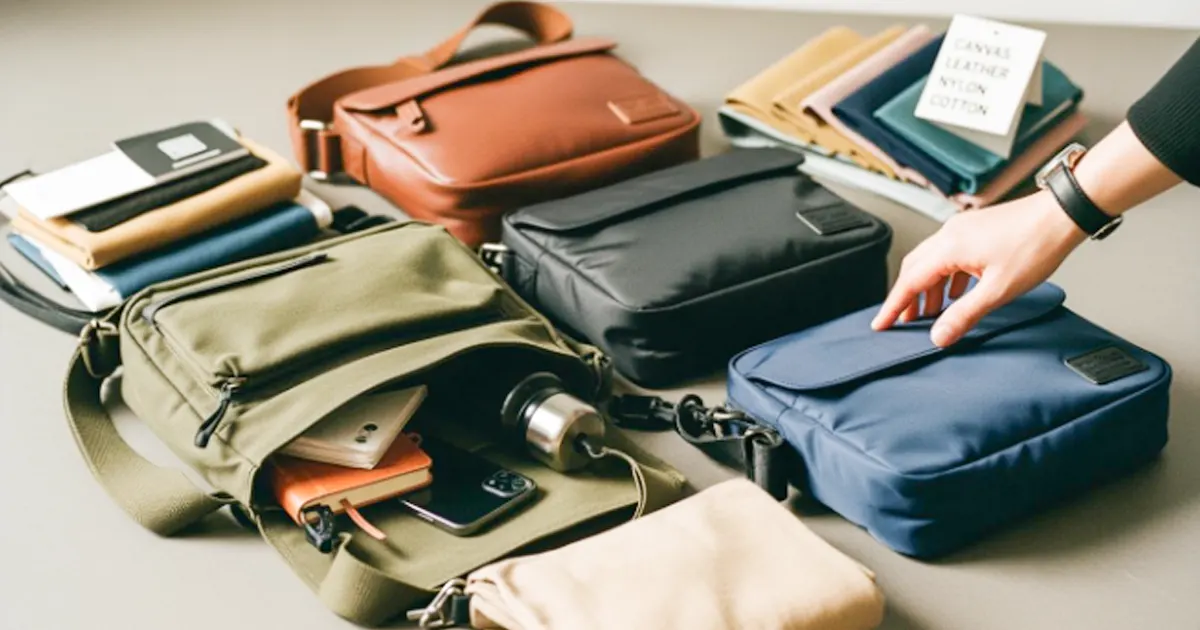
| Canvas | Natural fabric that looks cool and ages well. It is heavier and soaks up water, so best for dry places. |
If you want a backpack for daily use, nylon and polyester are best. Cordura is good if you are rough on your gear.
Canvas and Eco Options
Canvas backpacks look cool and feel strong. They get better as they age. Canvas is heavier and can soak up water. It works best in dry places. If you care about the planet, you can pick recycled polyester or organic cotton. These eco options are strong and help the environment.
Quality Construction
Reinforced Stitching
A strong backpack needs good stitching. Double or triple stitching keeps your bag together. Reinforced seams and padded corners make it last longer. Your backpack can handle heavy books and daily use.
Strong Zippers
You open and close your backpack a lot. You need zippers that do not break. High-quality zippers last longer and keep your stuff safe. Look for thick straps and padded bottoms for extra strength. Here is a table of features that make backpacks stronger:
| Feature | Description | Benefits |
|---|---|---|
| Double or Triple Stitching | Keeps the bag together at stress points. | Makes it stronger and lasts longer. |
| Reinforced Zippers | Can handle lots of use. | Reliable, long-lasting, and tough. |
| Reinforced Straps and Handles | Made with thicker, stronger materials. | Makes the backpack last longer. |
| Padded Bottoms and Corners | Protects against damage. | Stops wear and keeps your stuff safe. |
| Reinforced Seams and Stress Points | Extra strength at high-pressure spots. | Lowers risk of tears and damage. |
Water Resistance
You never know when it will rain or when you spill something. Water resistance is important for a strong school backpack. If you live in a rainy city or walk to school, waterproof backpacks keep your books safe. Even a lunchbox leak can ruin your homework. A water-resistant lining helps stop spills. Here are times when water resistance matters:
- Rainy cities like Seattle or Portland
- Walking or biking to school
- Lunchbox leaks or spilled drinks
- Outdoor recess or field trips
If you want your backpack to last, check the material, stitching, and water resistance. A strong backpack saves you money and stress all year.
Tip: Pick a backpack with strong stitching, tough zippers, and water-resistant fabric for the best durability.
Organization and Tech Features
You want your school backpack to keep your stuff neat and easy to find. Good organization makes your day smoother. You don’t waste time digging for your homework or charger. Let’s look at the features that help you stay organized and ready for anything.
Multiple Compartments
Main and Small Pockets
Backpacks with several compartments help you sort your items. You can use the main pocket for books and binders. Smaller pockets work well for pens, keys, or snacks. When you have a place for everything, you don’t lose track of your supplies. Some backpacks even have mesh pockets for quick access. You can grab your phone or ID without opening the whole bag.
Tip: Use small pockets for items you need often. This keeps your backpack tidy and saves time.
Easy Access
Easy access means you don’t struggle to reach your stuff. Zippers that open wide let you see inside your backpack. Some bags have front pockets or side openings. You can grab your water bottle or notebook fast. This makes your school day less stressful. You stay focused and organized.
Laptop and Tablet Sleeves
Padded Protection
Many high school backpacks come with a padded sleeve for your laptop or tablet. This sleeve keeps your device safe from bumps and drops. You don’t worry about scratches or damage. Padded protection is important if you carry tech every day. You can trust your backpack to keep your electronics secure.
Size Compatibility
You need a sleeve that fits your device. Check the size before you buy. Most sleeves fit laptops up to 15 inches. If you use a tablet, make sure the sleeve isn’t too big or too small. A good fit means your device stays in place. You don’t want your laptop sliding around.
Specialized Pockets
Water Bottle Holders
Staying hydrated is important. Water bottle holders make it easy to carry your drink. You don’t have to worry about spills inside your backpack. Most holders sit on the side for quick access. You grab your bottle and go.
Security Pockets
Security pockets keep your valuables safe. You can store your wallet, phone, or bus pass in a hidden pocket. These pockets protect your items from theft. You feel confident knowing your stuff is secure.
Here’s a quick table showing how these features help with organization:
| Feature | How It Helps You Stay Organized |
|---|---|
| Multiple Compartments | Sorts books, tech, and supplies |
| Laptop Sleeve | Keeps devices safe and easy to find |
| Water Bottle Holder | Prevents spills and keeps you hydrated |
| Security Pocket | Protects valuables and important items |
You get better organization and more functionality when you pick a backpack with these features. You stay prepared for school, sports, and everything in between.
Practical Tips for Choosing a School Backpack
Try Before You Buy
Fit and Comfort
You want the right backpack to feel good every day. The best way to check fit and comfort is to try it on in person. Here’s a simple step-by-step guide to help you:
- Find your hip bones (iliac crest) and make sure the hip belt sits right on top.
- Adjust the hip belt so it hugs your body without gaps.
- Stand up straight and move around. The belt should feel secure but not tight.
- Loosen the shoulder straps before putting the backpack on.
- Place the straps over your shoulders and make sure they rest just off the top.
- Tighten the straps until they feel snug but not too tight.
- Adjust the load lifters so the straps make a 30- to 45-degree angle.
- Clip the sternum strap about an inch below your collarbone.
- Walk around and check if the weight feels even.
- Look for any gaps between your back and the backpack.
- Try a few movements to see if the backpack stays stable and comfy.
Tip: The right backpack should fit your body, not just your school supplies. Avoid bags that are too big or too small.
Online Shopping Tips
Shopping online for the right backpack can be easy if you know what to look for. Choose a smaller bag to avoid overpacking and back strain. Pick a backpack with two straps for better weight balance. Try to keep your backpack’s weight under 10% of your body weight. Look for adjustable backs and padded straps for extra comfort. Multiple compartments help you stay organized. If you care about the environment, check if the backpack uses recycled materials or has sustainability certifications. Make sure the bag is tough enough to last more than one school year.
Involve the Student
Balancing Preferences
You want to love your backpack, so get involved in picking it out. When you help choose, you get a backpack that matches your style and needs. This makes you more likely to use it every day. Parents, let your child share their opinions. The right backpack should fit both your needs and your taste.
Encouraging Self-Expression
A backpack is more than just a bag. It shows your personality. Pick colors, patterns, or patches that make you happy. When you express yourself, you feel more confident at school. Involving students in the choice leads to better satisfaction and more use.
Budget and Value
Investing in Quality
Backpacks come in all price ranges. Here’s a quick table to help you compare:
| Price Segment | Price Range | What You Get |
|---|---|---|
| Economy | Below $50 | Good for budgets, basic durability and function |
| Mid-range | $50-$150 | Balance of quality and price, great for most students |
| Premium | $150-$300 | Top materials, extra features, very durable |
| Luxury | Above $300 | Designer brands, unique styles, exclusive features |
You don’t have to buy the most expensive one. The right backpack gives you value for your money and lasts a long time.
When to Replace
Sometimes, you need to replace your backpack. Watch for these signs:
- Pain in your back, neck, or shoulders
- Numbness or tingling in your hands or arms
- Trouble walking or sitting evenly
- Sleepless nights from pain
If you notice these problems, it’s time for a new backpack. Don’t wait until things get worse.
Note: The right backpack should keep you comfortable, organized, and happy all year.
Conclusion
You want a backpack that feels good and looks cool. When you balance comfort and style, you get the best of both worlds. Check out these key takeaways:
- Durability keeps your backpack strong all year.
- Water resistance protects your stuff from spills and rain.
- Padded straps and back panels give you comfort.
- Multiple compartments help you stay organized.
Let students pick their favorite features. Custom backpacks let you show off your style, fit your needs, and save money. You can feel confident and ready for school every day!
FAQ
How do I know if my backpack fits me?
Try it on. The bottom should sit just above your waist. Straps should feel snug but not tight. If you feel pain or the bag pulls you backward, it’s too big.
What size backpack should I get for high school?
Most high school students need a backpack between 20 and 30 liters. This size holds books, a laptop, and daily essentials without feeling bulky.
Can I wash my backpack in the washing machine?
Check the label first. Many backpacks can go in the machine, but some need hand washing. Always empty your bag and use a gentle cycle.
What features help keep my backpack organized?
Look for multiple compartments, a laptop sleeve, and small pockets. Water bottle holders and security pockets also help you stay organized.
How can I make my backpack more comfortable?
Pick padded straps and an ergonomic back. Adjust the straps so the weight sits close to your body. Use waist and sternum straps if your backpack has them.
Are there backpacks for students with back pain?
Yes! You can find ergonomic backpacks with extra padding and support. Wide straps and waist belts help reduce strain. Ask your doctor for recommendations.
Can I personalize my backpack?
Absolutely! Add patches, pins, or custom prints. Some brands let you design your own. Personalization helps you show off your style and makes your backpack unique.
How often should I replace my backpack?
Replace your backpack if you notice pain, broken straps, or worn-out zippers. Most backpacks last one to two years with daily use.