You might wonder, are mesh bags recyclable? Most recycling programs do not accept them. Many mesh bags are made from plastic. These plastics do not break down quickly. They can take hundreds of years to decompose and often harm wildlife during this process. However, mesh bags help in other ways. You can reuse them many times, which cuts down on single-use plastic waste. This makes them better for the planet compared to regular plastic bags.
Key Takeaways
- Most mesh bags cannot go in home recycling bins. You should check your local rules before you throw them away.
- Mesh bags made from nylon or polypropylene break down very slowly. They can take hundreds of years to disappear. This can hurt animals and nature.
- Using mesh bags again helps cut down on plastic trash. You can use them for shopping, storing things, or making crafts.
- Always wash mesh bags before you recycle them. Dirty bags can mess up the recycling process.
- Eco-friendly choices like organic cotton mesh bags break down naturally. They are better for the planet.
- If you cannot recycle mesh bags, you can give them to shelters or community gardens.
- Cut up mesh bags that cannot be recycled before you throw them away. This helps keep animals safe from getting stuck.
- Learn about your local recycling rules because they are different in each place.
Are Mesh Bags Recyclable?
The Reality of Recycling
You might ask, are mesh bags recyclable? The answer is not easy. Most mesh bags made from plastic cannot go in your home recycling bin. Many towns and cities do not take them. Recycling centers have strict rules about what they will accept. Mesh bags usually do not fit these rules.
Here are some things that decide if you can recycle mesh bags where you live:
| Factor | Description |
|---|---|
| Materials Used | The kind of materials in the mesh bags can decide if they can be recycled. |
| Local Recycling Capacity | If your local center can handle certain materials, you might be able to recycle them. |
| Market Demand | If there is a need for recycled materials, programs might accept them. |
| Government Regulations | Local laws can say what is or is not recyclable in your area. |
Some mesh bags are made from nylon or polypropylene. These materials last a long time. Most home recycling programs do not take them. For example, in Pittsburgh, you cannot recycle mesh bags made from nylon or polypropylene at home. These bags take hundreds of years to break down. If you throw them away, they can hurt the environment.
Some new recycling machines can recycle polypropylene mesh bags. Companies like PureCycle Technologies and P&G have found ways to clean and reuse these plastics. They remove color, smell, and other things, so the plastic is almost new again. But most local recycling programs do not use these machines.
Tip: Always ask your local recycling center before you put mesh bags in your recycling bin. Rules are different everywhere.
Why Most Mesh Bags Aren’t Accepted
You may wonder why mesh bags are not accepted. The main reason is how recycling centers work. Mesh bags can mess up sorting machines. They get stuck in the equipment and slow everything down. Workers must stop the machines to fix the problem. This wastes time and money.
Here are the main reasons mesh bags are not accepted:
| Reason for Rejection | Description |
|---|---|
| Contamination in Recycling | Plastic bags often have food or liquids on them, which makes them hard to recycle. |
| Damage to Recycling Machinery | Plastic bags can get stuck in machines and cause problems. |
Mesh bags can get dirty fast. If you use them for fruits or vegetables, food or water can stick to the plastic. This makes recycling harder. Most centers do not want dirty bags.
You might think about new recycling options. Some places use new technology to recycle mesh bags, but this is not common. Most people cannot use these services. So, are mesh bags recyclable in your home recycling program? Most of the time, the answer is no.
If you want to help the Earth, try to use your mesh bags again and again. You can use them for shopping, storage, or crafts. When you ask, are mesh bags recyclable, remember most local programs do not take them. Try to make less trash and keep mesh bags out of landfills.
Mesh Produce Bags and Recycling
Plastic Mesh Produce Bags
You see plastic mesh produce bags every time you shop for fruits and vegetables. These bags hold oranges, onions, garlic, and even avocados. They look light and stretchy, but they are tough. Most plastic mesh produce bags use nylon or polypropylene. Some use polyethylene, like LDPE or HDPE. Here’s a quick look at the types of plastic you might find:
- Nylon or polypropylene (#5) makes up most plastic mesh produce bags. These bags last a long time and do not break down fast.
- Some plastic mesh produce bags use low-density polyethylene (LDPE). These bags feel soft and bend easily.
- Others use high-density polyethylene (HDPE). These bags feel thicker and stronger.
You might think these bags are harmless, but they can stay in landfills for hundreds of years. Animals can get tangled in them, too. That’s why you need to know how to handle plastic mesh produce bags the right way.
Recycling Plastic Mesh Produce Bags
You probably wonder if recycling plastic mesh produce bags is possible. Most curbside programs do not accept them. The reason is simple. These bags can jam machines and cause trouble at recycling centers. But you still have options if you want to recycle plastic mesh produce bags.
Here’s a table to help you understand what to do:
| Accepted Materials | Instructions |
|---|---|
| Plastic mesh produce bags (used for oranges, onions, garlic) | Make sure bags are clean and free of food. Put them in a grocery-sized bag. Place that bag inside a waterproof black bag. Do not put them in the ReCo Pick bag. |
You need to check with your local recycling center before you drop off plastic mesh produce bags. Some stores or special programs may collect them. Always clean the bags first. Food bits can ruin the recycling process.
Common Issues in Recycling
Sorting Equipment Problems
Plastic mesh produce bags can cause big problems for recycling machines. The bags get tangled in the gears and rollers. Workers must stop the machines to pull out the bags. This slows everything down and costs money. Many centers say no to plastic mesh produce bags because of these problems.
Contamination Risks
Dirty plastic mesh produce bags can spoil a whole batch of recycling. If you leave food or water inside, the bags can spread mold or bacteria. This makes it hard to recycle anything in that batch. You should always rinse and dry plastic mesh produce bags before trying to recycle them.
Tip: If you cannot recycle plastic mesh produce bags, try to reuse them at home. You can store toys, organize sports gear, or use them for crafts.
Types of Mesh Bags
You see mesh bags everywhere, but not all mesh bags are the same. They come in different shapes, sizes, and materials. Each type has its own job. Let’s look at the main types you might find at home or in stores.
Did you know? Mesh bags are used in many industries, not just for groceries!
Here’s a quick table to show you some main categories and their uses:
| Category Type | Subcategories |
|---|---|
| Application | Fruit Industry |
| Vegetables Industry | |
| Others | |
| Types | Plastic Mesh Bag |
| Cotton Mesh Bag |
Produce Mesh Bags
You probably use mesh produce bags when you buy oranges, onions, or avocados. These bags help keep fruits and veggies fresh because air can move through the holes. Most stores use plastic mesh for these bags. Some stores now offer cotton mesh bags as a greener choice. You can wash and reuse cotton bags many times. If you want to cut down on waste, bring your own reusable mesh produce bags to the store.
Laundry Mesh Bags
Laundry mesh bags help protect your clothes in the wash. You put socks, underwear, or delicate shirts inside, zip it up, and toss it in the machine. The mesh lets water and soap flow through, but keeps your items safe from getting tangled or stretched.
Laundry mesh bags come in different materials. Here’s a table to help you see the differences:
| Material Type | Characteristics |
|---|---|
| Organic Cotton | Made of GOTS Certified Organic Cotton, free of microplastics, eco-friendly. |
| Synthetic Fibers | Includes nylon, polyester, acrylic; can shed microplastic fibers in the wash. |
If you want to help the planet, pick organic cotton laundry bags. They do not shed microplastics, so they are better for the environment.
Packaging Mesh Bags
You might not notice packaging mesh bags, but they play a big role in business. Companies use them to move and store heavy things like sand, gravel, or even rocks. Polypropylene mesh bags are the top choice for these jobs. They are strong and last a long time. Farmers use them to carry fruits and vegetables. Builders use them for erosion control and waste. In emergencies, people fill them with sand to stop floods. These bags work well because they let air flow and keep things dry.
Tip: If you see a mesh bag holding heavy stuff at a construction site, it’s probably made of polypropylene.
Now you know the main types of mesh bags and how each one helps in daily life or big jobs.
Identifying Recyclable Mesh Bags
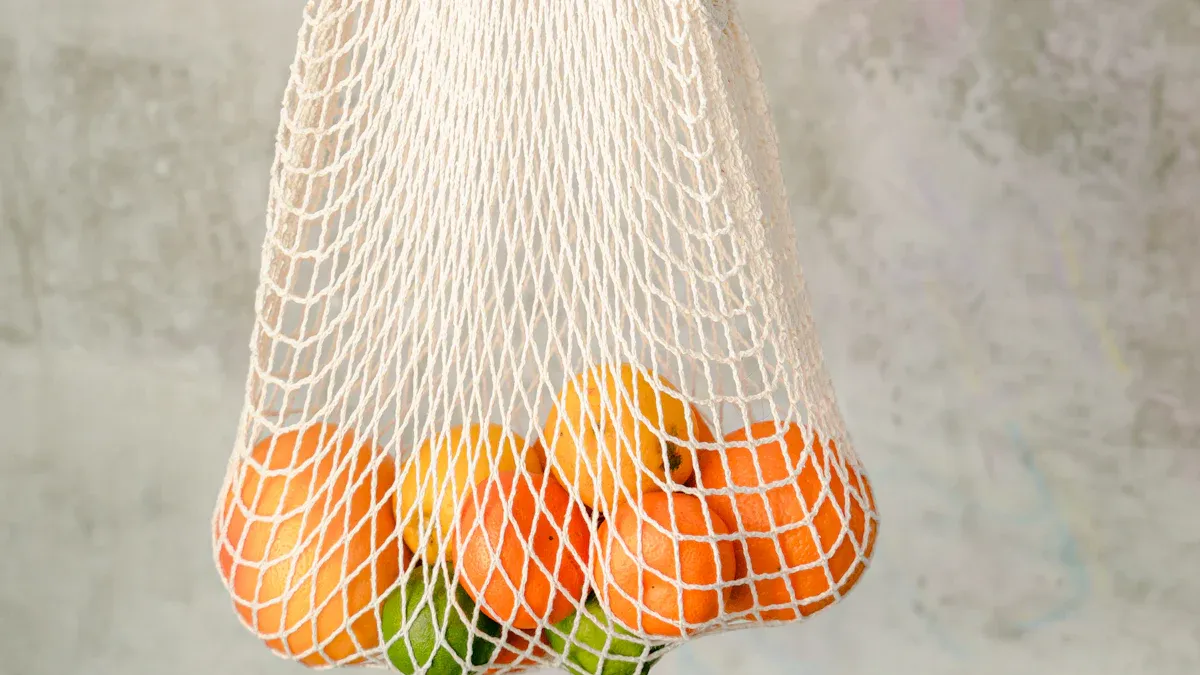
You might stand in your kitchen, mesh bag in hand, and wonder, “Can I recycle this?” It’s not always easy to tell. But you can look for a few clues to help you decide. Let’s break it down so you know what to check before tossing that bag in the bin.
Recycling Symbols
First, check for recycling symbols on your mesh bag. These little icons can tell you a lot. Some mesh bags have a number inside a triangle. Others might have special instructions. Here’s what you should look for:
- Stretchy plastic mesh bags: You can usually recycle these in L.A.’s blue bin. These bags stretch when you pull them.
- Netted produce bags (like nylon): You can’t recycle these. Put them in the black bin with your trash.
Tip: If you don’t see a recycling symbol, it’s safer to reuse the bag or throw it away. Not all mesh bags are created equal!
Material Types
The material of your mesh bag matters a lot. Some materials break down in nature, while others stick around for years. Here’s a quick table to help you see the difference:
| Material | Biodegradability | Environmental Impact |
|---|---|---|
| Organic Cotton | Biodegradable | Good for the earth, breaks down over time |
| Nylon | Not biodegradable | Uses lots of energy, can pollute water |
| Polyester | Not biodegradable | Uses lots of energy, can pollute water |
If you have a cotton mesh bag, you’re making a greener choice. Cotton breaks down and returns to the earth. Nylon and polyester bags last much longer and can harm the environment if not handled right.
Note: If you’re not sure what your bag is made of, check the tag or packaging. Sometimes it lists the material type.
Manufacturer Labels
You can also find helpful information on the labels attached to your mesh bags. These labels often tell you how to recycle the bag or what it’s made from. Here’s a table with some common labels and what they mean:
| Label Name | Description |
|---|---|
| Plastic Resin Codes | Shows the type of plastic, but doesn’t always mean you can recycle it. |
| How2Recycle | Gives you clear recycling instructions if the bag is recyclable. |
| On-Pack Recycling Label (OPRL) | Tells you how and where to recycle, helpful for bags with more than one material. |
| Australasian Recycling Label | Offers recycling info for Australia and New Zealand, sometimes seen on imported bags. |
| Triman | Used in France to show recyclability. |
| Crossed-Out Trash Can | Means you shouldn’t throw the item in regular trash, often for hazardous materials. |
When you spot these labels, you get a better idea of what to do with your mesh bag. If you see a How2Recycle label, follow the steps. If you only see a plastic resin code, check your local recycling rules.
Pro Tip: When in doubt, reuse your mesh bag for shopping, storage, or crafts. You help the planet every time you use a bag again!
What to Do with Non-Recyclable Mesh Bags
So, you’ve got a pile of mesh bags and you just found out they can’t go in your recycling bin. Don’t worry! You have plenty of smart ways to keep them out of the trash. Let’s look at some creative and practical ideas.
Reuse Options
You can give mesh bags a second life at home. They’re handy for all sorts of things. Here are some easy ways to reuse them:
Home Uses
- Pick up after your dog during walks. Mesh bags work well as dog waste bags.
- Bring them to the farmers market. You can keep your produce separate and your tote bag clean.
- Wrap your shoes before packing a suitcase. This keeps dirt off your clothes.
- Store fresh herbs in the fridge. Tie a mesh bag around the herbs to keep them humid and fresh.
- Cover leftovers in the fridge. A mesh bag over a plate keeps bugs away and lets air flow.
Tip: Keep a few mesh bags in your car or backpack. You’ll always have one ready for a quick shopping trip or a picnic.
Craft Ideas
If you like making things, mesh bags can become fun projects. Try these ideas:
- Make a rope by twisting several mesh bags together. You can use it to tie up plants or secure items in your garage.
- Wrap a paintbrush in a mesh bag to keep it from drying out between uses.
- Cut mesh bags into squares and layer them to create coasters. These protect your table from drips and look cool, too.
You can also use mesh bags for kids’ crafts. They make great material for collages or homemade decorations.
Donation Choices
If you don’t want to reuse your mesh bags, think about donating them. Some animal shelters use mesh bags for bedding or cleaning. Community gardens might need them for storing bulbs or tools. Ask local schools or art centers if they want mesh bags for craft projects. You help others and keep waste out of landfills.
Proper Disposal
If you can’t find a way to reuse or donate your mesh bags, you’ll need to throw them away. Put them in your regular trash bin. Don’t put them in the recycling bin unless your city says it’s okay. Mesh bags can jam recycling machines and cause problems. Always check your local rules before tossing them out.
Note: Try to use up your mesh bags before throwing them away. Every time you reuse a bag, you help the planet a little more.
Alternatives to Plastic Mesh Produce Bags
Looking for better choices than plastic mesh bags? You have lots of options that are good for you and the planet. Let’s check out some smart swaps you can make next time you shop for fruits and veggies.
Eco-Friendly Mesh Bags
You can pick eco-friendly mesh bags instead of plastic ones. These bags use materials that are safer for the earth. Cotton mesh bags stand out as a top choice. They come from natural fibers and break down over time. Nylon and polyester bags last a long time, but they do not break down and use more energy to make.
Here’s a quick look at how these bags compare:
| Type of Bag | Environmental Impact | Biodegradability | Freshness Benefits |
|---|---|---|---|
| Cotton Mesh Bags | Greener manufacturing, less energy, no harmful chemicals | Biodegradable, breaks down naturally | Breathable, absorbs water, keeps produce fresh longer |
| Nylon/Polyester Bags | Higher carbon footprint, synthetic materials | Not biodegradable | Less breathable, may not keep produce fresh as well |
If you want to keep your fruits and veggies fresh, cotton mesh bags work best. They let air move through and help your food last longer. You can wash and reuse them many times. Next time you shop, try using reusable produce bags to cut down on waste.
Tip: Wash your cotton mesh bags often to keep them clean and ready for your next trip.
Compostable Choices
You can also try compostable mesh bags. These bags break down fast in composting facilities. They use plant-based materials instead of plastic. Here are some popular types:
- Corn starch bags come from corn kernels. They are strong, water-resistant, and break down in a few months.
- Potato starch bags use leftovers from making potato products. They also resist moisture and compost quickly.
You can toss these bags in your green bin if your city collects compost. They turn into soil instead of trash.
Note: Compostable bags need special composting centers to break down. Check if your area accepts them.
Sustainable Packaging
You have even more choices for sustainable packaging. Many stores now offer bags and wraps that are safe for the planet. Here are some options you might see:
- Compostable mesh net bags work well for fruits and veggies. They let air flow and break down after use.
- Organic cotton mesh bags are strong, reusable, and biodegradable. You can use them again and again.
You can ask your store if they offer these options. Every time you pick a greener bag, you help reduce plastic waste.
Choosing the right bag makes a big difference. You help protect nature and keep your food fresh.
Summary and Recommendations
Key Points
You learned a lot about mesh bags and recycling. Here are the most important things to remember:
- Recyclable materials use less natural resources than biodegradable ones. Recycling saves energy and raw materials.
- It is easier to find recycling bins than composting bins. You can recycle more if you know what goes in each bin.
- Real biodegradable materials cannot be recycled. These materials can release bad gases when they break down, so they are not always the best choice.
- Woven plastic mesh bags cannot be recycled. You should put these bags in the trash.
- Before you throw away any mesh bag, cut it into small pieces. This helps protect animals because they will not get stuck or hurt.
Tip: Always check your local recycling rules. Some places take certain mesh bags, but most do not.
Here is a table to help you remember what to do with different mesh bags:
| Mesh Bag Type | Best Disposal Method |
|---|---|
| Plastic mesh (woven) | Trash (cut before tossing) |
| Organic cotton mesh | Reuse, donate, or compost |
| Recyclable plastic mesh | Clean and recycle if allowed |
Responsible Choices
You can make smart choices to help the planet. Here are some ways to handle mesh bags the right way:
- Choose mesh bags made from organic cotton or recycled polyester. These bags are better than single-use plastic produce bags and last longer.
- If you use compostable bags, take off any parts that are not compostable. Cut the bag into small pieces so it breaks down faster.
- Make sure recyclable bags are clean before you put them in the recycling bin. Dirty bags can mess up the recycling process.
- Always check your city’s recycling rules. The rules can change, so it is good to stay updated.
- Use natural fiber mesh bags for storage or gardening. You can also give them to textile recycling programs.
- Cut up mesh bags before throwing them away. This keeps animals safe and helps the environment.
Every time you reuse, recycle, or compost a mesh bag, you help nature and keep your community clean.
You do not have to be perfect. Small changes matter. Next time you shop, think about what kind of bag you use. If you reuse or recycle your mesh bags, you really help the planet.
Conclusion
You now know most mesh bags can’t go in your home recycling bin, but some brands offer fully recyclable options made from one type of plastic. You can help the planet by following these simple steps:
- Keep your mesh bags handy for shopping.
- Wash them often to keep them clean.
- Choose reusable or recyclable bags when you can.
As a mesh bag manufacturer, we focus on eco-friendly materials and strong, reusable designs. Every time you pick a sustainable bag, you make a real difference for the earth.
FAQ
Can you recycle mesh bags at home?
Most cities do not let you recycle mesh bags in your curbside bin. You should check with your local recycling center before tossing them in. Clean and reuse mesh bags whenever you can.
What are mesh bags made of?
Mesh bags use materials like nylon, polyester, polypropylene, or cotton. Plastic mesh bags last longer but do not break down easily. Cotton mesh bags are biodegradable and safer for the environment.
Are cotton mesh bags better for the planet?
Yes! Cotton mesh bags break down naturally and do not release microplastics. You can wash and reuse them many times. They help you cut down on plastic waste.
How do you clean mesh bags?
You can wash mesh bags by hand with soap and water. Let them air dry before using them again. Some cotton mesh bags can go in the washing machine.
What should you do with old mesh bags?
Reuse old mesh bags for storage, crafts, or gardening. If you cannot reuse them, donate to local shelters or schools. Cut up plastic mesh bags before throwing them away to protect wildlife.
Can you compost mesh bags?
You can compost cotton mesh bags if they do not have synthetic parts. Plastic mesh bags do not break down in compost. Always check the label before composting.
Why do mesh bags jam recycling machines?
Mesh bags tangle in sorting equipment at recycling centers. This causes delays and can damage the machines. That is why most programs do not accept them.
Where can you buy eco-friendly mesh bags?
You can find eco-friendly mesh bags at grocery stores, online shops, or local markets. Look for bags made from organic cotton or plant-based materials.