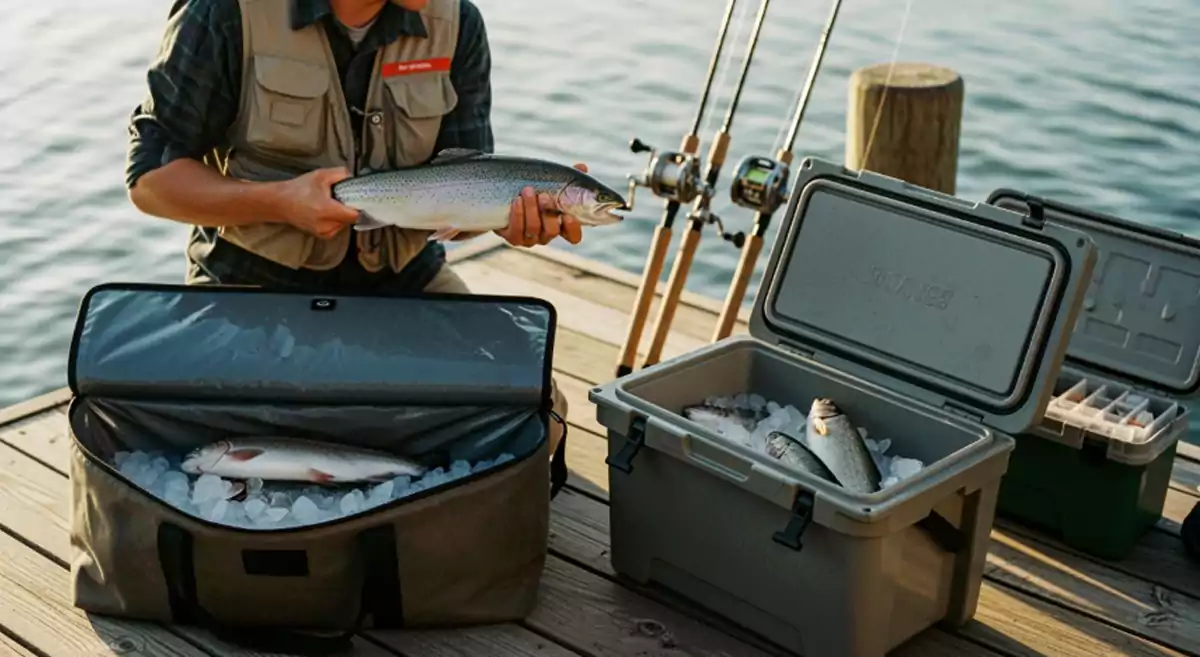
If you want a quick answer, most anglers say that when comparing a fish bag vs cooler, fish bags are best for easy carrying and short trips. On the other hand, coolers keep ice cold longer, making them better for long days. You should consider factors like insulation, portability, durability, capacity, price, and your fishing style before making a choice. Check out this simple table to see how each option compares:
| Feature | Hard Box Cooler | Insulated Cool Bag |
|---|---|---|
| Portability | Bulky, heavy | Lightweight, easy |
| Storage Space | Takes up space | Folds flat |
| Ice Retention | Excellent | Good for short trips |
Think about how much gear you bring and where you fish. Ultimately, your preferences matter more than what others say. Let’s take a closer look at fish bags vs coolers so you can decide what works best for you.
Key Takeaways
- Fish bags are light and easy to carry. They are good for short trips. You can store them easily.
- Coolers keep ice cold for a long time. They are great for long fishing trips.
- Think about how you fish and what you need before you choose.
- Fish bags cost less money. Coolers cost more but last longer.
- Check your gear for leaks often. Take care of it so it works well and keeps fish fresh.
- If you fish from a kayak or small boat, pick a fish bag or a small cooler. This helps you save space.
- You can use both. Take a fish bag for short trips. Use a cooler for long trips. This helps you be more efficient.
- Think about how much space you need. Plan so you do not waste room or ice.
Fish Bag vs Cooler: Quick Comparison
Key Differences Table
When you look at the fish bag vs cooler debate, it helps to see the facts side by side. Here’s a quick table that shows how fish bag vs cooler options stack up for anglers:
| Feature | Fish Bag | Fish Box Cooler |
|---|---|---|
| Insulation | Less efficient, about 1 inch of insulation | Superior, up to 2 inches of foam and tight seals |
| Portability | Lightweight, folds up, easy to carry | Heavy, bulky, harder to move |
| Durability | Tough vinyl, but can puncture or tear | Very durable, resists cracks and fading |
| Storage | Folds flat, fits in small spaces | Takes up more space, rigid structure |
| Cost | Lower price, budget-friendly | Higher price, $225–$549 for top models |
| Maintenance | Needs more cleaning, can leak if not sealed | Easier to clean, less likely to leak |
You can see that fish bag vs cooler choices really depend on what you need for your trip. Fish bag options like opah cooler bags work well if you want something light and easy to store. Fish box cooler models shine when you want the best insulation and long-term durability.
Pros and Cons Overview
Let’s break down the main pros and cons of each option so you can pick the right fishing cooler for your next adventure.
Fish Bag Pros:
- Super portable and lightweight. You can carry it with one hand, even when full.
- Folds flat, so you save space in your boat or car.
- Lower cost, so you don’t have to spend a lot to keep your catch fresh.
- Great for day trips or when you want to pack light.
Fish Bag Cons:
- Insulation isn’t as strong as a fish box cooler, so ice melts faster.
- Needs more cleaning, especially if you use it often.
- Can leak if you don’t seal it well.
- Not as tough as a hard-sided fish box cooler.
Fish Box Cooler Pros:
- Top-notch insulation. Your ice lasts longer, even on hot days.
- Built to last. These fishing cooler boxes can take a beating and keep working.
- Easy to clean and less likely to leak.
- Perfect for multi-day trips or when you need to keep fish cold for hours.
Fish Box Cooler Cons:
- Heavy and bulky. You might need help to move it, especially when it’s full.
- Takes up a lot of space in your boat or truck.
- Costs more, especially for high-end fishing cooler boxes.
- Not as easy to store when you’re not using it.
Tip: If you fish from a kayak or small boat, opah cooler bags or other fish bag options make life easier. For big offshore trips, a fish box cooler or fishing cooler boxes give you peace of mind.
When you compare fish bag vs cooler, think about your gear, how much space you have, and how long you need to keep your catch cold. Fishing cooler boxes and opah cooler bags both have a place in your setup. The best choice depends on your fishing style and what matters most to you.
Better Insulation: Which Keeps Fish Fresher?
When you want to keep your catch fresh, insulation matters. You need to know how well a fish bag or a hard box cooler holds cold temperatures. Let’s break down how each option works and which one gives you better insulation for your fishing trips.
Fish Bag Insulation
Ice Retention and Materials
You might wonder how long a fish bag can keep your fish cold. Most insulated fish bags use advanced closed-cell foams or reflective thermal barriers. These materials help trap cold air and slow down melting. Some premium fish bags even use vacuum-insulated panels, which can keep ice for over 72 hours. Here’s a quick look at the most common insulation materials and their impact on ice retention:
| Insulation Material | Impact on Ice Retention |
|---|---|
| Advanced Closed-Cell Foams | Contributes to extended ice retention |
| Reflective Thermal Barriers | Helps maintain cold temperatures |
| Vacuum-Insulated Panels | Extends ice retention durations over 72 hours |
Most fish bags can keep ice for 24–48 hours under normal fishing conditions. That’s enough for a day trip or a short overnight adventure. If you pick a mid-sized fishing cooler bag with at least 24-hour ice retention, you’ll have a versatile option for most outings.
Maintenance Needs
You need to clean your fish bag after every trip. Fish bags can get messy, especially if you use a lot of ice. Make sure you rinse it out and let it dry. Some fish bags are leak-proof, which helps prevent spills and makes cleaning easier. If you take care of your fish bag, it will last longer and keep your catch fresh.
Tip: Always check the seams and zippers for leaks. A leak-proof fish bag keeps your boat clean and your fish cold.
Cooler Insulation
Hard-Sided vs Soft-Sided
Coolers come in two main types: soft coolers and hard box cooler models. Soft coolers use flexible insulation and work well for short trips. Hard coolers have thick walls and tight seals. They keep ice for days and protect your fish from heat. Here’s a table that shows the difference:
| Cooler Type | Insulation Capability | Ideal Use |
|---|---|---|
| Soft Coolers | Good insulation, can keep ice for a reasonable period | Casual outings, short trips |
| Hard Coolers | Exceptional ice retention, keeps cold for days | Extended trips, long-term storage |
Hard box cooler options use materials like NBR rubber and EVA foam. NBR rubber can keep fish fresh for up to 96 hours at 70 degrees Fahrenheit. EVA foam works, but it’s less effective for long-term ice retention.
Long-Term Freshness
If you want your fish to stay fresh for several days, a hard box cooler is your best bet. These coolers keep ice longer and maintain safe temperatures. You can trust a hard box cooler to protect your catch on multi-day trips. Here’s a quick look at how insulation materials affect freshness:
| Insulation Material | Duration of Freshness | Temperature Condition |
|---|---|---|
| NBR Rubber | Up to 96 hours | 70 degrees Fahrenheit |
| EVA Foam | Less effective | Varies |
Insulation: Fish Bag vs Cooler
So, which one gives you better insulation? Let’s compare what anglers say and what you need for your fishing style.
- Fish bags are great for portability and moisture retention. They help keep fish fresh and maintain weight, which is important for tournaments.
- Coolers win when it comes to ice retention and durability. You can rely on a hard box cooler for longer trips and tough conditions.
- If you want a fishing cooler that’s easy to carry and clean, go with a fish bag. If you need maximum ice retention and long-term freshness, pick a hard box cooler.
| Feature | Duration |
|---|---|
| Ice retention under normal conditions | 24–48 hours |
Most anglers recommend choosing a fish bag for short trips and a hard box cooler for extended adventures. When you pick your gear, think about insulation performance, build quality, and how easy it is to move. A mid-sized fish bag with good ice retention works for most outings. For long trips, hard box cooler models give you peace of mind.
Note: Fish bags excel at keeping fish moist and fresh for short periods. Hard box cooler options offer better insulation and ice retention for longer journeys.
Portability and Storage for Anglers
Fish Bag Portability
Flexibility and Space Saving
When you want something lightweight and easy to carry, a fish bag stands out. You can fold it flat and tuck it into tight spaces on your kayak or in your car. This makes it perfect for anglers who like to travel light or have limited room for gear. Fish bags fit well in small boats and don’t take up much space when you’re not using them. You can even roll one up and stash it in a backpack. That’s a big win for portability.
But fish bags do have some challenges. Take a look at this table to see what you might face:
| Challenge | Description |
|---|---|
| Limited capacity | Often smaller, with less insulation thickness to save space. |
| Lower insulation value | Shorter ice retention time compared to a cooler. |
| Durability concerns | Zippers and seams can break; punctures are more likely. |
| Weight | Some bags feel heavy even when empty, not great for rough terrain. |
| Sun exposure | May wear out faster if left in the sun, unless UV-protected. |
| Customer reviews | Some mention mold, zipper breakage, or heat transfer issues. |
Transport and Storage
You’ll find that a fish bag is easy carry for short trips. Many come with padded straps, so you can sling one over your shoulder and keep your hands free for your fishing cooler or other gear. Fish bags work best for casual outings or when you want to move quickly from spot to spot. If you fish from a kayak or small boat, you’ll love how a fish bag fits in tight spaces and folds away when empty.
Cooler Portability
Bulk and Handling
A cooler gives you better insulation and keeps ice solid for longer, but it’s not always simple to move around. Hard-sided coolers can get heavy, especially when packed with fish and ice. You might need help to lift one into your boat or truck. Some modern coolers come with wheels, sturdy handles, and ergonomic grips, which make them easier to roll or carry. Still, you’ll notice the bulk when you try to fit a large cooler into a small boat or car.
- Many coolers now have wheels for rolling over docks or parking lots.
- Sturdy handles and ergonomic grips help you get a better hold.
- Choosing the right size matters. A cooler that’s too big wastes ice and space, while one that’s too small can’t hold all your catch.
Storage Challenges
Storing a cooler can be tricky. Hard-sided models take up a lot of room, even when empty. If you have a small garage or limited storage on your boat, you might struggle to find a good spot for your cooler. Oversized coolers can be a hassle to move and store, especially after a long day on the water. Picking the right size helps you avoid wasted space and makes transport more efficient.
Tip: If you want the best of both worlds, use a fish bag for short trips and a cooler for longer adventures. Match your choice to your fishing style and storage needs.
Durability and Maintenance
Fish Bag Durability
Material Strength
You want your fish bag to last through rough trips and heavy loads. Some fish bags, like the Buzbe Swarm Bag, use a special rubberized plastic. This material feels soft but resists tearing. You can pack it full, and it keeps its shape. It also stays waterproof, even when you push it to the limit. Over time, this kind of fish bag stands up to tough conditions on the water. You do not have to worry about leaks or rips if you pick a quality bag.
Cleaning and Care
Taking care of your fish bag is simple, but you need to stay on top of it. Rinse it out after every trip. Let it dry before you store it with your other gear. If you leave it wet, mold can grow inside. Check the zippers and seams for any signs of wear. A quick wipe-down keeps the insulation working well and helps your bag last longer. You can use mild soap, but avoid harsh chemicals that might damage the material.
Tip: Always store your fish bag out of direct sunlight. UV rays can weaken the material and shorten its life.
Cooler Durability
Construction and Longevity
A cooler can take a beating, but not all coolers are the same. High-quality fishing cooler models use thick plastic walls and strong seals. Some even have 316-grade stainless steel parts that fight off rust and corrosion. This matters if you fish in saltwater or leave your cooler outside. The best coolers keep their insulation power for years.
Here’s a quick look at how construction materials affect cooler life:
| Evidence Type | Description |
|---|---|
| Corrosion Resistance | Marine coolers use stainless steel to prevent rust. |
| Thermal Cycling Damage | Big temperature swings can weaken plastic and seals. |
| UV Degradation | Sunlight can crack plastic and damage gaskets. |
| Water Intrusion | Leaks let in moisture, which hurts insulation and can cause mold. |
Maintenance Tips
You can make your cooler last longer with a few easy habits:
- Wipe it out after every use. Leftover water or fish slime can cause bad smells.
- Don’t use sharp tools or harsh cleaners. These can scratch or weaken the plastic.
- Store your cooler in the shade or inside when you’re not using it.
- Check the lid and seals for warping. A warped lid breaks the air seal and hurts insulation.
- Avoid leaving your cooler in extreme heat or cold for long periods.
Note: A little care goes a long way. Clean your cooler and fish bag after every trip, and they’ll keep your catch fresh for years.
Capacity and Space Needs
When you plan a fishing trip, you want enough room for your catch and your gear. Let’s look at how fish bag and cooler options stack up for capacity and storage.
Fish Bag Capacity
Size Options
You’ll find fish bag choices in all shapes and sizes. Some anglers like full-size backpacks that hold up to 50 liters. These work great for bay boat trips or tournament fishing. Sling packs offer 10 to 20 liters, perfect for quick outings or sight fishing. Lumbar packs fit two trays and feel comfortable for wade fishing or long walks.
Here’s a table to help you pick the right fish bag for your needs:
| Type of Bag | Capacity Range (liters) | Best For |
|---|---|---|
| Full-Size Backpacks | 35-50 | Bay boat anglers, tournament bass fishermen, all-day sessions |
| Sling Packs | 10-20 | Sight fishing, working shorelines, quick access to gear |
| Lumbar Packs | Varies (accommodates 2 trays) | Wade fishing, long approaches, all-day wear for comfort |
You can match your fish bag to your fishing style. If you want to travel light, a sling pack works well. For bigger catches, grab a full-size backpack.
Flat Storage
One big advantage of a fish bag is flat storage. You can fold it up and tuck it away when you’re done. This saves space in your boat or car. You won’t struggle to find room for your bag, even if you have lots of gear. Fish bags fit in tight spots and don’t get in the way.
Tip: If you fish from a kayak or a small boat, flat storage makes life easier. You can carry more without feeling crowded.
Cooler Capacity
Volume and Organization
Coolers come in many sizes, from small boxes to super-sized models. A 20-quart box fits a couple of fish and is easy to carry. If you fish with friends or stay out longer, a 40-50 quart box gives you more room and better insulation. For big adventures, a 72-quart box holds lots of fish and keeps ice solid for days.
Check out this table to see which cooler fits your trip:
| Capacity Option | Description | Suitable For |
|---|---|---|
| 20-quart box | Small, easy to carry, fits a couple of fish | Solo or duo on short trips |
| 40-50 quart box | Good insulation, holds more fish and ice | Groups or longer trips |
| 72-quart box | Large, durable, long ice retention, waterproof | Commercial or extended adventures |
Coolers also help you organize your catch. Many fishing cooler models have dividers, secure latches, and ergonomic handles. These features keep your fish fresh and make it easy to grab what you need.
| Feature | Benefit |
|---|---|
| Ample space | Room for fish, food, and drinks |
| Effective insulation | Keeps everything cold and fresh |
| Secure latching systems | Stops heat from getting in |
| Dividers | Separates fish from other items |
| Ergonomic handles | Easy to carry and access |
| Anti-skid bottoms | Stays put on wet surfaces |
| Textured no-slip lids | Easy to open, nothing slides off |
Space on Boats
You need to think about storage space on your boat. Hard-shell coolers like the Coleman 316 Series hold 52 quarts but can be bulky. Soft-sided coolers, such as the L.L. Bean Softpack Adventure Cooler, fit in odd-shaped compartments and take up less room. Super coolers like the YETI Tundra 45 pack up to 54 cans but feel heavy and take up more space because of extra insulation.
| Cooler Type | Example Model | Capacity | Storage Impact |
|---|---|---|---|
| Hard-Shell Cooler | Coleman 316 Series | 52 quarts | Sturdy design, can be bulky and difficult to stow. |
| Soft-Sided Cooler | L.L. Bean Softpack Adventure Cooler | 12 liters (18 cans) | Flexible, can fit in odd-shaped compartments. |
| Super Cooler | YETI Tundra 45 Cooler | Up to 54 cans | Heavy and occupies more space due to insulation. |
If you have a small boat, a soft-sided cooler or a fish bag might be your best bet. You’ll save space and still keep your catch fresh.
Note: Always match your cooler or fish bag size to your trip. Too big wastes ice and space. Too small means you might leave fish behind.
Cost and Value for Anglers
When you shop for fishing gear, price matters. You want something that fits your budget but also lasts. Let’s break down what you can expect to pay for a fish bag or a cooler, and how each one brings value to your fishing trips.
Fish Bag Pricing
Entry-Level vs Premium
You can find a fish bag for as little as $45. Entry-level bags work for casual outings, but they may not last long. Cheaper bags often use thin materials and weak zippers. These might leak or tear after a few trips. Homemade bags usually lack good insulation, so your catch may not stay cold. If you fish often, you’ll want to invest in a better bag. Premium brands like Reliable offer strong seams and better insulation, but they still cost less than most high-end coolers. You don’t have to spend a fortune to get a quality fish bag that keeps your catch fresh.
Long-Term Value
Think about how often you fish. If you go out a lot, a sturdy fish bag saves you money over time. Cheap bags wear out fast, so you end up buying replacements. A good bag lasts for years if you take care of it. Many anglers like fish bags because they are easy to carry and store. They work well for quick trips and don’t take up much space. For frequent anglers, a fish bag gives you solid value without the bulk of a cooler.
Cooler Pricing
Budget to High-End
Coolers come in a wide range of prices. Here’s a quick look at what you get for your money:
| Price Range | Features |
|---|---|
| Entry-Level ($50-$150) | Basic insulation and durability, good for casual use |
| Mid-Range ($150-$300) | Better insulation, sturdy build, fishing-specific features |
| Premium ($300+) | Roto-molded, multi-day ice retention, extreme durability, extra features |
Entry-level coolers work for short trips. If you want better ice retention and stronger construction, mid-range models are a smart pick. Premium coolers, like Yeti, cost more but last for years. They keep ice solid for days and stand up to rough use.
Cost Over Time
You might wonder if a high-priced cooler is worth it. Many anglers say yes, especially if you fish often or need to keep large catches cold. Some people switch from cheap plastic coolers to premium brands after dealing with broken handles and cracked lids. While the upfront cost is higher, you save money in the long run because you don’t need to replace your cooler every season. For beach trips or big hauls, a tough fishing cooler pays off. If you walk to your spot or fish from a kayak, a fish bag may be the better value.
Tip: Match your choice to your fishing style. If you need something light and easy, go with a fish bag. For long trips or big catches, invest in a quality cooler.
Best Choice for Anglers: Use Cases
Offshore Fishing
If you love heading offshore for big fish, you need gear that can handle the job. Many expert reviews point to fish kill bags as the top pick for these trips. Here’s why so many anglers choose them:
- Fish kill bags hold a lot more fish than most coolers. Some bags can fit twice as much, so you don’t have to worry about running out of space.
- These bags are easy to use. You can load your catch quickly and zip it up to keep everything cool.
- Fish kill bags keep your fish cold all day, even when the sun is strong.
You can toss a fish kill bag on deck, fill it with ice, and focus on fishing. If you want the best choice for anglers who go offshore, a fish kill bag makes your trip easier and keeps your catch fresh.
Tip: Look for a fish kill bag with thick insulation and strong handles. You’ll thank yourself when you bring home a big haul.
Kayak and Small Boat
Fishing from a kayak or small boat means you have to think about space and weight. You want something that fits in tight spots and doesn’t tip your boat. Both fish bags and coolers can work, but some coolers stand out for these trips.
Here’s a quick look at what other anglers say about popular coolers for kayaks and small boats:
| Cooler Model | Key Features | User Feedback |
|---|---|---|
| Engel Drybox Coolers | Lightweight, portable, fits well in kayaks | Great for kayak fishing, easy to carry and store |
| K2 Summit 20 | High-density insulation, holds ice for days | Keeps fish fresh, trusted by many anglers |
| RTIC 20 | Affordable, solid build, good performance | Fits most kayaks, great value for the price |
| AO Coolers | Collapsible, versatile, easy to pack | Loved for compactness and use in many outdoor activities |
| RTIC Soft Pack | Holds ice up to 5 days, budget-friendly | Popular for performance and price, works well for small boats |
You can see that soft-sided coolers and compact hard coolers get a lot of love. They fit in small spaces and keep your fish cold. If you want something even lighter, a fish bag works too. Just make sure it fits your boat and holds enough ice for your trip.
Shore and Pier
When you fish from the shore or a pier, you want gear that’s easy to carry. You might walk a long way or climb over rocks. A fish bag shines in these spots because it’s lightweight and folds flat when empty. You can sling it over your shoulder and keep your hands free for rods and tackle.
If you plan to stay out all day or bring home a big catch, a small cooler can also work. Look for one with a comfy handle and a size you can carry without trouble. Some anglers use a backpack cooler for extra comfort.
Note: Always think about how far you’ll walk and how much fish you expect to catch. Pick the bag or cooler that makes your trip simple and fun.
Party Boats and Group Trips
You love fishing with friends. Maybe you join a party boat or plan a group trip with your family. These outings feel exciting because you never know who will catch the biggest fish. You need gear that keeps up with the crowd and makes sharing easy.
On party boats, space gets tight. You see coolers stacked everywhere. People bring snacks, drinks, and lots of ice. Fish bags and coolers both show up, but each has its own strengths.
Fish Bags:
- Easy to carry around the deck.
- Fold flat when empty, so you save space.
- Quick to open and close, which helps when you need to drop in a fish fast.
- Good for sharing with a buddy or storing a few catches.
Coolers:
- Hold more ice and keep fish cold longer.
- Tough enough for rough handling and crowded decks.
- Work well for storing drinks and food along with your catch.
- Some have wheels, so you roll them instead of lifting.
Let’s look at a table to compare which works best for party boats and group trips:
| Feature | Fish Bag | Cooler |
|---|---|---|
| Portability | Very high | Medium (wheels help) |
| Ice Retention | Good for a few hours | Excellent for all day |
| Space Saving | Folds flat | Bulky, needs storage |
| Sharing | Easy to pass around | Can be awkward |
| Durability | Can tear or leak | Very strong |
You want to think about your group size. If you fish with a big crowd, coolers make sense. You can pack lots of ice and keep everyone’s catch fresh. If you fish with just a couple of friends, fish bags work great. You grab your bag, toss in your fish, and move on.
Tip: Bring both if you can. Use a fish bag for quick storage and a cooler for long-term chilling. Your group will thank you when the fish stay fresh and the drinks stay cold.
Party boats get busy. You want gear that fits your style. Fish bags help you move fast and keep things simple. Coolers give you peace of mind for longer trips. Pick what matches your group and your plans.
Fish Bag vs Cooler: Decision Guide
Key Questions for Anglers
You want to make the right choice for your next trip. Start by asking yourself a few simple questions. These will help you figure out if a cooler or a fish bag fits your needs best.
- How long do you plan to stay out on the water?
- Will you need to carry your catch a long distance?
- Do you fish from a kayak, small boat, or a big offshore vessel?
- How much space do you have for storage?
- Do you need to keep your fish cold for a few hours or a few days?
- What is your budget for new gear?
If you answer these questions honestly, you will see which option matches your fishing style. You do not want to buy something that makes your trip harder.
Matching to Fishing Style
Every angler has a different way of fishing. You might love quick trips to the pier, or you might spend days offshore. Your fishing style will point you toward the best choice.
| Fishing Style | Best Option | Why It Works |
|---|---|---|
| Short day trips | Fish bag | Light, easy to carry, fits in small spaces |
| Kayak or small boat | Cooler (soft-sided) | Compact, keeps ice cold, easy to organize |
| Offshore adventures | Cooler (hard-sided) | Holds more fish, top insulation, lasts longer |
| Group or party trips | Cooler | More room for ice, food, and drinks |
| Tournament fishing | Fish bag | Keeps fish moist, easy to weigh in |
You can see that a cooler works well for long trips and big groups. It gives you better insulation and holds more ice. A fish bag shines when you want to travel light or need to save space. Think about your favorite way to fish. Match your choice to your habits, not just what looks cool in the store.
Tips for Choosing
You want to pick the right fishing cooler without stress. Here are some tips to help you decide:
- Test the weight: Pick up the cooler or fish bag before you buy it. Make sure you can carry it when it is full.
- Check the insulation: Look for thick walls and tight seals. Good insulation keeps your ice from melting too fast.
- Think about cleaning: Choose a model that is easy to rinse and dry. You do not want old fish smells in your gear.
- Look for strong handles and zippers: These parts get used a lot. Weak handles or zippers break fast.
- Plan for storage: If you have a small car or boat, a fish bag or soft cooler saves space.
- Read reviews: Other anglers share what works and what does not. Their advice can save you money and time.
Tip: If you fish in hot weather, always add extra ice. Even the best insulation needs help on sunny days.
You do not have to spend a lot to get a good fishing cooler. Focus on what you need most—insulation, space, or easy carrying. The right choice will make your fishing trips better and keep your catch fresh.
Care and Environmental Impact
Cleaning Fish Bags
You want your fish bag to last for years. Cleaning it right after each trip helps a lot. Start by emptying out all the ice and fish. Rinse the inside with fresh water. Use a soft brush and mild soap to scrub away any slime or blood. Make sure you get into the corners and seams. After you clean it, let the bag dry completely before you store it. This stops mold and bad smells from building up. If your bag has a removable liner, take it out and wash it separately. You can also sprinkle a little baking soda inside to keep things fresh.
Tip: Always check the zippers and handles for dirt. Clean them so your bag stays easy to open and carry.
Cooler Cleaning
A cooler needs regular cleaning too. You should wash it after every fishing trip. First, dump out any melted ice and leftover water. Use a sponge or cloth with warm, soapy water to wipe down the inside and outside. Scrub any sticky spots or stains. For tough smells, mix a little vinegar with water and wipe the surfaces. Rinse the cooler well and leave the lid open so it can air dry. Don’t forget to clean the drain plug and the gasket around the lid. These spots can trap water and cause mold.
Here’s a quick checklist for cooler cleaning:
- Empty all contents and ice.
- Wash with soap and water.
- Scrub stains and corners.
- Rinse well.
- Dry with the lid open.
Note: Never use bleach or harsh chemicals. These can damage your cooler and make it unsafe for food or fish.
Eco-Friendliness
You care about the environment when you fish. The type of cooler you pick can make a difference. Many new coolers use recyclable plastics and eco-friendly insulation. Some brands even offer repair kits so you can fix your cooler instead of throwing it away. When you clean your gear, use natural soaps that won’t harm the water or wildlife. Try to reuse ice packs instead of buying single-use ice bags. If your cooler or fish bag wears out, check if you can recycle it at a local center.
| Product Feature | Eco-Friendly Action |
|---|---|
| Recyclable materials | Choose coolers made from recycled plastic |
| Repairable parts | Fix broken handles or latches |
| Natural cleaners | Use plant-based soaps |
| Reusable ice packs | Cut down on plastic waste |
Callout: Small changes in how you clean and care for your gear help protect the places you love to fish.
Conclusion
You have a lot to think about when picking between a fish bag and a cooler. Fish bags work great for short trips and tight spaces. Coolers shine on long days and big group outings. Always match your choice to your fishing style, where you fish, and your budget. Every angler has different needs. If you want a custom fish bag, we can help you find the perfect fit for your adventures.
FAQ
What is the main difference between a fish bag and a cooler?
A fish bag folds flat and saves space. A cooler is bulky but keeps ice longer. You pick based on how much room you have and how long you need to keep fish cold.
Can I use both a fish bag and a cooler on the same trip?
Yes, you can! Many people use a fish bag for quick storage and then transfer fish to a cooler for longer chilling. This combo works well for busy days on the water.
How do I stop my fish bag from leaking?
Check the seams and zippers before each trip. Make sure you close the bag tightly. If you see any damage, patch it right away. A leak-proof liner helps too.
Which option is easier to clean after fishing?
A fish bag usually cleans up faster. Just rinse and hang it to dry. A cooler takes more time because you need to scrub corners and clean the drain plug.
Will a fish bag keep my catch fresh all day?
A fish bag keeps fish cold for several hours if you use enough ice. For longer trips, you may want a cooler. Always add fresh ice when you can.
Are fish bags or coolers better for young anglers?
Fish bags are lighter and easier for kids to carry. Coolers can be heavy and hard to move. If you fish with your family, a fish bag makes things simple.